

U0101 on 2014-2018 Nissan Rogue: Lost Communication With TCM Causes and Fixes
Code U0101 on a 2014-2018 Nissan Rogue means the Transmission Control Module (TCM) is offline. This is most often caused by a wiring harness fault near the engine bay fuse box (IPDM) or a failed TCM. Diagnosis is critical, as a new TCM requires expensive dealer programming. Checking for corroded wiring and verifying power/ground at the TCM connector are essential first steps before condemning the module.
- U0101 on a 2014-2018 Rogue is a serious code that makes the vehicle unsafe to drive.
- The most likely causes are a wiring fault in the engine bay or a failed Transmission Control Module (TCM).
- Always diagnose the wiring, power, and grounds thoroughly before replacing the expensive TCM.
- A replacement TCM is not a DIY job; it requires mandatory programming by a Nissan dealer or specialist.
- Start with the simplest checks: battery health and fuses.
What's Unique About the 2014-2018 Nissan Rogue
The 2014-2018 Rogue (T32 generation) uses a Jatco JF016E CVT that is highly dependent on its TCM for operation. While the U0101 code is a generic network fault, on this platform it frequently points to two main culprits: wiring harness problems in the engine bay or an internal failure of the TCM itself. Unlike some vehicles where the TCM is inside the transmission, the Rogue's TCM is a separate module located in the engine bay between the battery and air filter box, making it somewhat easier to access for testing and replacement. This external location, however, also exposes it and its wiring to engine bay heat, vibration, and potential moisture intrusion.
Symptoms You May Notice
- Check Engine Light is on
- AT (Automatic Transmission) warning light is on
- Vehicle enters 'limp mode,' with severely limited power and speed
- Transmission will not shift or shifts very harshly
- Gear position indicator on the dashboard may be blank or incorrect
- Vehicle may not start (crank-no-start condition)
- Inability to shift out of Park
- Dangerous lurching or instances where the transmission will not engage, as noted in similar Nissan powertrain complaints (NHTSA ODI #11631268)
- Replacing the entire transmission. U0101 is an electronic/network fault, not a mechanical failure. While CVT failure is common on these vehicles, this specific code points to the control side first.
- Replacing the TCM without diagnosing the wiring. A wiring fault can mimic a failed TCM perfectly, and replacing the expensive module will not fix the problem. This is a common and costly mistake.
Most Likely Causes
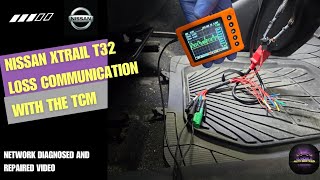
- CAN Bus Wiring Harness Fault 🔴 High Probability Wiring in the engine bay is exposed to vibration, heat, and potential corrosion. A common failure point is the harness near the IPDM (Intelligent Power Distribution Module, the engine bay fuse box), where wires can chafe or break internally. Another known issue is corrosion within the main TCM connector itself, interrupting the signal. Simply wiggling the harness while the vehicle is running can sometimes trigger or resolve the issue, confirming a wiring fault. 🎬 Watch: A real-world diagnosis of TCM communication loss and wiring repair.
How to confirm: A technician will perform a visual inspection of the harness between the ECM, TCM, and IPDM. They will then use a multimeter to test for proper voltage (approx. 2.6V on CAN High and 2.4V on CAN Low) and resistance (60 ohms across the circuit with the battery disconnected) on the CAN lines at the TCM connector. A resistance reading of 120 ohms may indicate a break in one of the CAN wires or a faulty terminating resistor in another module.
Typical fix: Repairing the specific broken or corroded wire or connector pin. This is labor-intensive but avoids the cost of a new module. In some cases, a new connector pigtail is spliced in.
Est. part cost: $10-$75 for wiring supplies or a connector pigtail - Failed Transmission Control Module (TCM) 🟡 Medium Probability → Shop Transmission Assembly Nissan CVTs and their control modules are a known weak point across several models and years. Internal electronic failure, often due to heat and vibration, can cause the module to stop communicating on the network. Manufacturer service information in TSB Bulletin #NTB21-002A notes that in some cases of U0101, the TCM may show as "UNKNOWN" in the present status during a diagnostic scan.
How to confirm: If the wiring, power (12V+), and grounds to the TCM are all verified to be good, but a professional scan tool still cannot communicate with the module, the TCM itself is condemned. This is a process of elimination.
Typical fix: Replace the TCM and have the new unit programmed by a Nissan dealership or qualified shop with Nissan-specific software. This is not a DIY-programmable part. 🎬 Watch: How to program a used TCM and CVT transmission.
Est. part cost: $600-$900 for a new or remanufactured TCM. Part numbers like 31036-4BL0B and 31036-7FM1A are associated with this generation, but always verify by VIN. - Low Battery Voltage or Poor Grounds ⚪ Low Probability → Shop Vehicle Battery
How to confirm: Test the battery voltage with a multimeter; it should be above 12.4V with the engine off and 13.8-14.5V when running. Low voltage can cause unpredictable communication errors. Check and clean the main battery terminals and the chassis ground connections (especially the main ground strap from the battery to the chassis) to ensure they are tight and free of corrosion.
Typical fix: Charge or replace the battery. Clean, tighten, or replace corroded ground straps.
Est. part cost: $0-$250 - Blown Fuse ⚪ Low Probability
How to confirm: Check the vehicle's fuse boxes (both in the cabin and the engine bay/IPDM) for any fuses related to the Transmission Control Module or ECU. A blown fuse indicates a loss of power to the module. A user on a forum checked fuses #40 (Transmission Ignition) and #57 (TCM/ECM) for a similar issue.
Typical fix: Replace the blown fuse. If it blows again, there is an underlying short circuit that must be found and repaired.
Est. part cost: $1-$5
Diagnosis Steps
- Check Battery Health: Ensure the battery has a full charge (12.4V+) and that the terminals are clean and tight. Low voltage can cause unpredictable communication errors across the entire vehicle network.
- Scan for All Codes: Use a professional-grade scanner to read codes from all vehicle modules (TCM, ECM, BCM, ABS, etc.), not just the engine. Note any other communication (U-codes) or power-related faults. This helps determine if the fault is isolated to the TCM or is a network-wide problem.
- Inspect Fuses: Check all fuses related to the TCM, ECM, and transmission in both the interior and engine bay fuse boxes (IPDM). A blown fuse is a simple but critical check.
- Locate and Inspect the TCM: The TCM is in the engine bay, between the battery and the air filter box. Visually inspect the module and its connectors for any signs of corrosion, moisture, physical damage, or bent pins.
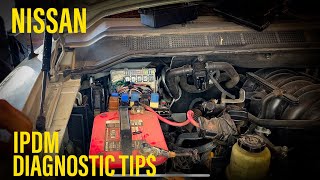
- Inspect the Wiring Harness: Carefully examine the wiring harness leading to the TCM, paying close attention to areas where it might rub against other components, especially around the battery tray and near the IPDM (engine bay fuse box). 🎬 See these expert tips for diagnosing Nissan IPDM and relay issues. Look for chafing, melting, or breaks.
- Test Power and Ground at the TCM Connector: This is a key professional step. With the TCM connector unplugged and ignition ON, use a multimeter to verify 12V power on the correct pin(s) and a solid ground connection (less than 0.5 Ω resistance to chassis ground). Lack of power or ground points directly to a wiring or fuse issue.
- Test CAN Bus Circuit Integrity: With the battery disconnected, measure the resistance between the CAN-High and CAN-Low pins at the TCM connector. A healthy circuit should read approximately 60Ω. A reading of 120Ω suggests a break in the circuit or a problem with a terminating resistor. A reading near 0Ω indicates a short between the CAN lines.
- Isolate the Fault (Advanced): If the CAN bus is faulty, a technician may unplug modules one by one to see when the correct 60Ω resistance returns. This helps identify a module or section of wiring that is bringing the network down.
- Condemn the TCM: If all wiring, power, and ground circuits test good, and the CAN network is stable, but the TCM remains offline, the module itself is the most likely culprit and should be replaced.
Parts You'll Likely Need
- Transmission Control Module (TCM)
(OEM #31036-4BL0B, 31036-7FM1A (Varies by year/VIN, verification required))— This is the most common major component to fail when wiring and power sources are confirmed to be good.
Trusted brands: Hitachi (OEM Manufacturer), Nissan OE
OEM price range: $700-$900
Aftermarket price range: $400-$600 (Remanufactured)
Related Codes That Often Appear With This One
- U1000 — This is another Nissan-specific CAN communication error code that often appears alongside other U-codes when there is a network problem.
- U0100 — This code indicates 'Lost Communication with ECM/PCM.' If the entire network is unstable, multiple modules may lose communication simultaneously.
- P0725 — Indicates an Engine Speed Input Circuit Malfunction. The TCM relies on engine speed data from the ECM. If the communication link is down (U0101), the TCM can't get this data, often triggering P0725 as a secondary code.
- U0122 — Indicates 'Lost Communication With Vehicle Dynamics Control Module'. A forum user reported this code appearing with U0101 during an episode of widespread CAN bus issues, potentially triggered by extreme cold weather.
Technical Service Bulletins (TSBs) & Recalls
- NTB15-084c: Addresses CVT judder with DTCs P17F0/P17F1, which are related to transmission performance but distinct from the U0101 communication fault.
- NTB19-076A: A later TSB related to CVT judder, indicating ongoing issues with the transmission systems in these vehicles.
- TSB Bulletin #NTB21-002: Describes a condition where the engine will not crank and will not start, with DTC U0101 stored in the ECU or Shifter Control Unit (SCU) in either past or current status.
- TSB Bulletin #NTB21-002A: Provides service information for intermittent no-start conditions where the TCM may show as "UNKNOWN" in the diagnostic tool while U0101 is present.
Platform-Specific Known Issues
- The Jatco CVT used in this generation of Rogue is known for a variety of issues, and control system problems are common. While not a formal recall for this specific code, Nissan has faced class-action lawsuits and extended warranties related to CVT performance and failure, such as juddering and premature failure.
- A user on a Nissan forum reported a de
Mechanic-Grade Diagnostic Values
- CAN Bus Resistance — expected: Approximately 60 Ω. Failure: A reading of 120 Ω indicates an open circuit or faulty terminating resistor. A reading near 0 Ω indicates a short between the CAN lines.
- CAN Bus Voltage (Key On, Engine Off) — expected: CAN High (Pin 6 at DLC) should be ~2.6V. CAN Low (Pin 14 at DLC) should be ~2.4V.. Failure: If either voltage is stuck at 0V, 5V, or battery voltage, it indicates a short or open in the CAN harness.
- TCM Power Supply — expected: 12.0V - 12.6V with ignition on.. Failure: Significantly lower voltage indicates a power supply issue (fuse, relay, wiring).
- TCM Ground Resistance — expected: Less than 0.5 Ω.. Failure: Higher resistance indicates a poor ground connection which can cause the module to drop offline.
Scan Tool Commands That Help
- Nissan CONSULT-III Plus: Re/programming, Configuration — This function is required to program a new TCM to the vehicle. It involves writing the vehicle's specific calibration file to the new module.
- Nissan CONSULT-III Plus: Work Support > Write IP Characterization — This is a specific function used during the programming of a new or used transmission assembly to write the calibration data (often supplied on a CD with a new transmission) to the TCM.
- Advanced Aftermarket Scanners (e.g., Autel, Topdon): Online Programming and Configuration / TCM Replacement — Some high-end aftermarket tools can perform the online programming required to install a new TCM, downloading the necessary files from the manufacturer's server. This is an alternative to the dealer's CONSULT tool.
- Any Professional Scanner: Auto Scan / Network Test — Used at the beginning of diagnosis to see which modules are communicating on the network. If the TCM is missing from the list of responding modules, it confirms the communication loss.
Wiring & Ground Locations
- TCM Location — In the engine bay, located between the battery and the air filter box.. This is the module that is offline. Its location exposes it and its wiring to engine heat and vibration, which can contribute to wiring faults or internal module failure.
- IPDM E-15 Connector — The Intelligent Power Distribution Module (IPDM) is the main fuse/relay box in the engine compartment.. The CAN bus wiring for the TCM passes through this area. The harness near the IPDM is a very common location for chafing, breaks, or corrosion, causing intermittent or total loss of communication with the TCM.
- CAN H / CAN L Wires — A twisted pair of wires (often Pink and Blue on this model) running from the ECM to the TCM and other modules.. These two wires are the physical network bus. A break, short to power, or short to ground on either wire will take the TCM offline and set code U0101.
- Main Chassis Grounds — Key ground points are located on the chassis near the battery and from the engine block/transmission to the frame.. A poor or corroded ground can cause unstable voltage for the TCM, leading to intermittent communication dropouts even if the module itself is fine.
Real Owner Repair Stories
- DJ AUTOMOTIVE on YouTube (2015 Nissan Rogue) — Intermittent crank-no-start, loss of communication with TCM, scan tool could not read the TCM.
❌ Tried (didn't work) The owner likely replaced parts before bringing the vehicle to the shop, as the video title mentions 'Parts Cannon Fired'.
✅ What actually fixed it A broken CAN Low wire in the harness near the IPDM (engine bay fuse box). The technician identified the fault by wiggling the harness and watching the CAN signal on an oscilloscope. Shaking the harness would cause the vehicle to fail to start, and then start again, confirming a wiring issue. The broken wire was repaired to resolve the U0101 code and restore communication. - NHTSA ODI #11114960 — An owner reported that their dashboard lights were lighting up and a diagnostic check revealed a U0101 lost communication code. Despite the code being present, the service department initially refused to keep the vehicle for extended repair.
Model Year Variations Within This Range
- 2017-2018: The 2017 model year introduced a mid-cycle refresh for the Rogue, which included powertrain updates and potentially minor wiring changes. While the fundamental cause (CAN bus failure) and diagnosis for U0101 remain the same, wiring diagrams and connector pinouts should always be verified for the specific model year, especially post-facelift (2017+).
Diagnostic Flowchart
Other Known Issues on This Vehicle
Issues unrelated to this code that are worth knowing about as an owner of this generation:
- Premature CVT Failure / Judder 🔴 High — Very common. Can occur at any mileage, but often reported between 60,000 and 100,000 miles. Symptoms include shaking, hesitation, and whining. (Ref: Multiple TSBs exist (e.g., NTB15-084c, NTB19-076A) for judder, and Nissan extended the warranty on many CVTs.)
- AC Compressor Failure 🟠 Medium — Common complaint. The AC may stop blowing cold air, sometimes intermittently at first, especially in hot weather. Often requires compressor replacement.
- Leaking Sunroof Drains 🟠 Medium — Widespread issue where the front or rear sunroof drain tubes get clogged with debris, causing water to overflow from the drain tray and leak into the cabin headliner, A-pillars, or footwells. (Ref: No recall, but it's a well-documented problem with many DIY and professional repair guides available.)
- Automatic Emergency Braking (AEB) Malfunction 🔴 High — Common on 2017-2018 models. Owners report the system engaging and braking the vehicle suddenly for no reason ('phantom braking'), posing a safety risk. (Ref: Subject of a class-action lawsuit and NHTSA investigation.)
- Faulty Fuel Level Sensor 🟡 Low — The fuel gauge may become inaccurate or read empty when the tank is not. This is typically caused by a worn sensor on the fuel pump assembly inside the tank.
Used vs. New Parts: Buying Guide for This Vehicle
When a used part is the smart pick: A used TCM is almost never a smart choice for this vehicle. Nissan dealerships will typically refuse to program a used module to a different vehicle's VIN. While some specialized independent shops might be able to 'clone' or reprogram a used module, it is a significant risk. A used part only makes sense if it comes from a specialist who guarantees it is 'virginized' and ready for programming.
Donor-vehicle mileage cap: roughly under 60000 miles for the part to have meaningful remaining life.
What to inspect on the donor part:
- Verify the part number exactly matches the original.
- Inspect connector pins for any signs of corrosion, damage, or moisture.
- Ask the seller if the part has been 'unlocked' or 'virginized' for reprogramming (unlikely but necessary).
- Obtain the VIN of the donor vehicle to check its history if possible.
OEM-only on this vehicle (don't cheap out):
- Transmission Control Module (TCM) - Due to the absolute requirement for VIN-specific programming by a dealer or specialist with proprietary tools, buying a new OEM or a professionally remanufactured and pre-programmed unit is the only reliable path.
Aftermarket brands forum-validated for this vehicle:
- Flagship One (Remanufactured, Pre-programmed)
- AutoECMs (Remanufactured)
Brands owners have reported issues with on this vehicle:
- Generic, unbranded TCMs from online marketplaces that do not offer pre-programming to your vehicle's VIN.
Real Owner Stories
Aggregated from forums and TSBs cited above. Mileages and costs reflect what owners reported in those sources.
2015 Nissan Juke (1.6L Turbo)
Symptoms: The vehicle experienced a cluster of CAN codes including U0101 and several other codes all in one day.
What fixed it: The dealer replaced the Transmission Control Module (TCM) after initial diagnostic checks found no other faults.
Source hint: NissanForums.com thread titled 'U0101 and several other codes all in one day'
Related OBD-II Codes
Frequently Asked Questions
Does TSB NTB15-084c or NTB19-076A apply to my U0101 communication error?
Where is the TCM located on my 2014-2018 Rogue for inspection?
Can I program a replacement TCM (part 31036-4BL0B or 31036-7FM1A) myself?
Which fuses should I check if my Rogue won't shift out of Park and has a U0101 code?
Is there a common wiring failure point I should look for in the engine bay?
What multimeter readings confirm a CAN bus wiring issue on my Rogue?
Helpful Videos
We Have This Part in Stock

The information in this article is provided for general reference and educational purposes only. Vehicle specifications, procedures, and part compatibility can vary by production date, trim level, and region. Always consult your vehicle's factory service manual and verify part numbers before purchasing or performing repairs. Safety-critical components such as airbags, seat belts, and braking systems should be installed by a qualified professional.
- Nissan Rogue:
- 🧭 Diagnostic Flowchart
- 🎬 Helpful Videos
- 🛍️ Shop This Part
- What's Unique About the 2014-2018 Nissan Rogue
- Symptoms You May Notice
- Most Likely Causes
- Diagnosis Steps
- Parts You'll Likely Need
- Related Codes That Often Appear With This One
- Technical Service Bulletins (TSBs) & Recalls
- Platform-Specific Known Issues
- Mechanic-Grade Diagnostic Values
- Scan Tool Commands That Help
- Wiring & Ground Locations
- Real Owner Repair Stories
- Model Year Variations Within This Range
- Other Known Issues on This Vehicle
- Used vs. New Parts: Buying Guide for This Vehicle
- Real Owner Stories
- 2015 Nissan Juke (1.6L Turbo)
- Related OBD-II Codes
- Frequently Asked Questions
- 🎟️ Get 5% Off