

U0101 on 2004-2015 Nissan Titan: Lost Communication with TCM Causes and Fixes
On a 2004-2015 Nissan Titan, code U0101 almost always points to a failed Transmission Control Module (TCM). On most of these trucks, the TCM is located inside the transmission oil pan, bolted to the valve body. Before condemning the TCM, check battery voltage and clean all major ground points (battery-to-chassis, chassis-to-engine), as poor grounds are a common and cheaper underlying cause. If grounds are good, the entire valve body/TCM assembly usually needs to be replaced. Expect to pay $300-$
- U0101 on a 2004-2015 Titan is most likely caused by a failed Transmission Control Module (TCM).
- The TCM is located inside the transmission oil pan, bolted to the valve body, and must be replaced as a complete assembly.
- Before replacing the expensive TCM/valve body, always verify battery health and check all power and ground connections, as these are simpler, common causes of communication faults.
- For 2005-2010 models, check the transmission fluid for any signs of being pink and milky, which indicates coolant contamination (SMOD) and requires a full transmission and radiator replacement.
- This repair is not recommended for DIYers. The most common fix requires dropping the transmission pan and replacing the valve body assembly.
What's Unique About the 2004-2015 Nissan Titan
The first-generation Nissan Titan has a specific design that makes it prone to the U0101 code. For most models from late 2004 to 2015, the TCM is not a separate, easily accessible box. Instead, it's integrated with the transmission valve body and lives inside the hot, vibrating environment of the transmission oil pan. This location makes the TCM highly susceptible to failure from heat and vibration, causing internal circuit board cracks. This internal TCM failure is the most common cause of this code, far more so than on vehicles with an externally mounted module. Additionally, a faulty Intelligent Power Distribution Module (IPDM), which is a known weak point, can cause voltage issues that trigger this communication code.
Symptoms You May Notice
- Check Engine Light is on
- Vehicle is stuck in 'limp mode' (usually a single high gear, making acceleration very slow)
- Harsh or erratic shifting
- Inability to shift out of Park
- The gear indicator on the dashboard may be blank or incorrect
- Vehicle may not start (no-crank condition)
- ABS or VDC/Slip warning lights may also illuminate
- Scan tool cannot communicate with the TCM
- Replacing only the solenoids on the valve body. While solenoids can fail, they typically produce different codes. U0101 is a communication failure, pointing to the TCM board itself.
- Replacing the external vehicle speed sensor. This sensor can cause shifting problems, but it will set its own specific codes (like P0720) and does not typically cause a U0101.
- Condemning the TCM before thoroughly checking and cleaning all main power and ground connections.
Most Likely Causes
- Internal Failure of the Transmission Control Module (TCM) 🔴 High Probability → Shop Transmission Assembly The TCM is integrated with the valve body inside the transmission pan, exposing it to constant heat and vibration that eventually leads to circuit board failure. This is the most common root cause after verifying power and grounds are good.
How to confirm: After verifying that the TCM is receiving correct power and ground at the main transmission connector, and the CAN bus wiring is intact, the module itself is condemned. A professional scan tool will be unable to communicate with the TCM.
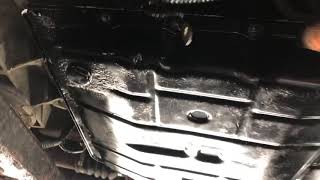
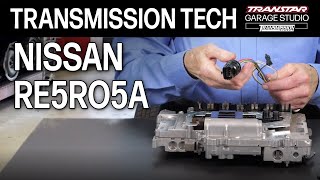
Typical fix: Replace the entire transmission valve body assembly, which includes the integrated TCM. 🎬 Watch: A detailed guide on valve body and TCM replacement. This is typically purchased as a single remanufactured unit. The replacement part must be programmed to the vehicle's VIN.
Est. part cost: $300 - $600 (Remanufactured) - Poor Power or Ground Connection 🟡 Medium Probability Corroded or loose ground straps are common on trucks. The main ground from the battery to the chassis and engine block is a frequent culprit. Forum users on Reddit have specifically pointed to loose or corroded grounds as a fix for U-codes on these trucks.
How to confirm: Perform a voltage drop test on the main power and ground cables. Inspect all major ground points for corrosion and tightness. Key locations on the Titan include the negative battery cable connection to the frame and a separate strap to the engine block. There should be less than 0.1 volts of resistance on ground circuits.
Typical fix: Disconnect, clean all ground connection points with a wire brush until they are shiny metal-to-metal, and re-tighten securely. Apply dielectric grease to prevent future corrosion. Replace corroded battery cables or ground straps if necessary.
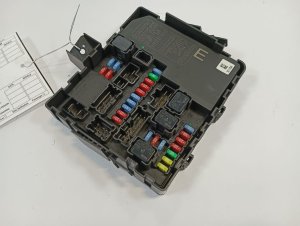
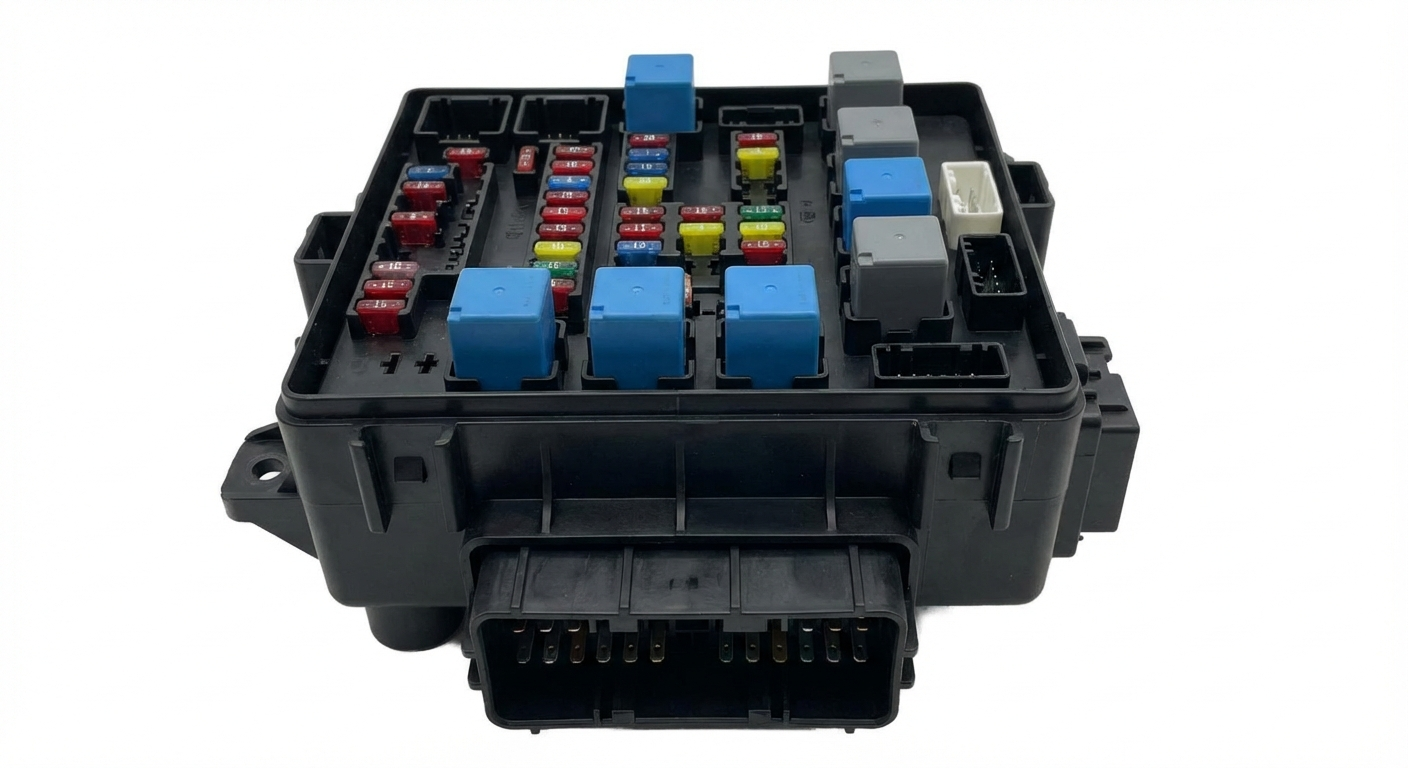
Est. part cost: $20 - $100 - Faulty Intelligent Power Distribution Module (IPDM) ⚪ Low Probability → Shop Fuse Box The original white-cased IPDMs are known to fail, particularly the internal, non-serviceable ECM relay, which can cause low voltage to various modules, including the TCM. This is a well-documented issue across many Nissan platforms from this era.
How to confirm: If you experience intermittent no-start conditions along with the U0101 code, the IPDM is a strong suspect. A technician can test the voltage output from the IPDM to confirm it's supplying stable power to the ECM and other systems. Water intrusion is also a common cause of failure; check for corrosion inside the IPDM box.
Typical fix: Replace the IPDM with the updated black-cased version from Nissan. 🎬 Watch: How to fix no-start issues by replacing the IPDM. On some 2004-2006 models, a separate ECM relay was available for replacement per a TSB, which could be a cheaper fix.
Est. part cost: $150 - $300 - Damaged CAN Bus Wiring Harness ⚪ Low Probability Wiring can be damaged by rodents, chafing against the frame or engine components, or corrosion in connectors, particularly the main round connector at the transmission housing.
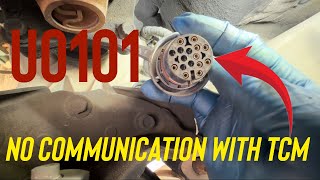
How to confirm: Visually inspect the wiring harness leading to the main transmission connector. A technician can test the CAN bus wires for continuity and resistance between the TCM connector and the OBD-II port. 🎬 See how to diagnose a TCM no communication code. A reading of 60 ohms between CAN High and CAN Low is expected. If it's 120 Ohms, there is a break in the CAN wiring or the TCM is disconnected from the network.
Typical fix: Repair the broken or shorted section of wire. Clean or replace corroded connectors.
Est. part cost: $10 - $100
Rare But Worth Checking
- Low Battery Voltage: → Shop Vehicle Battery A weak or failing battery can cause a multitude of random electronic issues, including communication codes. Always test the battery (should be ~12.6V engine off) and charging system (13.7-14.7V engine on) and ensure voltage is above 10.5V before diagnosing CAN issues.
Diagnosis Steps
- Scan for Codes: Use an OBD-II scanner to confirm the U0101 code. Note any other codes present, especially U1000 or P07xx codes. A professional scanner is needed to see if the TCM module is responsive.
- Check Battery Health: Ensure the battery is fully charged (12.6V+ with engine off) and the charging system is working correctly (13.7V+ with engine running). Low voltage can cause communication errors.
- Inspect Fuses: Check all fuses related to the TCM, ECM, and transmission in the fuse boxes and the IPDM. A blown TCM fuse is a strong indicator of a problem.
- Inspect Grounds: This is a critical and cost-effective step. Disconnect the negative battery terminal. Locate, disassemble, clean, and re-tighten the main battery ground cable connection to the chassis and the primary engine-to-chassis ground strap. Wiring diagrams show key ground points are E15 and E24 in the engine compartment.
- Check TCM Power/Ground at Connector: Using a multimeter and a wiring diagram, check for proper 12V power and good ground at the main circular connector going to the transmission. This confirms if the module is getting the power it needs to operate.
- Test CAN Bus: With the battery disconnected, measure the resistance between pins 6 (CAN High) and 14 (CAN Low) at the OBD-II port. It should be 60 Ohms. If it's 120 Ohms, there is an open in the circuit or the TCM is offline. You can also check CAN voltages with the key on: CAN High should be 2.5-3.5V and CAN Low should be 1.5-2.5V.
- Condemn the TCM/Valve Body: If power, ground, and CAN wiring are all verified to be good, the internal TCM has failed. The only remaining step is replacement.
Parts You'll Likely Need
- Transmission Valve Body with TCM
(OEM #31705-X058A (and subsequent revisions like 31705-X100B, though VIN matching is required))— This is the most common failure point. The TCM is integrated into the valve body, and they are replaced as a single assembly. Part must be programmed to the vehicle.
Trusted brands: Hitachi (OEM), Rostra, Street Smart Transmission, UpFix
OEM price range: $800 - $1200
Aftermarket price range: $300 - $600 (Remanufactured) - Intelligent Power Distribution Module (IPDM) — A less common but known failure point that can cause communication codes due to unstable power supply.
Trusted brands: Nissan (OEM)
OEM price range: $150 - $300
Related Codes That Often Appear With This One
- U1000 — This is a generic Nissan code for a CAN Communication Circuit fault. It often appears alongside U0101, indicating a general network problem initiated by the TCM going offline.
- P07xx — Various P07xx codes (e.g., P0717, P0744) related to sensors and solenoids may be stored. These are often symptoms of the TCM failing, not the root cause, as the failing TCM board contains the circuitry for these components.
Technical Service Bulletins (TSBs) & Recalls
- TSB Bulletin #NTB21-001 - Manufacturer service information notes that a customer may state the engine will not crank and will not start (intermittently) and DTC U0101 is stored in the ECU or Shifter Control Unit.
- TSB Bulletin #NTB21-001B - This bulletin confirms that a no-start condition may occur when U0101 is stored in the ECU or SCU as past or current, or if the TCM shows as "UNKWN" in the present.
- NTB08-072b - While not directly for U0101, this TSB addresses harsh shifting and other transmission complaints on vehicles with the RE5R05A, sometimes involving software updates or valve body replacement, which is relevant context.
- NTB20-068 - Discusses transfer case seal replacement, relevant for 4x4 models where leaks could be misidentified.
- NTB08-068c - A recall campaign for the A/C condenser fan on 2004-2006 models, showing the complexity of the electrical system and the potential for one component to affect others.
Platform-Specific Known Issues
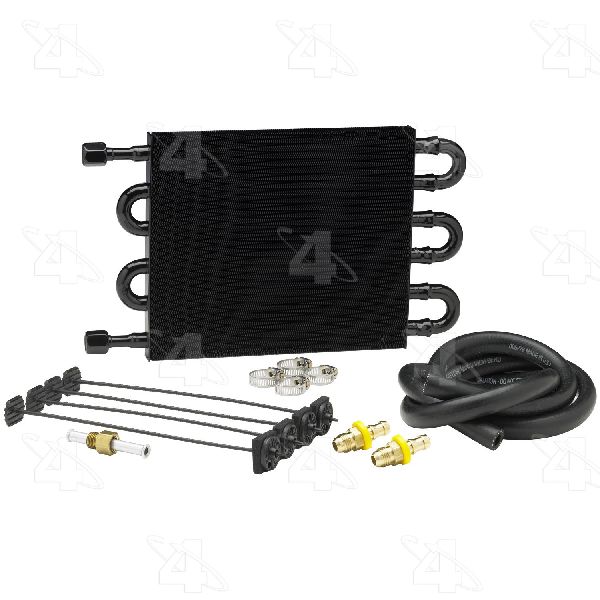
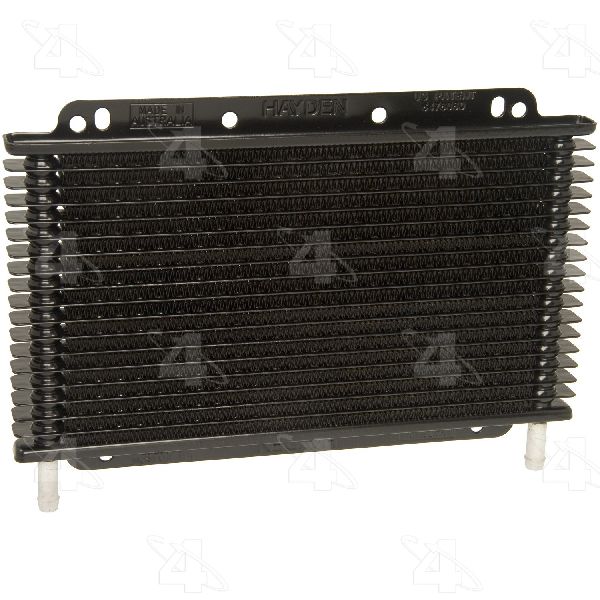
- Strawberry Milkshake of Death (SMOD): On 2005-2010 models, the internal transmission cooler in the radiator is prone to failing. This allows engine coolant to mix with the automatic transmission fluid. The glycol in the coolant quickly destroys the transmission's clutches and the electronics in the TCM, leading to catastrophic failure and often a U0101 code. If you see pink, milky fluid on the dipstick, the transmission and radiator need to be replaced. Many owners proactively install an external transmission cooler to bypass the radiator and prevent this.
- Early vs. Late Model TCM Location: Very early 2004 models may have an external TCM located in the passenger kick panel. However, the vast majority of 2004-2015 Titans use the RE5R05A transmission with the TCM integrated into the valve body inside the transmission. It is crucial to verify which setup your specific truck has.
Mechanic-Grade Diagnostic Values
- CAN Bus Resistance (across Pins 6 & 14 at OBD-II port, battery disconnected) — expected: ~60 Ohms. Failure: 120 Ohms indicates an open circuit or disconnected terminating module (like the TCM). ~0 Ohms indicates a short between CAN High and Low wires.
- CAN High Voltage (Pin 6 at OBD-II to Chassis Ground, Key On Engine Off) — expected: ~2.7 Volts (active: ~3.5V). Failure: Significant deviation suggests a short or open circuit.
- CAN Low Voltage (Pin 14 at OBD-II to Chassis Ground, Key On Engine Off) — expected: ~2.3 Volts (active: ~1.5V). Failure: Significant deviation suggests a short or open circuit.
- TCM Power Supply (at transmission connector) — expected: 11V to 14V. Failure: Voltage below 11V indicates a power supply issue upstream of the TCM.
- TCM Ground (at transmission connector to chassis ground) — expected: Below 1 Ohm. Failure: Resistance higher than 1 Ohm indicates a poor ground connection.
Scan Tool Commands That Help
- Nissan CONSULT: Self-Diagnostic Results — This is the first step with the dealer tool. It will attempt to communicate with all modules on the CAN bus and report which ones are not responding, confirming the U0101 is due to the TCM being offline.
- Nissan CONSULT: CAN Diag Support Monitor — This function provides a live look at the CAN communication status, helping to determine if the fault is intermittent or constant. It can help differentiate between a wiring issue and a complete module failure.
- Advanced Aftermarket Scanners / Nissan CONSULT: IPDM Active Test (Auto Active Test) — If an IPDM failure is suspected, this command cycles all outputs controlled by the IPDM (lights, wipers, horn, etc.). While it doesn't directly test the TCM circuit, it can help verify the overall health of the IPDM as a power distribution source.
Wiring & Ground Locations
- Main Transmission Connector — The large, circular, twist-lock connector on the passenger side of the transmission housing.. This is the single point of connection for all power, ground, and communication lines to the internal TCM. Checking for power, ground, and CAN signals here is the most critical diagnostic step.
- TCM Power Pins — Pins 9 and 14 at the main transmission connector.. These pins supply the 12V power needed for the TCM to operate. A loss of voltage here points to a fuse, relay, or wiring issue, not a failed TCM.
- TCM Ground Pins — Pins 13 and 16 at the main transmission connector.. These pins provide the ground path for the TCM. High resistance on these pins will prevent the module from turning on.
- TCM CAN Bus Pins — CAN High is Pin 2, CAN Low is Pin 6 at the main transmission connector.. These are the specific wires that carry the communication signal. Checking for proper voltage and resistance here can isolate a wiring fault between the TCM and the rest of the vehicle.
- Ground Point G100 — On the passenger side of the engine compartment, near the firewall.. A real-world repair identified a corroded splice connector near this ground point as the cause of a U0101. The ground itself was good, but the splice that distributed the ground to the TCM had failed internally.
Real Owner Repair Stories
- YouTube user OmarGautomotive (Ford (similar diagnostic principles shown, applicable to Titan)) — No communication with TCM, U0101 code present, scan tool cannot connect to TCM.
❌ Tried (didn't work) Checked fuses (F53, F26) - they were good., Checked for power at the TCM connector (pins 9, 14) - power was present.
✅ What actually fixed it A ground problem was found. The main ground point (G100) was good, but a splice connector for the ground wires near it was corroded internally. After the splice, there was no ground continuity to the TCM connector (pins 13, 16). Applying a temporary ground to the wire after the splice restored communication, proving the splice was the point of failure. - Owner Report (NHTSA ODI #11631268) — An owner of a similar Nissan platform reported dangerous lurching and instances where the transmission would not engage, noting the diagnostic code was U0101 for bad communication between the TCM and vehicle.
- Owner Report (NHTSA ODI #11114960) — A driver reported that multiple dashboard lights illuminated and a service check revealed a U0101 lost communication code.
OEM Part Supersession History
31705-X058A (and others like 31705-X045A, 31705-X050E)→31705-X100B— Part evolution and updates by the manufacturer to improve reliability or address known issues.
Heads up: VIN matching is critical. While the parts may physically interchange, the programming on the TCM is specific to the vehicle's geartrain and options. Using the wrong programmed unit can cause shifting issues or other codes.
Model Year Variations Within This Range
- 2004-2007: These earlier models are more prone to IPDM failures (white-cased units) and had a TSB for a replaceable ECM relay within the IPDM on some 2004-2006 models. They are also more prone to exhaust manifold cracking which, while unrelated to U0101, is a common issue on early Titans.
- 2008-2015: Received a facelift with revised styling and an updated interior. Many early production issues were minimized by this point. The IPDM was updated to a more reliable black-cased unit.
- Approx. 2004+: The manufacturer of the TCM/valve body assembly changed from Bosch to Hitachi. The pressure switch design also changed. This is important when sourcing remanufactured parts, as they must match the original type.
Diagnostic Flowchart
Other Known Issues on This Vehicle
Issues unrelated to this code that are worth knowing about as an owner of this generation:
- Cracked Exhaust Manifolds 🔴 High — Extremely common, often occurs between 80,000-120,000 miles. The catalytic converter is integrated, making replacement expensive. (Ref: No specific recall, but a widely documented problem.)
- Rear Axle Seal Leak / Differential Failure 🔴 High — Very common, especially on 2004-2013 models. A clogged axle vent builds pressure, forcing gear oil past the seals, which can contaminate brakes and lead to differential failure if not addressed. (Ref: Multiple TSBs have been issued, and Nissan released an updated axle design for 2004-2007 models.)
- Transmission Cooler Failure (SMOD - Strawberry Milkshake of Death) 🟠 Critical → Shop Transmission Assembly — Common on 2005-2010 models. The internal radiator transmission cooler ruptures, mixing coolant and ATF, which destroys the transmission. (Ref: No recall, but TSB NTB08-041a exists for other models with the same issue. The common fix is bypassing the radiator with an external cooler.)
- IPDM (Intelligent Power Distribution Module) Failure 🟠 Medium — Common issue, especially on earlier models with the white-cased module. Causes intermittent no-start conditions and various electrical faults. (Ref: TSBs exist for some Nissan models addressing a faulty internal ECM relay.)
- Catalytic Converter Failure 🟠 Medium — Often a consequence of other issues like a failing fuel pump or cracked exhaust manifolds, but can fail on its own, causing a lack of power.
Used vs. New Parts: Buying Guide for This Vehicle
When a used part is the smart pick: A used IPDM from a later model year (with the updated black case) can be a cost-effective and reliable replacement for a failed original white-cased unit. A used main battery ground cable is also a viable option if the donor vehicle shows no signs of corrosion.
Donor-vehicle mileage cap: roughly under 150000 miles for the part to have meaningful remaining life.
What to inspect on the donor part:
- For an IPDM: Check for a black case (the updated design). Open the cover and inspect for any signs of water intrusion, white/green powdery corrosion on the circuit board or connectors.
- For a Valve Body/TCM: This is not recommended from a junkyard. The part has a high failure rate from heat/vibration, and a used one has an unknown history. Its remaining life is a gamble.
- For Wiring/Connectors: Ensure there is no visible corrosion on the pins, no cuts or abrasions in the wiring, and that the locking tabs are intact.
Aftermarket brands forum-validated for this vehicle:
- For Remanufactured Valve Body/TCM: Rostra, UpFix, and Street Smart Transmission are commonly mentioned providers who specialize in rebuilding and testing these units.
- For IPDM: A genuine Nissan part (the updated black version) is the most reliable choice.
Brands owners have reported issues with on this vehicle:
- Unnamed, no-brand valve bodies from online marketplaces should be avoided. These often lack proper testing, programming, and warranty support. The risk of receiving a defective part is high.
Real Owner Stories
Aggregated from forums and TSBs cited above. Mileages and costs reflect what owners reported in those sources.
2004 Nissan Titan
Symptoms: Electrical issues and communication problems; user specifically looking for ground locations like the battery-to-frame connection and fuse box connectors.
What fixed it: Cleaning and securing the battery-to-frame ground and checking the fuse box connector.
Source hint: Reddit: r/NissanTitan - Ground issue?
2005-2010 Nissan Titan
Symptoms: Pink, milky fluid on the dipstick and a U0101 code after the internal radiator cooler failed.
What fixed it: Replacement of the transmission and radiator; many owners now bypass the radiator with an external cooler to prevent this.
Source hint: vehicle_specific_issues: Strawberry Milkshake of Death (SMOD)
2004-2006 Nissan Titan
Symptoms: Intermittent no-start conditions and communication codes caused by low voltage from the IPDM.
What fixed it: Replacing the original white-cased IPDM with the updated black-cased version, or replacing the ECM relay on specific early models.
Source hint: common_causes: Faulty Intelligent Power Distribution Module (IPDM)
Related OBD-II Codes
Frequently Asked Questions
My 2005 Titan has pink, milky fluid on the transmission dipstick and a U0101 code. What happened?
Is the TCM located in the same place on all 2004-2015 Titans?
Can a faulty IPDM cause the U0101 communication code on my Nissan?
What is the specific resistance I should look for when testing the CAN bus on my Titan?
Are there specific ground points on the Titan I should check for U0101?
Does TSB NTB08-072b apply to my U0101 issue?
Helpful Videos

Used OEM Parts in Stock
New Aftermarket Parts Available

The information in this article is provided for general reference and educational purposes only. Vehicle specifications, procedures, and part compatibility can vary by production date, trim level, and region. Always consult your vehicle's factory service manual and verify part numbers before purchasing or performing repairs. Safety-critical components such as airbags, seat belts, and braking systems should be installed by a qualified professional.
- Nissan Titan:
- 🧭 Diagnostic Flowchart
- 🎬 Helpful Videos
- 🛍️ Shop This Part
- What's Unique About the 2004-2015 Nissan Titan
- Symptoms You May Notice
- Most Likely Causes
- Rare But Worth Checking
- Diagnosis Steps
- Parts You'll Likely Need
- Related Codes That Often Appear With This One
- Technical Service Bulletins (TSBs) & Recalls
- Platform-Specific Known Issues
- Mechanic-Grade Diagnostic Values
- Scan Tool Commands That Help
- Wiring & Ground Locations
- Real Owner Repair Stories
- OEM Part Supersession History
- Model Year Variations Within This Range
- Other Known Issues on This Vehicle
- Used vs. New Parts: Buying Guide for This Vehicle
- Real Owner Stories
- 2004 Nissan Titan
- 2005-2010 Nissan Titan
- 2004-2006 Nissan Titan
- Related OBD-II Codes
- Frequently Asked Questions
- 🎟️ Get 5% Off