

U0101 on 2015-2019 Subaru Outback: Lost Communication with TCM Causes and Fixes
On a 2015-2019 Subaru Outback, code U0101 most often means there's an electrical issue preventing communication with the Transmission Control Module (TCM). Before suspecting a bad TCM, check for a weak battery, corroded wiring, or a blown fuse, as these are more common and cheaper fixes. This platform is notoriously sensitive to low battery voltage, which can be caused by a parasitic drain from the vehicle's telematics module.
- U0101 means the Transmission Control Module (TCM) is offline.
- Always start diagnosis by testing the battery and checking fuses before suspecting more complex issues. This platform is highly sensitive to low voltage.
- Thoroughly inspect all wiring and connectors going to the transmission and TCM for damage or corrosion.
- Do not replace the TCM unless all other possibilities, especially the battery and its connections, have been ruled out.
- Driving the vehicle with this code is not recommended as it can be unsafe.
What's Unique About the 2015-2019 Subaru Outback
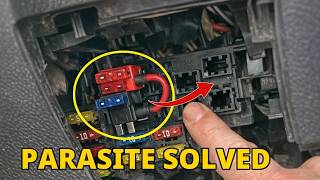
While U0101 is a universal code, modern Subarus, including this generation of Outback, are known to be extremely sensitive to battery voltage. A weak or failing battery can cause various control modules to malfunction and drop off the network, triggering communication codes like U0101. This is often the root cause before any more complex wiring or module faults should be suspected. A well-documented issue on these vehicles involves a parasitic drain from the data communications module (DCM) that kills the battery, leading to these codes. This problem was widespread enough to result in a class-action lawsuit (In re Subaru Battery Drain Products Liability Litigation 🎬 Watch: How to diagnose and fix the DCM parasitic draw) and a settlement for owners of 2015-2020 Outbacks. The issue is often linked to the 3G network sunset, causing the DCM to constantly search for a signal and drain the battery.
Symptoms You May Notice
- Check Engine Light is on
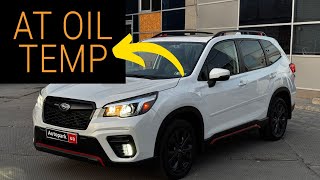
- Flashing 'AT OIL TEMP' light on the dashboard
- Vehicle enters 'limp mode,' limiting speed and locking the transmission in a single gear (often 2nd or 3rd).
- Harsh, erratic, or delayed shifting.
- Inability to shift out of Park.
- The gear selector indicator (PRNDL) on the dashboard may disappear or stop updating.
- Scan tool fails to communicate with the TCM.
- Replacing the entire transmission. The U0101 code is an electrical communication issue, not a mechanical failure. A full transmission replacement is almost never the correct fix for this code alone.
- Replacing the TCM without first testing the battery and wiring. A weak battery or a corroded wire are far more common and cheaper to fix.
Most Likely Causes
- Weak or Failing Battery / Poor Power Connection 🔴 High Probability → Shop Vehicle Battery Subaru electrical systems are sensitive to low voltage. A battery at the end of its life or with corroded terminals often causes intermittent communication faults. This generation is particularly known for a parasitic drain caused by the DCM, which was the subject of a class-action lawsuit.
How to confirm: Test the battery voltage with a multimeter. A healthy, resting battery should be above 12.4V. Have the battery load-tested. Inspect battery terminals for corrosion and ensure they are tight. A parasitic draw test can be performed to see if a module is staying active when the car is off.
Typical fix: Clean the battery terminals and cable ends. If the battery fails a load test, replace it. If a parasitic drain from the DCM is confirmed, it may need to be disconnected or reprogrammed by a dealer.
Est. part cost: $150-$300 - Damaged Wiring or Corroded Connectors 🟡 Medium Probability The wiring harness to the transmission can be exposed to road debris, moisture, and heat. Rodent damage to soy-based wire insulation is also a known problem. The main TCM connector is a common point for moisture intrusion.
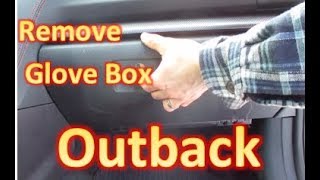
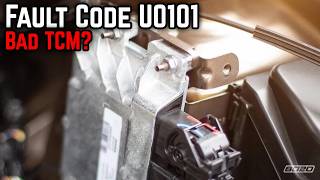
How to confirm: Visually inspect the wiring harness leading to the transmission and the TCM. The TCM is typically located in the passenger-side footwell area, behind the glove box. 🎬 Watch: How to remove the glove box on your Outback Disconnect the connectors at the TCM and check for green/white corrosion, bent pins, or moisture.
Typical fix: Clean the connectors with electrical contact cleaner and apply dielectric grease to seal out moisture. Repair any damaged sections of the wiring harness. This may require splicing wires or repinning a connector.
Est. part cost: $10-$100 - Blown Fuse ⚪ Low Probability An electrical short or surge can blow the fuse that supplies power to the TCM.
How to confirm: Locate the fuse for the TCM in the vehicle's fuse box (consult the owner's manual). Visually inspect the fuse or test it for continuity with a multimeter. Check fuses labeled 'TCM', 'ECU', or 'ECM'.
Typical fix: Replace the blown fuse. If the new fuse blows immediately, it indicates a short circuit that needs to be diagnosed.
Est. part cost: $1-$5 - Faulty Transmission Control Module (TCM) ⚪ Low Probability → Shop Transmission Assembly While less common than electrical issues, the TCM can fail internally due to heat, vibration, and age causing fractures on the circuit board.
How to confirm: This is a last-resort diagnosis. If the battery, fuses, wiring, and grounds have all been confirmed to be good, the TCM is the likely culprit. A professional scan tool will show that the module is completely unresponsive.
Typical fix: Replace the Transmission Control Module. The new module will need to be programmed to the vehicle's VIN by a dealership or a specialized shop.
Est. part cost: $600-$900
Rare But Worth Checking
- CAN Bus Network Failure: This is rare but possible. It involves a short or open circuit in the twisted pair of CAN bus wires somewhere in the vehicle, which would likely cause multiple 'U' codes for different modules, not just the TCM.
- CVT Valve Body Failure: → Shop Transmission Valve Body On some Subaru models with the TR580 CVT, an internal failure of the valve body's electronics can cause a U0101 code, often accompanied by solenoid-specific codes like P2764 or P0971. While the TCM itself is external, this internal transmission component failure can sever its communication. This repair is often covered under Subaru's extended CVT warranty.
Diagnosis Steps
- Check for any other stored trouble codes with an OBD-II scanner. Note any other 'U' codes, as multiple communication codes point towards a systemic issue.
- Check the battery. Ensure it is fully charged (above 12.4V) and that the terminals are clean and tight. Have the battery load tested, as voltage sensitivity is a major issue on this platform.
- Inspect all fuses related to the transmission and engine computers (TCM, ECM) in both the interior and under-hood fuse boxes.
- Perform a thorough visual inspection of the wiring harness between the engine bay and the transmission. Look for any signs of chafing, melting, corrosion, or rodent damage.
- Locate the TCM (typically behind the glove box in the passenger footwell) and inspect its electrical connectors for corrosion, damage, or loose pins.
- If tools are available, check for 12V power and a good ground at the TCM connector using a multimeter and a wiring diagram.
- A professional technician would next test the CAN bus wiring for proper resistance (should be 60 ohms between pins 6 and 14 of the OBD-II port with the battery disconnected).
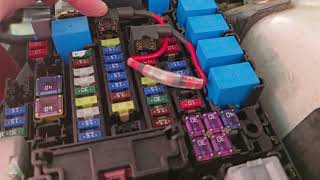
- If a parasitic draw is suspected, perform a draw test with an ammeter to isolate the circuit causing the battery drain (the DCM is a known culprit).
- If all power, ground, and network wiring tests pass, the Transmission Control Module (TCM) is likely faulty and requires replacement and programming.
Parts You'll Likely Need
- 12V Vehicle Battery — Low system voltage from a weak battery is a primary cause of communication codes on this platform.
Trusted brands: Subaru (OEM), Interstate, DieHard, Odyssey
OEM price range: $200-$300
Aftermarket price range: $150-$250 - Transmission Control Module (TCM)
(OEM #31711AF99A (Example for 2.5L models, always verify with VIN))— This is the part to replace if all wiring, power, and ground checks have been completed and found to be in good condition.
Trusted brands: Subaru (OEM)
OEM price range: $600-$900
Related Codes That Often Appear With This One
- P0700 — P0700 is a generic code that the ECM sets to turn on the Check Engine Light whenever the TCM has detected any fault. It's an informational code that simply says 'check the transmission for codes'.
- U0100 — Lost Communication with ECM. If both codes appear, it often points to a more widespread network problem or a power supply issue affecting multiple modules, not just an isolated TCM problem.
- U0122 — Lost Communication with Vehicle Dynamics Control Module. Seeing multiple 'U' codes together strongly suggests a network-wide issue, such as a bad battery, failing alternator, or a fault on the main CAN bus wiring.
Technical Service Bulletins (TSBs) & Recalls
- TSB 12-192-15R: Addresses concerns of cracked windshields on 2015-2016 models, particularly those with the de-icer feature, and extends the warranty.
Platform-Specific Known Issues
- A well-documented parasitic battery drain from the Data Communications Module (DCM) often leads to low voltage, triggering U0101 and other communication codes. This was the subject of a class-action lawsuit.
- The Lineartronic CVT in these models has a warranty extension to 10 years/100,000 miles due to reliability concerns. While U0101 is electrical, sometimes internal valve body failures can trigger it.
Mechanic-Grade Diagnostic Values
- CAN Bus Network Resistance — expected: ~60 Ω. Failure: A reading of ~120 Ω indicates a missing terminating resistor or an open in the circuit. A reading near 0 Ω indicates a short between the CAN High and CAN Low wires.
- TCM Power Supply Voltage — expected: 12.0 - 12.6 V (Key On, Engine Off) or ~14.0 V (Engine Running). Failure: Low or no voltage points to a blown fuse (e.g., Fuse No. 4 or No. 11 in some diagrams), a break in the power wire, or a charging system fault.
- TCM Ground Circuit Resistance — expected: < 0.5 Ω. Failure: High resistance indicates a corroded, loose, or broken ground connection, which can cause the module to go offline intermittently.
- Torque Converter Clutch (TCC) Lock-Up Solenoid Resistance — expected: 12.2 - 13.2 Ω. Failure: A reading significantly outside this range, especially an open circuit (infinite resistance), points to an internal failure in the CVT valve body electronics.
Scan Tool Commands That Help
- Subaru Select Monitor (SSM) or high-level aftermarket (Launch, Autel): AT Learning Mode / Relearn Procedure — This function is required after replacing the CVT valve body or the entire transmission. It resets and relearns adaptive shift data. Failure to perform this can result in poor shifting even with new parts.
- Subaru Select Monitor (SSM): TCM Reprogramming / Flashing — This is used to update the TCM with the latest factory software or to program a new or used replacement TCM to the vehicle's specific VIN and configuration.
- Professional Bi-Directional Scanner: Network Communication Test (Ping) — This command actively requests a response from the TCM. If the scanner shows no response, it helps confirm the module is offline, aiding in distinguishing between a wiring fault and a dead module.
Wiring & Ground Locations
- Main Engine Grounds — Two ground wire terminals bolted directly to the top of the engine block, under the intake manifold.. These grounds are critical for the main engine wiring harness, which includes circuits for multiple modules. A loose or corroded ground here can cause intermittent and difficult-to-diagnose network communication faults, including U0101.
- TCM Connectors (B54, B55) — Located on the Transmission Control Module, which is behind the glove box in the passenger footwell.. These are the primary connection points for all power, ground, and communication lines to the TCM. Probing for voltage and resistance at these specific connectors is a key diagnostic step.
- OBD-II Data Link Connector (B40) — Under the driver's side dashboard, to the left of the steering column.. Pins 6 (CAN-H) and 14 (CAN-L) provide a direct access point to the main CAN bus for testing network-wide resistance, which is the first step in diagnosing any 'U' code.
Real Owner Repair Stories
- Reddit user in r/MechanicAdvice (2017 Subaru Forester XT (shares platform architecture and many modules with Outback)) — Dashboard lit up with multiple random error codes, including U0101 (Lost comm with TCM), U0122 (Lost comm with VDC), U0155 (Lost comm with IPC), and U0100 (Lost comm with ECM).
❌ Tried (didn't work) Initial diagnosis was inconclusive.
✅ What actually fixed it The positive battery terminal clamp was found to be internally corroded and failing. Replacing the terminal clamp resolved all communication codes. This highlights how a single point of failure in the main power supply can mimic a complex network-wide fault.
"I Checked Everything" — The Actual Cause
- A common scenario for U0101 is that all wiring harness continuity tests pass, but the code persists. The cause is often a systemic electrical issue rather than a single broken wire. A prime example is a failing battery or a corroded main battery terminal clamp, which provides unstable voltage to all modules, causing them to drop off the network intermittently. Another is the well-documented parasitic drain from the DCM, which slowly weakens the battery overnight, causing communication codes on startup.
When the Usual Fixes Don't Work
- While the common causes list focuses on wiring, fuses, and the TCM itself, a significant number of U0101 cases on this platform are ultimately resolved by addressing the power supply. In one documented instance on a similar platform, a vehicle presented with a Christmas tree of communication codes (U0101, U0100, U0122). After extensive diagnostics, the root cause was found to be a simple corroded positive battery terminal. This demonstrates that before spending hours tracing wires or hundreds of dollars on a new TCM, a thorough load test of the battery and a physical inspection of the main battery cables and terminals are the highest-value diagnostic steps.
Model Year Variations Within This Range
- 2018-2019: The 2018 model year introduced a mid-cycle refresh. While the core engine and transmission hardware remained, the Lineartronic CVT received a retuned Electronic Control Unit (ECU) for smoother and quieter operation. The infotainment system was also significantly upgraded, adding more complexity to the CAN bus network. These changes mean that wiring diagrams and software procedures may differ slightly from the 2015-2017 models.
- 2016-2018: These model years are most commonly cited in relation to the parasitic battery drain caused by the Data Communications Module (DCM) after the 3G network shutdown. While it can affect other years, TSBs and owner complaints are heavily concentrated in this range, making it a primary suspect for battery-related U0101 codes on these specific years.
Diagnostic Flowchart
Other Known Issues on This Vehicle
Issues unrelated to this code that are worth knowing about as an owner of this generation:
- Parasitic Battery Drain 🔴 High → Shop Vehicle Battery — Very common across 2015-2020 models. Often caused by the Data Communications Module (DCM) failing to enter a 'sleep' state. (Ref: Subject of class-action lawsuit 'In re Subaru Battery Drain Products Liability Litigation'.)
- CVT Transmission Issues 🔴 High → Shop Transmission Assembly — Common enough that Subaru extended the CVT warranty to 10 years / 100,000 miles for many models in this range. (Ref: CVT Warranty Extension Program (e.g., TSB 16-107-17R for some models).)
- Spontaneously Cracking Windshields 🟠 Medium — Affects many models, particularly those with the wiper de-icer feature. Cracks often start from the base of the windshield. (Ref: TSB 12-192-15R; Subject of multiple lawsuits and warranty extensions.)
- Infotainment System Glitches 🟡 Low — Widespread complaints of the head unit freezing, rebooting, losing audio, or having unresponsive controls.
- Excessive Oil Consumption 🟠 Medium — Some owners of the 2.5L engine report higher-than-normal oil consumption between changes.
Used vs. New Parts: Buying Guide for This Vehicle
When a used part is the smart pick: A used Transmission Control Module (TCM) from a reputable salvage yard can be a cost-effective option, but only if you have access to a professional shop or dealer with the correct tools to reprogram it. It is not a plug-and-play part.
Donor-vehicle mileage cap: roughly under 80000 miles for the part to have meaningful remaining life.
What to inspect on the donor part:
- Verify the part number exactly matches your original TCM.
- Inspect the connector pins for any signs of corrosion, moisture damage, or being bent.
- Choose a donor vehicle that was not involved in a flood or front-end collision.
- Obtain the VIN of the donor vehicle if possible, as it can sometimes aid in the reprogramming process.
OEM-only on this vehicle (don't cheap out):
- Transmission Control Module (TCM): While used OEM is an option, aftermarket TCMs for this platform are not widely available or trusted. Programming is the main barrier, and OEM units are guaranteed to be compatible with dealer software.
- CVT Valve Body: Due to the complexity and sensitivity of the CVT, using a new Genuine Subaru valve body is strongly recommended. While individual aftermarket solenoids are sold, they are a higher-risk repair.
Brands owners have reported issues with on this vehicle:
- Unbranded or generic CVT valve body solenoids from online marketplaces. These often have high failure rates and can cause more issues than they solve.
Real Owner Stories
Aggregated from forums and TSBs cited above. Mileages and costs reflect what owners reported in those sources.
2017 Subaru Forester XT
Symptoms: Vehicle randomly displayed multiple error codes and entered a low-power mode. The issue was intermittent and difficult for the dealership to diagnose.
What fixed it: The context points toward a likely wiring harness or battery issue, though the specific final repair was not confirmed, it corroborated the complexity of network-wide faults.
Source hint: Reddit - r/subaru - 2017 Forester XT with U0101, U0122, U0155, U0100
Related OBD-II Codes
Frequently Asked Questions
Could the parasitic battery drain issue mentioned in the class-action lawsuit cause my U0101 code?
Is there a warranty extension that covers transmission-related issues for my 2015-2019 Outback?
My dashboard is flashing 'AT OIL TEMP' and the gear indicator disappeared. Is this related to U0101?
Does TSB 12-192-15R have anything to do with my transmission communication error?
Where is the Transmission Control Module (TCM) located if I need to check the wiring for corrosion?
Can a simple blown fuse cause a total loss of communication with the TCM?
Helpful Videos
We Have This Part in Stock

The information in this article is provided for general reference and educational purposes only. Vehicle specifications, procedures, and part compatibility can vary by production date, trim level, and region. Always consult your vehicle's factory service manual and verify part numbers before purchasing or performing repairs. Safety-critical components such as airbags, seat belts, and braking systems should be installed by a qualified professional.
- Subaru Outback:
- 🧭 Diagnostic Flowchart
- 🎬 Helpful Videos
- 🛍️ Shop This Part
- What's Unique About the 2015-2019 Subaru Outback
- Symptoms You May Notice
- Most Likely Causes
- Rare But Worth Checking
- Diagnosis Steps
- Parts You'll Likely Need
- Related Codes That Often Appear With This One
- Technical Service Bulletins (TSBs) & Recalls
- Platform-Specific Known Issues
- Mechanic-Grade Diagnostic Values
- Scan Tool Commands That Help
- Wiring & Ground Locations
- Real Owner Repair Stories
- "I Checked Everything" — The Actual Cause
- When the Usual Fixes Don't Work
- Model Year Variations Within This Range
- Other Known Issues on This Vehicle
- Used vs. New Parts: Buying Guide for This Vehicle
- Real Owner Stories
- 2017 Subaru Forester XT
- Related OBD-II Codes
- Frequently Asked Questions
- 🎟️ Get 5% Off