

U0101 on 2003-2009 Toyota 4Runner: Lost Communication With TCM Causes and Fixes
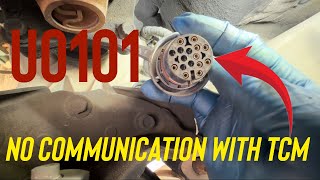
On a 2003-2009 4Runner, code U0101 means the Transmission Control Module (TCM) has stopped communicating on the vehicle's network. This is most often caused by wiring issues, poor grounds, or a faulty TCM. Expect serious shifting problems, getting stuck in one gear ('limp mode'), or a no-start condition.
- U0101 is an electrical/network failure, not a mechanical transmission problem.
- Do not drive the vehicle. You risk stalling in traffic or having unpredictable transmission behavior.
- Always diagnose the problem in order: check fuses, power, grounds, and wiring before condemning the expensive Transmission Control Module (TCM).
- A weak battery or bad alternator can cause communication codes; ensure your charging system is healthy.
- This is a complex diagnosis. If you are not comfortable with automotive electrical diagnostics, professional service is strongly recommended.
What's Unique About the 2003-2009 Toyota 4Runner
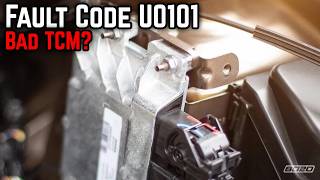
For the 4th generation Toyota 4Runner, the U0101 code is a straightforward network communication error. Unlike some vehicles that integrate the TCM with the valve body inside the transmission, the 4Runner of this era uses a separate, externally accessible control module, which is located behind the glove box. This can simplify diagnosis and replacement, as the transmission pan does not need to be removed to access the module itself. However, like many vehicles of this age, wiring integrity is a primary concern due to potential corrosion or physical damage over time, especially to grounds and connectors.
Symptoms You May Notice
- Check Engine Light is on
- Transmission warning light is on
- Vehicle is stuck in 'limp mode' (usually 2nd or 3rd gear)
- Harsh, erratic, or delayed shifting
- Inability to shift out of Park or Neutral
- Engine stalls or will not start
- Speedometer may stop working
- Transmission temperature warning light may illuminate
- Replacing the transmission: This is a network/electrical code. Unless there are other codes and symptoms pointing to a mechanical failure, the transmission itself is rarely the cause of U0101.
- Replacing the TCM without checking wiring: Many TCMs are replaced unnecessarily when the actual problem is a simple broken wire, corroded pin, or bad ground that costs much less to fix.
Most Likely Causes
- Damaged or Corroded Wiring Harness 🔴 High Probability Over years of service, wiring harnesses can become brittle, chafe against the chassis or engine components, or suffer from moisture intrusion at connectors, leading to an open or short in the CAN bus lines. Rodent damage to soy-based wiring has also been reported by owners.
How to confirm: Visually inspect the wiring harness leading to the TCM (located behind the glove box) for any signs of damage, chafing, or corrosion. Pay special attention to connectors for bent or corroded pins. Use a multimeter to check for continuity and for shorts to power or ground on the CAN H and CAN L wires at the TCM connector.
Typical fix: Repair the damaged section of the wire or replace the corroded connector pins. In severe cases, a harness section may need to be replaced.
Est. part cost: $10-$100 - Poor Power or Ground to TCM 🟡 Medium Probability Ground straps and power connections can corrode or loosen over time, causing intermittent voltage drops that prevent the module from operating correctly. Low system voltage from a weak battery or failing alternator can also trigger communication codes across multiple modules.
How to confirm: With the ignition on, use a multimeter to verify a stable 12V power supply and a solid ground (less than 0.1 volts) at the appropriate pins on the TCM connector. Check the battery voltage and charging system output.
Typical fix: Clean or tighten the ground connection points. Repair the power wire or replace the related fuse if necessary. Replace a weak battery or faulty alternator.
Est. part cost: $5-$50 - Failed Transmission Control Module (TCM) 🟡 Medium Probability → Shop Transmission Assembly
How to confirm: If all wiring, power, and ground circuits test good, and the CAN bus resistance is correct (60 ohms), the module itself is the likely culprit. This is a process-of-elimination diagnosis. A professional scan tool that can attempt to directly communicate with the TCM can help confirm it is offline.
Typical fix: Replace the Transmission Control Module. The new module may require programming to the vehicle's VIN.
Est. part cost: $200-$700
Rare But Worth Checking
- Failed Engine Control Module (ECM): → Shop Engine Control Module (ECM) While the code points to the TCM, the ECM is the primary module monitoring communication. A fault within the ECM's CAN transceiver can, in rare cases, cause it to falsely report a communication loss with other modules.
- CAN Bus Network Fault: Another module on the same CAN bus circuit (like the ABS module) could be failing and 'shouting' on the network, disrupting communication for the TCM. This is complex to diagnose and usually requires an oscilloscope to see the signal integrity.
- Blown Fuse: A simple blown fuse for the TCM or related circuits can cause a complete loss of communication. Always check the fuse boxes in the engine bay and inside the cabin as a first step.
Diagnosis Steps
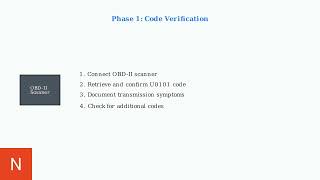
- Check for Other Codes: Scan the vehicle for any other DTCs. Other 'U' codes can help pinpoint a wider network issue.
- Check Fuses: Inspect all fuses related to the transmission and engine control systems in both the engine bay and interior fuse panels.
- Inspect Battery and Grounds: Ensure the battery is fully charged (12.4V+ with engine off) and terminals are clean. Check the main engine and chassis ground connections for tightness and corrosion.
- Visual Inspection: Thoroughly inspect the wiring harness between the ECM and the TCM. The TCM is located behind the glove box. Look for any signs of chafing, melting, or corrosion, paying close attention to where the harness bends or is secured.
- Test Power and Ground at TCM: Locate the TCM behind the glove box. Disconnect its connector and, with the ignition on, use a multimeter to confirm there is battery voltage at the power pins and a good ground (near 0 ohms resistance to chassis ground) at the ground pins.
- Test CAN Bus Lines: With the battery disconnected, measure the resistance between the CAN High and CAN Low pins at the OBD-II port (pins 6 and 14). A healthy network should read approximately 60 ohms. A reading of 120 ohms indicates an open circuit or a missing terminating resistor (one of the main modules is disconnected or faulty). A reading near 0 ohms indicates the lines are shorted together.
- Isolate the Module: If wiring, power, and grounds are confirmed to be good, the TCM is the most likely cause of the failure.
Parts You'll Likely Need
- Transmission Control Module (TCM)
(OEM #Varies by year and engine (e.g., 89530-35180 for some V6 models). Always verify with VIN.)— If wiring and power/ground are good, the internal electronics of the module have likely failed, preventing it from communicating.
Trusted brands: Toyota (OEM), Flagship One (Remanufactured), SIA Electronics (Repair Service)
OEM price range: $400-$900
Aftermarket price range: $200-$500 (Remanufactured)
Related Codes That Often Appear With This One
- U0073 - Control Module Communication Bus 'A' Off
- U0100 - Lost Communication with ECM/PCM 'A'
Platform-Specific Known Issues
- TCM Location: On the 4th generation (2003-2009) 4Runner, the Transmission Control Module (TCM), also referred to as the Transmission ECU, is located behind the glove box assembly, mounted alongside the main Engine Control Module (ECM).
Mechanic-Grade Diagnostic Values
- CAN Bus Resistance at OBD-II Port (Pins 6 & 14) — expected: ~60 Ω. Failure: A reading of ~120 Ω indicates an open circuit or one of the two terminating resistors is offline (often a faulty ECM or TCM). A reading near 0 Ω indicates a short between the CAN High and CAN Low wires.
- TCM Power Supply Voltage — expected: 11 to 14 V. Failure: Voltage below 11V with the ignition on points to a weak battery, failing alternator, or a high-resistance fault in the power supply wire or fuse block.
- TCM Ground Circuit Resistance — expected: Below 1.0 Ω. Failure: Resistance higher than 1.0 Ω between the TCM ground pin and a clean chassis ground indicates a corroded or loose ground connection, which can cause intermittent module operation.
- CAN Bus Voltage (Key On, Engine Off) — expected: CAN High (Pin 6 to Ground): ~2.5V to 3.5V. CAN Low (Pin 14 to Ground): ~1.5V to 2.5V.. Failure: Voltages that are stuck high (e.g., 4.2V), stuck low, or do not mirror each other indicate a faulty module transceiver or a short to power/ground on the bus.
Scan Tool Commands That Help
- Toyota Techstream: Health Check — This is the first step. It automatically scans all modules on the network and shows which ones are communicating and which are not. A 'Not Responding' status for the 'Transmission' ECU confirms the U0101 fault at the network level.
- Toyota Techstream: CAN Bus Check — After a Health Check, this utility can be used to see a live list of all ECUs on the bus and their communication status. It helps verify if the TCM is intermittently dropping off the network or is completely absent.
- Advanced Scan Tool (e.g., Techstream): Bidirectional Communication Test — This function actively sends a request to the TCM and waits for a response. If the tool reports 'No Response,' it confirms the TCM is offline, which helps differentiate between a wiring issue and a dead module after power and grounds have been verified.
Wiring & Ground Locations
- EB and ED — Ground points located on the front left fender (EB) and the left bank cylinder head (ED) for 2006+ models. For 2004 models, EB is on the left front inner fender and ED is on the left cylinder head.. These are primary ground points for the engine harness and various control modules. Corrosion or looseness at these locations can cause intermittent communication faults for multiple systems, including the TCM.
- Engine Block to Battery Negative Ground — A large gauge wire running from the negative battery terminal to a bolt on the engine block, located behind the lower control arm, often sharing a bolt with a smaller frame-to-block ground wire.. This is the main ground path for the entire engine and its associated electronics, including the ECM and by extension, the TCM communication network. A poor connection here can cause widespread, difficult-to-diagnose electrical issues, including module communication loss.
- IK and IG — Ground points located in the right kick panel (IK) and on the instrument panel brace (IG) behind the glove box.. The TCM is located behind the glove box. These are the closest and most relevant chassis ground points for the TCM itself. A poor connection here is a direct and highly probable cause for a U0101 code if the module itself is not getting a proper ground.
Real Owner Repair Stories
- T4R.org (Toyota 4Runner Forum) user (2004 Toyota 4Runner V8) — Check Engine Light, VSC TRAC, and VSC OFF lights illuminated. Vehicle went into limp mode, stuck in a single gear. Code U0101 was present.
❌ Tried (didn't work) Replacing the gas cap., Checking fuses.
✅ What actually fixed it The wiring harness that runs over the transfer case had chafed and corroded. Specifically, a green wire in the bundle was found to be completely corroded through. Repairing this single wire and protecting the harness resolved all symptoms and cleared the code.
Model Year Variations Within This Range
- 2003-2004 (V6 Models): V6 models from 2003-2004 were equipped with a 4-speed automatic transmission (A340E/F). From 2005-2009, all 4Runners (V6 and V8) used a 5-speed automatic (A750E/F). While the U0101 code's meaning is the same, the TCM part numbers and some specific wiring pinouts may differ between these transmission types. It is critical to source the correct TCM for the vehicle's specific year and transmission.
Diagnostic Flowchart
Other Known Issues on This Vehicle
Issues unrelated to this code that are worth knowing about as an owner of this generation:
- Excessive Frame Rust 🔴 High — Very common, especially in the Rust Belt states. Can become structurally unsafe. A class-action lawsuit was filed regarding this issue. (Ref: No official recall for the 4Runner, unlike the Tacoma/Tundra, but a widely documented problem.)
- Cracked/Melting Dashboard 🟡 Low — Extremely common in hot, humid climates. The dash becomes sticky and cracks, causing a distracting glare. (Ref: Toyota had a Warranty Enhancement Program (ZE6) to replace dashboards, but it has since expired.)
- Cracked Exhaust Manifolds (V8 2UZ-FE) 🟠 Medium — Very common on the 4.7L V8 engine. Causes an audible ticking noise, especially when cold, that may go away as the engine warms up and the crack seals.
- Head Gasket Failure (V6 1GR-FE) 🔴 High — A known issue on early 2003-2005 models with the 4.0L V6. Toyota updated the gasket design in later years. Symptoms include coolant loss and gurgling from the heater core.
- Seized Front Brake Calipers 🟠 Medium — Common, particularly in rust-prone areas. The pistons in the calipers can seize, causing the vehicle to pull to one side during braking and leading to uneven pad/rotor wear.
Used vs. New Parts: Buying Guide for This Vehicle
When a used part is the smart pick: A used TCM from a reputable salvage yard can be a smart, cost-effective choice for this repair, especially if the vehicle is older. Since this generation of 4Runner does not typically require VIN programming for a replacement TCM, a part with the exact same OEM number is often plug-and-play.
Donor-vehicle mileage cap: roughly under 150000 miles for the part to have meaningful remaining life.
What to inspect on the donor part:
- Verify the part number on the used TCM EXACTLY matches the original module.
- Source the part from a vehicle that was not involved in a flood or fire.
- Inspect the connector pins on the used module for any signs of corrosion, moisture damage, or being bent.
- If possible, choose a donor vehicle with lower mileage and from a region without heavy road salt use to minimize the risk of underlying corrosion issues.
Aftermarket brands forum-validated for this vehicle:
- Toyota (OEM New or Remanufactured)
- Flagship One (FS1)
- SIA Electronics (Repair Service)
Brands owners have reported issues with on this vehicle:
- Be cautious of no-name or unbranded modules from online marketplaces that do not guarantee an exact OEM part number match or offer a warranty. An incorrect module will not communicate with the vehicle.
Real Owner Stories
Aggregated from forums and TSBs cited above. Mileages and costs reflect what owners reported in those sources.
2003-2009 Toyota 4Runner
Symptoms: Owner experienced limp mode and electrical troubleshooting issues; discussions focused on checking grounds under the dash and in the engine bay.
What fixed it: Cleaning and tightening ground connections under the dash and in the engine bay.
Source hint: T4R.org (Toyota 4Runner Forum) 4th Gen T4Rs section
2003-2009 Toyota 4Runner
Symptoms: Communication codes like U0101 appearing; owner confirmed the issue was electrical rather than a mechanical transmission failure.
What fixed it: Repairing electrical circuits/wiring rather than replacing the transmission assembly.
Source hint: 4Runners.com
Related OBD-II Codes
Frequently Asked Questions
Where is the Transmission Control Module (TCM) located on my 2003-2009 4Runner?
Can I use a used TCM from a salvage yard to fix code U0101?
Is there a TSB or recall for the frame rust I noticed while inspecting my wiring?
Could my 4Runner's 'limp mode' be caused by a weak battery instead of a bad transmission?
Does the 2003-2009 Lexus GX 470 have the same U0101 issues as the 4Runner?
Could rodents be responsible for my U0101 communication error?
Helpful Videos
We Have This Part in Stock



The information in this article is provided for general reference and educational purposes only. Vehicle specifications, procedures, and part compatibility can vary by production date, trim level, and region. Always consult your vehicle's factory service manual and verify part numbers before purchasing or performing repairs. Safety-critical components such as airbags, seat belts, and braking systems should be installed by a qualified professional.
- Toyota 4Runner:
- 🧭 Diagnostic Flowchart
- 🎬 Helpful Videos
- 🛍️ Shop This Part
- What's Unique About the 2003-2009 Toyota 4Runner
- Symptoms You May Notice
- Most Likely Causes
- Rare But Worth Checking
- Diagnosis Steps
- Parts You'll Likely Need
- Related Codes That Often Appear With This One
- Platform-Specific Known Issues
- Mechanic-Grade Diagnostic Values
- Scan Tool Commands That Help
- Wiring & Ground Locations
- Real Owner Repair Stories
- Model Year Variations Within This Range
- Other Known Issues on This Vehicle
- Used vs. New Parts: Buying Guide for This Vehicle
- Real Owner Stories
- 2003-2009 Toyota 4Runner
- 2003-2009 Toyota 4Runner
- Related OBD-II Codes
- Frequently Asked Questions
- 🎟️ Get 5% Off