

U0101 on 2008-2013 Toyota Highlander: Lost Communication With TCM Causes and Fixes
This code means the Transmission Control Module (TCM) has gone offline. The most common causes are low battery voltage, a bad ground connection, or a wiring issue. Less commonly, the TCM itself has failed. Driving is not recommended as the transmission may shift harshly or get stuck in one gear.
- U0101 means the Transmission Control Module (TCM) is offline and cannot communicate with the rest of the vehicle.
- Do not drive the vehicle, as it can result in unsafe shifting behavior or getting stranded.
- Always check the simplest things first: battery voltage, battery terminal connections, and chassis grounds.
- Inspect wiring and connectors to the transmission for damage before assuming the expensive TCM has failed.
- Diagnosis is complex and best left to a professional with the right tools unless you are an experienced DIYer with a multimeter and wiring diagrams.
What's Unique About the 2008-2013 Toyota Highlander
For the 2008-2013 Toyota Highlander, the U0101 code is a straightforward network communication fault. Unlike some vehicles where the TCM is a known high-failure part due to design or placement, the Highlander's system is generally robust. Therefore, diagnosis should always start with the basics like battery health and wiring integrity before suspecting the module itself. On this platform, the TCM is a separate unit, not integrated into the main engine computer, making targeted diagnosis possible. It is typically located in the engine bay, under the battery tray, making it relatively accessible once the battery is removed.
Symptoms You May Notice
- Check Engine Light is on
- Transmission warning light is illuminated
- Harsh, erratic, or delayed shifting
- Vehicle is stuck in one gear (limp mode), often limiting speed
- Gear position indicator on the dashboard may be blank or incorrect
- Vehicle may not start if the TCM cannot communicate the Park/Neutral position
- Scan tool fails to communicate with the TCM
- Replacing the entire transmission when the fault is purely electrical.
- Replacing the TCM without first verifying its power, ground, and network connections are intact.
Most Likely Causes
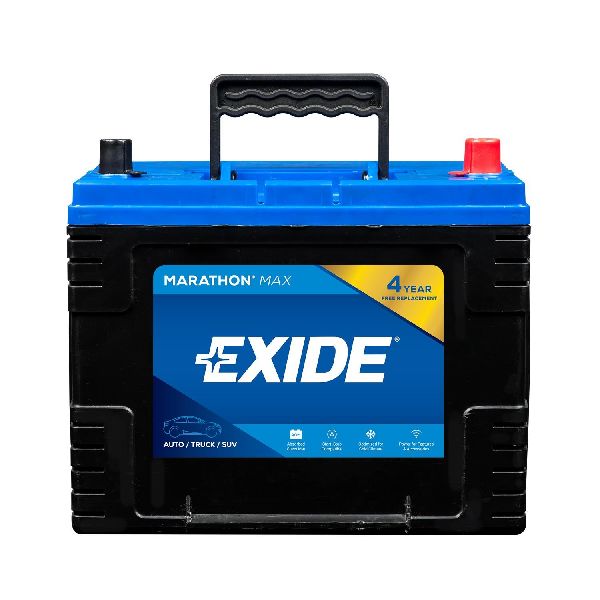
- Low Battery Voltage or Poor Ground Connection 🔴 High Probability → Shop Vehicle Battery All modern vehicles rely on stable voltage for module communication. An aging battery or corroded ground straps are common sources of intermittent electrical problems that can trigger communication codes like U0101.
How to confirm: Test the battery voltage with a multimeter. It should be above 12.4V with the engine off and 13.7V-14.7V with the engine running. Inspect the main battery terminals and the chassis ground straps for looseness or corrosion.
Typical fix: Charge or replace the battery. Clean or replace corroded terminals and ground straps.
Est. part cost: $10-$300 - Damaged Wiring or Corroded Connectors 🟡 Medium Probability The wiring harness leading to the transmission and TCM is exposed to heat, moisture, and vibration, which can cause wires to chafe, break, or connectors to corrode over time. Rodent damage to wiring is also a possible cause.
How to confirm: Visually inspect the wiring harness going to the transmission and the TCM. The TCM is located under the battery tray. Check its electrical connector for corrosion, moisture, or bent pins. Use a multimeter to check for continuity on the CAN bus wires (often a twisted pair) between the TCM and the OBD-II port/PCM.
Typical fix: Repair the damaged section of the wire harness or clean/replace the affected connector. Sometimes the pins in the connector can become loose and need to be re-tensioned.
Est. part cost: $20-$200 - Blown Fuse for the TCM ⚪ Low Probability
How to confirm: Consult the owner's manual or the fuse box diagram to locate the fuse(s) for the Transmission Control Module (TCM) and/or Powertrain Control Module (PCM). Visually inspect the fuse; if it's blown, replace it.
Typical fix: Replace the blown fuse. If the new fuse blows immediately, it indicates a short circuit in the wiring that must be diagnosed.
Est. part cost: $1-$5 - Failed Transmission Control Module (TCM) ⚪ Low Probability → Shop Transmission Assembly While not exceptionally common, electronic modules can fail due to internal circuit board issues from heat, vibration, or age. Water intrusion can also damage the module.
How to confirm: This is diagnosed by exclusion. If the battery, grounds, fuses, and all wiring (power, ground, and CAN bus) to the TCM test good, and a professional scan tool cannot communicate with the TCM, the module itself is the likely culprit.
Typical fix: Replace the Transmission Control Module. This may require programming to the vehicle's VIN, but some owners report success swapping with a used unit that has the exact same part number.
Est. part cost: $200 (Used) - $900 (New)
Diagnosis Steps
- Check for other stored trouble codes. Additional codes can help pinpoint the problem area.
- Check the battery. Ensure it is fully charged and the terminals are clean and tight. Test the charging system.
- Inspect all fuses related to the transmission and engine control modules.
- Perform a thorough visual inspection of the wiring harness between the main computer and the transmission. Look for any signs of chafing, melting, or corrosion, paying close attention to where the harness may rub against the engine or chassis.
- Locate the TCM, which is under the battery and battery tray. Disconnect the battery, remove it, and then remove the tray to access the module. Inspect its electrical connector for damage, water intrusion, or corrosion.
- Using a multimeter and a wiring diagram, verify that the TCM is receiving proper power (typically on two separate pins) and has solid ground connections (often two pins as well).
- If power and ground are good, test the CAN bus communication wires for proper resistance (typically 60 ohms between CAN High and CAN Low with the battery disconnected) and check for shorts to power or ground.
- If all wiring, power, and grounds are confirmed to be good, the Transmission Control Module (TCM) is the most likely failed component.
Parts You'll Likely Need
- Transmission Control Module (TCM)
(OEM #89530-0E041)— If all wiring and power sources are confirmed good, the module itself has likely failed internally. This specific part number fits 2012-2013 Highlander models with the 2.7L L4 engine. Other part numbers will be needed for V6 or different model years. Always verify by VIN.
Trusted brands: Toyota (OEM)
OEM price range: $850-$920
Aftermarket price range: $200-$500 (Used/Remanufactured) - Battery — Low or unstable system voltage is a very common cause of communication codes between modules.
Trusted brands: Toyota TrueStart, Interstate, DieHard
OEM price range: $150-$250
Aftermarket price range: $120-$200
Related Codes That Often Appear With This One
- U0073 — Control Module Communication Bus 'A' Off. This is a general CAN bus failure code that can appear with a specific module communication loss code like U0101.
- U0100 — Lost Communication with ECM/PCM. This can appear alongside U0101, indicating a broader network problem.
- P07xx — Various transmission-related codes may be stored if the TCM loses power or fails intermittently before complete communication is lost.
Platform-Specific Known Issues
- source — A YouTube video on a 2011 Toyota Sienna (a platform mate) with codes U0101 and U0100 showed the vehicle stuck in gear. The owner confirmed that replacing the TCM with a used unit of the exact same part number for $220 completely fixed the issue without needing dealer programming. The TCM was located under the battery tray, consistent with the Highlander's location.
Mechanic-Grade Diagnostic Values
- CAN Bus Resistance — expected: Approximately 60 Ω. Failure: A reading of 120 Ω indicates an open circuit or a problem with one of the two terminating resistors. A reading of 0 Ω indicates a short between the CAN High and CAN Low wires.
- CAN High Voltage (Key On, Engine Off) — expected: 2.5V - 3.5V. Failure: Voltage stuck high (near battery voltage) or low (near 0V) indicates a short to power or ground.
- CAN Low Voltage (Key On, Engine Off) — expected: 1.5V - 2.5V. Failure: Voltage stuck high (near battery voltage) or low (near 0V) indicates a short to power or ground.
- TCM Power Supply Voltage (Key On) — expected: 12.0V - 12.6V. Failure: Significantly lower voltage or no voltage indicates a problem with the power supply wire or a blown fuse.
- TCM Ground Resistance — expected: Below 0.5 Ω. Failure: Higher resistance indicates a poor ground connection, which can cause intermittent communication issues.
Scan Tool Commands That Help
- Toyota Techstream: Communication Bus Check — To verify which specific modules on the CAN bus are and are not communicating. This can quickly confirm if the TCM is the only module offline or if there is a wider network problem.
- Toyota Techstream: Health Check — To perform a comprehensive scan of all vehicle ECUs, retrieving all current, pending, and history codes. This is the first step to see if other codes are present that could point to the root cause (e.g., a general network code like U0073).
- Advanced Bi-Directional Scan Tool: TCM Communication Test / Ping — After verifying power and ground, this function actively attempts to communicate with the TCM. A 'No Response' confirms the communication break and helps isolate the fault to the wiring or the module itself.
Wiring & Ground Locations
- TCM Ground (General) — The TCM grounds through its wiring harness to a chassis ground point. For the 2011 Highlander, a list of ground points includes A3 (behind left front headlight) and A4 (behind left end of dash). The specific ground for the TCM must be identified using a vehicle-specific wiring diagram.. A corroded or loose ground is a high-probability cause for communication faults. The module cannot communicate without a solid ground reference.
- CAN Bus Terminating Resistors — For the HS-CAN bus used by the powertrain, one 120-ohm resistor is in the ECM, and the other is in the combination meter (instrument cluster).. If either terminating resistor fails or their circuit is open, the total bus resistance will change from 60 ohms to 120 ohms, causing signal reflections and communication errors like U0101.
- TCM Connector — Located under the battery and battery tray in the engine compartment.. This connector is the primary interface for the TCM's power, ground, and CAN signals. It is exposed to potential moisture and corrosion, and all diagnostic electrical tests (power, ground, CAN signals) must be performed here.
Real Owner Repair Stories
- YouTube video on a 2011 Toyota Camry (2011 Toyota Camry) — Check engine light on, code U0101 - Lost Communication with TCU (TCM).
❌ Tried (didn't work) Initial diagnosis showed no communication with the transmission controller.
✅ What actually fixed it The problem was a bad Transmission Control Unit (TCU/TCM). The mechanic replaced the faulty module with a used one, which restored communication and cleared the code. No programming was mentioned as being necessary for the fix.
OEM Part Supersession History
89530-0E041→N/A— This part number appears to be specific and has not been superseded, though it is listed as currently unavailable from some OEM sources due to supply issues.
Heads up: This part is listed for 2012-2013 Highlander models with the 2.7L L4 engine. It is critical to match the part number exactly when replacing, especially when using a pre-owned module to avoid programming issues.
Model Year Variations Within This Range
- 2008-2010: V6 models used a 5-speed automatic transmission. The 2.7L 4-cylinder with a 6-speed automatic was introduced in 2009. These different transmissions will have different TCM part numbers.
- 2011-2013: These models underwent a facelift. V6 models were upgraded to a 6-speed automatic transmission. The TCM for the 6-speed (U660E) will be different from the earlier 5-speed (U151E). The part number 89530-0E041 is specifically for the 2012-2013 2.7L L4 models.
- 2008-2010 (Hybrid): Hybrid models used a 3.3L V6 with a CVT. The control systems and modules for the hybrid powertrain are entirely different from the conventional gasoline models.
- 2011-2013 (Hybrid): Hybrid models were upgraded to a 3.5L V6 with their CVT. This represents another distinct powertrain combination with unique control modules.
Diagnostic Flowchart
Other Known Issues on This Vehicle
Issues unrelated to this code that are worth knowing about as an owner of this generation:
- Rupturing VVT-i Oil Line (V6 Only) 🔴 High — Common on early 2GR-FE engines (approx. 2008-2010) before an updated all-metal line was introduced. Failure can be sudden and cause catastrophic engine damage due to oil starvation. (Ref: Limited Service Campaign (LSC) issued by Toyota, but it has expired. The fix is to replace the original rubber/metal hose with the updated all-metal part (15772-31030).)
- Melting / Sticky Dashboard 🟡 Low — Common in vehicles exposed to high heat and sun climates. The dashboard surface degrades, becoming sticky and creating a dangerous glare on the windshield. (Ref: No TSB, but was the subject of a class-action lawsuit and a Customer Support Program from Toyota which has since expired.)
- Steering Intermediate Shaft Clunk 🟠 Medium — A very common issue where a clunk or pop is heard and felt through the steering wheel when turning at low speeds. Caused by wear in the intermediate shaft splines/U-joints. (Ref: T-SB-0034-13. The fix is to replace the shaft with an updated part (45220-48171).)
- Timing Cover Oil Leak (V6 Only) 🟠 Medium — A prevalent issue on the 2GR-FE engine where the sealant for the timing chain cover fails, causing a significant oil leak. Repair is labor-intensive.
- Water Pump Failure (V6 Only) 🟠 Medium — Water pumps on the 2GR-FE engine are known to fail, typically by leaking coolant (pink crust visible) or from bearing noise.
Used vs. New Parts: Buying Guide for This Vehicle
When a used part is the smart pick: For this U0101 fault, if the Transmission Control Module (TCM) is confirmed to be the cause, sourcing a used module is a very smart and cost-effective strategy. Multiple owner and mechanic reports confirm that obtaining a used TCM with the exact same part number often results in a plug-and-play fix without the need for expensive dealer programming.
Donor-vehicle mileage cap: roughly under 150000 miles for the part to have meaningful remaining life.
What to inspect on the donor part:
- Verify the part number on the used module EXACTLY matches the original. Take a photo of your original part number before shopping.
- Purchase from a reputable auto recycler that offers a short-term warranty (e.g., 30-90 days) to protect against receiving a dead-on-arrival part.
- Inspect the connector pins on the used module for any signs of corrosion, damage, or being bent. Do not accept a part with damaged pins.
- If possible, find out the donor vehicle's history to avoid parts from flood-damaged cars.
Aftermarket brands forum-validated for this vehicle:
- For electronic modules like the TCM, a used OEM (Toyota) part is the most common and recommended alternative to a new OEM part. There are no widely recognized 'good' aftermarket brands that manufacture new replacement TCMs for this specific vehicle.
Brands owners have reported issues with on this vehicle:
- Avoid generic or unbranded electronic modules from online marketplaces without a clear warranty or return policy. The risk of incompatibility or premature failure is high.
Real Owner Stories
Aggregated from forums and TSBs cited above. Mileages and costs reflect what owners reported in those sources.
2011 Toyota Sienna (Platform Mate) V6
Symptoms: The vehicle was stuck in gear (limp mode) with codes U0101 and U0100 present.
What fixed it: Replacing the TCM with a used unit of the exact same part number. The repair was performed by removing the battery tray to access the module.
Cost: $220-$220
Source hint: YouTube video on a 2011 Toyota Sienna (a platform mate) with codes U0101 and U0100
Related OBD-II Codes
Frequently Asked Questions
Where is the Transmission Control Module (TCM) located on the 2008-2013 Toyota Highlander?
Can I use a used TCM to fix the U0101 code on my Highlander, or does it require dealer programming?
Is there a specific part number for the TCM that I should look for?
My Highlander has a clunking sound when turning at low speeds; is this related to the U0101 code?
Could a simple battery issue cause my transmission warning light and U0101 code?
Is the VVT-i oil line failure related to the transmission communication error?
Helpful Videos
We Have This Part in Stock

The information in this article is provided for general reference and educational purposes only. Vehicle specifications, procedures, and part compatibility can vary by production date, trim level, and region. Always consult your vehicle's factory service manual and verify part numbers before purchasing or performing repairs. Safety-critical components such as airbags, seat belts, and braking systems should be installed by a qualified professional.
- Toyota Highlander:
- 🧭 Diagnostic Flowchart
- 🎬 Helpful Videos
- 🛍️ Shop This Part
- What's Unique About the 2008-2013 Toyota Highlander
- Symptoms You May Notice
- Most Likely Causes
- Diagnosis Steps
- Parts You'll Likely Need
- Related Codes That Often Appear With This One
- Platform-Specific Known Issues
- Mechanic-Grade Diagnostic Values
- Scan Tool Commands That Help
- Wiring & Ground Locations
- Real Owner Repair Stories
- OEM Part Supersession History
- Model Year Variations Within This Range
- Other Known Issues on This Vehicle
- Used vs. New Parts: Buying Guide for This Vehicle
- Real Owner Stories
- 2011 Toyota Sienna (Platform Mate) V6
- Related OBD-II Codes
- Frequently Asked Questions
- 🎟️ Get 5% Off