

U0101 on 2014-2019 Toyota Highlander: Lost Communication with TCM Causes and Fixes
Code U0101 on a Toyota Highlander means the Transmission Control Module (TCM) has stopped communicating. The most common causes are low battery voltage, corroded wiring, or a blown fuse. On 2017-2019 models with the 8-speed transmission, this code can also be a symptom of known internal transmission issues covered by Toyota's Customer Support Program ZJC.
- U0101 is an electrical/network code, not a mechanical code. Do not assume the transmission needs replacement without proper diagnosis.
- Always start diagnosis by checking the simplest things first: battery health, charging system, and all related fuses.
- For 2017-2019 models, be aware of the known issues with the 8-speed (UA80) transmission, which could be the root cause of the communication failure.
- If the TCM needs to be replaced, it is not a DIY-friendly job as it requires special programming to work with your vehicle.
What's Unique About the 2014-2019 Toyota Highlander
The 2014-2019 Highlander spans two different transmissions. The 2014-2016 models use a generally reliable 6-speed automatic (U760E), though it is known for a torque converter shudder issue. However, the 2017-2019 models introduced the 8-speed UA80 automatic transmission, which has been the subject of numerous owner complaints, multiple TSBs, and a Customer Support Program (ZJC) for harsh shifting, whining noises, and potential internal faults. The root cause of the UA80 issue is often an improperly bent washer tab inside the transmission from the factory, which can lead to a nut loosening and causing damage. 🎬 Watch: Understanding the 8-speed transmission issues and factory defects. While U0101 can occur on any year, on a 2017-2019 model it warrants extra attention to the health of the transmission itself due to these widespread, documented problems. A critical difference is that the TCM on 2014-2016 models is a separate, external module, whereas on 2017-2019 models, it is integrated with the transmission valve body, making replacement much more complex.
Symptoms You May Notice
- Check Engine Light and/or transmission warning light is on
- Vehicle will not start or has an intermittent no-start condition
- Transmission is stuck in one gear (limp mode), limiting vehicle speed
- Harsh, erratic, or delayed shifting
- The gear indicator on the dashboard may be blank or incorrect
- Vehicle may stall while driving
- Inability for a scan tool to communicate with the TCM
- Replacing the entire transmission when the fault is purely electrical (e.g., a bad wire, low battery, or faulty ground).
- Replacing the TCM without first thoroughly checking the battery, grounds, and wiring harness for faults.
- Overlooking water intrusion from clogged sunroof drains as the root cause of wiring corrosion under the driver's side carpet and kick panel.
Most Likely Causes
- Low Battery Voltage or Failing Alternator 🔴 High Probability → Shop Alternator All modern vehicles with multiple control modules are sensitive to low voltage. A weak battery can cause unpredictable communication errors between modules before any starting issues are apparent. On Hybrid models, the 12V auxiliary battery is located in the rear cargo area, not under the hood, which can be overlooked.
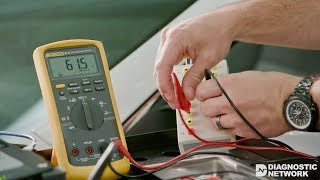
How to confirm: Test the battery with a multimeter; it should read at least 12.4V with the engine off. With the engine running, voltage should be between 13.7V and 14.7V. Perform a load test on the battery to confirm its health.
Typical fix: Recharge or replace the battery. If charging voltage is low, diagnose and replace the alternator.
Est. part cost: $150-$350 - Damaged or Corroded Wiring/Connectors 🟡 Medium Probability Wiring harnesses, especially those near the transmission or under the carpet, are exposed to heat, vibration, and potential moisture from known water leak issues (clogged sunroof drains, bad roof rail seals), which can lead to chafing, broken wires, or corroded connector pins over time. Water from a clogged sunroof drain commonly pools on the driver's side floor, potentially corroding connectors or ground points located behind the kick panel. 🎬 See how to clear clogged sunroof drains and stop leaks.
How to confirm: Visually inspect the wiring harness going to the Transmission Control Module (TCM) for any signs of damage, chafing, or corrosion. Disconnect the connectors at the TCM and ECM and check for bent or corroded pins. Check for continuity and resistance on the CAN bus wires.
Typical fix: Repair the damaged section of the harness or clean/replace the affected connector.
Est. part cost: $20-$500 - Blown Fuse 🟡 Medium Probability
How to confirm: Locate the fuse box(es) and check all fuses related to the TCM, ECM, and ECU (often labeled 'ECU-B', 'TCM', etc.). A blown fuse indicates a loss of power to the module.
Typical fix: Replace the blown fuse. If the new fuse blows immediately, it indicates a short circuit in the wiring that must be traced.
Est. part cost: $1-$5 - Failed Transmission Control Module (TCM) ⚪ Low Probability → Shop Transmission Assembly On 2017-2019 models, the TCM is integrated with the UA80 8-speed transmission's valve body. Widespread internal transmission issues, as acknowledged by Toyota's CSP ZJC, can potentially lead to module failure or trigger communication codes. Failure requires a complex internal transmission repair, not a simple external module swap.
How to confirm: This is typically diagnosed by exclusion. If the battery, fuses, and all wiring (power, ground, CAN bus) to the TCM test good, but a professional scan tool still cannot communicate with the module, the TCM itself is likely faulty.
Typical fix: For 2014-2016 models, replace the external TCM. For 2017-2019 models, replace the transmission valve body or the entire transmission assembly. All replacements require programming by a dealer or qualified shop to match the vehicle's VIN.
Est. part cost: $600-$1300
Rare But Worth Checking
- Failed Engine Control Module (ECM): → Shop Engine Control Module (ECM) While less common than a TCM failure, a fault within the ECM can sometimes disrupt CAN bus communication and incorrectly flag a communication loss with other modules. Water intrusion from a leaking aftermarket windshield harness has also been known to damage the ECM on these vehicles.
- Shorted Skid Control (ABS) Module: A failing module on the CAN bus, such as the Skid Control (ABS) module, can disrupt the entire network and cause communication loss codes for other modules like the TCM. A technician's trick is to disconnect the Skid Control Module and see if communication with the TCM 🎬 Watch: A quick guide to diagnosing U0101 communication codes. is restored.
Diagnosis Steps
- Check and record any other stored fault codes. The presence of other 'U' codes suggests a wider network problem.
- Test the battery voltage and the charging system output. Ensure voltage is stable and above 12.4V. Note: On Hybrid models, the 12V battery is in the rear cargo area.
- Inspect all fuses related to the TCM and ECM in the engine bay and interior fuse panels.
- Perform a thorough visual inspection of the wiring harness between the ECM and the TCM. Look for chafed wires, loose connectors, or signs of corrosion, paying close attention to areas exposed to heat or potential water intrusion.
- Pull back the driver's side floor carpet and remove the kick panel to inspect for moisture and corroded connectors or ground points (like G08), which is a common result of clogged sunroof drains.
- Disconnect the TCM connector and inspect for any bent, corroded, or fluid-contaminated pins. Clean as necessary.
- Using a wiring diagram, verify the TCM has proper power (12V+) and ground (less than 0.5 ohms resistance) connections with a multimeter.
- With a multimeter and the battery disconnected, check the resistance of the CAN bus at the OBD-II port (pins 6 and 14). It should be approximately 60 ohms. Also check CAN bus voltages with the key on: CAN High should be 2.5-3.5V and CAN Low should be 1.5-2.5V.
- If all wiring, power, and grounds are confirmed good, and especially if the vehicle is a 2017-2019 model, investigate the transmission's health per TSB T-SB-0160-18 and CSP ZJC.
- If all else fails, the final step is to suspect a faulty TCM or, less commonly, a faulty ECM.
Parts You'll Likely Need
- Transmission Control Module (TCM)
(OEM #89535-76021 (2014-2016); Integrated into valve body/transmission on 2017-2019 models (e.g., assembly 30510-48601-84).)— If all electrical checks pass, the module itself may have failed internally. For 2014-2016 models, this is an external module. For 2017-2019 models, this is an internal component requiring major transmission service.
Trusted brands: Toyota (OEM)
OEM price range: $900-$1308
Aftermarket price range: $500-$900 (Remanufactured) - Automotive Battery — Low system voltage is a very common cause of communication codes.
Trusted brands: Toyota TrueStart, Interstate, DieHard
OEM price range: $200-$350
Aftermarket price range: $150-$250
Related Codes That Often Appear With This One
- U0100 — Lost Communication with ECM/PCM. If both codes are present, it often points to a more significant network-wide issue, a bad ECM, or a major power/ground problem affecting multiple modules.
- U0073 — Control Module Communication Bus 'A' Off. This is a general CAN bus fault code indicating the entire network is down, rather than just a single module.
Technical Service Bulletins (TSBs) & Recalls
- ZJC Customer Support Program - Covers repairs for UA80 transmission damage on certain 2017-2018 Highlanders due to a potential internal fault (improperly bent washer tab). Extends coverage for 10 years from date of first use.
- T-SB-0160-18 - Addresses transaxle whine, harsh shift, MIL ON, or reduced power on some 2017-2018 Highlander vehicles, often leading to transmission replacement.
Platform-Specific Known Issues
- Customer Support Program ZJC for UA80 Transmission: → Shop Transmission Assembly For 2017-2018 models, Toyota issued Customer Support Program ZJC to address internal transmission issues on the UA80 8-speed. The cause is a washer tab that was not sufficiently bent during assembly, which can lead to a nut loosening. Symptoms include whining, harsh shifting, and MIL illumination. The program extends warranty coverage for this specific failure. Owners report dealers may require payment for related parts like transmission coolers during the 'free' repair.
- TSB T-SB-0160-18 for 8-Speed Transmission Symptoms: → Shop Transmission Assembly This TSB also addresses whine noises, harsh shifting, and MIL-on conditions for 2017-2018 Highlander and Sienna models. It provides diagnostic procedures for a list of specific DTCs (though U0101 is not explicitly listed, the root cause could trigger it) and authorizes a remanufactured transaxle replacement if criteria are met.
- Water Intrusion from Clogged Sunroof Drains: A widely reported issue on Highlanders is the clogging of the front sunroof drains. Instead of draining outside, water backs up and overflows into the cabin, typically soaking the driver's side floor carpet. This moisture can corrode wiring harnesses, ground points (like G08, located at the A-pillar base), and junction connectors located under the carpet and behind the kick panel, leading to various electrical faults including communication codes like U0101.
Mechanic-Grade Diagnostic Values
- CAN Bus Resistance (at DLC Pins 6 & 14) — expected: Approximately 60 Ω (with battery disconnected). Failure: A reading of ~120 Ω indicates an open in the bus (like a broken wire or unplugged terminating module). A reading significantly less than 60 Ω indicates a short circuit between the CAN lines.
- CAN High Voltage (DLC Pin 6 to Ground) — expected: 2.5V - 3.5V (Key On, Engine Off). Failure: Voltage outside this range indicates a short to power or ground.
- CAN Low Voltage (DLC Pin 14 to Ground) — expected: 1.5V - 2.5V (Key On, Engine Off). Failure: Voltage outside this range indicates a short to power or ground.
- TCM Power Supply Voltage — expected: 12.0V - 12.6V (at the TCM power supply pin, Key On). Failure: Low or no voltage indicates a blown fuse, relay issue, or open in the power wire.
- TCM Ground Circuit Resistance — expected: Below 0.5 Ω (between TCM ground pin and chassis ground). Failure: High resistance indicates a corroded or loose ground connection, a common cause of intermittent module communication.
Scan Tool Commands That Help
- Toyota Techstream: Health Check — This is the first step after connecting to the vehicle. It automatically polls all possible control modules on the network and displays their communication status. A module that is not communicating (which would cause a U0101 for the TCM) will be flagged, instantly telling the technician where the communication break is.
- Toyota Techstream: CAN Bus Check — This utility provides a real-time view of which modules are actively communicating on the CAN bus. It helps differentiate between a module that is completely offline versus one that is intermittently dropping out. It's a powerful tool for diagnosing network-wide faults vs. single-module faults.
Wiring & Ground Locations
- G08 — At the lower side of the left (driver's) A-pillar harness fixer, likely behind the kick panel.. This is a primary instrument panel ground point. Corrosion here due to water intrusion from a clogged sunroof drain can cause a poor ground for multiple modules, leading to communication codes like U0101.
- G01 — In the left (driver's side) fender of the engine compartment.. This is a main ground point for the engine compartment harness. Corrosion or a loose connection here can affect power and ground integrity for modules located in the engine bay.
- DLC3 (OBD-II Port) — Under the driver's side dashboard.. This is the primary access point for testing the entire CAN bus network. Pins 6 (CAN-H) and 14 (CAN-L) are used for network-wide voltage and resistance checks.
- A43 Connector — Main connector for the Engine Control Module (ECM), located behind the glove compartment.. This connector is a known weak point for corrosion caused by water wicking down from a poorly sealed aftermarket windshield's de-icer harness. While often associated with U0100 (Lost Comm with ECM), a fault here can disrupt the entire network and potentially trigger other U-codes.
Real Owner Repair Stories
- Reddit user on r/ToyotaHighlander (2016 Toyota Highlander) — Dealer reported a 'water leak present' during a multi-point inspection and quoted $6,576 to fix.
❌ Tried (didn't work) Dealer diagnosis was vague, only stating the price was to replace the wet carpet.
✅ What actually fixed it The issue was identified by other forum members as the 'famous sunroof drain line plugged issue,' which causes water to soak the interior carpet. The high cost from the dealer was for replacing the carpet due to the water damage. The underlying fix is to clear or bypass the clogged drain to prevent future leaks, which can then allow for the repair of any resulting electrical corrosion. - YouTube video by 'Fix It Angel' (Toyota Highlander (similar generation)) — Water soaking the driver's side floor mat after rain.
❌ Tried (didn't work) Using drain cleaner and trying to push something through the drain line provided only a temporary fix as the clog returned.
✅ What actually fixed it The permanent fix was to bore a larger hole where the drain terminates inside the fender area. The original design has a tiny exit hole that easily clogs with debris, causing the system to back up and overflow into the cabin. Creating a larger exit path prevents future clogs. This confirms the design flaw that leads to water intrusion.
OEM Part Supersession History
89661-0E830, 89661-0E831, 89661-0E832, 89661-0E833, 89661-0E834→89661-0E835— Standard hardware/software revisions by the manufacturer.
Heads up: This is the Engine Control Module (ECM) for 2017-2019 models. Using an older revision may lack critical software updates.
Model Year Variations Within This Range
- 2017-2019: The Transmission Control Module (TCM) is not a separate, external component. It is integrated with the transmission valve body, inside the transmission pan. A 'TCM failure' requires replacement of the valve body or the entire transmission, a significantly more labor-intensive and expensive repair than on earlier models.
- 2014-2019 (Hybrid Models): The 12-volt auxiliary battery is not located under the hood. It is in the rear cargo area, under the floor cover. This is a critical detail for the very first diagnostic step of checking battery voltage and condition.
Diagnostic Flowchart
Other Known Issues on This Vehicle
Issues unrelated to this code that are worth knowing about as an owner of this generation:
- Defective Low-Pressure Fuel Pump 🔴 High — Widespread on 2018-2019 models, leading to a massive recall. Can cause engine to stall while driving. (Ref: NHTSA 20V-012 (and expansions like 20TA02).)
- Torque Converter Shudder (6-Speed) 🟠 Medium — Common on 2014-2016 models with the U760E 6-speed transmission. Feels like driving over rumble strips at low speeds (25-50 mph). (Ref: Warranty Enhancement Program ZE2 (extends warranty to 8 years/150,000 miles for this specific issue).)
- Water Leaks into Cabin 🟠 Medium — Reported across the generation, often caused by clogged sunroof drains, improperly sealed roof rail clips, or body seams near the fuel inlet. Can damage electronics. (Ref: T-SB-0040-24 (for roof rail clips on later models), LSC 22TD02 (for body seam).)
- Infotainment System Glitches 🟡 Low — Owners report issues like the screen freezing, going black, or Bluetooth connectivity problems. Often requires a software update or head unit replacement by the dealer.
- Power Liftgate Malfunction 🟡 Low — The power struts for the rear tailgate can fail or lose calibration, causing the gate to not open or close properly. Often requires a reset procedure or replacement of the motor struts.
Used vs. New Parts: Buying Guide for This Vehicle
When a used part is the smart pick: For wiring-related issues, sourcing a used connector pigtail or a section of a wiring harness from a salvage yard is a smart and cost-effective repair, especially if the damage is localized to a connector. For the known sunroof leak, using generic vinyl tubing from a hardware store is a common and effective DIY fix.
Donor-vehicle mileage cap: roughly under 100000 miles for the part to have meaningful remaining life.
What to inspect on the donor part:
- For wiring harnesses/pigtails, inspect for any signs of previous corrosion (green crust), brittleness, or prior repairs (tape, butt connectors).
- Ensure the locking tabs on plastic connectors are intact and not broken.
- If sourcing a complete used transmission (for 2017+ models), verify the donor vehicle's mileage and history if possible. Look for clean fluid as an indicator of health.
OEM-only on this vehicle (don't cheap out):
- Transmission Control Module (TCM): Due to the requirement for VIN-specific programming, an OEM new or OEM-remanufactured module is strongly recommended. A used module will not be plug-and-play and may not be programmable to the vehicle.
- Transmission Assembly (2017+): Given the known issues with the UA80 transmission, a new or remanufactured unit from Toyota (which may include updated parts to address original flaws) is a much safer investment than a used unit of unknown history.
Brands owners have reported issues with on this vehicle:
- Unknown/unbranded TCMs from online marketplaces. These often have programming issues or are simply non-functional.
Real Owner Stories
Aggregated from forums and TSBs cited above. Mileages and costs reflect what owners reported in those sources.
2017-2018 Toyota Highlander
Symptoms: Whining noise from the transmission, harsh shifting, and the Malfunction Indicator Light (MIL) illuminated. The owner noted the dealer required payment for related parts like transmission coolers even though the main repair was covered.
What fixed it: Replacement of the transmission assembly under Customer Support Program ZJC due to an internal fault (improperly bent washer tab).
Source hint: Reddit r/ToyotaHighlander - Thread 'UA80F CSP ZJC (Pol19-04)'
Related OBD-II Codes
Frequently Asked Questions
Does Customer Support Program ZJC apply to my 2017 Highlander's transmission issues?
I have a 2015 Highlander with a U0101 code and wet carpets. Are these related?
Where is the 12V battery located on my Highlander Hybrid if I need to check voltage for a U0101 code?
My 2018 Highlander is whining and shifting harshly; is there a technical service bulletin for this?
Can I just swap the Transmission Control Module (TCM) myself on a 2019 Highlander?
Which fuses should I check for a U0101 communication error on this vehicle?
Helpful Videos




We Have This Part in Stock



The information in this article is provided for general reference and educational purposes only. Vehicle specifications, procedures, and part compatibility can vary by production date, trim level, and region. Always consult your vehicle's factory service manual and verify part numbers before purchasing or performing repairs. Safety-critical components such as airbags, seat belts, and braking systems should be installed by a qualified professional.
- Toyota Highlander:
- 🧭 Diagnostic Flowchart
- 🎬 Helpful Videos
- 🛍️ Shop This Part
- What's Unique About the 2014-2019 Toyota Highlander
- Symptoms You May Notice
- Most Likely Causes
- Rare But Worth Checking
- Diagnosis Steps
- Parts You'll Likely Need
- Related Codes That Often Appear With This One
- Technical Service Bulletins (TSBs) & Recalls
- Platform-Specific Known Issues
- Mechanic-Grade Diagnostic Values
- Scan Tool Commands That Help
- Wiring & Ground Locations
- Real Owner Repair Stories
- OEM Part Supersession History
- Model Year Variations Within This Range
- Other Known Issues on This Vehicle
- Used vs. New Parts: Buying Guide for This Vehicle
- Real Owner Stories
- 2017-2018 Toyota Highlander
- Related OBD-II Codes
- Frequently Asked Questions
- 🎟️ Get 5% Off