

U0101 on 2010-2015 Toyota Prius: Lost Communication With 'TCM' Causes and Fixes
On a 2010-2015 Prius, U0101 means a communication failure within the hybrid control system. Before suspecting expensive components, check the 12V auxiliary battery; a weak battery is a very common cause of random communication codes. If the battery is good, the issue is often related to a failing main hybrid inverter, a problem so common on 2010-2014 models that Toyota issued Safety Recall J0V and a warranty extension to cover its replacement.
- Always check the 12V auxiliary battery first. It's the simplest and most common fix for U0101 on a Prius.
- If the battery is good, suspect the hybrid inverter, especially on 2010-2014 models. Check with a Toyota dealer to see if your VIN is covered by the warranty extension for this part.
- Do not drive the vehicle. A U0101 code can cause the car to shut down in traffic, creating a serious safety hazard.
- This is not a transmission code in the traditional sense. The problem lies within the hybrid system's electronic controls, not the physical transaxle gears.
- Due to the high voltages and complexity of the hybrid system, professional diagnosis and repair are strongly recommended.
What's Unique About the 2010-2015 Toyota Prius
The key difference for the Prius is that there is no separate 'TCM' to replace. The code points to a communication problem between the main hybrid computer (Power Management Control ECU) and the inverter assembly, which controls the electric motors. For 2010-2014 models, this code can be a strong indicator of a failing Intelligent Power Module (IPM) within the inverter, an issue so common that Toyota issued a recall and warranty extension (Safety Recalls E0E and J0V) to address it with software updates or full inverter replacement.
Symptoms You May Notice
- "Check Hybrid System" message on the dashboard
- Multiple warning lights illuminated (Check Engine, Master Warning Triangle, ABS, VSC)
- Vehicle enters 'limp mode' with severely reduced power
- Vehicle will not go into 'Ready' mode (no-start condition)
- Inability to shift out of Park
- Car may stall while driving
- Gear indicator on dash may be blank or incorrect
- Replacing the Power Management Control ECU when the actual fault is a weak 12V battery or a failing inverter.
- Assuming the expensive hybrid transaxle has failed, when the issue is purely electronic communication.
- Replacing the inverter at great expense without first checking if the vehicle is covered by Toyota's extended warranty program for the part.
Most Likely Causes
- Failing or Weak 12V Auxiliary Battery 🔴 High Probability → Shop Vehicle Battery All control modules, including the hybrid system ECUs, require a stable voltage from the 12V battery to initialize and communicate. A weak or failing battery is a very common cause of random electronic faults, communication codes, and bizarre error messages on the Prius.
How to confirm: Test the 12V auxiliary battery (located in the trunk) with a multimeter or a digital battery tester. A healthy, resting battery should show approximately 12.6V. A reading below 12.2V indicates a low state of charge. Many owners report that even a battery that seems 'ok' can cause these issues, and replacement is the only definitive test.
Typical fix: Replace the 12V auxiliary battery. It must be an AGM (Absorbent Glass Mat) type battery.
Est. part cost: $180-$280 - Hybrid Inverter / Intelligent Power Module (IPM) Failure 🔴 High Probability The IPM inside the inverter is a known failure point on 2010-2014 models, prone to damage from thermal stress. This was the subject of Toyota Safety Recall J0V. The failure disrupts communication and hybrid system function, directly causing U0101.
How to confirm: This requires a professional diagnosis. A technician will use a scan tool like Toyota Techstream to check for specific inverter-related codes (like P0A94) that often accompany the U0101. They will also check the vehicle's VIN to see if the recall/warranty extension work has been performed.
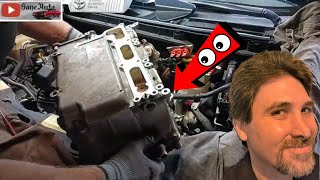
Typical fix: If related to the recall, a Toyota dealer will update the control software or, if the inverter has already failed, replace the entire inverter assembly free of charge 🎬 See how to perform a full inverter replacement yourself. under the Customer Support Program.
Est. part cost: $0 (if covered by warranty extension) or $1500-$3000+ - Damaged Wiring or Corroded Connectors 🟡 Medium Probability The wiring harness between the Power Management Control ECU (behind the glove box) and the Inverter Assembly (in the engine bay) can be subject to damage from accidents, rodents, or corrosion, disrupting the CAN bus communication signals.
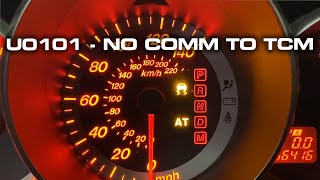
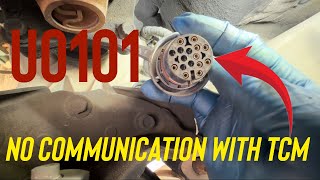
How to confirm: Visually inspect the wiring harnesses and connectors at both the Power Management ECU and the Inverter. A technician would use a multimeter to check for continuity and proper resistance (around 60 ohms) on the CAN High 🎬 Watch: How to diagnose CAN network communication failures. and CAN Low wires at the OBD-II port.
Typical fix: Repair the damaged section of the harness or clean/replace the corroded connectors.
Est. part cost: $10-$500 - Failed Power Management Control ECU ⚪ Low Probability While possible, the ECU itself is the least likely component to fail. It's a durable, solid-state module. It should only be suspected after all other possibilities are exhausted.
How to confirm: This is a process of elimination. If the battery, inverter, and all wiring have been confirmed to be good, the ECU itself may be the problem. This requires advanced diagnostics with a specialized scan tool.
Typical fix: Replace the Power Management Control ECU. This may require programming to the vehicle.
Est. part cost: $150-$500
Diagnosis Steps
- Check the 12V Auxiliary Battery: Before any other step, test the health of the 12V battery. Ensure it has a full charge and can hold a load. A weak battery is the most common and cheapest fix. A simple voltage check may not be enough; a load test is recommended.
- Scan for All Trouble Codes: Use a high-quality scanner capable of reading Toyota-specific codes from all modules (Hybrid Control, Engine, ABS, etc.). Note all codes present. Codes like P0A94 are a critical clue pointing to inverter failure.
- Check for Recalls and Warranty Extensions: Contact a Toyota dealer or use Toyota's online lookup tool with your VIN to see if Safety Recall J0V or Customer Support Program ZJB is open or was completed for your vehicle. The inverter failure is a known issue with a specific remedy and extended coverage.
- Inspect Wiring and Connectors: Visually inspect the main wiring harness running from the inverter in the engine bay to the firewall. Pay close attention to the large connectors at the inverter and at the Power Management Control ECU behind the glove box. Look for any signs of corrosion, damage, or loose pins.
- Test CAN Bus Network: This is an advanced step. Using a multimeter, a technician will check the resistance between the CAN High (Pin 6) and CAN Low (Pin 14) pins at the DLC3 (OBD-II) connector. The resistance should be approximately 60 ohms. A reading of 120 ohms indicates a break in the circuit or a missing terminating resistor, while 0 ohms indicates a short.
- Verify Power and Ground to ECUs: Confirm that both the Power Management Control ECU and the Inverter are receiving proper power and have a solid ground connection. A blown fuse can cause this code.
- Professional Diagnosis: If the battery and wiring are good, and the vehicle is eligible for the inverter recall/warranty, take it to a Toyota dealer. They are equipped to confirm the inverter failure and perform the replacement, often at no cost. Given the high failure rate of the inverter on these models, it is the most likely culprit after the 12V battery.
Parts You'll Likely Need
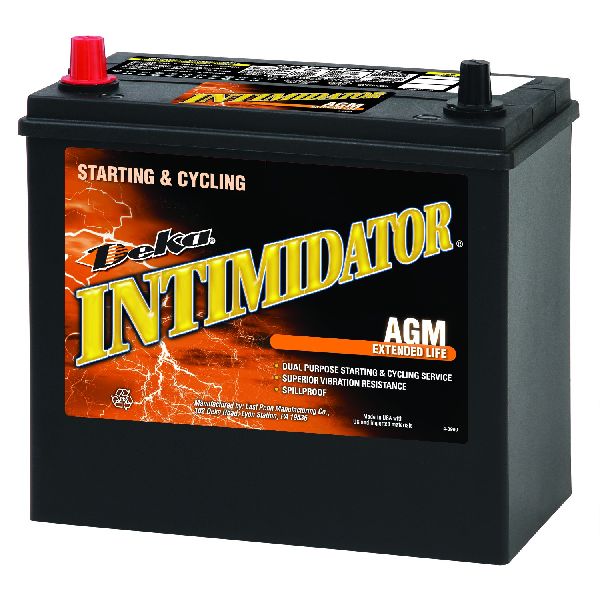
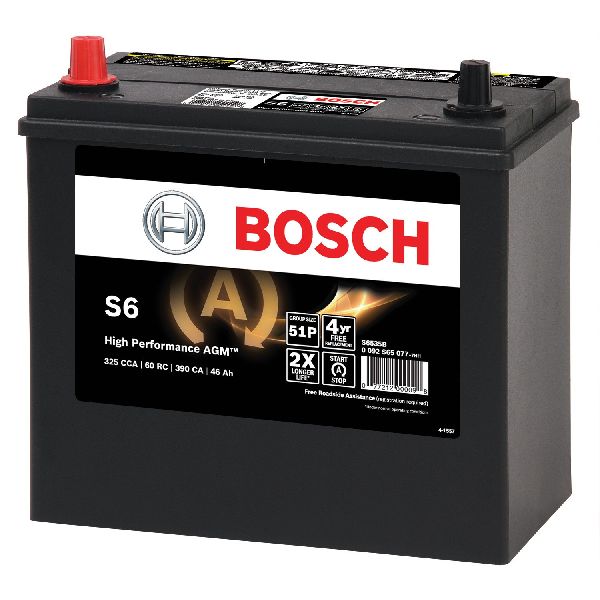
- 12V AGM Auxiliary Battery
(OEM #28800-21171 (Supersedes 28800-21170, S46B24R))— A weak 12V battery is the most frequent cause of various electronic and communication faults on a Prius.
Trusted brands: Toyota TrueStart (OEM), Optima YellowTop (DS46B24R), Bosch Platinum Series AGM
OEM price range: $250-$350
Aftermarket price range: $200-$280 - Inverter with Converter Assembly
(OEM #G9200-47170 (Standard, non-Plug-in, one of several possible numbers))— This is the most common major component failure leading to a U0101 code on this vehicle, due to a known defect with the internal Intelligent Power Module (IPM). Often replaced under warranty.
Trusted brands: Toyota (New or Remanufactured)
OEM price range: $2500-$3300
Aftermarket price range: $1000-$1800 (Remanufactured)
Related Codes That Often Appear With This One
- P0A94 — This code means 'DC/DC Converter Performance' and points directly to a fault within the inverter assembly, making it a strong companion code to U0101 and often the key to getting a warranty replacement.
- P3004 — This code, 'High Voltage Power Resource', also points to an issue with the inverter or high-voltage system, often logged alongside communication failures.
- U0100 — This is a similar code for 'Lost Communication with ECM/PCM'. If both are present, it can indicate a more widespread CAN bus network problem, possibly pointing back to a weak 12V battery or wiring issue.
Technical Service Bulletins (TSBs) & Recalls
- T-SB-0168-16: 2ZR-FXE Engine Oil Consumption Inspection Procedure
- T-SB-0169-16: 2ZR-FXE Engine Oil Consumption Repair Procedure
- Customer Support Program ZJB: Extended coverage for Brake Booster and Brake Booster Pump Assemblies
- Safety Recall E0E / F0R: Initial software updates and inverter inspection for thermal issues.
- Safety Recall J0V: Superseding recall for inverter software and potential replacement, addressing a stall risk not covered by E0E/F0R.
Platform-Specific Known Issues
- Inverter Failure Recall Overlap: The 2010-2014 models were subject to multiple overlapping recalls and warranty extensions for the inverter (E0E, F0R, J0V). A U0101 code is a strong signal for this specific failure.
Mechanic-Grade Diagnostic Values
- CAN Bus Resistance at OBD-II Port — expected: Approximately 60 Ω between Pin 6 (CAN-H) and Pin 14 (CAN-L) with the 12V battery disconnected.. Failure: A reading of ~120 Ω indicates an open circuit or a module/terminating resistor is disconnected. A reading near 0 Ω indicates a short circuit between the CAN-H and CAN-L wires.
- CAN Bus Voltage at OBD-II Port — expected: With key ON, CAN-H (Pin 6) should be ~2.5-3.5V and CAN-L (Pin 14) should be ~1.5-2.5V.. Failure: Voltages that are stuck high, stuck low, or match each other indicate a bus fault.
- Power Management Control ECU Ground — expected: Less than 0.5 Ω resistance between the ground pin and a clean chassis ground.. Failure: High resistance indicates a poor ground connection, which can cause intermittent module operation.
- Terminating Resistor Check — expected: The two main terminating resistors (120 Ω each) are located in the ECM (Engine Control Module) and the Combination Meter. Disconnecting either one should cause the overall bus resistance to change from 60 Ω to 120 Ω.. Failure: If resistance does not change to 120 Ω when a known terminating module is disconnected, it points to a wiring issue or a fault in the other terminating module.
Hidden / Shadow Codes Worth Checking
- Information Code (e.g., 144 for P0A1D): Toyota's Techstream software can display secondary 'Information Codes' (Info Codes) that provide more specific details about a primary DTC. For example, a generic module failure code might have an Info Code specifying an internal self-test failure. (see via In Techstream, after running a Health Check, a 'snowflake' icon next to a DTC indicates available freeze-frame data. Clicking this icon opens a detailed view which includes any stored Info Codes.)
Scan Tool Commands That Help
- Toyota Techstream: CAN Bus Check — This utility, found under the main menu, polls all expected ECUs on the CAN network and displays which ones are communicating and which are not. It's a fast way to confirm if the Power Management ECU or other modules are offline.
- Toyota Techstream: Active Test — Allows the technician to send direct commands to a specific ECU. While there isn't a direct 'communicate' test for U0101, attempting to run an active test for a function controlled by the suspect module (e.g., an inverter-related test) will fail if the module is not communicating, helping to confirm the fault.
- Toyota Techstream: Freeze Frame Data — When a U0101 is set, viewing the associated freeze frame data is critical. It captures multiple snapshots of vehicle data from just before and at the moment the fault occurred, which can reveal clues like a sudden voltage drop from the 12V battery. The columns are labeled with numbers like -2, -1, 0, 1, where '0' is the moment the code was triggered.
Wiring & Ground Locations
- Power Management Control ECU — Behind the glove box on the passenger side of the dashboard.. This is the master computer for the hybrid system. U0101 indicates it has lost communication with the inverter. Its connectors (A21, A22, L5, L6) and ground (Pin 5 of A21) are primary test points.
- CAN Junction Connector 1 — A blue connector located high up under the driver's side dash, near the steering column.. This connector ties multiple CAN bus lines together. A technician in a diagnostic video found that unplugging this connector helped isolate a shorted module on the bus. It's a key diagnostic access point that isn't in the service manual's main flow.
- Ground Point 'IH' — Located in the passenger side kick panel area.. This is a common grounding point for several ECUs located in the dashboard area. Corrosion or looseness here can cause intermittent communication faults for multiple modules.
- Cowl and A/C Drain — The cowl drain is under the plastic trim at the base of the windshield. The A/C evaporator drain tube passes through the firewall on the passenger side.. If these drains become clogged with leaves or debris, water can overflow and leak into the passenger compartment, dripping directly onto the Power Management ECU, junction blocks, and wiring harnesses, causing corrosion and short circuits.
Real Owner Repair Stories
- PriusChat Forum User (2010 Prius) — Car was caught in a flash flood with water up to the bottom of the seats.
❌ Tried (didn't work) Drying the car for an extended period.
✅ What actually fixed it The insurance estimate identified multiple wiring harnesses in the floor and instrument panel that required replacement, with parts costing over $1,200 before labor. The owner ultimately accepted an insurance settlement to total the vehicle due to the high risk of future corrosion-related electronic problems. - PriusChat Forum User (Prius C (similar CAN architecture)) — Multiple communication codes including U0101 and U0293 after water damage.
❌ Tried (didn't work) Swapping the Hybrid Vehicle ECU, Shift Lever ECU, and cleaning battery bus bars.
✅ What actually fixed it The root cause was traced to a water-damaged stop light switch, which had a corroded internal circuit board. Replacing the switch was a key step in restoring communication on the network. This highlights how a seemingly unrelated, water-damaged component can disrupt the entire CAN bus. - YouTube Channel 'Global Commerce CA' (2012 Prius) — No communication on the CAN bus, CAN-H and CAN-L voltages were shorted together.
❌ Tried (didn't work) Using an incorrect wiring diagram from one data provider which led to wasted diagnostic time.
✅ What actually fixed it After getting the correct wiring diagram, the technician located and unplugged the blue CAN Junction Connector 1 under the driver's dash, which restored normal CAN voltages to the OBD-II port. This isolated the fault to a module downstream of that connector. The final diagnosis was a shorted-out ECM (Engine Control Module), which also contained one of the network's 120-ohm terminating resistors.
OEM Part Supersession History
G9200-47140→Unknown— Part for 2010 model year.
Heads up: This part number is specific to the 2010 model year.G9200-47170 / G9200-47180 / G9200-47190 / G9200-47210 / G9200-47230→Multiple revisions exist.— Parts for 2012-2015 model years. Different numbers may reflect minor updates or different manufacturing plants.
Heads up: When sourcing a used inverter, it is critical to match the part number or verify compatibility via VIN with a dealer. An inverter from a later model may not be plug-and-play with an earlier car due to software and hardware differences.04899-47020→04899-47021— Updated Intelligent Power Module (IPM) kit for inverter repair.
Heads up: Part number 04899-47020 is for 2010-2011 models, while 04899-47021 is for 2012-2015 models. They are not interchangeable.
Model Year Variations Within This Range
- 2010-2011 vs 2012-2015: The repair kit for the Intelligent Power Module (IPM) inside the inverter has a different part number for 2010-2011 models (04899-47020) versus 2012-2015 models (04899-47021), indicating an internal design change.
- 2010-2014: These model years are specifically covered by Toyota's Safety Recall J0V and related warranty extensions for inverter failure. A 2015 model with the same symptoms is less likely to be covered under these specific programs.
Diagnostic Flowchart
Other Known Issues on This Vehicle
Issues unrelated to this code that are worth knowing about as an owner of this generation:
- EGR System Clogging 🔴 High — Common over 100,000 miles. Clogged EGR cooler, valve, and intake manifold passages can lead to engine knocking, misfires, and eventual head gasket failure if not addressed. (Ref: No recall, but a well-documented issue. Preventative cleaning is recommended by owners every 60k-100k miles.)
- Excessive Oil Consumption 🟠 Medium — More prevalent in 2010-2014 models, often appearing after 80,000 miles. Caused by issues with piston ring design. (Ref: T-SB-0168-16 (Inspection) and T-SB-0169-16 (Repair) were issued to address the problem with an updated piston and ring set for qualifying vehicles.)
- Brake Actuator Assembly Failure 🔴 High — Can occur at various mileages, leading to a loss of braking assist, multiple warning lights, and a loud, frequent buzzing noise from the pump. (Ref: Toyota issued Customer Support Program ZJB, extending warranty coverage for the brake booster and pump assembly to 10 years or 150,000 miles for certain model years.)
- Center Multi-Function Display (MFD) Failure 🟡 Low — The screen can go blank or become unresponsive due to poorly soldered internal connections.
Used vs. New Parts: Buying Guide for This Vehicle
When a used part is the smart pick: For the Combination Meter (instrument cluster), a used part is a viable option, as they are not VIN-locked; the main challenge is finding one with mileage close to your vehicle's original reading. For the Power Management ECU, a used part can work if the part numbers are identical, but may require data cloning from the old unit to the replacement by a specialist service if it doesn't work immediately.
Donor-vehicle mileage cap: roughly under 150000 miles for the part to have meaningful remaining life.
What to inspect on the donor part:
- For an inverter, verify the donor vehicle was not in a major front-end collision.
- Check for any signs of corrosion on the housing or connectors, which could indicate water exposure.
- Ask the seller if the donor vehicle had any hybrid system warning lights prior to being dismantled.
- Obtain the VIN of the donor car to check its recall history; avoid inverters from cars where the recall was performed but the part still failed.
OEM-only on this vehicle (don't cheap out):
- Inverter with Converter Assembly: Due to the high failure rate and specific software matching, a new or dealer-remanufactured part covered by warranty is strongly recommended. Aftermarket or untested used parts are a significant gamble.
Brands owners have reported issues with on this vehicle:
- Unbranded, 'no-name' inverters from online marketplaces. The quality control is non-existent, and they often fail quickly or are dead on arrival.
Real Owner Stories
Aggregated from forums and TSBs cited above. Mileages and costs reflect what owners reported in those sources.
2010-2014 Toyota Prius
Symptoms: The vehicle experienced a stall risk and the hybrid system function was disrupted due to thermal stress on the Intelligent Power Module (IPM).
What fixed it: Toyota dealer performed Safety Recall J0V, which involved updating the control software or replacing the entire inverter assembly.
Cost: $0
Source hint: Safety Recall J0V: Superseding recall for inverter software and potential replacement
2010 Toyota Prius
Symptoms: Owner experienced a brake actuator failure and inverter issues, citing code C1391.
What fixed it: Replacement of the brake actuator and inverter under Customer Support Program ZJB and related warranty extensions.
Source hint: PriusChat.com thread: 'My dealer experience and the customer support program ZJB'
2010-2015 Toyota Prius 2ZR-FXE — ~100000 miles
Symptoms: Engine knocking and misfires leading to potential head gasket failure.
What fixed it: Cleaning or replacing the clogged EGR cooler, valve, and intake manifold passages.
Source hint: Reddit r/prius thread where a Toyota technician explains the EGR clogging issue on Gen 3 Prii
Related OBD-II Codes
Frequently Asked Questions
Is the U0101 code on my 2012 Prius covered by a recall?
My 2010 Prius won't go into 'Ready' mode and shows a 'Check Hybrid System' message. Could this just be the 12V battery?
Does the brake booster issue mentioned in Customer Support Program ZJB relate to code U0101?
I have a Lexus CT200h with a U0101 code; is the cause the same as the Prius?
Can a clogged EGR system cause a U0101 code?
What is the resistance check for the CAN bus on a 2010-2015 Prius?
Helpful Videos

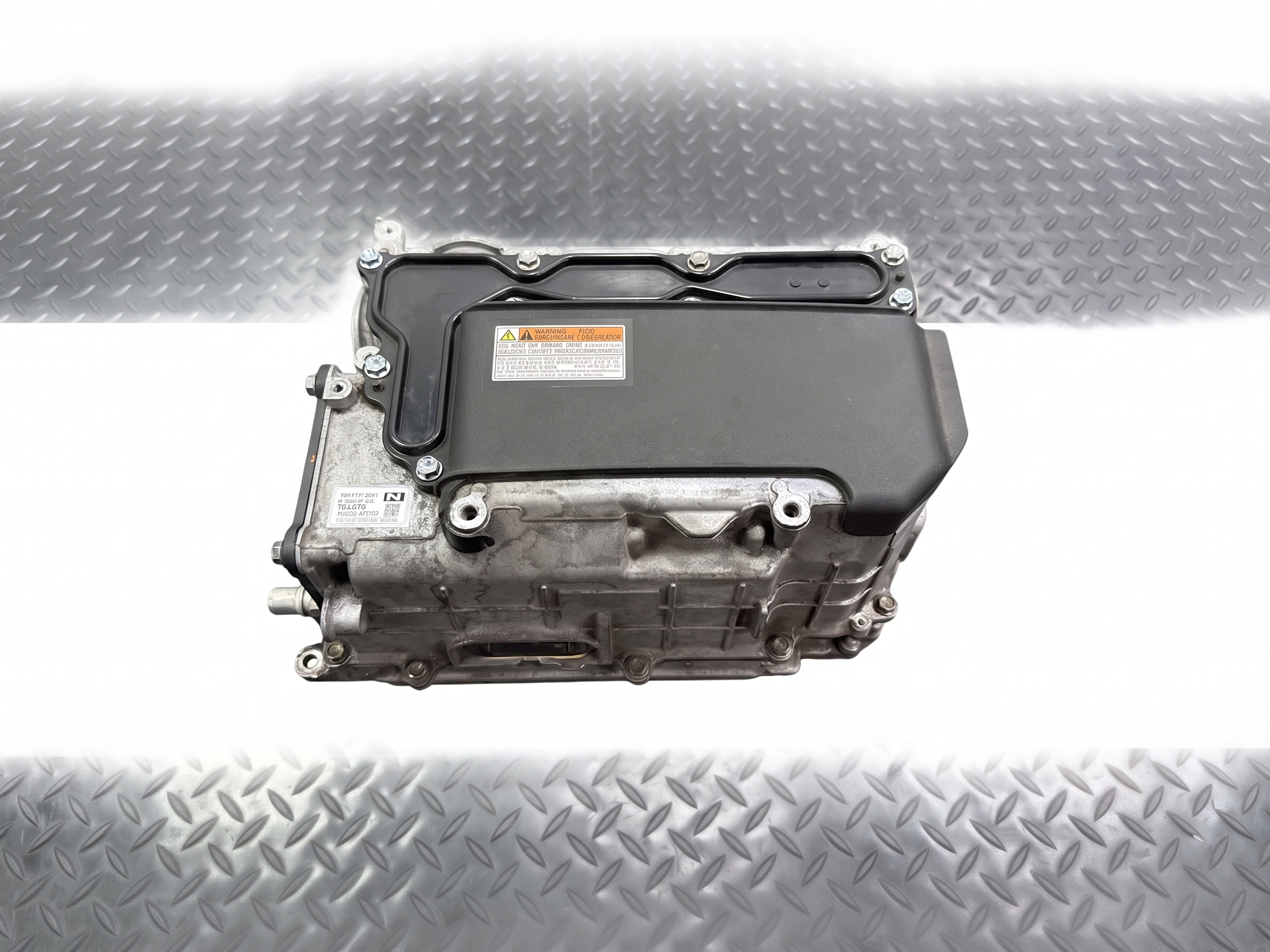
Used OEM Parts in Stock
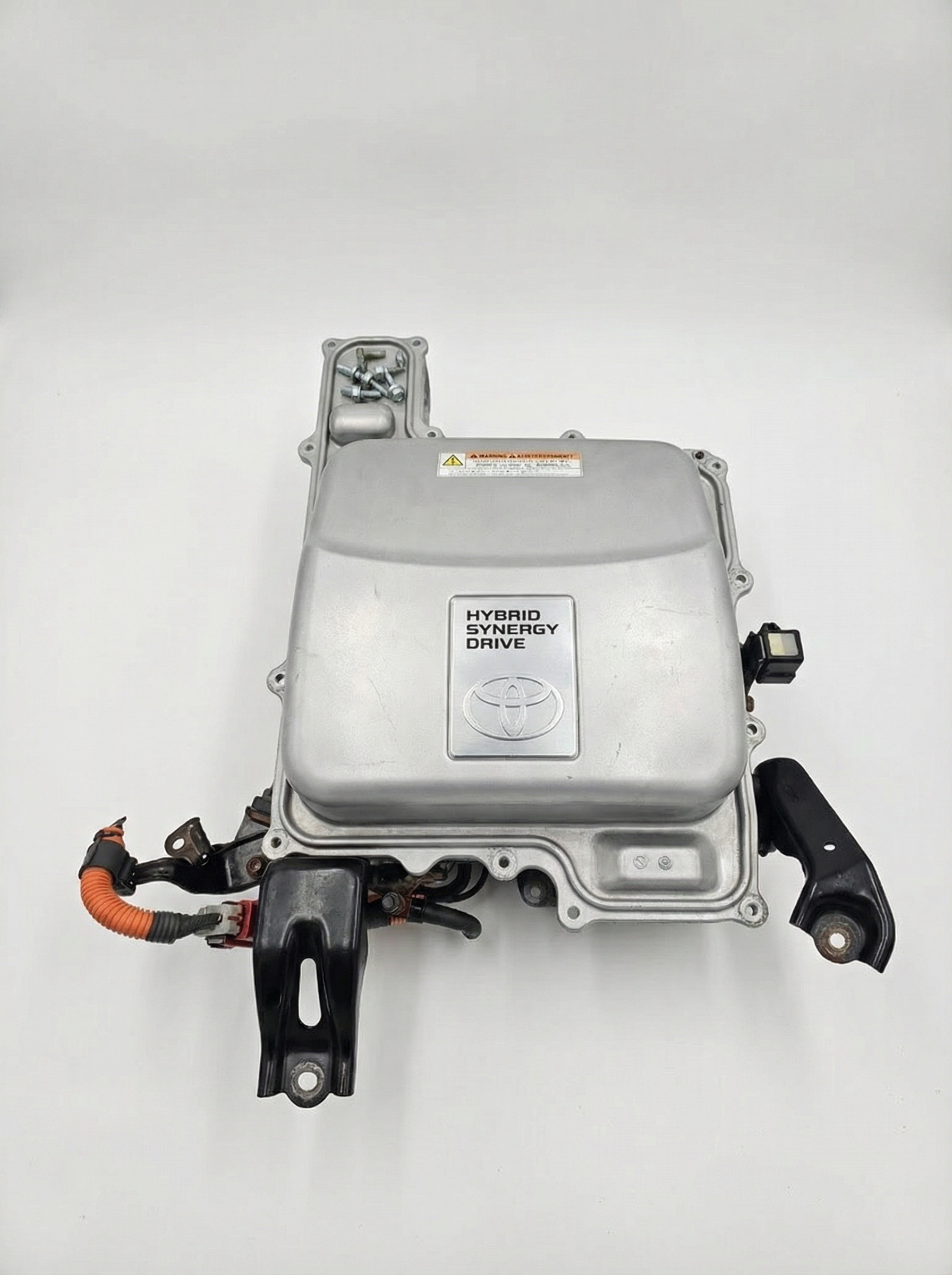
New Aftermarket Parts Available



The information in this article is provided for general reference and educational purposes only. Vehicle specifications, procedures, and part compatibility can vary by production date, trim level, and region. Always consult your vehicle's factory service manual and verify part numbers before purchasing or performing repairs. Safety-critical components such as airbags, seat belts, and braking systems should be installed by a qualified professional.
- Toyota Prius:
- 🧭 Diagnostic Flowchart
- 🎬 Helpful Videos
- 🛍️ Shop This Part
- What's Unique About the 2010-2015 Toyota Prius
- Symptoms You May Notice
- Most Likely Causes
- Diagnosis Steps
- Parts You'll Likely Need
- Related Codes That Often Appear With This One
- Technical Service Bulletins (TSBs) & Recalls
- Platform-Specific Known Issues
- Mechanic-Grade Diagnostic Values
- Hidden / Shadow Codes Worth Checking
- Scan Tool Commands That Help
- Wiring & Ground Locations
- Real Owner Repair Stories
- OEM Part Supersession History
- Model Year Variations Within This Range
- Other Known Issues on This Vehicle
- Used vs. New Parts: Buying Guide for This Vehicle
- Real Owner Stories
- 2010-2014 Toyota Prius
- 2010 Toyota Prius
- 2010-2015 Toyota Prius 2ZR-FXE — ~100000 miles
- Related OBD-II Codes
- Frequently Asked Questions
- 🎟️ Get 5% Off