

U0101 on 2012-2019 Toyota Prius C: Lost Communication with Transmission Control Fixes
On a Toyota Prius C, code U0101 almost always points to a weak 12V auxiliary battery, not a transmission failure. Before suspecting expensive components, fully test and charge or replace the 12V battery located in the rear of the vehicle. This is a very common and inexpensive fix that often presents with a cluster of other communication codes.
- U0101 on a Prius C is a network communication error, not a mechanical transmission failure.
- The most likely cause is a weak or failing 12V auxiliary battery. Always test this battery first.
- This code is often accompanied by U0293, as they both point to a communication loss with the same computer (Power Management Control ECU).
- Do not drive the vehicle, as it may shut down or enter a low-power limp mode without warning.
- If the battery is healthy, the next steps are to inspect wiring and fuses before considering the expensive Power Management Control ECU.
What's Unique About the 2012-2019 Toyota Prius C
The key difference for the Prius C is the absence of a separate Transmission Control Module (TCM). All transmission and hybrid system logic is handled by the Power Management Control ECU (also called the HV ECU). Because the entire hybrid system relies on constant communication between multiple computers, a drop in voltage from the 12V auxiliary battery is a very common trigger for this and other communication codes. Owners often find a flurry of 'U' codes, including U0101 and U0293, that all resolve after replacing the 12V battery.
Symptoms You May Notice
- Check Engine Light is on
- Hybrid system warning light is on
- Vehicle will not go into 'Ready' mode (no start)
- Vehicle enters a low-power 'limp home' mode
- Sudden loss of power while driving
- Multiple warning lights on the dashboard appearing at once ('Christmas tree' effect)
- Brake system warning lights may appear, and a change in braking feel may be noticed
- Replacing the hybrid transaxle. This is a communication code, not a mechanical failure code. The transaxle itself is rarely the problem.
- Replacing the main Engine Control Module (ECM). While possible, it is much more likely that the issue lies with the power supply or the Power Management Control ECU that the ECM is trying to talk to.
Most Likely Causes
- Failing or Weak 12V Auxiliary Battery 🔴 High Probability → Shop Vehicle Battery The Prius C's complex network of ECUs requires stable voltage. A weak 12V battery is the most frequent cause of intermittent communication faults and multiple U-codes. Even a temporary voltage drop during startup can trigger these codes.
How to confirm: Test the 12V battery's voltage with a multimeter. A healthy, resting battery should be at or above 12.6V. A reading below 12.4V suggests it's discharged, and below 12.0V indicates it may be failing and cannot be trusted even if it holds a charge temporarily. A proper load test is the definitive confirmation.
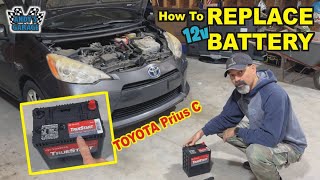
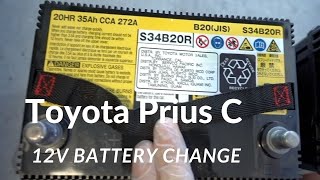
Typical fix: Replace the 12V AGM battery located under the rear passenger-side trim panel. 🎬 Watch: Step-by-step 12V battery replacement walkthrough Ensure all codes are cleared after replacement.
Est. part cost: $180-$250 - Corroded or Loose Battery Terminals 🟡 Medium Probability → Shop Vehicle Battery Similar to a weak battery, poor connections can cause voltage drops that disrupt ECU communication. The ground connection to the chassis is equally important.
How to confirm: Visually inspect the 12V battery terminals for white or blue-green corrosion. Wiggle the terminals to check for tightness. Follow the negative cable to its chassis ground point and check for corrosion and tightness.
Typical fix: Disconnect the terminals, clean them and the battery posts with a wire brush and a baking soda/water solution, and reconnect securely. Apply dielectric grease to prevent future corrosion.
Est. part cost: $1-$10 - Damaged Wiring or Connectors ⚪ Low Probability Wiring to the Power Management Control ECU can be damaged by moisture, heat, or rodents, interrupting the CAN bus communication signals. The main CAN bus lines run throughout the vehicle and can be damaged in multiple locations.
How to confirm: Visually inspect the wiring harness leading to the Power Management Control ECU (part of the inverter assembly) for any signs of damage, corrosion, or moisture intrusion. Check for similar damage along the main harness routes.
Typical fix: Repair or replace the damaged section of the wiring harness. Clean any corroded connectors with a specialized contact cleaner.
Est. part cost: $20-$500 - Failed Power Management Control ECU ⚪ Low Probability While uncommon, the control module itself can fail, especially due to internal component breakdown or external factors like water damage. This is the module that other ECUs are trying to communicate with when U0101 is set.
How to confirm: This is a diagnosis of exclusion. If the battery, wiring, and CAN bus network all test good, the ECU itself is the likely culprit. This requires advanced diagnostics, often with Toyota's Techstream software, to see if the module is responsive on the network.
Typical fix: Replace the Power Management Control ECU, which is often part of the inverter assembly. This typically requires programming by a dealer or specialized shop.
Est. part cost: $500-$1500
Rare But Worth Checking
- Faulty Inverter/Converter Assembly: A recall was issued for some early models where high temperatures could damage the Intelligent Power Module (IPM) within the inverter. A failure here can cause a loss of power and communication codes. This was covered under Toyota Safety Recall J0V.
- CAN Bus Network Fault: A short or open circuit in the CAN bus wiring itself can cause widespread communication failures between many modules, not just the Power Management ECU. This can be caused by a single faulty module dragging the whole network down.
- Blown Fuse: A user on PriusChat reported that after replacing the 12V battery with no success, the issue was ultimately a blown HEV fuse, which disabled the HV ECU and caused codes U0101 and U0293.
Diagnosis Steps
- Check for other stored DTCs. A flood of 'U' codes strongly suggests a power supply or main network problem.
- Using a multimeter, test the 12V auxiliary battery. It should read at least 12.6V when the car is off. If it's low, charge it fully and re-test. If it doesn't hold a charge or drops below 12.0V after resting, replace it.
- Inspect the 12V battery terminals and ground connections for corrosion or looseness. Clean and tighten as needed. Follow the main ground strap to the chassis and ensure it is secure and clean.
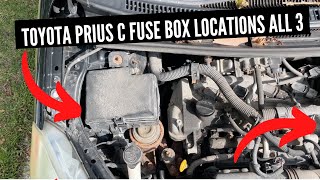
- Check fuses related to the hybrid system, ECU, and transmission in the under-hood and interior fuse boxes. Specifically look for fuses labeled 'HEV', 'ECU-B', or 'IGCT'.
- Visually inspect the wiring harnesses connected to the inverter/converter assembly (which contains the Power Management Control ECU) in the engine bay. Look for any signs of rodent damage, chafing, or corrosion.
- If the above steps don't resolve the issue, a more advanced scan tool (like Toyota Techstream) is needed to perform a CAN bus health check to see which modules are offline.
- Test the CAN bus wiring for correct resistance. With the 12V battery disconnected, measure resistance between Pin 6 (CAN-H) and Pin 14 (CAN-L) at the OBD-II port. It should be ~60 ohms. If it's ~120 ohms, one of the terminating resistors (or the wiring to it) is open. If it's near 0 ohms, the lines are shorted together.
- If all wiring and network tests pass, the Power Management Control ECU is the most likely failed component. This is a diagnosis of last resort after all other possibilities are exhausted.
Parts You'll Likely Need
- 12V AGM Auxiliary Battery
(OEM #28800-21181)— This is the most common cause of communication codes on the Prius C due to voltage instability when the battery weakens.
Trusted brands: Toyota TrueStart, Optima (YellowTop), NorthStar, DieHard Platinum AGM
OEM price range: $220-$280
Aftermarket price range: $180-$250 - Inverter with Converter Assembly
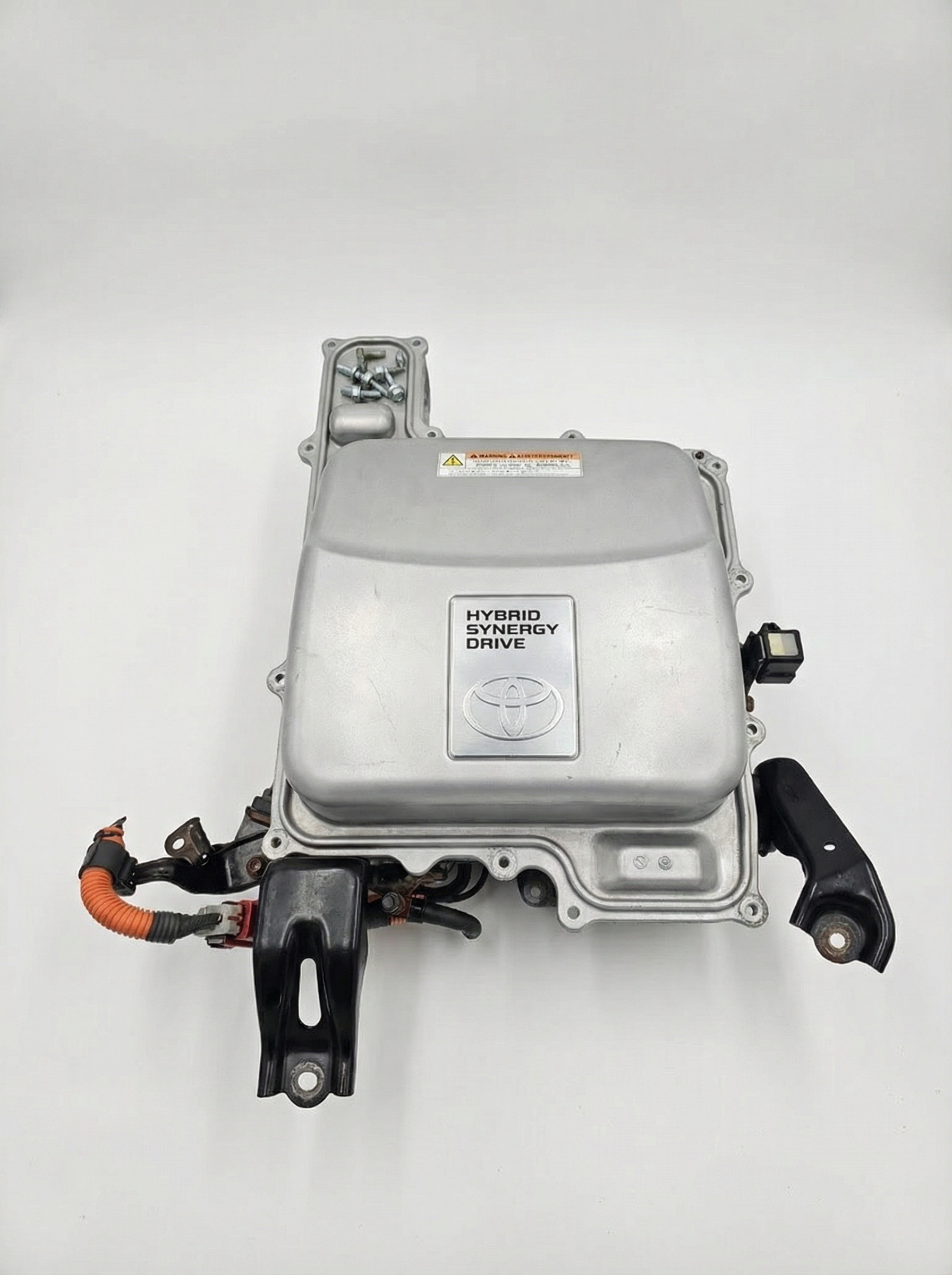
(OEM #G9200-52031 (example, varies by year/spec))— This assembly contains the Power Management Control ECU. It is replaced if the ECU itself is diagnosed as faulty. This is an uncommon but possible failure, sometimes related to internal IPM failure.
Trusted brands: Toyota (OEM)
OEM price range: $1000-$2000
Aftermarket price range: $600-$1200 (Remanufactured)
Related Codes That Often Appear With This One
- U0293 — Lost Communication With Hybrid Powertrain Control Module. On the Prius C, the 'TCM' (from U0101) and the 'Hybrid Powertrain Control Module' are the same physical unit (the Power Management Control ECU), so these codes often appear together.
- U0100 — Lost Communication With ECM/PCM. This can appear alongside U0101 if the network issue is widespread, indicating a broader CAN bus or power supply problem.
- C1466 — Damper Circuit Failure. A user on PriusChat reported this code appearing with U0101 and U0293, along with a sensation of lost braking power, pointing to a system-wide electrical issue likely stemming from the 12V battery.
Platform-Specific Known Issues
- A safety recall (Toyota campaign J0V) was issued for 2010-2014 models for a software update to the hybrid system. In rare situations, the vehicle might not enter failsafe mode as intended, potentially leading to a stall. This could be accompanied by communication codes. This recall superseded previous related recalls E0E and F0R.
- A recall was issued for 2018-2019 Prius C models (Toyota recall K0K) for a faulty DC-DC converter, which could fail and stop charging the 12V au
Mechanic-Grade Diagnostic Values
- CAN Bus Resistance (at OBD-II Port) — expected: ~60 Ohms. Failure: A reading of ~120 Ohms indicates an open circuit in one of the two terminating resistors or the wiring to it. A reading near 0 Ohms indicates a short between the CAN-H and CAN-L lines.
- CAN Line to Ground Resistance — expected: Mega-ohms or Open/Infinite Resistance. Failure: Any low resistance reading indicates a short to ground on either the CAN-H or CAN-L line.
- 12V Auxiliary Battery Voltage (Resting, car off) — expected: 12.6V or higher. Failure: Below 12.4V indicates a discharged state; below 12.0V after a full charge suggests a failing battery unable to support the vehicle's network.
Scan Tool Commands That Help
- Toyota Techstream: Health Check — To get a comprehensive list of all DTCs from all modules. A flood of 'U' codes from various ECUs points towards a systemic issue like power supply or a main bus fault, rather than a single module failure.
- Toyota Techstream: CAN Bus Check — To visualize the status of all ECUs on the network. This utility shows which modules are communicating and which are not, helping to pinpoint the source of the 'Lost Communication' code.
- Toyota Techstream: Active Test — After identifying a potentially faulty module, Active Tests can be used to command specific components (like relays or solenoids) to operate, verifying if the module can send commands and if the component responds. This helps differentiate between a bad module, wiring, or component.
Wiring & Ground Locations
- CAN No. 1 Junction Connector — Behind the dashboard, often high up in the center or towards the driver's side. A video for a 2012 Prius shows it as a blue connector located high up behind the instrument cluster area.. This connector links many critical ECUs, including the Power Management Control ECU, Combination Meter, and Main Body ECU. Disconnecting it can help isolate sections of the CAN bus to find a faulty module that may be bringing the network down.
- CAN No. 2 Junction Connector — Also located behind the dashboard, connecting another branch of the network.. Connects the Skid Control ECU (ABS), ECM (Engine Control Module), and links back to the CAN No. 1 Junction Connector. A fault here can cause widespread communication issues.
- Primary Powertrain Ground — A primary ground cable runs from the inverter assembly case to the vehicle body/chassis in the engine compartment.. The inverter (which houses the Power Management ECU) is a major power component. A poor ground connection here can introduce electrical noise and voltage instability, disrupting CAN communication and triggering U-codes.
- Interior Fuse Box — Under the instrument panel on the driver's side, to the left of the steering column, often requiring you to look up from the floor.. Contains fuses like 'ECU-IG' and 'METER' which power the ECUs and instrument cluster. A blown fuse here can cause a module to go offline, resulting in a communication code.
- Engine Compartment Fuse Box (Hybrid) — Under the hood, there are two fuse boxes. The one primarily related to the hybrid system is near the inverter on the driver's side.. This box contains the critical 'HEV' fuse. If this fuse is blown, the Hybrid/Power Management ECU will lose power, directly causing U0101 and U0293.
Real Owner Repair Stories
- PriusChat user 'steppenwolf' (2015 Prius C) — Powers on but no engine start, no 'Ready' light. Codes U0293 and U0101 present when read with an Autel or Snap-on scanner, but not with basic scanners.
❌ Tried (didn't work) Replacing the 12V auxiliary battery., Checking all mini fuses.
✅ What actually fixed it The user was investigating a blown 'HEV' fuse as the potential cause, based on another forum member's successful fix for the same symptoms. The final resolution was not posted in the thread, but the focus shifted from the 12V battery to the main HEV fuse. - Reddit user on r/PriusC (2015 Prius C) — Powers on, no engine start. Codes U0293 and U0101.
❌ Tried (didn't work) Using basic code scanners (they showed no codes).
✅ What actually fixed it The user noted that another owner with the identical issue found the cause to be a blown HEV fuse. The thread points to this as a likely, non-obvious cause after the 12V battery is ruled out.
When the Usual Fixes Don't Work
- While the vast majority of U0101 codes on the Prius C are caused by a failing 12V battery, there are documented cases where this is not the root cause. In one instance on PriusChat, a user replaced the 12V battery with no change in symptoms (no-start, U0101/U0293 codes). The diagnosis then shifted to a potentially blown main 'HEV' fuse located in the under-hood fuse box, which would cut power to the Power Management ECU entirely, mimicking a module failure. This highlights the need to verify critical fuses before condemning the expensive inverter assembly.
OEM Part Supersession History
G9200-59015→G9200-59035 (as of Nov 2014), then G9200-59065 (as of Aug 2021)— Standard part revision and improvement over the production life.
Heads up: These inverter assembly part numbers are specific to the Prius C and are not interchangeable with parts from the standard Prius models.
Model Year Variations Within This Range
- 2012-Nov 2014: Used original inverter part number G9200-59015. When sourcing a used part, this is the number to look for from these early models.
- Nov 2014-2019: Used inverter part number G9200-59035 (or a later supersession). While likely compatible with earlier years, it's a different part revision.
Diagnostic Flowchart
Other Known Issues on This Vehicle
Issues unrelated to this code that are worth knowing about as an owner of this generation:
- Brake Actuator Failure 🔴 High — Common on higher mileage vehicles (100k+ miles). Symptoms include a buzzing noise from the engine bay every 30-45 seconds, ABS/VSC/Brake warning lights, and codes like C1256.
- EGR Cooler Clogging 🟠 Medium — Becomes an issue typically after 80,000-120,000 miles. Clogging from carbon buildup can lead to engine knock, rough idle, and in severe cases, contribute to head gasket failure. Cleaning is recommended preventative maintenance.
- Intelligent Power Module (IPM) Failure 🔴 High — Affected 2012-2014 models under high-load conditions, potentially causing a stall. This was the subject of Safety Recall J0V, which involved a software update and, if necessary, inverter replacement. (Ref: Safety Recall J0V)
- DC-DC Converter Failure 🔴 High → Shop Power Converter — Affected 2018-2019 models. The converter failure prevents the 12V battery from being charged, leading to a loss of power. (Ref: Safety Recall K0K)
- Minor Oil Consumption 🟡 Low — The 1NZ-FXE engine can start to consume some oil at higher mileage (over 100k miles), often due to piston ring design. It is generally not as severe as the issue in the 3rd generation (2010-2015) standard Prius with the 1.8L engine.
Used vs. New Parts: Buying Guide for This Vehicle
When a used part is the smart pick: For the most expensive component, the Inverter with Converter Assembly, a used part from a reputable salvage yard is a very sensible choice, especially on an older vehicle. Owners report that new OEM inverters can be prohibitively expensive ($2500+), while used units can be found for a fraction of that cost.
Donor-vehicle mileage cap: roughly under 150000 miles for the part to have meaningful remaining life.
What to inspect on the donor part:
- Verify the part number matches your vehicle's year range (e.g., G9200-59015 for early models, G9200-59035 for later ones).
- Inspect all connectors for signs of corrosion, bent pins, or melted plastic.
- Check the casing for any signs of physical damage or water intrusion.
- If possible, get the VIN of the donor car to check its history for accidents or flood damage.
- Prefer sellers who offer a warranty (e.g., 6 months) on the used part.
OEM-only on this vehicle (don't cheap out):
- Power Management Control ECU (if replaced separately from the inverter assembly). Due to programming requirements, an OEM part is the safest bet.
Aftermarket brands forum-validated for this vehicle:
- For the 12V battery, brands like Optima (YellowTop) and NorthStar are well-regarded AGM alternatives to the OEM Toyota TrueStart.
Brands owners have reported issues with on this vehicle:
- There are no widely reported aftermarket brands to avoid for this specific repair, but for a critical component like the inverter, a used OEM part is generally considered more reliable than a new, non-OEM aftermarket unit.
Real Owner Stories
Aggregated from forums and TSBs cited above. Mileages and costs reflect what owners reported in those sources.
2012-2019 Toyota Prius C
Symptoms: The vehicle experienced a no-start condition and threw a U0101 code along with a U0293 code.
What fixed it: Replacing a blown HEV fuse resolved the issue after the 12V battery was already replaced.
Source hint: Reddit.com (r/PriusC)
2012-2019 Toyota Prius C
Symptoms: U0101 and other U-codes appeared intermittently, often triggered by voltage drops during startup.
What fixed it: Replacement of the 12V AGM battery located under the rear passenger-side trim panel.
Source hint: PriusChat.com
Related OBD-II Codes
Frequently Asked Questions
My 2013 Prius C won't go into 'Ready' mode and has a U0101 code. Could this be related to a recall?
I have a 2019 Prius C that lost power while driving. Is there a known issue for this year?
Where is the 12V battery located in the Prius C if I need to check the voltage for a U0101 code?
Can a blown fuse cause a U0101 no-start condition on my Prius C?
Does the U0101 code mean I need to replace a Transmission Control Module (TCM)?
Helpful Videos


Used OEM Parts in Stock
New Aftermarket Parts Available



The information in this article is provided for general reference and educational purposes only. Vehicle specifications, procedures, and part compatibility can vary by production date, trim level, and region. Always consult your vehicle's factory service manual and verify part numbers before purchasing or performing repairs. Safety-critical components such as airbags, seat belts, and braking systems should be installed by a qualified professional.
- Toyota Prius C:
- 🧭 Diagnostic Flowchart
- 🎬 Helpful Videos
- 🛍️ Shop This Part
- What's Unique About the 2012-2019 Toyota Prius C
- Symptoms You May Notice
- Most Likely Causes
- Rare But Worth Checking
- Diagnosis Steps
- Parts You'll Likely Need
- Related Codes That Often Appear With This One
- Platform-Specific Known Issues
- Mechanic-Grade Diagnostic Values
- Scan Tool Commands That Help
- Wiring & Ground Locations
- Real Owner Repair Stories
- When the Usual Fixes Don't Work
- OEM Part Supersession History
- Model Year Variations Within This Range
- Other Known Issues on This Vehicle
- Used vs. New Parts: Buying Guide for This Vehicle
- Real Owner Stories
- 2012-2019 Toyota Prius C
- 2012-2019 Toyota Prius C
- Related OBD-II Codes
- Frequently Asked Questions
- 🎟️ Get 5% Off