

U0101 on 2011-2020 Toyota Sienna: Lost Communication With TCM Causes and Fixes
On a 2011-2020 Toyota Sienna, code U0101 means the Transmission Control Module (TCM) has stopped communicating with other vehicle computers. This is often caused by a faulty TCM itself, which is a known issue. A used replacement TCM with a matching part number costs around $200-$250 and often fixes the problem without needing dealer programming. A new one from the dealer can be over $1,000.
- U0101 on a 2011-2020 Sienna means the Transmission Control Module (TCM) is offline.
- The most probable cause for this specific vehicle is a failed TCM.
- Do not immediately assume the transmission needs replacement; this is an electronic, not a mechanical, fault.
- A cost-effective DIY fix is to replace the TCM with a used one that has the exact same part number, which can avoid the need for expensive dealer programming.
- Always check fuses, wiring, and battery voltage before condemning the TCM.
What's Unique About the 2011-2020 Toyota Sienna
For the third-generation (2011-2020) Sienna, the U0101 code is frequently traced back to a failure of the Transmission Control Module (TCM) itself. While wiring and power issues are always possible, owner experiences strongly suggest the TCM is a common point of failure for these vans when this specific code appears. A popular and effective fix is to replace the module with a used one that has the exact same part number, which avoids costly dealership programming. Multiple owner accounts and repair videos document this exact scenario, where a sub-$250 used TCM resolves limp mode and communication codes instantly.
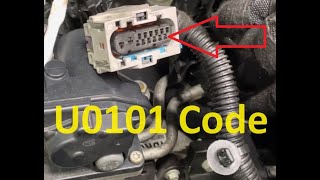
🎬 Watch: How a $220 used TCM fixed these exact codes.Symptoms You May Notice
- Check Engine Light is on
- Transmission warning light is on
- Vehicle is stuck in one gear (often 3rd gear), also known as 'limp mode'
- Harsh or erratic shifting
- Vehicle will not shift gears at all
- Gear selector indicator on the dashboard may not display the current gear
- Inability to communicate with the TCM using a standard OBD-II scan tool
- Replacing the entire transmission. The U0101 code is an electrical communication issue, not a mechanical failure. Many owners have been saved from a costly transmission replacement by first addressing the TCM.
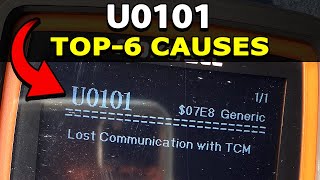
- Replacing the Engine Control Module (ECM). 🎬 See this breakdown of the top 6 causes for U0101. While the ECM is part of the communication network, the U0101 code specifically points to a loss of signal from the TCM's perspective.
Most Likely Causes
- Faulty Transmission Control Module (TCM) 🔴 High Probability → Shop Transmission Assembly This is a widely reported failure point for this specific generation of Sienna when codes U0101 and sometimes U0100 appear together. The internal electronics of the module fail, causing it to go offline.
How to confirm: After verifying power, ground, and CAN bus wiring to the TCM are intact, the module itself becomes the primary suspect. A professional scan tool will be unable to communicate with the TCM, confirming it's offline. A definitive test is swapping in a known-good, part-number-matched TCM.
Typical fix: Replace the Transmission Control Module. Using a salvaged TCM with the exact same part number is a common, cost-effective repair that often avoids the need for dealer programming.
Est. part cost: $150-$250 (Used) - Wiring or Connector Issues 🟡 Medium Probability The TCM is located under the battery tray, an area susceptible to moisture, corrosion, and battery acid fumes over time if not perfectly sealed. Rodent damage to wires in this area is also possible.
How to confirm: Visually inspect the TCM connectors and nearby wiring for green/white corrosion, physical damage, chew marks, or loose pins. Use a multimeter to test for continuity and resistance on the CAN bus wires between the TCM and the OBD-II port.
Typical fix: Repair the damaged section of the wiring harness or clean/replace the corroded connector.
Est. part cost: $10-$50 - Poor Power or Ground Connection ⚪ Low Probability
How to confirm: Use a multimeter to verify that the TCM is receiving proper battery voltage (approx. 12.6V with engine off) and has a solid ground connection (less than 0.1 ohms resistance to chassis) at its connector. Check for blown fuses related to the TCM or ECU in the under-hood fuse box.
Typical fix: Clean the ground connection point on the chassis or repair the power supply wire. Replace any blown fuses.
Est. part cost: $1-$20 - Weak Battery or Failing Alternator ⚪ Low Probability → Shop Alternator
How to confirm: Test the battery's voltage with the engine off (should be ~12.6V) and the alternator's output with the engine running (should be ~13.7-14.7V). Low system voltage can cause unpredictable communication errors between modules.
Typical fix: Replace the battery or alternator.
Est. part cost: $150-$500
Diagnosis Steps
- Check the battery and charging system to ensure stable voltage above 12.4V.
- Check all fuses related to the transmission and engine control modules in the under-hood and interior fuse panels.
- Locate the TCM, which is under the battery tray. Remove the battery and its plastic tray to access it.
- Visually inspect the TCM connectors and wiring harness for any signs of corrosion (especially green or white powder), moisture, or physical damage like chew marks.
- Using a multimeter and a wiring diagram, verify the TCM has proper power and ground at the connector.
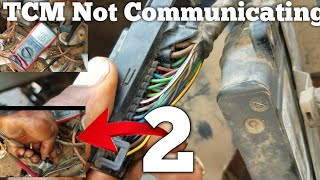
- With the battery disconnected, check the CAN bus resistance at the OBD-II port (pins 6 and 14). A healthy network should read approximately 60 ohms. 🎬 Watch: Troubleshooting steps for when the TCM won't communicate. Readings of 120 ohms or an open circuit point to a wiring or module issue.
- If power, ground, and wiring are confirmed to be good, the TCM is the most likely culprit.
- Replace the TCM with a unit that has the exact same part number to avoid programming issues. A used module is a common and effective fix.
Parts You'll Likely Need
- Transmission Control Module (TCM)
(OEM #89530-08040 (example, always match your original part number))— This module is the most common failure point on the 2011-2020 Sienna that leads to a U0101 code.
Trusted brands: Toyota (OEM), Used OEM (from salvage yards)
OEM price range: $1000-$1200+
Aftermarket price range: $150-$250 (Used/Salvage)
Related Codes That Often Appear With This One
- U0100 — U0100 is a similar code for 'Lost Communication With ECM/PCM'. When both appear, it strongly points to a network problem, and on this vehicle, it is often still the TCM causing the entire network disruption by 'shouting' on the CAN bus and preventing other modules from communicating.
Technical Service Bulletins (TSBs) & Recalls
- T-SB-0160-18: While not directly for U0101, this TSB addresses harsh shifting and other transmission DTCs on 2017-2018 models with the 8-speed transmission, indicating a sensitivity in the drivetrain electronics.
Platform-Specific Known Issues
- A Technical Service Bulletin (TSB) T-SB-0160-18 exists for 2017-2018 Sienna models for harsh shifting, whine noise, and other transmission-related DTCs, but it does not specifically list U0101. It involves potential transaxle replacement for other codes on the 8-speed automatic transmission.
Mechanic-Grade Diagnostic Values
- CAN Bus Resistance — expected: ~60 Ω. Failure: A reading of ~120 Ω indicates an open circuit in one of the terminating resistors or the wiring to it. A reading near 0 Ω indicates a short between the CAN High and CAN Low wires.
- TCM Power Supply Voltage — expected: ~12.0 - 12.6 V (Key On, Engine Off). Failure: Significantly lower voltage or no voltage indicates a problem with the power supply wire, fuse, or relay.
- TCM Ground Connection Resistance — expected: < 0.5 Ω. Failure: Resistance higher than 0.5 Ω (or ideally, less than 0.1 Ω) indicates a poor or corroded ground connection, which can cause the module to malfunction.
- CAN Bus Voltage (Live) — expected: CAN High: 2.5 to 3.5 V; CAN Low: 1.5 to 2.5 V. Failure: Voltages that are stuck high, stuck low, or do not mirror each other (in opposite directions from the 2.5V center) indicate a network fault, such as a short to power or ground.
Scan Tool Commands That Help
- Professional OBD-II Scanner / Techstream: Communication Test / Bidirectional Control — After verifying power and ground, a bidirectional scanner can attempt to directly communicate with the TCM. If the tool sends a request and receives no response, it confirms the TCM is offline and not communicating, further isolating the fault to the module or its direct wiring.
- Professional OBD-II Scanner / Techstream: Health Check / Full System Scan — This should be the first step. A full system scan will show which other modules, if any, are also reporting communication loss. If only the TCM is offline (U0101), it points more strongly to the TCM itself. If multiple modules are offline, it suggests a broader network problem like a wiring short on the main CAN bus.
Wiring & Ground Locations
- TCM Location — Under the battery and battery tray in the engine compartment.. This is the physical location of the module that needs to be accessed for inspection, testing of its connector, and replacement.
- OBD-II Port — Under the driver's side dashboard, above the pedals.. This port is the primary access point for diagnostic scanning and for testing the overall CAN bus network resistance between pins 6 and 14.
- Engine Bay Ground Points (General) — Various points on the fenders and near the engine block. For example, on similar Toyota models, ground points are designated 'EA' (Front Left Fender) and 'EC' (Front Right Fender).. The TCM relies on a clean chassis ground to function. A corroded or loose ground point in the engine bay is a potential cause for the module to go offline. Verifying the integrity of these grounds is a key diagnostic step.
- Junction Connectors — Located throughout the instrument panel and engine room, with specific designators like 'J20' or 'J48' in service manuals.. The CAN bus signals pass through these connectors. A corroded or loose pin within a junction connector can interrupt communication between the TCM and other modules, causing a U0101 code.
Real Owner Repair Stories
- YouTube channel 'Barman Auto Sales' (2011 Toyota Sienna) — Vehicle stuck in 3rd gear ('limp mode'), check engine light on with codes U0101 and U0100.
❌ Tried (didn't work) The video advises against immediately replacing the transmission or valve body, which are common misdiagnoses.
✅ What actually fixed it Replaced the Transmission Control Module (TCM) with a used unit that had the exact same part number. The used part cost approximately $200 and immediately resolved the communication codes and shifting issues without requiring dealer programming.
OEM Part Supersession History
89530-08040→N/A— This part number is specific to certain model years and is not directly superseded by a newer universal part. Compatibility is key.
Heads up: This part number is listed for 2011-2013 Toyota Sienna models. It is critical to match the part number exactly from the original module.89530-08060→N/A— Part number for specific 2012-2013 models.
Heads up: This part number is listed for 2012-2013 models. Always match the part number from the original module before purchasing a replacement.89530-08100→N/A— Part number for later models, likely accommodating changes in the transmission or vehicle electronics.
Heads up: This part number is listed for 2013-2017 Sienna models. Using a part from an earlier or later year range will likely result in incompatibility.
Model Year Variations Within This Range
- 2011-2016: These models are equipped with the 6-speed (U660E) automatic transmission. The TCM part numbers (e.g., 89530-08040) are specific to this transmission.
- 2017-2020: These models feature the updated 8-speed (UA80E) automatic transmission. While the U0101 fault pattern can still occur, the TCM itself is different and has different part numbers (e.g., 89530-08100 for a 2017 model) to manage the new transmission. The modules are not interchangeable between 6-speed and 8-speed vans.
Diagnostic Flowchart
Other Known Issues on This Vehicle
Issues unrelated to this code that are worth knowing about as an owner of this generation:
- Power Sliding Door Cable Failure 🔴 High — Very common across the generation. The cable frays and breaks, making the power door inoperative. Often happens after the basic warranty period. (Ref: T-SB-0141-18 covers the repair procedure for 2011-2018 models. A recall was issued for 2011-2016 models for the door potentially opening while driving.)
- Torque Converter Shudder 🟠 Medium — Commonly reported as a vibration or shudder under light throttle between 25-50 mph. It's related to the 'flex lock-up' function. (Ref: Toyota issued Warranty Enhancement Program ZT7, extending coverage for this specific issue to 8 years or 150,000 miles.)
- Cracked or Sticky/Melting Dashboard 🟡 Low — Affects earlier models in this generation (up to 2010, but relevant to early buyers of the 3rd gen). The dashboard material degrades in heat and humidity. (Ref: Toyota created Warranty Enhancement Program ZE6 to address this, offering replacement dashboards for affected vehicles.)
- Ruptured VVT-i Oil Line 🔴 High — A rubber section of the VVT-i oil line can rupture, causing rapid and catastrophic oil loss, potentially leading to engine seizure. This was more prevalent on earlier 2GR-FE engines but is a critical check. (Ref: An all-metal replacement line (Part No. 15767-31020) is the permanent fix.)
Used vs. New Parts: Buying Guide for This Vehicle
When a used part is the smart pick: For the Transmission Control Module (TCM) on this platform, a used part is a highly recommended and cost-effective strategy. Multiple owner and shop reports confirm that a used TCM with an identical part number often works as a plug-and-play replacement, avoiding the high cost and programming requirements of a new OEM unit.
Donor-vehicle mileage cap: roughly under 150000 miles for the part to have meaningful remaining life.
What to inspect on the donor part:
- Verify the part number on the used module EXACTLY matches your original module.
- Purchase from a reputable salvage yard or online seller with a return policy or short-term warranty.
- Inspect the connector pins on the used module for any signs of corrosion, moisture damage, or bent pins.
- If possible, get the VIN of the donor vehicle to confirm it's from a similar year and model range.
OEM-only on this vehicle (don't cheap out):
- While a used OEM part is recommended, it's crucial to stick with genuine Toyota (Denso) modules. There are no known reliable aftermarket manufacturers for the TCM itself.
Brands owners have reported issues with on this vehicle:
- Avoid any non-OEM, 'remanufactured' TCMs from unknown brands without a substantial warranty and clear programming instructions, as they may not be properly calibrated for the vehicle.
Real Owner Stories
Aggregated from forums and TSBs cited above. Mileages and costs reflect what owners reported in those sources.
2011 Toyota Sienna
Symptoms: Vehicle experienced U0101 and U0100 codes, resulting in 'Lost communication with TCM' and the transmission entering limp mode.
What fixed it: Replacement of the TCM with a used unit featuring the exact same part number.
Cost: $200-$220
Source hint: YouTube/Barman Auto Sales: A video titled '2011 Toyota Sienna code U0101 U0100 Lost communication with TCM code FIXED for $220!!'
2011-2020 Toyota Sienna
Symptoms: Unable to communicate with TCM after a remanufactured transmission installation; ECM cannot communicate with the TCM over the CAN bus.
What fixed it: Troubleshooting the CAN bus and checking connectors for fluid contamination or damage.
Source hint: Reddit r/AskMechanics: A thread titled 'U0101 - Unable to communicate with TCM after reman trans install'
Related OBD-II Codes
Frequently Asked Questions
Does TSB T-SB-0160-18 apply to my 2017 Toyota Sienna with code U0101?
Where is the Transmission Control Module (TCM) located on the 2011-2020 Sienna?
Can I use a used TCM to fix the U0101 code on my Sienna?
Is the U0101 code related to the Toyota Warranty Enhancement Program ZT7?
Why is the TCM prone to failure on this specific vehicle?
Will a bad battery cause a U0101 code on my Sienna?
Helpful Videos

We Have This Part in Stock

The information in this article is provided for general reference and educational purposes only. Vehicle specifications, procedures, and part compatibility can vary by production date, trim level, and region. Always consult your vehicle's factory service manual and verify part numbers before purchasing or performing repairs. Safety-critical components such as airbags, seat belts, and braking systems should be installed by a qualified professional.
- Toyota Sienna:
- 🧭 Diagnostic Flowchart
- 🎬 Helpful Videos
- 🛍️ Shop This Part
- What's Unique About the 2011-2020 Toyota Sienna
- Symptoms You May Notice
- Most Likely Causes
- Diagnosis Steps
- Parts You'll Likely Need
- Related Codes That Often Appear With This One
- Technical Service Bulletins (TSBs) & Recalls
- Platform-Specific Known Issues
- Mechanic-Grade Diagnostic Values
- Scan Tool Commands That Help
- Wiring & Ground Locations
- Real Owner Repair Stories
- OEM Part Supersession History
- Model Year Variations Within This Range
- Other Known Issues on This Vehicle
- Used vs. New Parts: Buying Guide for This Vehicle
- Real Owner Stories
- 2011 Toyota Sienna
- 2011-2020 Toyota Sienna
- Related OBD-II Codes
- Frequently Asked Questions
- 🎟️ Get 5% Off