

U0102 on 2007-2014 Cadillac Escalade: Causes and Fixes for Lost Communication with TCCM
This code means the Transfer Case Control Module (TCCM) is offline, disabling your 4WD. The most common causes are corroded wiring/connectors under the truck near the driver's side frame rail, a bad ground connection (especially on the frame or engine block), or a failed TCCM. Expect to pay $150-$450 for a new module, plus diagnostic time. Always check wiring and grounds before replacing the module.
- U0102 means the 4WD system is disabled because the Transfer Case Control Module (TCCM) is offline.
- Before replacing the expensive TCCM, thoroughly inspect its wiring connector for corrosion and verify it has good power and ground.
- On this Escalade, U0102 is often part of a larger network problem. Check for other 'U' codes; if present, the fault is likely in the main vehicle wiring harness, not the TCCM itself.
- A bad ground connection at the engine block is a known, simple-to-fix cause for this and other communication codes.
- Professional diagnosis is recommended due to the complexity of network troubleshooting and the potential need for module programming.
What's Unique About the 2007-2014 Cadillac ESCALADE
On this GMT900 platform, U0102 is frequently a symptom of a larger network communication problem, not just an isolated TCCM failure. GM Technical Service Bulletin #08-07-30-021H documents that codes like U0102 often appear with a host of other communication codes (U0073, U0100, U0101) due to issues like chafed wiring, poor terminal connections at the main 16-way transmission harness, or faulty ground wires on the frame and engine block. Therefore, diagnosis should always start with the health of the entire vehicle network before condemning the TCCM itself.
Diagnostic Flowchart
Tap your situation to follow the diagnostic path that matches what you're seeing on this vehicle.
Symptoms You May Notice
- "Service 4WD" or "Service Four Wheel Drive" message on the driver information center.
- Four-wheel-drive system is inoperative and cannot be engaged.
- Indicator lights on the 4WD selector switch are off or behave erratically.
- Check Engine Light (Malfunction Indicator Lamp) may be illuminated.
- In some cases, it can be accompanied by other electrical issues like the transmission failing to shift, door locks cycling, or gauges fluctuating, as noted in TSB 08-07-30-021H.
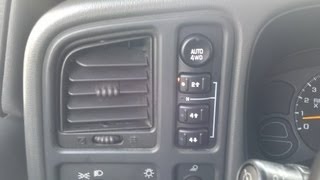
- Replacing the 4WD selector switch in the dash. While the switch can fail and cause 4WD issues (often with no lights on the switch), it typically does not cause a U0102 communication code on its own. A U0102 code indicates the TCCM itself is offline, not that it's receiving a bad signal from the switch. 🎬 See how to test and replace the 4WD selector switch.
Most Likely Causes
- Wiring or Connector Fault 🔴 High Probability The TCCM is located on the driver's side frame rail, exposing its wiring and connectors to road salt, moisture, and debris, leading to corrosion and damage. TSB 08-07-30-021H also highlights general GMLAN wiring harness issues on this platform, specifically chafing and backed-out terminals in the main transmission connector. Harnesses routed near the frame or under the fuse box are known chafe points.
How to confirm: Visually inspect the TCCM connector and nearby harness for green/white corrosion, chafed insulation, or broken wires. Test for power, ground, and communication signal integrity at the connector with a multimeter. With the key on, CAN High and CAN Low lines should both read around 2.5V.
Typical fix: Clean the connector terminals with an electrical contact cleaner and apply dielectric grease to prevent future moisture intrusion. If corrosion is severe, the connector pigtail may need to be replaced. Repair any damaged sections of the wiring harness.
Est. part cost: $20-$60 - Poor Ground Connection 🟡 Medium Probability Vehicle grounds, particularly those on the frame under the driver's door and on the engine block (G104, G110), are known to corrode or break over time on GMT900 trucks. A wire can break inside the ring terminal lug while appearing visually intact, causing an intermittent open circuit.
How to confirm: Locate the primary grounds for the TCCM and other modules (e.g., G110 on the driver's side of the engine block, and G104 on the rear of the driver's side cylinder head) and inspect for tightness and corrosion. Perform a voltage drop test on the ground circuit; it should be under 100-200mV.
Typical fix: Remove, clean the mounting surface to bare metal, and securely re-fasten the ground connection. Protect the connection with a corrosion inhibitor. If the wire or terminal end is broken, it must be repaired or replaced.
Est. part cost: $5-$25 - Failed Transfer Case Control Module (TCCM) 🟡 Medium Probability → Shop Transfer Case Motor Internal electronic failure of the module can occur due to age, vibration, or voltage spikes. Water intrusion from a corroded connector seal can also damage the module's circuit board.
How to confirm: This is diagnosed by exclusion. If the TCCM has proper battery voltage (approx. 12.5V), a solid ground (less than 0.1 ohms resistance), and the communication network wiring tests good, the module itself is the likely point of failure.
Typical fix: Replace the Transfer Case Control Module. Some aftermarket modules (like Dorman) are advertised as plug-and-play, while OEM units require programming to the vehicle's VIN by a dealer or qualified shop.
Est. part cost: $150-$450 - Blown Fuse ⚪ Low Probability A fuse can blow due to a momentary short circuit in the wiring or an internal fault in the TCCM or another component on the same circuit. A chafed wire shorting to the chassis is a common cause.
How to confirm: Locate the fuse for the TCCM/4WD system in the underhood fuse panel (often labeled TREC or 4WD) and check for continuity with a multimeter or test light.
Typical fix: Replace the blown fuse. If the new fuse blows immediately, it indicates a persistent short circuit that must be diagnosed and repaired before replacing the fuse again.
Est. part cost: $1-$5
Rare But Worth Checking
- Faulty Transfer Case Encoder Motor/Sensor: → Shop Transfer Case Motor
Diagnosis Steps
- Perform a full diagnostic scan of all vehicle modules to check for other 'U' (network) codes. The presence of multiple communication codes points to a network-wide issue rather than an isolated TCCM failure.
- Check the fuse for the Transfer Case Control Module (often labeled 4WD or TREC) in the underhood fuse panel.
- Locate the TCCM on the driver's side frame rail, near the transmission. Visually inspect its connector and the surrounding wiring harness for corrosion, damage, or loose connections.
- Disconnect the TCCM connector. Use a multimeter to verify you have a solid ground (less than 0.2 ohms to chassis ground) and battery voltage on the appropriate power supply pins.
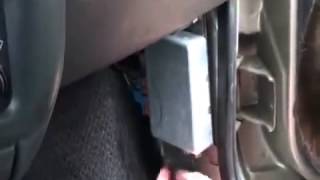
- With the battery disconnected, measure the resistance between Pin 6 (CAN High) and Pin 14 (CAN Low) at the OBD-II diagnostic port. A healthy network should read approximately 60 Ohms. A reading of 120 Ohms indicates an open circuit or a missing terminating resistor. A reading near 0 Ohms indicates the CAN High and Low wires are shorted together.
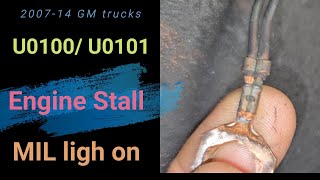
- If the resistance is not 60 Ohms, or if multiple U-codes are present, follow the diagnostic procedures in TSB 08-07-30-021H to trace the wiring fault. 🎬 Watch: Diagnosing multiple communication codes on Chevy and Cadillac trucks. This may involve checking the 16-way transmission connector and other module connectors on the GMLAN.
- If power, ground, and network resistance are all correct, the TCCM is the most likely failed component and should be replaced.
Parts You'll Likely Need
- Transfer Case Control Module (TCCM)
(OEM #23247709 (superseded by 84953426))— This module is the most common component to be replaced after all wiring, power, and ground issues have been ruled out.
Trusted brands: ACDelco (GM Genuine), Dorman (e.g., 599-192), Cardone
OEM price range: $250-$450
Aftermarket price range: $150-$300
Related Codes That Often Appear With This One
- U0073 — Control Module Communications Bus OFF. This indicates a general network failure, often seen with U0102 per TSB 08-07-30-021H.
- U0100 — Lost Communication With ECM/PCM. Often set alongside U0102 when a network-wide wiring or power issue is present.
- U0101 — Lost Communication With TCM. The transmission and transfer case modules are on the same network; a fault affecting one can affect the other, often related to the main transmission harness connector.
Technical Service Bulletins (TSBs) & Recalls
- 08-07-30-021H: Details widespread GMLAN communication loss issues, listing U0102 as a possible code and pointing to wiring, connector, and ground faults as likely causes. It specifically mentions checking the 16-way transmission harness connector for backed-out terminals.
Platform-Specific Known Issues
- GM Technical Service Bulletin 08-07-30-021H is critical for this issue. It covers a wide range of intermittent electrical problems, including setting code U0102. The bulletin directs technicians to inspect for chafed wiring, poor terminal connections at the 16-way transmission connector, and faulty data link terminating resistors as common causes for the entire communication network going down.
Mechanic-Grade Diagnostic Values
- GMLAN Bus Resistance — expected: ~60 Ω (Ohms) between Pin 6 and Pin 14 of the OBD-II port with battery disconnected.. Failure: A reading of ~120 Ω indicates an open circuit or one of the two terminating resistors is offline. A reading near 0 Ω indicates the CAN High and Low wires are shorted together.
- GMLAN Bus Voltage (Key On) — expected: ~2.5V on both CAN High (Pin 6) and CAN Low (Pin 14) when the bus is at rest.. Failure: A line stuck near 0V or battery voltage indicates a short to ground or power. No voltage fluctuation during communication indicates a bus failure.
- TCCM Ground Circuit Voltage Drop — expected: Less than 100-200mV.. Failure: A higher voltage reading indicates excessive resistance in the ground circuit, which can cause the module to malfunction or drop offline.
- TCCM Power Supply — expected: 12V +/- 0.5V at the TCCM power supply pin.. Failure: Low or no voltage indicates a blown fuse, open wire, or other power supply issue.
Scan Tool Commands That Help
- GDS2 (GM Dealer Tool): Network Communication Status — This function is a primary step to get a complete overview of the vehicle's networks. It shows which modules are 'Present' and communicating versus 'Not Present,' immediately identifying which modules are offline without having to check each one individually.
- GDS2 / High-End Scan Tool: Transfer Case Actuator/Motor Commands — If communication with the TCCM can be established intermittently, a technician can use bidirectional controls to command the transfer case motor to shift ranges. If the command is sent but the motor doesn't respond (and power/ground are good), it helps isolate the fault to the motor itself or the TCCM's driver circuit.
- SPS (Service Programming System): Module Programming/Setup — This is required after installing a new, unprogrammed OEM TCCM. The SPS software loads the correct vehicle-specific software and VIN into the new module, allowing it to communicate with the other computers in the vehicle.
Wiring & Ground Locations
- GMLAN Terminating Resistors — There are two 120-ohm resistors. One is internal to the Engine Control Module (ECM). The other is at the opposite end of the high-speed bus, often within another module or as a standalone resistor in a connector.. The two resistors in parallel create the 60-ohm resistance needed for the network to function. If one resistor or its wiring fails, the total resistance jumps to 120 ohms, causing network instability and communication codes like U0102.
- G103 — On the front of the passenger side cylinder head.. This is a primary engine ground point. While not the direct ground for the TCCM, poor engine grounding can introduce electrical noise and voltage differentials that disrupt network communication.
- G104 — On the rear of the driver's side cylinder head, often sharing a stud with a ground strap to the firewall (G108).. This is a critical ground point for multiple systems. A failure here can cause widespread issues, including network codes. One owner found the wire for this ground broken inside the terminal.
- G110 — On the front driver's side of the engine block.. This is a known critical ground point for both the ECM and TCM. A fault here is a common cause for U0100 and U0101, which are frequently seen with U0102.
Real Owner Repair Stories
- YouTube user 'Michigan Heating Guy' (2014 Chevrolet Suburban) — Service 4WD message, U0102 code present.
❌ Tried (didn't work) Replacing the 4WD fuse, which would blow again after the fuse box cover was shut.
✅ What actually fixed it Found a wire in the harness directly under the underhood fuse box had chafed through its insulation and was shorting to the metal body structure. The fix was to repair the damaged wire and protect the harness. - YouTube user 'Just a Dude' (2007-2014 Chevrolet Tahoe) — Engine stalling, multiple communication codes including U0100, U0101, U0102.
❌ Tried (didn't work) Initial visual inspection of grounds showed them to be tight and clean.
✅ What actually fixed it A closer inspection of the ground wires at the engine block (likely G104 or G110) revealed that one of the smaller wires had broken all its copper strands inside the ring terminal lug, right at the crimp. It appeared connected but was electrically open. The fix was to cut back the wire and install a new ring terminal. - Tahoe Yukon Forum user 'ScottTheEngineer' (2008 Chevrolet Tahoe) — Intermittent gauge fluctuation, multiple U-codes including U0140, U0100, U0101, and U0102.
❌ Tried (didn't work) Replacing the ECM, BCM, negative battery cable, mega fuse, and battery.
✅ What actually fixed it Found the main wiring harness that runs down from the ECM, across the frame, had rubbed through. Approximately 6 wires were damaged, and the main battery positive wire in the harness was shorting to the frame. Repairing the chafed and shorted wires resolved the issue.
"I Checked Everything" — The Actual Cause
- A common failure pattern for this code is when all visible wiring and connections appear fine. In one documented case, the root cause was a ground wire that had broken internally at the crimp for the ring terminal connected to the engine block. The wire and terminal looked perfectly normal and tight, but wiggling the harness would cause the connection to open, setting multiple communication codes. This type of fault will not be found with a simple visual inspection and requires a physical pull test on the wire or a voltage drop test under load to identify.
OEM Part Supersession History
23247709→84953426— Standard part revision and consolidation by the manufacturer.
Heads up: Part number 84953426 also replaces older numbers 24242778, 24255142, and 24263580. Replacement with an OEM module requires VIN-specific programming to function.
Model Year Variations Within This Range
- 2010-2014: Starting in the 2010 model year, the 6.2L V8 engine (L94) was equipped with Active Fuel Management (AFM), or cylinder deactivation. The 2007-2008 (L92) and 2009 (L9H) engines did not have this system. While not directly impacting the U0102 code, it represents a significant change in the powertrain control system.
- 2007-2014: All gasoline V8 models throughout this generation used the 6L80 6-speed automatic transmission. This provides consistency in diagnosing network issues between the TCM and TCCM, as the hardware and basic communication architecture did not change.
Helpful Videos
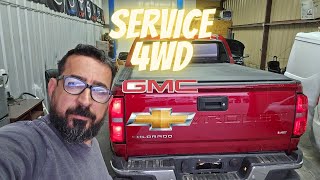
Used OEM Parts in Stock
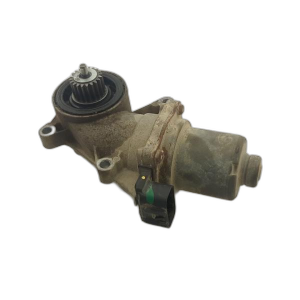
New Aftermarket Parts Available


The information in this article is provided for general reference and educational purposes only. Vehicle specifications, procedures, and part compatibility can vary by production date, trim level, and region. Always consult your vehicle's factory service manual and verify part numbers before purchasing or performing repairs. Safety-critical components such as airbags, seat belts, and braking systems should be installed by a qualified professional.
- Cadillac ESCALADE:
- 🧭 Diagnostic Flowchart
- 🎬 Helpful Videos
- 🛍️ Shop This Part
- What's Unique About the 2007-2014 Cadillac ESCALADE
- Symptoms You May Notice
- Most Likely Causes
- Rare But Worth Checking
- Diagnosis Steps
- Parts You'll Likely Need
- Related Codes That Often Appear With This One
- Technical Service Bulletins (TSBs) & Recalls
- Platform-Specific Known Issues
- Mechanic-Grade Diagnostic Values
- Scan Tool Commands That Help
- Wiring & Ground Locations
- Real Owner Repair Stories
- "I Checked Everything" — The Actual Cause
- OEM Part Supersession History
- Model Year Variations Within This Range
- 🎟️ Get 5% Off