

U0102 on 2014-2019 GMC Sierra 1500: Lost Communication with TCCM Fixes
This code means the truck's main computers have lost communication with the Transfer Case Control Module (TCCM). The most common fixes are reprogramming the Engine Control Module (ECM) due to a known software glitch, or inspecting and repairing the wiring and connectors leading to the TCCM, which is located under the driver's side of the vehicle. A module reprogram is a dealer/shop-level fix.
- U0102 means the Transfer Case Control Module (TCCM) is not communicating with the rest of the truck.
- Before replacing any parts, check for software updates. GM has issued multiple TSBs indicating that an ECM or Gateway Module reprogram can fix this code.
- Thoroughly inspect the wiring and connector at the TCCM for corrosion or damage, as its location makes it vulnerable.
- This is not a DIY-friendly repair unless you are experienced with electrical diagnostics. Professional diagnosis is recommended to avoid replacing unnecessary parts.
- The vehicle is safe to drive in 2WD, but the 4WD system will not be available until the communication link is restored.
What's Unique About the 2014-2019 Gmc SIERRA 1500
On the 2014-2019 Sierra and its K2XX platform mates, this code is frequently linked to software anomalies. Multiple Technical Service Bulletins (TSBs) from GM point to situations where various control modules, including the TCCM, can stop communicating due to software errors that require reprogramming. In some cases, a low battery event can trigger a cascade of communication codes, including U0102, which can only be resolved by an ECM reflash. Furthermore, the TCCM is located on the driver's side frame rail, making its wiring and connectors susceptible to corrosion and damage from road debris and moisture, a common real-world failure point mentioned by owners. A notable issue for this platform is the TCCM's ability to fail internally and backfeed voltage onto the run/crank circuit, causing a battery drain that is often misdiagnosed as a fault in another module like the instrument panel cluster.
Diagnostic Flowchart
Tap your situation to follow the diagnostic path that matches what you're seeing on this vehicle.
Generation note: The 2014-2018 models belong to the third generation (K2XX). The 2019 model year includes both the K2XX platform (sold as the 'Sierra 1500 Limited') and the new fourth-generation T1XX platform. The cited TSBs are primarily relevant to the K2XX trucks, but similar network communication principles and TCCM failure modes apply to the newer generation. A key variation is Safety Recall #14192A for 2014-2015 models with the NQH transfer case, which required a TCCM reprogram to prevent unexpected shifts to neutral.
Symptoms You May Notice
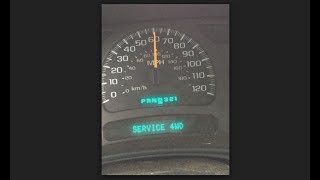
- "Service 4WD" message on the instrument cluster.
- Four-wheel-drive system is inoperative or stuck in one mode (usually 2WD).
- Indicator lights for the 4WD selector switch are completely off or flash briefly at startup and then go out.
- Check Engine Light is on.
- Transmission may not shift properly or feel like it has lost passing gear.
- Multiple other warning lights (ABS, Stability Control) may illuminate during a network-wide event.
- In rare, severe cases associated with broader network failure, a no-crank or start-then-stall condition can occur.
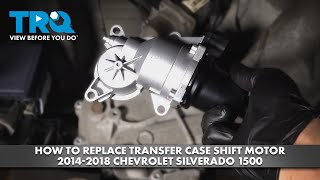
- Replacing the transfer case actuator motor when the issue is electronic. 🎬 Watch: How to replace the transfer case shift motor correctly.
- Replacing the 4WD selector switch in the cab, as its failure typically produces different codes or symptoms, though owners sometimes replace it first when the lights go out.
- Replacing the Instrument Panel Cluster (IPC) for a battery drain when the actual cause is a faulty TCCM backfeeding voltage onto the circuit.
Most Likely Causes
- Engine Control Module (ECM) Software Anomaly 🔴 High Probability TSB #N192267870 explicitly states that a combination of U-codes, including U0102, can be stored after a low-voltage event on 2019 models, requiring an ECM reprogram. Safety recall #14192A for 2014-2015 models also required a TCCM software update.
How to confirm: A GM dealer or qualified shop with access to GM's Service Programming System (SPS) can check the current calibration ID of the ECM and TCCM against the latest available software.
Typical fix: Reprogramming the Engine Control Module (ECM) and/or Transfer Case Control Module (TCCM) with the latest software update.
Est. part cost: $0 - Wiring or Connector Issue 🟡 Medium Probability The TCCM and its wiring are located underneath the vehicle on the frame rail, exposed to moisture, road salt, and potential physical damage, leading to corrosion or broken wires. TSB #08-07-30-021H specifically calls out chafed wiring and corroded connectors as a cause for a host of communication codes, including U0102. 🎬 Watch: Diagnosing lost communication codes on Chevy and GMC trucks.
How to confirm: Visually inspect the wiring harness and connectors at the Transfer Case Control Module for green corrosion, damage, or loose pins. Perform a continuity and resistance check on the CAN bus wires between the TCCM and a known good point on the network.
Typical fix: Repairing the damaged section of the wiring harness or cleaning/replacing the corroded connector. Applying dielectric grease can help prevent future corrosion.
Est. part cost: $10-$50 - Failed Transfer Case Control Module (TCCM) 🟡 Medium Probability → Shop Transfer Case Motor Like any electronic module, the TCCM can fail internally due to voltage spikes, heat, or age. A known issue on this platform is TCCM failure caused by voltage spikes from improperly wired aftermarket accessories. Owners in forums have documented replacing the module to fix the U0102 code.
How to confirm: This is typically a process of elimination. If the power, ground, and communication circuits to the module are all verified to be good, and a software update doesn't fix the issue, the module itself is the likely culprit. A scan tool may show the module as completely offline.
Typical fix: Replacing the TCCM. The new module will require programming to the vehicle's VIN using GM's SPS.
Est. part cost: $150-$400 - Serial Data Gateway Module (SDGM) Logic Lock ⚪ Low Probability → Shop Telematics Interface Module TSB #PIT5586G notes that a software error can cause the SDGM to stop communicating on all CAN channels, which would generate a host of U-codes, including U0102. The fix is often a simple battery disconnect to reset the module or a reprogram.
How to confirm: This is diagnosed when a large number of modules across multiple CAN buses are all reporting lost communication simultaneously. A technician would follow the TSB diagnostic path, which includes checking for backed-out terminals at the SDGM connectors.
Typical fix: Reprogramming the Serial Data Gateway Module. In some cases, inspecting the SDGM connectors for backed-out terminals is also required.
Est. part cost: $0
Rare But Worth Checking
- Poor Power or Ground to TCCM: A blown fuse for the 4WD system (often labeled TREC, 4WD, or T-CASE in the fuse box) or a corroded ground connection can prevent the TCCM from powering on, which will appear as a communication loss. On K2XX trucks, common ground points to inspect are G110 and G114 on the frame, which have been noted for loose connections, and G102.
Diagnosis Steps
- Scan for all DTCs in all modules. Note any other 'U' (communication) codes, as they can point to a network-wide problem rather than a single module failure.
- Check for Technical Service Bulletins (TSBs). Given the known software issues, check if TSBs #N192267870, #PIT5586G, #08-07-30-021H, or recall #14192A apply to your vehicle's VIN.
- Inspect TCCM Power and Ground. Check the fuse for the 4WD/TCCM system in the underhood fuse block. Locate the TCCM on the driver's side frame rail, disconnect its connector, and verify you have a solid 12V power supply (12 ± 0.5 V) and a clean, tight ground connection with minimal resistance (less than 0.1 Ω to chassis ground).
- Inspect TCCM Connector and Harness. With the TCCM disconnected, visually inspect the connector pins and wiring harness for any signs of green corrosion, moisture, or physical damage. Pay close attention to the harness routing where it might chafe against the frame or transfer case itself.
- Check CAN Bus Network. With the key off and battery disconnected, measure the resistance between pins 6 (CAN High) and 14 (CAN Low) of the OBD-II port. A healthy network should read approximately 60 ohms (± 5 ohms). A reading of 120 ohms suggests an open circuit or a missing terminating resistor, while a reading near 0 ohms indicates a short between the CAN lines.
- Attempt Module Reprogramming. If wiring, power, and grounds are good, the next step is to have a dealer or qualified shop attempt to reprogram the ECM and/or TCCM per the relevant TSBs.
- Replace the TCCM. If all previous steps fail to resolve the issue, the TCCM itself has likely failed internally. Replace the module and have it programmed to the vehicle's VIN. A 'Transfer Case Range Actuator Learn' procedure may be required using a scan tool like GDS2 after installation.
Parts You'll Likely Need
- Transfer Case Control Module (TCCM)
(OEM #84108308, 86522174 (Varies by year and RPO code, e.g., NQH. Always verify with VIN))— This module is the most common hardware failure after wiring and software issues are ruled out. It is the brain of the 4WD system.
Trusted brands: ACDelco (GM Genuine), Dorman
OEM price range: $250-$400
Aftermarket price range: $150-$300
Related Codes That Often Appear With This One
- U0100 — Lost Communication with ECM/PCM. Often appears with other U-codes during a network-wide communication failure as described in TSB #08-07-30-021H.
- U0101 — Lost Communication with TCM (Transmission Control Module). This can be set alongside U0102 due to a shared communication bus or a broader module failure event, as noted in TSB #N192267870.
- U0140 — Lost Communication with Body Control Module (BCM). This often acts as a central hub, and its loss can trigger codes from other modules. It is listed in TSBs #N192267870 and #PIT5586G.
Technical Service Bulletins (TSBs) & Recalls
- N192267870
- PIT5586G
- 08-07-30-021H
Platform-Specific Known Issues
- TSB #N192267870: Low Voltage Event: Documents an issue on 2019 models where a low battery event can cause the ECM to store multiple U-codes, including U0102, upon restart. The official fix is to reprogram the ECM.
- TSB #PIT5586G: SDGM Logic Lock: Describes a condition where the Serial Data Gateway Module (SDGM) can enter a 'logic lock' state, causing it to stop communicating and triggering a flood of communication codes. The fix involves reprogramming the SDGM or checking its connectors for backed-out terminals.
- Recall #14192A: Unwanted Transfer Case Shift to Neutral: → Shop Transfer Case Motor A safety recall for 2014-2015 models with the NQH transfer case where an electrical short could cause the transfer case to shift to neutral without warning. The remedy was to reprogram the TCCM.
- PIE0548: Loose Ground Connections: A GM Preliminary Information bulletin for 2019-2020 models requesting technicians to document and report instances of loose connections at grounds G110 (body harness) and G114 (engine harness) on the vehicle's frame.
Mechanic-Grade Diagnostic Values
- High-Speed CAN Bus Resistance — expected: ~60 Ω (± 5 Ω). Failure: A reading of ~120 Ω indicates an open circuit or missing terminator. A reading near 0 Ω indicates a short between the CAN high and low wires.
- CAN Bus Voltage (Key On) — expected: CAN High and CAN Low lines should both measure approximately 2.5V.. Failure: A line stuck near 0V or 5V indicates a short to ground or power. No voltage deviation during communication points to a fault.
- TCCM Power Supply Voltage — expected: 12 V (± 0.5 V). Failure: Low or no voltage indicates a blown fuse, wiring issue, or problem with the power source.
- TCCM Ground Circuit Resistance — expected: Less than 0.1 Ω. Failure: High resistance indicates a corroded or loose ground connection (e.g., at G102 or G110).
Scan Tool Commands That Help
- GM GDS2 (Global Diagnostic System 2): Module Diagnostics > K69 Transfer Case Control Module > Control Functions — To access bidirectional controls and test TCCM-commanded functions after verifying power, ground, and network integrity.
- GM GDS2: Transfer Case Range Actuator Learn — This procedure is required after replacing and programming a new Transfer Case Control Module to synchronize the module with the transfer case motor's position.
- GM SPS (Service Programming System): K69 Transfer Case Control Module – Programming — Used to flash the TCCM with updated software to resolve known bugs (as per TSBs or recalls like 14192A) or to program a new replacement module to the vehicle's VIN.
Wiring & Ground Locations
- G110 / G114 — On the vehicle frame. G110 is for the body harness, and G114 is for the engine harness.. These are major ground points for various systems. GM issued a bulletin (PIE0548) for 2019-2020 models regarding loose connections at these specific grounds, which can cause a wide range of electrical issues, including communication codes.
- G102 — On the vehicle frame, serves as a ground point for multiple components.. Wiring schematics show the Transfer Case Control Module is grounded at this location. A poor connection here will cause the TCCM to lose power and stop communicating.
- X61A I/P Junction Block — The Left Instrument Panel Fuse Block.. Terminals in this block (e.g., Connector X7, pin 11 or Connector X5, pin 35) are on the Run/Crank ignition circuit. Aftermarket accessories are often tapped in here. An improperly suppressed relay can cause voltage spikes on this circuit, damaging the TCCM and leading to code U0102.
- TCCM Connector — On the driver's side frame rail, connected to the TCCM.. This is the primary connection for the module's power, ground, and CAN bus signals. Due to its exposed location, it is highly susceptible to corrosion and physical damage, which are direct causes of communication loss.
Real Owner Repair Stories
- YouTube channel 'Enos Auto' (2017 GM Truck (Silverado/Sierra platform)) — Service 4WD message, ABS and Traction Control lights on, multiple U-codes including U0102.
❌ Tried (didn't work) The previous shop had replaced the transfer case actuator motor.
✅ What actually fixed it The 5-volt reference wire to the transfer case position sensor was corroded and broken inside the insulation right at the connector. Repairing this single wire restored the correct voltage (from 0.6V to 4.98V) and fixed the communication issue. - YouTube channel 'The Auto Electrician' (2014 Suburban (K2XX Platform sibling)) — No 4WD operation, U0102 code stored in the brake module.
❌ Tried (didn't work) Initial internet searches pointed to general power/ground issues.
✅ What actually fixed it The fuse for the 4WD system was blown. Replacing the fuse restored function, though the user noted sparks from the fuse box, indicating a deeper short circuit was the root cause of the blown fuse.
"I Checked Everything" — The Actual Cause
- A common scenario for this platform involves a battery drain complaint. A technician may trace the parasitic draw to the Instrument Panel Cluster (IPC) circuit because it remains powered on. However, the actual root cause is an internally failed TCCM backfeeding voltage onto the shared Run/Crank ignition buss bar. The IPC is only a symptom. The true test is to remove the TCCM fuse (F31DL) or disconnect the TCCM entirely; if the parasitic draw on the other circuits disappears, the TCCM is the culprit.
OEM Part Supersession History
Varies by year/RPO→86522174, 84108308— Part clarification, not a direct supersession. The number 23247713 is often associated with the entire transfer case assembly for different GM models, not the Sierra's TCCM.
Heads up: Always verify the correct TCCM part number with the vehicle's VIN.
Model Year Variations Within This Range
- 2014-2015: These model years were subject to Safety Recall #14192A for the NQH transfer case, which could shift to neutral without input. The fix was a mandatory TCCM software reprogram.
- 2019-2020: GM issued a Preliminary Information bulletin (PIE0548) specifically for these years regarding loose ground connections at G110 and G114 on the frame, indicating a potential manufacturing quality issue at the end of the generation.
- 2014-2019: The transfer case input shaft design differs depending on the transmission it's paired with (6L80, 8L90, or 10L80). A T-case from a 6-speed truck has a different input spline configuration than one from an 8- or 10-speed truck, making them mechanically incompatible if swapped.
Helpful Videos
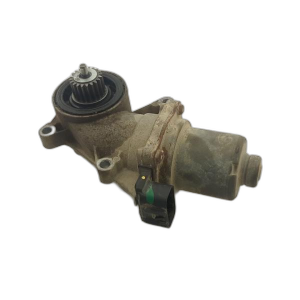
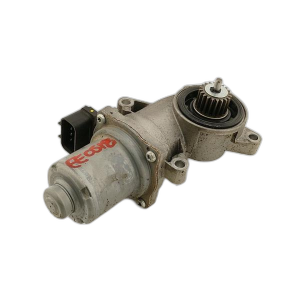
We Have This Part in Stock

The information in this article is provided for general reference and educational purposes only. Vehicle specifications, procedures, and part compatibility can vary by production date, trim level, and region. Always consult your vehicle's factory service manual and verify part numbers before purchasing or performing repairs. Safety-critical components such as airbags, seat belts, and braking systems should be installed by a qualified professional.
- Gmc SIERRA 1500:
- 🧭 Diagnostic Flowchart
- 🎬 Helpful Videos
- 🛍️ Shop This Part
- What's Unique About the 2014-2019 Gmc SIERRA 1500
- Symptoms You May Notice
- Most Likely Causes
- Rare But Worth Checking
- Diagnosis Steps
- Parts You'll Likely Need
- Related Codes That Often Appear With This One
- Technical Service Bulletins (TSBs) & Recalls
- Platform-Specific Known Issues
- Mechanic-Grade Diagnostic Values
- Scan Tool Commands That Help
- Wiring & Ground Locations
- Real Owner Repair Stories
- "I Checked Everything" — The Actual Cause
- OEM Part Supersession History
- Model Year Variations Within This Range
- 🎟️ Get 5% Off