

U0102 on 2017-2019 GMC Sierra 3500: Lost Communication with TCCM Causes and Fixes
This code means the Transfer Case Control Module (TCCM) has stopped communicating. On this truck, the most likely cause is a wiring or connector issue, often at the Serial Data Gateway Module (SDGM) as cited in GM TSBs #PIT5586B/C and #20-NA-212. A failed TCCM is also possible, but always diagnose network wiring, grounds, and SDGM connections first. A simple battery disconnect for 30 minutes can sometimes reset a module logic lock and temporarily fix the issue.
- U0102 means the Transfer Case Control Module (TCCM) is offline.
- Before replacing any parts, inspect the connectors at the Serial Data Gateway Module (SDGM) as per GM Technical Service Bulletins.
- Thoroughly check all power, ground, and communication wires to the TCCM for corrosion or damage before condemning the module.
- If the TCCM needs to be replaced, the new module will require programming to your truck's VIN to function correctly.
- This is a network communication issue; do not replace mechanical parts like the transfer case motor or the 4WD switch to try and fix it.
What's Unique About the 2017-2019 Gmc SIERRA 3500
For this generation of GMC Sierra (K2XX platform), a U0102 code is frequently linked to broader network communication problems rather than just a failed TCCM. General Motors has issued Technical Service Bulletins (TSBs) that point specifically to issues with the Serial Data Gateway Module (SDGM), which acts as a central router for vehicle data. The SDGM is located behind the dash, to the left of the steering column. Poor terminal connections at its X1 and X2 connectors are a known cause for a flood of communication codes, including U0102, making it a critical first checkpoint before suspecting the TCCM itself. Some bulletins also mention a software glitch or "logic lock" within the SDGM that can be resolved by a dealer reprogram or a temporary battery disconnect.
Diagnostic Flowchart
Tap your situation to follow the diagnostic path that matches what you're seeing on this vehicle.
Symptoms You May Notice
- "Service 4WD" message on the instrument cluster.
- Four-wheel-drive system is inoperative.
- The 4WD selector switch lights may be off or blinking.
- Inability to switch between 2WD, 4HI, and 4LO.
- Check Engine Light is on.
- In severe network-wide communication failures, other symptoms like fluctuating gauges, a no-start condition, radio display blank, or other warning lights (ABS, Airbag) 🎬 Watch: Troubleshooting lost communication codes on Chevy and GMC trucks. can occur.
- Replacing the 4WD selector switch. A faulty switch typically sets different codes (like B-codes) and does not cause a U0102 communication failure.
- Replacing the transfer case shift motor. The motor is a mechanical part with its own set of diagnostic codes; U0102 is a purely electrical/communication fault.
- Immediately replacing the TCCM without diagnosing the network. Given the high probability of SDGM and wiring issues on this platform, replacing the TCCM first is a common and expensive mistake.
Most Likely Causes
- Serial Data Gateway Module (SDGM) Connector or Logic Fault 🔴 High Probability → Shop Telematics Interface Module As documented in GM TSBs #PIT5586B, #PIT5586C, and #20-NA-212, the X1 and X2 connectors at the SDGM are a known weak point for bent, backed-out, or loose terminals. The module can also suffer from an internal logic lock that requires a reset (by pulling its fuse or disconnecting the battery) or a software update from a dealer.
How to confirm: Scan all modules. A flood of U-codes (U0100, U0101, U0140, etc.) points to the SDGM. Locate the SDGM behind the dash to the left of the steering column and physically inspect the X1 and X2 connectors for terminals that are not fully seated, bent, or show signs of corrosion. A technician would perform a pin-drag test for proper terminal tension.
Typical fix: Repair the affected terminal(s) or replace the connector pigtail. Ensure the connectors are fully seated. If no wiring issue is found, a dealer may need to reprogram the SDGM with updated software. In some cases, the SDGM itself fails and requires replacement and programming.
Est. part cost: $15-$75 - Wiring or Connector Issue at TCCM 🟡 Medium Probability The wiring harness leading to the transfer case is exposed to the elements, road debris, and vibration. Owners report the harness chafing against the front driveshaft or transmission, wearing through the insulation and causing shorts. The TCCM connector itself, mounted on the frame rail near the transmission crossmember, is also prone to corrosion.
How to confirm: Visually inspect the wiring harness running to the Transfer Case Control Module, paying close attention to areas where it passes over the transmission or near the front driveshaft. Check the TCCM connector for any signs of damage, corrosion (especially green or white powder), or loose connections. Test for power and ground at the TCCM connector using a multimeter.
Typical fix: Clean corroded connectors with electrical contact cleaner and apply dielectric grease. Repair or replace damaged sections of the wiring harness, and use zip ties or loom to secure it away from moving parts like the driveshaft.
Est. part cost: $10-$150 - Failed Transfer Case Control Module (TCCM) 🟡 Medium Probability → Shop Transfer Case Motor Internal failure of the module's circuit board or components can occur from vibration, moisture intrusion, or age. This is a common point of failure after all wiring and network issues have been ruled out.
How to confirm: This is diagnosed by exclusion. If power, ground, and the CAN bus communication wiring to the module are all verified to be good (correct voltage, good ground, ~60 ohms resistance on the network), but the module still does not communicate, the TCCM itself is faulty. 🎬 See this walkthrough for diagnosing and repairing a U0102 code.
Typical fix: Replace the Transfer Case Control Module. The new module must be programmed to the vehicle's VIN using dealer-level software like GDS2.
Est. part cost: $200-$450 - Poor Ground Connection ⚪ Low Probability Frame and engine block grounds on trucks can corrode or become loose over time, leading to intermittent electrical and communication problems. TSB #PIT5405C points to ground G218 (driver's side footwell) as a potential cause for communication issues, and other TSBs mention issues with ground bolts not being properly hardened from the factory on some 2017 models.
How to confirm: Locate the main ground points for the chassis, such as the one under the driver's door area (often G300 or similar), and the TCCM ground. Clean and tighten the connections. Perform a voltage drop test on the ground circuit to confirm its integrity. Check for broken ground wires hidden inside the loom near the main connection point.
Typical fix: Remove the ground connector, clean the contact surfaces on the frame/engine and the terminal itself until they are bare metal, and re-secure tightly. Apply a protective coating or dielectric grease.
Est. part cost: $1-$10
Rare But Worth Checking
- Aftermarket Device Interference:
Diagnosis Steps
- Perform a full vehicle scan to check for other communication codes. Multiple 'U' codes strongly suggest a network-wide problem, not an individual module failure.
- Check for relevant Technical Service Bulletins (TSBs). For this vehicle, TSBs #PIT5586B, #PIT5586C, and #20-NA-212 are highly relevant.
- As a simple first step, perform a 'hard reset' by disconnecting the negative battery terminal for at least 30 minutes to clear any potential module logic locks.
- Inspect the connectors at the Serial Data Gateway Module (SDGM), located left of the steering column, as recommended by the TSBs. Look for bent, loose, or corroded terminals in the X1 and X2 connectors.
- Inspect the wiring harness and connector at the Transfer Case Control Module (TCCM) for any visible damage, corrosion, or chafing, especially where the harness passes near the front driveshaft.
- Using a multimeter, verify that the TCCM has proper battery voltage and a solid ground connection. Check the TREC and 4WD fuses.
- With the key off, measure the resistance between pins 6 and 14 of the OBD-II port. A healthy CAN bus should read approximately 60 ohms. Readings of 120 ohms indicate an open circuit or a missing terminating resistor, while readings below 60 ohms suggest a short.
- If wiring, grounds, and network resistance are all good, the TCCM itself is the most likely culprit. Replacement requires programming.
Parts You'll Likely Need
- Transfer Case Control Module (TCCM)
(OEM #86522174)— If wiring and connectors are confirmed to be good, the module itself may have failed internally. This is a common point of failure after ruling out network issues. Requires programming.
Trusted brands: ACDelco (GM Genuine), Dorman, Cardone
OEM price range: $220-$350
Aftermarket price range: $200-$300 - Serial Data Gateway Module (SDGM) Connector Pigtail
(OEM #84619127 (Terminated Lead))— Per GM TSBs, the terminals in the SDGM connectors are a known failure point causing this code. Replacing the affected terminal or the connector pigtail is often the required repair.
Trusted brands: ACDelco
OEM price range: $40-$75
Aftermarket price range: $25-$50 - Serial Data Gateway Module (SDGM) — If the module has an internal logic failure that reprogramming cannot fix, or if the connector sockets are damaged, the module itself will need replacement. Requires programming.
Trusted brands: ACDelco (GM Genuine)
OEM price range: $150-$300
Related Codes That Often Appear With This One
- U0100 — Lost Communication with ECM. If there is a network-wide issue, like a problem at the SDGM, communication can be lost with multiple modules simultaneously.
- U0101 — Lost Communication with TCM. Similar to U0100, this points to a broader CAN bus network problem affecting multiple critical modules.
- U0140 — Lost Communication with BCM. This often appears alongside other U-codes when the Serial Data Gateway Module or a main wiring harness is compromised.
- U0073 — Control Module Communication Bus 'A' Off. This is a general network fault that frequently accompanies a rash of U-codes caused by an SDGM or wiring issue.
Technical Service Bulletins (TSBs) & Recalls
- PIT5586B: Instructs dealers to check Serial Data Gateway Module X1 and X2 connectors for terminal issues when a U0102 code is present on 2017-2018 models.
- PIT5586C: A later revision of the same bulletin, extending the model years to 2019 and reiterating the need to inspect SDGM connectors for communication faults like U0102.
- 20-NA-212: A more recent bulletin that also addresses SDGM communication loss, including logic lockups that may be fixed with a reprogram. It covers 2017-2019 models.
- PIT5405C: Points to a poor ground at G218 (in the driver's side footwell) as a possible cause for various communication DTCs.
Platform-Specific Known Issues
- Technical Service Bulletins #PIT5586B, #PIT5586C, and the later #20-NA-212 from GM directly address a wide range of communication DTCs, including U0102, on 2017-2019 Sierra models. The bulletins instruct dealers to check the Serial Data Gateway Module (SDGM) X1 and X2 connectors for terminal issues before replacing any modules. They also acknowledge a software issue that can cause a 'logic lock,' which may require reprogramming.
- A user on silveradosierra.com with a 2015 Sierra (same platform) fixed a U0102 code by finding and repairing the TCCM wiring harness where it had rubbed through against the front driveshaft.
Mechanic-Grade Diagnostic Values
- High-Speed CAN Bus Network Resistance — expected: ~60 Ω (Ohms) between Pin 6 and Pin 14 of the DLC with battery disconnected.. Failure: A reading of ~120 Ω indicates an open circuit or one of the two terminating resistors is offline. A reading significantly less than 60 Ω (e.g., 40 Ω) suggests a short or an extra terminating resistor on the network.
- High-Speed CAN Bus Voltage (Key On) — expected: Approximately 2.4V-2.6V on both CAN High (Pin 6 to ground) and CAN Low (Pin 14 to ground) when the bus is idle.. Failure: During communication, CAN High should go to ~3.5V and CAN Low to ~1.5V. A line stuck at 0V or battery voltage indicates a short to ground or power.
- TCCM Power Supply Voltage (Key On) — expected: 12V ± 0.5V at the TCCM power supply pin.. Failure: Voltage significantly below 12V indicates a problem in the power supply circuit, such as a corroded wire, loose fuse, or faulty relay.
- TCCM Ground Circuit Voltage Drop — expected: Less than 100-200mV (0.1-0.2V) between the TCCM ground pin and the negative battery terminal with the circuit active.. Failure: Higher voltage indicates excessive resistance in the ground path, often due to corrosion or a loose connection at a frame ground point.
Hidden / Shadow Codes Worth Checking
- U0102 00: Symptom byte '00' means 'No Additional Information.' This is the most common variant and simply indicates that communication was lost without providing a more specific reason. (see via A professional scan tool like the GM GDS2 is required to view the two-digit symptom byte.)
- U0102 71: Symptom byte '71' means 'Invalid Serial Data Received.' This suggests the TCCM is still on the network but is sending corrupt or nonsensical data, which points more strongly toward an internal TCCM fault rather than a complete wiring break. (see via A professional scan tool like the GM GDS2 is required to view the two-digit symptom byte.)
Scan Tool Commands That Help
- GM GDS2 (or equivalent): Vehicle DTC Information (Full Scan) — This is the essential first step. A full vehicle scan will show if U0102 is an isolated code or if multiple modules are reporting communication loss. A flood of U-codes points to a network-wide issue (like the SDGM) rather than a single module failure.
- GM GDS2 (or equivalent): Module Diagnostics > TCCM > Special Functions > Range Actuator Learn — This is a mandatory procedure after replacing the Transfer Case Control Module. Failure to perform this learn procedure will leave the 4WD system inoperative and may set other codes, such as C038D ('Range Actuator Position Not Learned').
- GM GDS2 (or equivalent): Module Setup > TCCM > Transfer Case Control Module Setup — This function is required to program a new TCCM to the vehicle's VIN and specific configuration (axle ratio, tire size, etc.). This is done using GM's SPS2 (Service Programming System) software.
Wiring & Ground Locations
- TCCM Location — Mounted on the driver's side frame rail, near the transmission crossmember.. Its exposed location makes the module and its connector highly susceptible to corrosion and damage from road spray, debris, and vibration, which can break power, ground, or communication circuits.
- SDGM Location — Behind the dashboard, to the left of the steering column.. This is the central data gateway. TSBs #PIT5586B/C specifically cite poor terminal connections at its X2 connector as a primary cause for a flood of communication codes, including U0102.
- G218 Ground — In the driver's side footwell area, often behind the kick panel or under the carpet.. TSB #PIT5405C identifies this as a critical ground for the Body Control Module (BCM). A poor connection here, sometimes caused by trapped dash insulation, can cause widespread communication issues that may include U0102.
- Engine Harness Chafe Points — Multiple bulletins identify chafe points at the ECM/TCM bracket, the driver's side upper control arm, and the shock tower bolt.. The engine harness, which contains CAN bus wires, can rub through its insulation at these points, causing intermittent shorts to ground that disrupt the entire network and can trigger U0102.
- Frame Ground (under driver's door) — A main chassis ground point located on the frame under the driver's side door area.. This is a common failure point due to corrosion from road salt and moisture. A high-resistance connection here can cause a variety of intermittent electrical faults and communication codes.
Real Owner Repair Stories
- YouTube user on a 2004 Chevy Silverado (similar architecture) (2004 Chevy Silverado) — "Service 4WD" light on, 4WD selector switch blinking but would not engage 4HI or 4LO.
❌ Tried (didn't work) Checking forums for common causes like transfer case motor or actuator., Inspecting and cleaning the main ground connection under the driver's door.
✅ What actually fixed it A closer inspection of the wiring loom going to the main ground point revealed a smaller, secondary ground wire had broken off inside the protective tubing. Splicing a new connector onto this hidden broken wire and reattaching it to the ground stud resolved the issue completely.
OEM Part Supersession History
23285501, 84047227, 84115056→84219971 (and others)— Part revision and consolidation by the manufacturer.
Heads up: A replacement TCCM, whether new or used, must be programmed to the vehicle's VIN and specific options (RPO codes) using GM's SPS2 software to function correctly. A used module will not work without being reprogrammed.
Helpful Videos
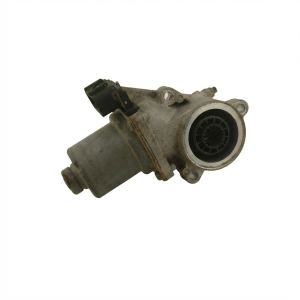
Used OEM Parts in Stock
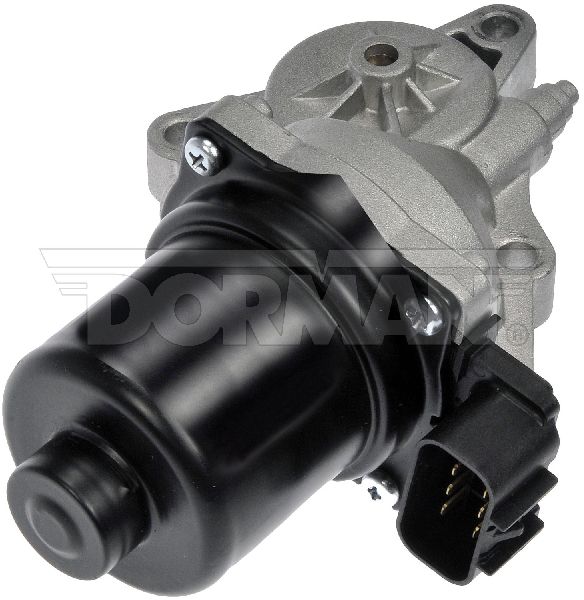
New Aftermarket Parts Available


The information in this article is provided for general reference and educational purposes only. Vehicle specifications, procedures, and part compatibility can vary by production date, trim level, and region. Always consult your vehicle's factory service manual and verify part numbers before purchasing or performing repairs. Safety-critical components such as airbags, seat belts, and braking systems should be installed by a qualified professional.
- Gmc SIERRA 3500:
- 🧭 Diagnostic Flowchart
- 🎬 Helpful Videos
- 🛍️ Shop This Part
- What's Unique About the 2017-2019 Gmc SIERRA 3500
- Symptoms You May Notice
- Most Likely Causes
- Rare But Worth Checking
- Diagnosis Steps
- Parts You'll Likely Need
- Related Codes That Often Appear With This One
- Technical Service Bulletins (TSBs) & Recalls
- Platform-Specific Known Issues
- Mechanic-Grade Diagnostic Values
- Hidden / Shadow Codes Worth Checking
- Scan Tool Commands That Help
- Wiring & Ground Locations
- Real Owner Repair Stories
- OEM Part Supersession History
- 🎟️ Get 5% Off