

U0109 on 2007-2014 Cadillac Escalade: Lost Communication With Fuel Pump Control Module Fixes
On a 2007-2014 Escalade, U0109 almost always points to a failed Fuel Pump Control Module (FPCM), often due to corrosion from its location on the frame. Before replacing it, check its connector, the related fuse in the underhood fuse box, and inspect the transmission X1 connector for issues. An OEM replacement requires programming, while some aftermarket brands like Dorman are pre-programmed.
- U0109 on a 2007-2014 Escalade means the Fuel Pump Control Module (FPCM) is offline, which will likely cause a no-start or stalling condition.
- The most common cause is the failure of the FPCM itself due to corrosion, as it's located in an exposed spot on the vehicle's frame.
- Before replacing the FPCM, always inspect its fuse, its electrical connector, and the main transmission (X1) connector for damage or corrosion.
- An OEM replacement module requires professional programming to the vehicle's VIN. Some aftermarket modules come pre-programmed.
What's Unique About the 2007-2014 Cadillac ESCALADE
On this generation of Cadillac Escalade and other GM trucks (GMT900 platform), the Fuel Pump Control Module is notoriously mounted on the driver's side frame rail cross-member, often above the spare tire. This exposed location makes the module and its electrical connector highly susceptible to corrosion and damage from road salt, water, and debris, a common issue discussed by owners. This design choice is a direct contributor to the high failure rate of this specific part on these vehicles.
Diagnostic Flowchart
Tap your situation to follow the diagnostic path that matches what you're seeing on this vehicle.
Symptoms You May Notice
- Engine cranks but will not start.
- Engine stalls unexpectedly while driving.
- Reduced engine power or 'limp mode'.
- Check Engine Light is on.
- Transmission may not shift correctly. [TSB #08-07-30-021H]
- Various other warning lights may be illuminated on the instrument panel. [TSB #08-07-30-021H]
- No audible whine or hum from the fuel pump when the key is turned to the 'ON' position.
- Replacing the in-tank fuel pump. The pump itself is usually functional; it's the control module that has failed or isn't receiving commands. A bad pump will not cause a U0109 communication code.
- Replacing the FPCM when the actual fault is a poor connection at the transmission X1 connector, as noted in TSB PIC4740F.
Most Likely Causes
- Failed Fuel Pump Control Module (FPCM) 🔴 High Probability → Shop Fuel Pump The module is mounted on the frame above the spare tire, where it is exposed to water, salt, and road debris, leading to internal failure from corrosion. 🎬 Watch how road salt destroys these modules and how to fix it. GM even issued a recall (NHTSA #14V614) for some model years due to potential internal contamination causing shorts.
How to confirm: After verifying power, ground, and communication lines to the module are intact, the module itself is the likely culprit. A scan tool that can attempt direct communication with the FPCM 🎬 Watch this professional diagnostic and replacement walkthrough for the FPCM. can confirm it is offline. An owner on Tahoe Yukon Forum confirmed a dealer diagnosed and replaced the module to fix the code.
Typical fix: Replace the Fuel Pump Control Module. The new module must be programmed to the vehicle unless a pre-programmed aftermarket unit is used.
Est. part cost: $80-$250 - Corroded FPCM Connector or Wiring 🟡 Medium Probability The same exposed location that damages the module also damages its electrical connector and nearby wiring. The pins can corrode or the wires can break.
How to confirm: Visually inspect the connector and harness at the FPCM for green or white corrosion, swollen wires, or broken pins. Perform a 'wiggle test' on the harness while monitoring communication.
Typical fix: Clean the connector terminals or, if damage is severe, replace the connector pigtail and splice it into the harness. A replacement pigtail is available under various part numbers.
Est. part cost: $20-$50 - Blown Fuse for the FPCM ⚪ Low Probability An internal short in a failing FPCM or a wiring issue can cause the fuse to blow. Corrosion in the underhood fuse box itself is also a known issue on GMT900 trucks that can cause a poor connection at the fuse.
How to confirm: Locate the fuse for the FPCM (often labeled 'F PUMP' or similar, typically fuse #21 in the underhood fuse box) and check for continuity. A visual inspection may show a broken filament or corroded legs.
Typical fix: Replace the blown fuse. If it blows again immediately, a short circuit exists that must be traced. If the fuse socket is corroded, the fuse box may need cleaning or replacement.
Est. part cost: $1-$5 - Poor Connection at Transmission Harness Connector (X1) ⚪ Low Probability → Shop Transmission Assembly GM TSB PIC4740F notes that unseated or corroded pins in this large connector can disrupt communication for multiple modules, including the FPCM, as the GMLAN communication wires pass through it.
How to confirm: Locate the X1 connector on the driver's side of the transmission. Disconnect and inspect for backed-out pins or 'fretting' corrosion (a gray film).
Typical fix: Clean the connector pins and apply dielectric grease before securely reconnecting. This is often misdiagnosed, leading to unnecessary FPCM replacement.
Est. part cost: $5-$15 (for cleaner and grease)
Rare But Worth Checking
- Damaged CAN Bus Wiring: The communication wires (often a twisted pair of Tan and Tan/White wires) could be damaged anywhere along the vehicle's frame. This is less common than a problem at a connector but possible if the vehicle has been in an accident or has underbody damage.
Diagnosis Steps
- Check for other DTCs. Multiple 'U' codes can point towards a network-wide issue rather than a single failed module, possibly related to the X1 connector. [TSB #08-07-30-021H]
- Check the FPCM fuse. Locate and inspect fuse #21 (20A) in the underhood fuse box. Check the fuse and its terminals for corrosion, which is a known issue. Replace if blown or corroded.
- Inspect the FPCM and its connector. The module is located on the driver's side frame cross-member, above the spare tire. Visually inspect the module, its wiring, and especially its connector for signs of corrosion, water damage, or physical impact.
- Test for Power and Ground. Using a multimeter, confirm that the FPCM connector is receiving battery voltage and has a solid ground connection.
- Inspect the Transmission X1 Connector. If power and ground are good, inspect the large X1 connector on the transmission for loose or corroded pins, as this is a known issue that can cause U0109 per TSB PIC4740F.
- Test CAN Bus Lines. If all else is good, check for proper voltage (approx. 2.5V on each line when idle) and resistance (approx. 60 ohms across the two lines) at the FPCM connector to verify the communication circuit is intact.
- Condemn the FPCM. If power, ground, and communication lines are all verified to be good, the Fuel Pump Control Module itself has failed and requires replacement.
Parts You'll Likely Need
- Fuel Pump Control Module
(OEM #20895924 (Supersedes previous numbers))— This is the most common point of failure for this code on this vehicle, primarily due to its vulnerable mounting location and internal shorts.
Trusted brands: ACDelco (OEM, requires programming), Dorman OE FIX 601-044 (Pre-programmed)
OEM price range: $150-$250
Aftermarket price range: $80-$180 - FPCM Connector Pigtail
(OEM #PT2782 (ACDelco), 84726045 (GM))— If the connector itself is damaged by corrosion beyond cleaning, a replacement pigtail is needed to ensure a solid connection to the new module.
Trusted brands: ACDelco, Dorman, EFI Connection
OEM price range: $40-$60
Aftermarket price range: $20-$40
Related Codes That Often Appear With This One
- U0073 — Control Module Communication Bus 'A' Off. This is a general network code often set alongside more specific ones like U0109. [TSB #08-07-30-021H]
- U0100 — Lost Communication with ECM/PCM. A network-wide issue can cause multiple modules to lose communication simultaneously. [TSB #08-07-30-021H]
- U0101 — Lost Communication with TCM. This code is particularly common if the fault lies in the transmission X1 connector. [TSB #08-07-30-021H]
- P069E — Fuel Pump Control Module Requested MIL Illumination. This is a code logged by the ECM indicating the FPCM has detected a fault with its own circuits or the fuel pump. It often appears with U0109.
Technical Service Bulletins (TSBs) & Recalls
- 08-07-30-021H: Mentions U0109 as one of several communication DTCs that can set due to network issues, causing various electrical and shifting problems.
- PIC4740F: While not directly for the Escalade, this TSB is highly relevant to the GMT900 platform, identifying the transmission X1 connector as a common source of communication faults that can trigger U0109.
Platform-Specific Known Issues
- The provided NHTSA TSB #08-07-30-021H confirms that U0109 can appear with a wide range of other communication codes due to network issues, causing symptoms like the transmission not shifting or various warning lamps illuminating.
- A safety recall (NHTSA #14V614, GM Campaign #14515) was issued for the FPCM on many 2008-2014 models, including the Escalade, for a defect that could cause an electrical short, leading to stalling or a no-start condition.
- Owners on forums like Tahoe Yukon Forum frequently report fixing U0109 by replacing the FPCM, confirming it as the common failure point.
Mechanic-Grade Diagnostic Values
- GMLAN Bus Resistance — expected: 60 Ohms (± 5 Ohms). Failure: A reading of 120 Ohms indicates an open in the circuit or one of the terminating resistors is offline. A reading significantly less than 60 Ohms indicates the CAN High and Low wires are shorted together.
- FPCM Power Supply Voltage (at connector) — expected: 11.5–12.5 V. Failure: Low or no voltage at the Red/White wire (Pin 32) indicates a problem with the fuse or wiring from the fuse box.
- FPCM Ignition 1 Voltage (at connector) — expected: 12V+ with key in ON position. Failure: No voltage at the Pink wire (Pin 15) indicates a fault in the ignition voltage circuit.
- Fuel Pump Relay Control Signal (at connector) — expected: 12V+ for 3-6 seconds with key ON, or constant 12V+ while cranking.. Failure: No voltage at the Dark Green/White wire (Pin 13) indicates the ECM is not commanding the FPCM to turn on. This could be a broken wire from the ECM (Pin 50) or a faulty ECM.
Scan Tool Commands That Help
- GDS2 (GM Global Diagnostic System 2): Module Diagnostics > Fuel Pump Control Module > Control Functions — After installing a new OEM FPCM, this function is used to perform the 'Fuel Pump Module Matching' or 'Fuel Pump Self Learning Process' which programs the new module to the vehicle. It can also be used to command the fuel pump on to test its function, bypassing the module's internal logic.
Wiring & Ground Locations
- FPCM Connector — On the Fuel Pump Control Module, located on the driver's side frame cross-member, typically above the spare tire.. This is the primary connection point for all power, ground, and communication signals to the module. Key pins to test are: Pin 1 (Black) for ground, Pin 13 (Dark Green/White) for ECM signal, Pin 15 (Pink) for ignition voltage, and Pin 32 (Red/White) for battery voltage.
- G303 / G304 — Near the base of the left 'B' pillar.. These are major body ground points. While not the direct ground for the FPCM, poor grounds here can cause myriad electrical issues and communication faults on the network.
- FPCM Ground — The FPCM is grounded via the Black wire (Pin 1) in its connector, which traces back to a chassis ground.. A poor ground connection at Pin 1 will prevent the module from powering on and communicating, directly causing a U0109.
- ECM C1 Connector, Pin 50 — On the Engine Control Module (ECM), which is typically located in the engine bay.. This is the source of the 'turn-on' signal for the FPCM. The Dark Green/White wire runs from ECM Pin 50 to FPCM Pin 13. A break in this wire will prevent the FPCM from activating, even if the FPCM itself is good.
Real Owner Repair Stories
- YouTube channel 'walosauto repair' (2007-2014 GM Truck/SUV (specific model not stated, but GMT900 platform)) — Crank no start, U0109 code stored.
❌ Tried (didn't work) Initial diagnosis pointed towards the FPCM.
✅ What actually fixed it The root cause was a poor connection at fuse #21 in the underhood fuse box. The fuse legs were corroded and making intermittent contact. Cleaning the contacts and replacing the fuse resolved the U0109 code and the no-start condition, though the video recommends replacing the entire fuse box due to internal damage. - Reddit user in r/GMT400 (describing a GMT900 issue) (2009 Silverado LT) — Electrical short in fuse block, leading to crank-no-start. After replacing fuse block, engine would crank but not start, no fuel pump prime, code U0109.
❌ Tried (didn't work) Checked relays., Replaced the entire underhood fuse block., Checked harness connectors at FPCM and PCM.
✅ What actually fixed it The user suspected a bad PCM since power was not being sent to the fuel pump fuse circuit. Another user suggested checking a communication line connector under the driver's side dash before replacing the PCM, implying a network wiring issue as a possible cause. The final resolution was not posted, but highlights the diagnostic path toward checking PCM output and network junctions when primary components and fuses are good.
OEM Part Supersession History
15862192, 20759945, 25848228→20895924 (current as of searches)— Revisions to improve reliability and address internal component failures that led to recalls and high failure rates.
Model Year Variations Within This Range
- 2007-2009: Some early models may have different original part numbers for the FPCM (e.g., 15862192) which have all been superseded by newer revisions. The function and diagnosis remain the same.
Helpful Videos
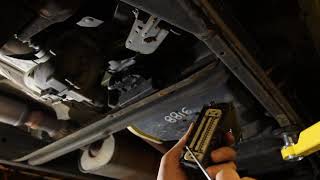
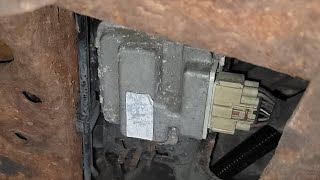
![Easy Fix for Common Chevy Problem [Fuel Pump Control Module]](https://img.youtube.com/vi/38Xeo1uLBoU/mqdefault.jpg)

Used OEM Parts in Stock
New Aftermarket Parts Available





The information in this article is provided for general reference and educational purposes only. Vehicle specifications, procedures, and part compatibility can vary by production date, trim level, and region. Always consult your vehicle's factory service manual and verify part numbers before purchasing or performing repairs. Safety-critical components such as airbags, seat belts, and braking systems should be installed by a qualified professional.
- Cadillac ESCALADE:
- 🧭 Diagnostic Flowchart
- 🎬 Helpful Videos
- 🛍️ Shop This Part
- What's Unique About the 2007-2014 Cadillac ESCALADE
- Symptoms You May Notice
- Most Likely Causes
- Rare But Worth Checking
- Diagnosis Steps
- Parts You'll Likely Need
- Related Codes That Often Appear With This One
- Technical Service Bulletins (TSBs) & Recalls
- Platform-Specific Known Issues
- Mechanic-Grade Diagnostic Values
- Scan Tool Commands That Help
- Wiring & Ground Locations
- Real Owner Repair Stories
- OEM Part Supersession History
- Model Year Variations Within This Range
- 🎟️ Get 5% Off