

U0109 on 2007-2013 Cadillac Escalade EXT: Lost Communication With Fuel Pump Control Module
This code means the Fuel Pump Control Module (FPCM) isn't communicating with the vehicle's main computer. This often results in a crank-no-start or stalling condition. Before replacing the FPCM, inspect the vehicle's wiring, especially the main transmission harness connector and underhood fuse box, as these are common failure points.
- U0109 means the Fuel Pump Control Module (FPCM) has stopped communicating, which will likely prevent the engine from starting or cause it to stall.
- Before replacing any parts, thoroughly inspect the 16-way electrical connector on the transmission for corrosion or damage, as this is a known weak point identified in a GM Technical Service Bulletin.
- This is a critical safety issue. Do not drive the vehicle until it is repaired, as it can shut down without warning.
- If the FPCM needs to be replaced, the new module will require professional programming to work with your vehicle's VIN.
What's Unique About the 2007-2013 Cadillac ESCALADE EXT
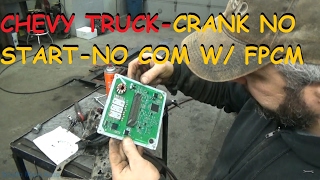
On this GMT900 truck platform, a U0109 code is frequently part of a larger network communication failure rather than an isolated FPCM issue. GM Technical Service Bulletin #08-07-30-021H specifically addresses this, pointing to issues like chafed wiring or backed-out terminals in the 16-way transmission harness connector that can cause a cascade of communication codes, including U0109. This means a simple connector or wiring problem can mimic a failed module, often leading to misdiagnosis and unnecessary parts replacement. 🎬 Watch: Diagnosing a crank no start with no FPCM communication. The FPCM is also located on a frame crossmember above the spare tire, exposing it to road salt and moisture which leads to high failure rates.
Diagnostic Flowchart
Tap your situation to follow the diagnostic path that matches what you're seeing on this vehicle.
Symptoms You May Notice
- Engine cranks but will not start.
- Engine stalls unexpectedly while driving.
- No audible hum from the fuel pump when the key is turned to 'ON'.
- Transmission may not shift correctly or may default to one gear.
- Check Engine Light (Malfunction Indicator Lamp) is illuminated.
- Instrument panel gauges may fluctuate erratically.
- Door locks may cycle on their own.
- Various other warning lights may illuminate on the dashboard, such as for the braking system or Stabilitrak.
- Replacing the fuel pump itself. The U0109 code is a communication error with the control module, not a mechanical failure of the pump. While a failing pump can sometimes damage the FPCM, the module and its wiring should always be diagnosed first. One owner on Reddit replaced the pump only to find the issue was still present.
Most Likely Causes
- Damaged Wiring or Poor Connection at Transmission Harness Connector 🔴 High Probability → Shop Transmission Assembly As detailed in TSB #08-07-30-021H, the GMLAN communication wires for multiple modules, including the FPCM, pass through the 16-way transmission harness connector (X1). This connector is susceptible to corrosion, chafing, and backed-out terminals, causing widespread communication loss.
How to confirm: Visually inspect the 16-way electrical connector on the transmission for corrosion (a gray or green film), damage, or unseated pins. Test the CAN bus wires (typically Tan and Tan/Black or Tan/White) for continuity and proper resistance using a multimeter.
Typical fix: Repair the damaged wiring or clean/reseat the terminals in the connector. In some cases, a new connector pigtail may be required. Applying dielectric grease during reassembly can prevent future moisture intrusion.
Est. part cost: $10-$50 - Failed Fuel Pump Control Module (FPCM) 🟡 Medium Probability → Shop Fuel Pump The FPCM is an electronic module that can fail over time due to heat, vibration, or internal component failure. On many GM trucks, it is mounted to the frame rail, often above the spare tire, exposing it to the elements, road salt, and moisture which can lead to corrosion and failure.
How to confirm: After verifying all wiring, power, and grounds to the FPCM are good, the module itself is the likely culprit. A bi-directional scan tool can attempt to communicate directly with the module; a lack of response points to a failed FPCM.
Typical fix: Replace the Fuel Pump Control Module. The new module must be programmed to the vehicle's VIN to function correctly, although some aftermarket modules are sold pre-programmed.
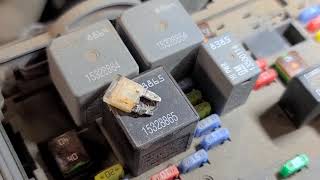
Est. part cost: $80-$200 - Blown Fuse or Corrosion in Underhood Fuse Box ⚪ Low Probability → Shop Fuse Box The underhood fuse box is susceptible to water intrusion, which can cause corrosion on the fuse terminals and internal connections. Fuse 21 (FSCM) is a common point of failure.
How to confirm: Locate the fuse for the fuel pump or FPCM (typically fuse #21) in the vehicle's underhood fuse box and check if it is blown or if its terminals are corroded. A blown fuse often indicates an underlying short circuit that must also be found and repaired.
Typical fix: Replace the blown fuse with one of the same amperage rating after diagnosing the cause. If corrosion is present, the fuse box may need to be disassembled and cleaned, or replaced entirely.
Est. part cost: $1-$200 - Poor Ground Connection ⚪ Low Probability Corrosion on chassis grounds is common on vehicles exposed to road salt and moisture. A related TSB for hybrid models, PIT4853D, specifically calls out checking ground G300 for undercoating or corrosion, which can cause a poor connection. G300 is located on a body mount under the driver's door.
How to confirm: Locate the primary ground for the FPCM (referencing a wiring diagram, often G300 or near the module's mounting location) and inspect it for corrosion or looseness. Perform a voltage drop test on the ground circuit.
Typical fix: Remove the ground connection, clean the contact surfaces on the terminal and the chassis until they are bare metal, and re-secure the connection. Applying a protective coating can prevent future corrosion.
Est. part cost: $0
Rare But Worth Checking
- Poor Connection at Under-Dash Connector:
Diagnosis Steps
- Scan for all DTCs in all modules. Note if other 'U' (communication) codes are present, which would point to a network-wide issue rather than a single module failure.
- Check the fuse for the Fuel Pump Control Module (often fuse #21 in the underhood fuse box). Inspect for a blown fuse and for corrosion on the terminals.
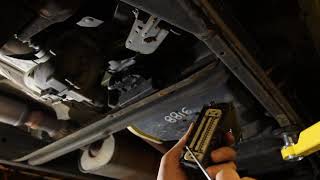
- Locate the FPCM, typically mounted on the driver's side frame rail, near or above the spare tire. 🎬 See this helpful overview of FPCM diagnosis and replacement. Inspect its connector and nearby wiring for any obvious damage, corrosion, or chafing.
- Locate the 16-way transmission harness connector on the side of the transmission. Disconnect it and carefully inspect both sides for corrosion (a gray or green film), backed-out pins, or moisture intrusion, as specified in TSB 08-07-30-021H.
- If no visible issues are found, use a multimeter to check for proper power and ground at the FPCM connector.
- Test the GMLAN (CAN bus) circuit. With the battery disconnected, measure the resistance between the two communication wires (Pin 6 and Pin 14) at the diagnostic port (DLC). It should be approximately 60 ohms. If it's 120 ohms, there is a break in the circuit or a missing/failed terminating resistor.
- If all wiring, connectors, and grounds test good, the FPCM is the most likely cause of the failure.
- Replace the FPCM and have the new module programmed by a qualified technician or dealership.
Parts You'll Likely Need
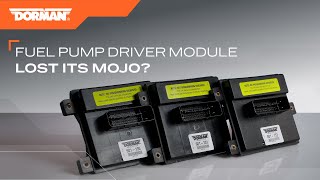
- Fuel Pump Control Module
(OEM #20877116 (for 2010-2012 models, verify by VIN))— This module is the primary suspect if all wiring and connections are confirmed to be in good condition. Its location on the frame rail makes it vulnerable to weather-related failure.
Trusted brands: ACDelco, GM Genuine, Dorman (often pre-programmed) 🎬 Watch: How to use a pre-programmed module to save time.
OEM price range: $120-$250
Aftermarket price range: $80-$150
Related Codes That Often Appear With This One
- U0073 — Control Module Communication Bus 'A' Off. This is a general network code indicating a problem on the high-speed GMLAN, which is consistent with the wiring issues described in TSB 08-07-30-021H.
- U0100 — Lost Communication with ECM/PCM. This often appears with other U-codes when a major network disruption occurs.
- U0101 — Lost Communication with TCM (Transmission Control Module). Since the problematic connector is on the transmission, it's very common to see communication codes for the TCM alongside the FPCM.
- P069E — Fuel Pump Control Module Requested MIL Illumination. This code indicates the FPCM has detected an internal fault and has asked the main computer to turn on the check engine light. It often accompanies U0109.
Technical Service Bulletins (TSBs) & Recalls
- 08-07-30-021H: Loss of High Speed GMLAN Communications, Intermittent No Crank, IP Gage Fluctuation, Various IP Warning Lamps Illuminated, Transmission May Not Shift, Communication DTCs U0073, U0100, U0101, U0102, U0109, U0121 or U0140 set.
- PIT4853D: A TSB for hybrid models that also lists U0109 and points to checking ground G300 for poor connection due to undercoating or corrosion.
Platform-Specific Known Issues
- TSB 08-07-30-021H: This bulletin is the most critical piece of information for this code on this vehicle. It highlights that a loss of high-speed GMLAN communication, causing codes like U0109, is often due to terminal or wiring issues in the 16-way transmission harness connector, not a failed module.
Mechanic-Grade Diagnostic Values
- CAN Bus Network Resistance — expected: ~60 Ohms. Failure: A reading of ~120 Ohms indicates an open circuit or a failed terminating resistor. A reading significantly less than 60 Ohms suggests a short circuit.
- CAN Bus Voltage (Key On, Engine Off) — expected: CAN High (Pin 6 to Ground): ~2.7V. CAN Low (Pin 14 to Ground): ~2.3V.. Failure: Voltages that are stuck high, low, or at 0V indicate a short to power, short to ground, or an open circuit on that line.
- FPCM Command Signal — expected: 12V signal for 3-6 seconds with key on, or constant 12V while cranking.. Failure: No voltage on this wire indicates a break in the wire or a failed ECM that is not sending the command.
- FPCM Ground Circuit Resistance — expected: Less than 3.0 Ohms.. Failure: Resistance higher than 3.0 Ohms indicates a corroded or loose ground connection that needs to be repaired.
Scan Tool Commands That Help
- Tech2 / GDS2: Fuel Pump On/Off Command — After verifying power and ground to the FPCM, this bidirectional command attempts to manually turn the fuel pump on. If the pump runs with the command but not on its own, it suggests a command signal issue from the ECM rather than a failed FPCM or pump.
- Tech2 / GDS2: Module Status — This function polls all modules on the network. If the FPCM shows as 'Not Present' or 'Offline', it confirms the communication loss seen by the ECM, pointing the diagnosis toward the network wiring, connectors, or the FPCM itself.
Wiring & Ground Locations
- G300 — Under the vehicle, below the driver's door, on a body mount.. This is a primary body ground point. A related TSB (PIT4853D) for hybrid models specifically calls out checking this ground for corrosion or being covered in undercoating, which can cause a poor connection and lead to communication codes like U0109.
- X1 Connector (Transmission) — The large 16-pin electrical connector on the driver's side of the transmission housing.. This is the location cited in TSB 08-07-30-021H. The GMLAN communication wires for the FPCM pass through this connector, and it's a very common point of failure due to corrosion or backed-out pins, causing U0109 and other network codes.
- FPCM Connector — Connected to the FPCM module, which is mounted on the driver's side frame rail, often above the spare tire.. This is the direct connection to the module. It's where power, ground, and the GMLAN signal must be tested. The Dark Green/White wire in Pin 13 is the command signal from the ECM.
- Underhood Fuse Box (BEC) — In the engine compartment, on the driver's side.. This box contains Fuse 21 (FSCM), which provides power to the Fuel Pump Control Module. The box is known to suffer from internal corrosion due to water intrusion, which can interrupt power and cause U0109.
Real Owner Repair Stories
- YouTube video from 'Car & Truck Problems' (GMC Yukon (platform mate)) — Crank no start condition.
❌ Tried (didn't work) Initial diagnosis pointed to the FPCM.
✅ What actually fixed it The technician found that Fuse 21 in the underhood fuse box, which powers the FPCM, had severely corroded legs. Replacing the fuse temporarily fixed the problem, but the root cause was corrosion inside the fuse box itself, which needed to be replaced for a permanent repair. - YouTube video from 'Rainman Ray's Repairs' (2018 Dodge RAM 1500 (Illustrative example of a common issue)) — Crank no start, U0109 code.
❌ Tried (didn't work) The fuse for the FPCM was checked and found to be good., Power was confirmed at the FPCM connector.
✅ What actually fixed it The ground wire for the FPCM was found to be completely broken at the chassis ground point (G916A on that vehicle). The terminal had corroded and separated from the frame. Repairing the ground connection restored communication and fixed the no-start issue.
OEM Part Supersession History
20791901, 20827745, 20850927→20877116— Standard part revision and consolidation by the manufacturer.
Heads up: Part number 20877116 is listed for 2010-2012 models. Earlier models (2007-2009) may use a different part number. Always verify the correct part number by VIN before ordering.20964304→20964305— Part revision for later models.
Heads up: These part numbers are typically for 2013-2014 models. Using them on an earlier model may result in a B1001 'Option Configuration Error' if not programmed correctly.
Model Year Variations Within This Range
- 2007-2009: These earlier models are highly susceptible to the wiring and connector issues described in TSB 08-07-30-021H. The FPCM part numbers may differ from later models.
- 2010-2012: These models commonly use FPCM part number 20877116. While still susceptible to wiring issues, module failure becomes a more frequent cause.
- 2013: The FPCM part number may change again for the final model year of this body style, often to 20964305. VIN verification is critical.
Helpful Videos
Used OEM Parts in Stock
New Aftermarket Parts Available




The information in this article is provided for general reference and educational purposes only. Vehicle specifications, procedures, and part compatibility can vary by production date, trim level, and region. Always consult your vehicle's factory service manual and verify part numbers before purchasing or performing repairs. Safety-critical components such as airbags, seat belts, and braking systems should be installed by a qualified professional.
- Cadillac ESCALADE EXT:
- 🧭 Diagnostic Flowchart
- 🎬 Helpful Videos
- 🛍️ Shop This Part
- What's Unique About the 2007-2013 Cadillac ESCALADE EXT
- Symptoms You May Notice
- Most Likely Causes
- Rare But Worth Checking
- Diagnosis Steps
- Parts You'll Likely Need
- Related Codes That Often Appear With This One
- Technical Service Bulletins (TSBs) & Recalls
- Platform-Specific Known Issues
- Mechanic-Grade Diagnostic Values
- Scan Tool Commands That Help
- Wiring & Ground Locations
- Real Owner Repair Stories
- OEM Part Supersession History
- Model Year Variations Within This Range
- 🎟️ Get 5% Off