

U0109 on 2011-2013 Chevrolet Volt: Lost Communication With Fuel Pump Control Module
This code means the main computer has lost communication with the module that controls the gasoline engine's fuel pump. The most common cause is a loose F2RA fuse or its associated wiring (circuit 1540) in the left rear fuse box located in the trunk, as noted in GM Technical Service Bulletin PIC5655A. The car will only run on battery power until this communication link is restored.
- U0109 on a Volt means the gas engine's fuel pump module isn't communicating, disabling the range extender.
- Before replacing any parts, check the F2RA fuse in the left rear trunk fuse box; a loose fuse is the most common cause per GM TSB PIC5655A.
- The car is safe to drive on remaining battery power, but range is severely limited.
- If the Fuel Pump Control Module (FPCM) does need replacement, it requires programming by a dealer or qualified shop.
What's Unique About the 2011-2013 Chevrolet VOLT
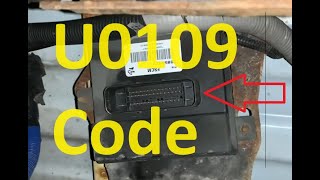
On a Chevrolet Volt, this code specifically affects the gasoline range-extender engine, not the primary electric drive system. A key symptom unique to the Volt is that the car may still drive normally on its battery charge, but the gas engine will fail to start when the battery is depleted or when required for maximum power or heating. The problem is so common that General Motors issued a Technical Service Bulletin (PIC5655A) pointing directly to loose connections in the rear fuse box as the likely culprit, rather than a failed module itself. 🎬 Watch: Troubleshooting lost communication with the fuel pump module. The bulletin explicitly advises technicians *not* to replace the FPCM unless all connection and wiring checks have been completed.
Diagnostic Flowchart
Tap your situation to follow the diagnostic path that matches what you're seeing on this vehicle.
Symptoms You May Notice
- Check Engine Light is on.
- Gasoline engine (range extender) will not start.
- Vehicle operates in battery-only mode.
- "Propulsion Power is Reduced" message may appear on the dash.
- Inability to switch from electric to gas power when the battery is low.
- Engine may crank but will not fire due to lack of fuel delivery.
- Replacing the Fuel Pump Control Module (FPCM) without checking connections. The official GM service bulletin strongly advises against replacing the FPCM until all wiring and fuse box connections have been thoroughly inspected.
- Replacing the fuel pump. The code indicates a communication failure with the control module, not a mechanical failure of the pump itself.
Most Likely Causes
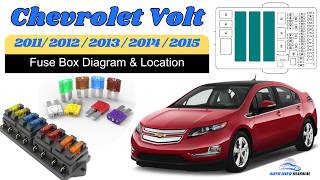
- Loose fuse or connection at the Left Rear Fuse Box (X53A) 🔴 High Probability This is a well-documented issue in GM Technical Service Bulletin #PIC5655A for 2011-2012 Volts. Vibrations can cause the F2RA fuse or the terminal for circuit 1540 (the FPCM power feed) to become loose in the fuse block over time.
How to confirm: Locate the rear fuse box behind a cover on the left (driver's) side of the trunk/cargo area. Visually inspect and physically check the F2RA fuse to ensure it is seated firmly. Perform a 'wiggle test' on the wiring harness connected to the fuse box, specifically focusing on the power feed wire for circuit 1540, to see if the fault can be duplicated while monitoring communication with a scan tool.
Typical fix: Reseat the fuse firmly. If the connection for circuit 1540 is loose, the fuse box terminal may have lost tension and require repair or replacement. In some cases, GM advises replacing the fuse box and the specific wiring harness terminal to ensure a permanent fix.
Est. part cost: $1-$10 for a fuse, $150-$300 for a fuse box if replacement is needed. - Damaged Wiring or Poor Connection 🟡 Medium Probability The wiring for the FPCM runs to the rear of the vehicle. Though generally well-protected inside the cabin, connectors can become loose or pins can corrode if exposed to moisture.
How to confirm: Perform a visual inspection of the wiring harness leading to the Fuel Pump Control Module, which is also located in the rear of the vehicle. Check for continuity, shorts to ground, and proper voltage at the FPCM connector using a digital multimeter and a vehicle-specific wiring diagram.
Typical fix: Repair or replace the damaged section of the wiring harness. Clean any corroded connectors and ensure pins have proper tension.
Est. part cost: $10-$50 for wiring repair supplies. - Failed Fuel Pump Control Module (FPCM) ⚪ Low Probability → Shop Fuel Pump While electronic modules can fail, the TSB for this vehicle explicitly states to check wiring and connections first and advises *not* to replace the FPCM unless all other causes are ruled out. Module failure is less common than the connection issue.
How to confirm: After confirming the fuse, all connections, and wiring are good, and that the module is receiving proper power and ground, the module itself is the likely point of failure. This requires a bi-directional scan tool to attempt to communicate directly with the module. If it's powered but unresponsive, it has likely failed.
Typical fix: Replace the Fuel Pump Control Module. The replacement module must be programmed by a GM dealer or a qualified shop with the proper tools to function in the vehicle.
Est. part cost: $50-$150
Rare But Worth Checking
- Faulty Powertrain Control Module (PCM): → Shop Engine Control Module (ECM) This is extremely rare. The PCM is the vehicle's main computer. A PCM failure would typically cause multiple other communication codes and significant drivability issues, not just an isolated U0109.
- Faulty OnStar Module (VCIM): In some GM vehicles of this era, a failing OnStar module (VCIM) has been found to cause interference on the CAN bus, leading to random communication codes like U0109. In one documented case on a 2011 Camaro, replacing the VCIM resolved a recurring U0109 and P069E issue after other diagnostics failed. This is an unusual but possible cause if the primary wiring and FPCM checks do not resolve the problem.
Diagnosis Steps
- Read all fault codes from the vehicle's OBD-II port. Note any other codes that are present, especially P069E.
- Locate the left rear fuse box (X53A) in the trunk, on the driver's side, behind a removable panel.
- Following TSB #PIC5655A, carefully inspect the 20A F2RA fuse. Remove it and check for any signs of corrosion or heat damage on the terminals and ensure it fits snugly back into the fuse box.
- Inspect the main power feed and wiring harness connected to the fuse box. Gently perform a 'wiggle test' on the wires, especially the wire for circuit 1540, to see if the connection is loose or if it causes the code to change status on a live scan tool.
- If connections are secure, locate the Fuel Pump Control Module (FPCM). On the Volt, it is typically located in the rear of the vehicle, often under trim panels near the fuel tank area.
- Inspect the electrical connector and wiring harness at the FPCM for damage, corrosion, or loose pins.
- Using a multimeter and a wiring diagram, verify that the FPCM is receiving 12V power on its supply circuit (fed by the F2RA fuse) and has a solid ground connection.
- If all wiring and connections are confirmed to be good, the FPCM is the most likely failed component.
- If replacing the FPCM, the new part (GM #20867261) will require programming to the vehicle's VIN using GM's service software.
Parts You'll Likely Need
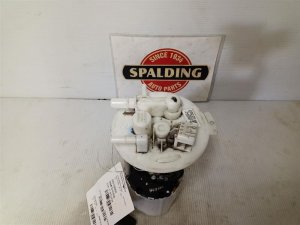
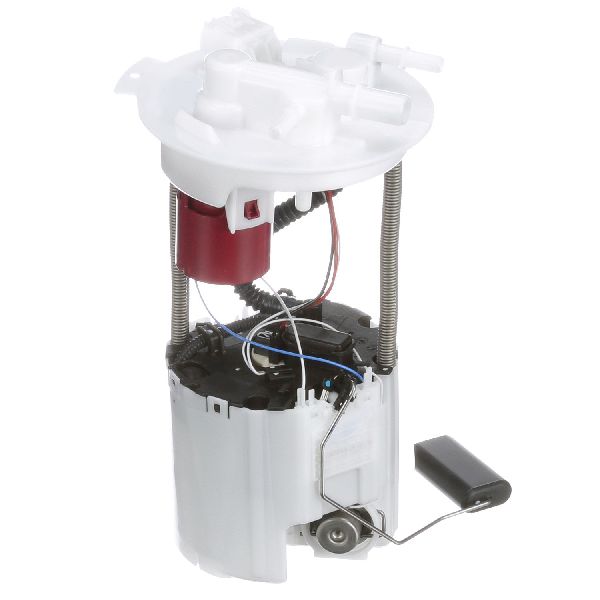
- Fuel Pump Flow Control Module
(OEM #20867261)— This module is the source of the communication failure. It is the part to replace only after verifying all wiring and fuse connections are intact per the TSB. This part supersedes part number 20867260 and requires programming.
Trusted brands: ACDelco, GM Genuine Parts
OEM price range: $80-$120
Aftermarket price range: $50-$90 - Mini Fuse (20A) — The F2RA fuse in the rear fuse box can become loose or its terminals can lose tension, causing intermittent communication loss.
Trusted brands: Bussmann, Littlefuse
OEM price range: $1-$5
Aftermarket price range: $1-$5
Related Codes That Often Appear With This One
- P069E — This code, 'Fuel Pump Control Module Requested MIL Illumination,' is often set as a companion to U0109. It indicates the FPCM has detected an internal fault or is not receiving a valid command, and has asked the main computer to turn on the Check Engine Light.
Technical Service Bulletins (TSBs) & Recalls
- PIC5655A / SB-10044236-8821: Addresses loss of communication with the Fuel Pump Control Module (U0109) and directs technicians to inspect connections at the left rear fuse box (X53A) before replacing any parts.
- PIC6039A: Notes that for 2011-2015 Volts, the main power feed terminals ('rosebud' style) in the rear fuse block (X53) are not available for individual service, and a damaged terminal requires replacement of the entire wiring harness.
Platform-Specific Known Issues
- A GM Technical Service Bulletin (PIC5655A, also referenced as SB-10044236-8821) was issued for 2011-2012 Volts for this exact code. It points to a loose connection for circuit 1540 or a loose F2RA fuse in the left rear fuse box as the primary cause and explicitly warns against replacing the FPCM without performing these checks first.
Mechanic-Grade Diagnostic Values
- CAN Bus Resistance — expected: Approximately 60 Ω when measured across CAN High (Pin 6) and CAN Low (Pin 14) at the OBD-II port with the battery disconnected.. Failure: A reading of 120 Ω suggests an open circuit or a missing terminating resistor on the network. A reading near 0 Ω indicates the CAN High and Low wires are shorted together.
- CAN Bus Voltage (Recessive State) — expected: Approximately 2.5V on both CAN High and CAN Low lines, measured to a known good ground with the key on.. Failure: Significant deviation from 2.5V on either line indicates a bus fault.
- CAN Bus Voltage (Dominant State) — expected: During active communication, CAN High should be ~3.5V and CAN Low should be ~1.5V.. Failure: Voltages that do not switch between recessive and dominant states indicate a communication failure.
- FPCM Power Supply Voltage — expected: 11.5V - 12.5V at the module's power input pin with the key on.. Failure: Low or no voltage points to a problem with the power supply from the fuse box (circuit 1540), not the module itself.
Scan Tool Commands That Help
- GDS2 (GM Global Diagnostic System 2): Fuel Pump Output Control / Fuel Pump Relay Command — This bidirectional control allows a technician to manually command the fuel pump ON and OFF. It is used to verify the integrity of the FPCM, the wiring, and the pump itself, bypassing normal ECM commands to isolate the fault.
- GDS2 (GM Global Diagnostic System 2): Configuration/Reset Functions > Fuel Pump Driver Control Module Configuration — This function is mandatory after replacing the Fuel Pump Control Module. It programs the new module to the vehicle's VIN and allows it to communicate correctly with the other vehicle systems.
- GDS2 (GM Global Diagnostic System 2): Data Bus Diagnostic Tool — This tool, which installs with GDS2, can be used to actively query all modules on the network to see which ones are not communicating, helping to quickly identify the source of a U-code.
Wiring & Ground Locations
- X53A Left Rear Fuse Box — Located in the trunk/cargo area, behind a cover on the driver's side.. This fuse box contains the F2RA fuse and the connection for circuit 1540, which supplies power to the FPCM. TSB PIC5655A identifies a loose fuse or a poor terminal connection here as the primary cause of U0109.
- Circuit 1540 Terminal — The wire terminal for circuit 1540 within the X53A fuse box connector.. TSB PIC6039A states that the main power feed terminals ('rosebud' style) in this fuse block are not individually serviceable. If this terminal has poor retention or is damaged, the entire wiring harness must be replaced, which is a critical and easily missed diagnostic detail.
- FPCM Ground — The FPCM is located in the rear of the vehicle. Its ground wire (typically black) attaches to a nearby chassis ground point on the frame or body.. A corroded or loose ground connection is a common cause for module communication failure. While the specific ground point number for the Volt's FPCM is not readily available, ensuring the module has a clean, tight connection to the chassis is a critical diagnostic step.
OEM Part Supersession History
20867260→20867261— Standard part revision and update by the manufacturer.
Model Year Variations Within This Range
- 2013: The High Voltage Interlock Circuit (HVIC) system was changed for the 2013 model year. While not directly affecting the FPCM, this indicates that wiring and module logic were updated during the 2011-2013 production run, and technicians should always verify diagrams specific to the vehicle's year.
Helpful Videos

Used OEM Parts in Stock
New Aftermarket Parts Available




The information in this article is provided for general reference and educational purposes only. Vehicle specifications, procedures, and part compatibility can vary by production date, trim level, and region. Always consult your vehicle's factory service manual and verify part numbers before purchasing or performing repairs. Safety-critical components such as airbags, seat belts, and braking systems should be installed by a qualified professional.
- Chevrolet VOLT:
- 🧭 Diagnostic Flowchart
- 🎬 Helpful Videos
- 🛍️ Shop This Part
- What's Unique About the 2011-2013 Chevrolet VOLT
- Symptoms You May Notice
- Most Likely Causes
- Rare But Worth Checking
- Diagnosis Steps
- Parts You'll Likely Need
- Related Codes That Often Appear With This One
- Technical Service Bulletins (TSBs) & Recalls
- Platform-Specific Known Issues
- Mechanic-Grade Diagnostic Values
- Scan Tool Commands That Help
- Wiring & Ground Locations
- OEM Part Supersession History
- Model Year Variations Within This Range
- 🎟️ Get 5% Off