

U0109 on 2018-2022 Ford Explorer Police Intercept: Causes and Fixes for Lost FPCM Communication
On a 2018-2022 Explorer Police Intercept, code U0109 almost always indicates a loose or damaged wiring harness connector at the Fuel Pump Control Module (FPCM), not a failed module. Ford has issued multiple Technical Service Bulletins for this exact problem. Inspecting and securing the FPCM connector (often with a zip tie as a preventative measure) is the most common fix, frequently costing nothing in parts.
- U0109 on this vehicle is a critical code that makes it unsafe to drive due to the risk of stalling.
- Do not replace any parts before physically inspecting the electrical connector on the Fuel Pump Control Module (FPCM) underneath the vehicle.
- The most common fix, documented in multiple Ford TSBs, is simply reseating the loose FPCM connector and securing it with a zip tie.
- This code is almost always an electrical connection problem, not a failure of the FPCM or the fuel pump itself.
- Check for related codes like P0627 and P025A, as their presence further confirms a wiring harness issue at the FPCM.
What's Unique About the 2018-2022 Ford EXPLORER POLICE INTERCEPT
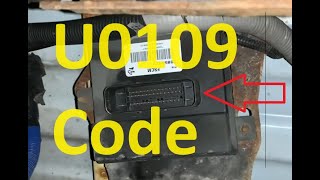
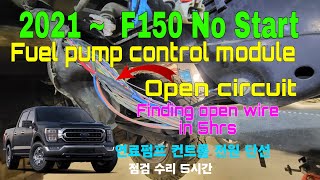
This issue is extremely common across many Ford platforms of this era, including the F-150, Expedition, Navigator, Transit, and Lincoln Aviator, as confirmed by multiple Ford Technical Service Bulletins (TSBs). The problem is so prevalent that the primary suspect for a U0109 code 🎬 Watch: A breakdown of common causes and fixes for U0109 codes. is not a failed part, but rather a poor connection at the FPCM harness connector. This points to a potential weakness in the connector's design or security from the factory, making a physical inspection the mandatory first step before any parts are replaced. Many owners and technicians report the connector's locking tab is weak or broken, necessitating the use of a zip tie 🎬 See how a loose connector causes no-start issues on Ford trucks. to keep it secure.
Diagnostic Flowchart
Tap your situation to follow the diagnostic path that matches what you're seeing on this vehicle.
Generation note: This year range covers the end of the fifth generation (2018-2019) and the start of the sixth generation (2020-2022) of the Explorer-based Police Interceptor Utility. The cited TSBs from Ford apply to vehicles in both generations, indicating the FPCM wiring harness issue is a known problem across the platform redesign. The TSBs specifically call out different connector and ground point identifiers for each generation.
Symptoms You May Notice
- Check Engine Light (MIL) is on
- Engine cranks but will not start
- Engine stalls unexpectedly while driving or at idle
- Hesitation or loss of power during acceleration
- No audible 'hum' or 'whine' from the fuel pump when the key is turned to the 'ON' position
- Wrench light may be illuminated on the instrument cluster
- Replacing the in-tank fuel pump. The U0109 code points specifically to a communication failure with the control module, not a mechanical failure of the pump itself.
- Replacing the Fuel Pump Control Module without first thoroughly inspecting the connector and wiring. The TSBs and numerous owner experiences strongly indicate the connection is the most likely failure point.
Most Likely Causes
- Loose or Intermittent Connection at FPCM Harness 🔴 High Probability This is a well-documented issue confirmed by multiple Ford TSBs (SSM 50661, SSM 51306, SSM 49618). The connector's locking tab can be weak or not fully engaged from the factory, allowing road vibrations to cause a partial or full disconnect.
How to confirm: Locate the FPCM. For 2020-2022 models, it's on the driver's side floor pan, accessible from under the vehicle. For 2018-2019 models, it's typically on the driver's side frame rail. Visually and physically inspect the main electrical connector (C3239 for 2018-19, C4033 for 2020-22) to see if it is fully seated. Wiggle the connector; if it's loose, this is the likely cause.
Typical fix: Disconnect the harness, inspect the pins for damage or corrosion, apply dielectric grease to the terminals, and reconnect it securely, ensuring it 'clicks'. Many owners and shops add a heavy-duty zip tie around the connector and module to ensure it cannot back out again. Ford's official recommendation is to use Motorcraft Electrical Grease XG-12.
Est. part cost: $0-$10 - Damaged Wiring or Poor Ground Connection 🟡 Medium Probability The FPCM and its wiring are located underneath the vehicle, exposed to moisture, road salt, and debris which can lead to corrosion or physical damage over time. A poor ground connection can cause intermittent operation and communication faults.
How to confirm: Inspect the wiring leading to the FPCM for any signs of chafing, breaks, or corrosion. Check the specific ground point for the FPCM: G302 for 2018-2019 models, and G407 for 2020-2022 models, as specified in TSBs. Ensure the ground is clean, tight, and free of rust. A technician diagnosed a similar issue on a RAM by finding a completely corroded ground wire near the module.
Typical fix: Repair any broken or chafed wires. Clean the ground connection point down to bare metal, re-attach the ground wire securely, and apply a protective coating.
Est. part cost: $5-$50 - Failed Fuel Pump Control Module (FPCM) ⚪ Low Probability → Shop Fuel Pump While electronic modules can fail from heat, vibration, or internal defects, it is far less common than the documented wiring and connection issues for this specific code on this platform. The TSBs explicitly advise checking connections and grounds before replacing any components.
How to confirm: If the wiring, connector, and grounds are all confirmed to be good (checked with a multimeter for 12V power, solid ground, and CAN bus signal continuity), the module itself becomes the primary suspect. A professional scan tool can run an FPCM self-test.
Typical fix: Replace the Fuel Pump Control Module. The new module may require programming to the vehicle, though many are plug-and-play. It is critical to use the correct part number for the vehicle's specific year and model.
Est. part cost: $75-$200
Rare But Worth Checking
- Blown Fuse: A fuse related to the FPCM or its circuit could blow, cutting power to the module and causing a communication loss. For 2018-2019 models, check the 30A MCASE fuse at position 63 in the under-hood fuse box. For 2020-2022 models, check the 30A fuse at position 4.
- CAN Bus Network Fault: A problem elsewhere on the Controller Area Network (CAN) bus could disrupt communication with multiple modules, including the FPCM. This is usually accompanied by several other 'U' (communication) codes for different modules.
Diagnosis Steps
- Scan the PCM for all stored Diagnostic Trouble Codes (DTCs). Note U0109 and any other codes like P0627, P025A, etc., as they reinforce the diagnosis.
- Locate the Fuel Pump Control Module (FPCM). On 2020-2022 models, it is under the vehicle on the driver's side floor pan. On 2018-2019 models, it is in a similar location on the frame rail.
- Carefully inspect the FPCM electrical connector (C3239 for 2018-19, C4033 for 2020-22) for looseness, corrosion, or pushed-out pins. This is the most critical step, as highlighted by multiple TSBs.
- Disconnect the connector, apply a small amount of dielectric grease (or Ford-recommended XG-12 electrical grease) to the pins, and reconnect it firmly. Ensure it 'clicks' into place. For added security, wrap a heavy-duty zip tie around the connector and the module body to prevent future loosening.
- Clear the DTCs and attempt to start the vehicle. If the code does not return and the vehicle runs, the problem was a loose connection.
- If the code returns, inspect the FPCM ground point (G302 for 2018-19, G407 for 2020-22) for rust or looseness. Clean the connection to bare metal and tighten securely.
- Inspect the wiring harness leading to the FPCM for any visible signs of damage, chafing, or melting. Pay close attention to the area where the harness enters the connector.
- Using a multimeter and a vehicle-specific wiring diagram, verify that the FPCM connector is receiving battery voltage (11.5-12.5V) and has a solid ground connection (less than 1 ohm of resistance to chassis ground).
- If all wiring, the connector, and grounds are confirmed to be good, the FPCM itself is the likely cause and should be replaced.
Parts You'll Likely Need
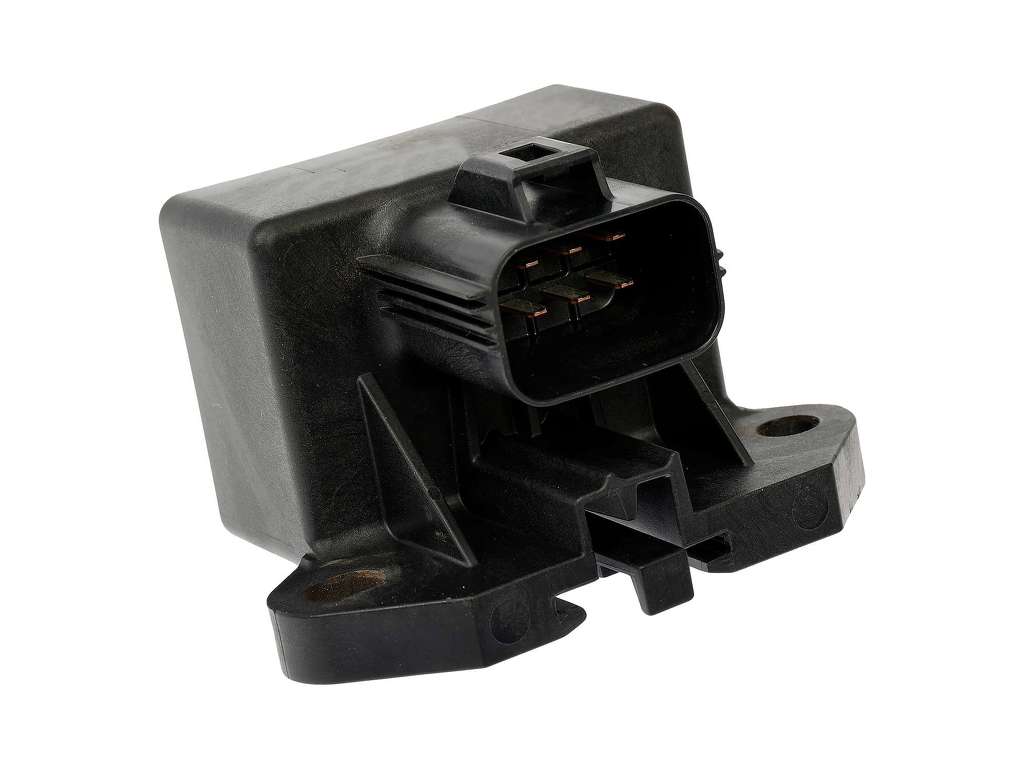
- Fuel Pump Control Module
(OEM #FU5Z-9D370-F (supercedes FU5A-9D370-LA))— This part is only needed if all wiring, connector, and ground checks pass. It is the least likely failure point despite being directly named in the code definition. Part number can vary, always confirm with VIN.
Trusted brands: Motorcraft, Dorman
OEM price range: $120-$200
Aftermarket price range: $75-$150 - Dielectric Grease
(OEM #XG-12 (Motorcraft Electrical Grease))— Essential for protecting the electrical connector from moisture and corrosion after inspection and reseating. Ford specifically recommends XG-12.
Trusted brands: Permatex, CRC, Motorcraft
OEM price range: $5-$15
Aftermarket price range: $5-$10 - Zip Tie / Cable Tie — A widely reported and effective preventative measure to secure the FPCM connector and prevent it from vibrating loose in the future.
OEM price range: $1
Aftermarket price range: $1
Related Codes That Often Appear With This One
- P0627 — Stands for 'Fuel Pump A Control Circuit Open'. This code is often triggered by the same harness disconnect that causes the U0109 communication loss and is mentioned in the same TSBs.
- P025A — Stands for 'Fuel Pump Module Control Circuit Open'. Like P0627, it points directly to an electrical fault in the FPCM circuit and is listed in the same TSBs as U0109.
- P008A — Stands for 'Low Pressure Fuel System Pressure - Too Low'. This is a direct symptom of the FPCM not communicating and therefore not running the fuel pump to build adequate pressure. It is also cited in the TSBs.
- P00C6 — Relates to 'Fuel Rail Pressure Too Low - Engine Cranking'. This can be logged if the FPCM isn't being properly controlled during startup, further indicating a fault in the FPCM system, and is mentioned in the TSBs.
Technical Service Bulletins (TSBs) & Recalls
- SSM 51306: Affects 2018-2023 vehicles. Cites DTCs P0627, P025A, P025B, P00C6, P008A and/or U0109. States the cause may be a partial disconnect, pushed-out pins, damaged terminals, or loose/corroded grounds. Specifies inspecting connector C3239/G302 for 2018-19 and C4033/G407 for 2020-22 models.
- SSM 50661: Affects 2018-2022 vehicles. Nearly identical to SSM 51306, listing the same codes and causes, emphasizing inspection before component replacement.
- SSM 49618: Affects 2018-2021 vehicles. Focuses on codes P025A and/or U0109, but provides the same diagnostic advice to check the FPCM connector and grounds first.
- SSM 52482: Affects 2020-2024 Explorer/Aviator. Lists the same group of codes including U0109 and advises checking specific circuits (VE518, VE225), connectors (C433/C4033), grounds (G407), and inline connectors (C1147, C3136).
Platform-Specific Known Issues
- Ford has issued multiple Technical Service Bulletins (TSBs) including SSM 50661, SSM 51306, and SSM 49618, all identifying an intermittent or partial disconnect of the FPCM harness as the primary cause of U0109 and related fuel system codes on this platform.
Mechanic-Grade Diagnostic Values
- CAN Bus Network Resistance — expected: Approximately 60 Ω between CAN_H and CAN_L pins at the DLC with the battery disconnected.. Failure: A reading of 120 Ω indicates one of the two terminating resistors (or a module containing one) is not connected. A reading near 0 Ω indicates a short between the CAN_H and CAN_L wires.
- FPCM Power Supply Voltage — expected: 11.5 - 12.5 V with Key On.. Failure: Low or zero voltage points to a problem with the fuse, relay, or power supply wiring, not a communication fault.
- CAN Bus Voltage (Key On, Engine Off) — expected: CAN_H should be ~2.6V, CAN_L should be ~2.3V. These are average voltages.. Failure: Voltages that are stuck high, low, or at 0V (when the network should be awake) indicate a fault on the bus, such as a short to power or ground.
- Ground Circuit Resistance — expected: Less than 1.0 Ω between the FPCM ground pin and a clean chassis ground point.. Failure: High resistance (anything over 1-2 Ω) indicates a poor ground connection, which can cause intermittent module operation.
Scan Tool Commands That Help
- Ford IDS / FORScan: FPCM On-Demand Self-Test — Use this after confirming the wiring and connections are good. This command specifically asks the FPCM to check its own internal circuitry for faults, which can confirm a failed module.
- Ford IDS / FORScan: Fuel Pump Command (Bidirectional Control) — This allows the technician to directly command the fuel pump on/off via the scan tool. If the pump runs with this command but not during normal operation, it suggests the FPCM is receiving power and has a good connection to the pump, pointing the diagnosis more toward the CAN communication lines or the PCM.
- FORScan: Reset All Adaptations / KAM Reset — After a repair, especially if a module was replaced or reprogrammed, resetting the Keep Alive Memory (KAM) can clear out old fault data and force the modules to re-learn, which can sometimes resolve lingering issues.
Wiring & Ground Locations
- C3239 — The main electrical connector at the Fuel Pump Control Module for 2018-2019 models.. This connector is the most common point of failure for U0109 on the 5th generation Explorer Police Interceptor, as identified in multiple TSBs.
- C4033 — The main electrical connector at the Fuel Pump Control Module for 2020-2022 models.. This is the primary suspect for U0109 on the 6th generation. Pin 1 is the Fuel Pump Control, Pin 2 is the CAN Bus Shield, Pin 3 is CAN Bus Low (VT-OG), Pin 4 is CAN Bus High (GY-OG), Pin 5 is Ground, and Pin 6 is the power supply from the fuse.
- G302 — The FPCM ground point for 2018-2019 models, located on the frame rail near the module.. A corroded or loose ground at this point will prevent the FPCM from powering on and communicating, directly causing U0109.
- G407 — The FPCM ground point for 2020-2022 models, located on the frame rail near the module.. This ground is critical for the FPCM on 6th generation models. Corrosion or looseness here will cause a loss of communication.
Real Owner Repair Stories
- YouTube video by 'Rainman Rays Repairs' (2018 Dodge RAM 1500 (platform with similar FPCM architecture)) — Crank no start, U0109 - Lost Communication with Fuel Pump Control Module.
❌ Tried (didn't work) Checking the fuse (it was good)., Initially suspecting the FPCM module itself.
✅ What actually fixed it The ground wire for the FPCM at the chassis ground point (G916A on the RAM) was completely corroded and broken inside the terminal lug. The wire looked intact from the outside, but wiggling it revealed the break. Cleaning the ground point and installing a new terminal lug on the wire restored communication and fixed the no-start condition.
OEM Part Supersession History
FU5A-9D370-LA→FU5Z-9D370-F— Standard part number revision, likely for improved manufacturing, materials, or internal logic.
Heads up: The new part number FU5Z-9D370-F is the correct service part and is backward compatible with vehicles that used the original part. Always verify fitment with the vehicle's VIN.
Model Year Variations Within This Range
- 2018-2019 vs 2020-2022: The FPCM connector and ground point designators are different between the 5th and 6th generations. 2018-2019 use connector C3239 and ground G302. 2020-2022 use connector C4033 and ground G407. The fuse location also changes from position 63 (2018-19) to position 4 (2020-22) in the under-hood fuse box.
Helpful Videos


Used OEM Parts in Stock
New Aftermarket Parts Available


The information in this article is provided for general reference and educational purposes only. Vehicle specifications, procedures, and part compatibility can vary by production date, trim level, and region. Always consult your vehicle's factory service manual and verify part numbers before purchasing or performing repairs. Safety-critical components such as airbags, seat belts, and braking systems should be installed by a qualified professional.
- Ford EXPLORER POLICE INTERCEPT:
- 🧭 Diagnostic Flowchart
- 🎬 Helpful Videos
- 🛍️ Shop This Part
- What's Unique About the 2018-2022 Ford EXPLORER POLICE INTERCEPT
- Symptoms You May Notice
- Most Likely Causes
- Rare But Worth Checking
- Diagnosis Steps
- Parts You'll Likely Need
- Related Codes That Often Appear With This One
- Technical Service Bulletins (TSBs) & Recalls
- Platform-Specific Known Issues
- Mechanic-Grade Diagnostic Values
- Scan Tool Commands That Help
- Wiring & Ground Locations
- Real Owner Repair Stories
- OEM Part Supersession History
- Model Year Variations Within This Range
- 🎟️ Get 5% Off