

U0109 on 2023-2024 Ford Transit: Lost Communication With Fuel Pump Control Module Fixes
On a 2023-2024 Ford Transit, code U0109 almost always indicates a poor electrical connection at the Fuel Pump Control Module (FPCM). This is a known issue covered by multiple Ford Technical Service Bulletins (TSBs), specifically SSM 52483. Before replacing any parts, inspect and reseat the FPCM connector (C433) and check ground G401 on the frame rail, which is typically a no-cost fix.
- U0109 on a 2023-2024 Ford Transit is a critical code that can cause a no-start or stalling condition and should be addressed immediately.
- Do not immediately replace the fuel pump or FPCM. The problem is most likely a simple, no-cost wiring connection issue.
- The first and most important step is to physically inspect the electrical connector (C433) and ground wire (G401) at the Fuel Pump Control Module.
- This is a well-known issue documented by Ford, affecting not just the Transit but also the F-150, Expedition, and Explorer.
- If the wiring is secure, the next step is to check the related fuse before considering module replacement.
What's Unique About the 2023-2024 Ford TRANSIT
Ford has issued numerous Technical Service Bulletins for this exact issue across many of its truck and SUV platforms from this era, including the Transit. The problem is so consistently traced back to the wiring harness connection at the Fuel Pump Control Module (FPCM) that Ford has specific diagnostic guidance telling technicians to check this connection first. TSB SSM 52483 explicitly identifies connector C433 and ground point G401 on the Transit as the primary areas to inspect for this code, indicating a common vulnerability in the connector or wiring design rather than frequent failure of the module itself.
Diagnostic Flowchart
Tap your situation to follow the diagnostic path that matches what you're seeing on this vehicle.
Symptoms You May Notice
- Check Engine Light (MIL) is on
- Engine cranks but will not start
- Engine stalls unexpectedly while driving 🎬 Watch: A step-by-step walkthrough of this common Transit no-start fix.
- Reduced engine power or sluggish performance
- Hesitation during acceleration
- Absence of the typical 'hum' or 'whine' from the fuel pump when the key is turned to the 'ON' position
- Replacing the in-tank fuel pump. This code points specifically to a communication or electrical issue with the control module, not a mechanical failure of the pump itself.
- Replacing the Fuel Pump Control Module (FPCM) without first inspecting the connector, ground, and fuse. Many owners and shops make this mistake only to have the U0109 code return immediately.
Most Likely Causes
- Intermittent or Partial Disconnect of the FPCM Harness Connector (C433) 🔴 High Probability This is a widely documented issue confirmed by multiple Ford TSBs (SSM 52483, SSM 51306, SSM 49618). The connector (C433 on the Transit) is located on the vehicle frame, often near or on top of the fuel tank, exposing it to moisture and vibration. The pins can become loose, corroded, or pushed out, interrupting communication.
How to confirm: Locate the FPCM on the vehicle frame rail, often near the fuel tank. Disconnect connector C433, inspect the pins and terminals for corrosion (white or green powder), moisture, or damage, and ensure it is firmly reseated until it clicks. Wiggle the harness while monitoring vehicle status to see if the fault can be triggered.
Typical fix: Clean the connector terminals with electrical contact cleaner and apply dielectric grease to prevent future moisture intrusion. Ensure it is fully seated and the locking tab is engaged. If the locking tab is broken, secure the connector with a zip tie. 🎬 Watch: How to fix U0109 and related fuel pressure codes. If pins are damaged, the connector pigtail may need to be replaced.
Est. part cost: $0-$50 - Loose or Corroded Ground Wire (G401) 🟡 Medium Probability The FPCM relies on a solid ground connection to the vehicle's frame to operate correctly. Ford TSB SSM 52483 specifically mentions checking ground G401 on the Transit. This ground point is exposed to the elements under the vehicle and can corrode or loosen over time, causing high resistance and intermittent communication faults.
How to confirm: Locate ground G401 on the frame rail near the FPCM. Check for tightness and any signs of rust or corrosion that would inhibit the electrical connection. A voltage drop test from the FPCM ground pin to the battery negative terminal can confirm a bad ground.
Typical fix: Remove the ground bolt, clean the contact surfaces of the terminal and frame down to bare metal with a wire brush, and securely re-fasten it. Applying a dielectric grease or protective coating can help prevent future corrosion.
Est. part cost: $0-$5 - Blown Fuse for the FPCM Circuit 🟡 Medium Probability An electrical short in the FPCM circuit or an internal failure in the module itself can cause the protective fuse to blow, cutting all power and communication. This was noted in an owner complaint for a similar model (ODI #11246223) and is a common first check in forum repair stories.
How to confirm: Locate the fuse for the fuel pump control module. For a similar year F-150, this is often a 20A fuse in the under-hood fuse box. On some Transits, it may be Fuse 65 (20A) in the Body Control Module (BCM) fuse panel. Always consult the owner's manual for the specific fuse number and location. Visually inspect the fuse to see if it is blown.
Typical fix: Replace the blown fuse with one of the same amperage. If the new fuse blows immediately, it indicates a persistent short circuit in the wiring or the FPCM itself that must be diagnosed.
Est. part cost: $1-$5 - Failed Fuel Pump Control Module (FPCM) ⚪ Low Probability → Shop Fuel Pump While the module can fail, it is far less common than wiring, connector, or ground issues on this platform, as emphasized by Ford's TSBs. Owners often replace the module only to find the problem persists because the root cause was the connection.
How to confirm: This is diagnosed by exclusion. If the connector (C433), ground (G401), fuse, and all associated wiring (power, ground, CAN bus lines) have been tested with a multimeter and confirmed to be good, the module itself is the next likely failure point.
Typical fix: Replace the Fuel Pump Control Module. The new module may require programming to the vehicle, though many are plug-and-play.
Est. part cost: $60-$150
Rare But Worth Checking
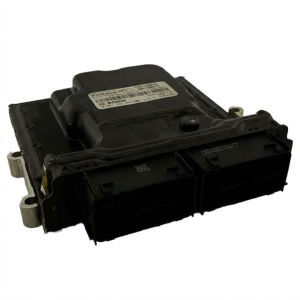
- Faulty Powertrain Control Module (PCM): → Shop Engine Control Module (ECM) This is extremely rare and should only be considered after all other possibilities, including all wiring and the FPCM itself, have been definitively ruled out by a professional. A failing PCM would likely present with multiple other communication codes.
- Damaged CAN Bus Wiring: The two CAN bus wires (CAN High and CAN Low) that connect the FPCM to the rest of the vehicle network can become shorted together, shorted to ground, or cut. This would interrupt communication. This requires advanced diagnostics with a multimeter or oscilloscope to check for proper resistance (around 60 ohms across the bus) and signal.
Diagnosis Steps
- Scan the PCM for all stored DTCs to confirm U0109 and note any accompanying codes like P025A, P0627, P008A, or P00C6, as these strongly point to the FPCM circuit.
- Check the fuse for the FPCM. Refer to your owner's manual for the correct fuse location and amperage (potentially a 20A fuse).
- Locate the Fuel Pump Control Module (FPCM). On many Transits, it is mounted to the vehicle frame rail, near the fuel tank.
- Carefully inspect the FPCM electrical connector (C433). Disconnect it and check for looseness, corrosion, pushed-out pins, or harness damage, as recommended by Ford TSB SSM 52483. A common, effective fix is to clean the contacts and secure the connector with a zip tie if the locking tab is broken.
- Inspect the FPCM ground connection (G401) on the frame for tightness and corrosion. Remove the bolt, clean all contact surfaces to bare metal, and re-secure it tightly.
- If the connector, ground, and fuse are all good, perform wiring checks with a multimeter. Test for battery voltage at the FPCM power pin and for continuity to ground on the ground pin.
- If power, ground, and CAN bus wiring are all confirmed to be good, the FPCM itself is the most likely failed component.
- After any repair, clear the DTCs and perform a test drive to ensure the fault does not return.
Parts You'll Likely Need
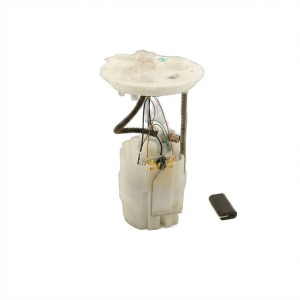
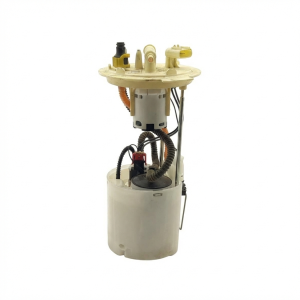
- Fuel Pump Control Module
(OEM #AA8Z-9D370-B)— This is the part to replace if the wiring, connector, and ground are all confirmed to be in good condition. While several part numbers exist, AA8Z-9D370-B is a common one, but always verify with your VIN.
Trusted brands: Motorcraft
OEM price range: $80-$150
Aftermarket price range: $60-$120 - FPCM Connector Pigtail
(OEM #3U2Z-14S411-XYB (Motorcraft WPT-1153))— If the connector itself is damaged, corroded, or has broken wires, replacing the pigtail is necessary to ensure a solid connection. The part number WPT-1153 is a potential match, but a visual confirmation is required before ordering.
Trusted brands: Motorcraft, Dorman
OEM price range: $40-$70
Aftermarket price range: $25-$50
Related Codes That Often Appear With This One
- P025A — This code for 'Fuel Pump Module A Control Circuit/Open' is frequently stored with U0109 because a loss of communication (U0109) is interpreted by the PCM as an open electrical circuit.
- P0627 — This code means 'Fuel Pump A Control Circuit/Open' and, like P025A, is a direct result of the PCM not being able to command the FPCM. It is explicitly mentioned in TSB SSM 52483.
- P008A — This code for 'Low Pressure Fuel System Pressure - Too Low' can be triggered when the FPCM stops commanding the fuel pump to run due to the communication loss. It is also listed in TSB SSM 52483.
- P00C6 — This code for 'Fuel Rail Pressure Too Low - Engine Cranking' is another symptom of the fuel pump not activating due to the U0109 fault, and is also listed in TSB SSM 52483.
Technical Service Bulletins (TSBs) & Recalls
- SSM 52483: For 2018-2024 Transit, F-150, etc., notes that U0109 and other fuel codes may be caused by an intermittent disconnect of the FPCM harness. It specifically identifies connector C433 and ground G401 for the Transit.
- SSM 51306: Similar to above, for 2023 models, pointing to the FPCM harness connection.
- SSM 50661: For 2022 models, also citing the FPCM harness disconnect for U0109.
- SSM 49618: An earlier TSB for 2018-2021 models, including the Transit, identifying the FPCM harness or ground as the cause for U0109 and P025A.
Platform-Specific Known Issues
- Ford has released multiple Technical Service Bulletins (TSBs) for 2023-2024 Transit models, including SSM 52483 and SSM 51306. These bulletins state that U0109, often with codes like P025A, may be due to an intermittent or partial disconnect of the harness to the Fuel Pump Control Module (FPCM).
- The TSBs specifically instruct technicians to inspect the FPCM connector C433 and ground G401 before replacing any components.
- Owner forums for Ford trucks with this issue frequently describe fixing the problem by simply cleaning and re-securing the FPCM connector, or by finding and replacing a blown fuse that was overlooked.
Mechanic-Grade Diagnostic Values
- CAN Bus Network Resistance — expected: Approximately 60 Ω (measured between CAN_H and CAN_L pins with power off). Failure: A reading of 120 Ω indicates an open circuit or a missing terminating resistor. A reading significantly below 60 Ω suggests a short circuit.
- FPCM Power Supply Voltage — expected: 11.5V - 12.5V (Battery Voltage) at the FPCM connector power pin with key on.. Failure: Low or no voltage points to a problem in the power supply circuit, such as a blown fuse (e.g., Fuse 65), faulty relay, or wiring damage.
- FPCM Ground Circuit Voltage Drop — expected: Less than 0.2V (measured between the FPCM ground pin and the negative battery terminal). Failure: A higher voltage reading indicates high resistance in the ground circuit, likely due to a loose or corroded G401 ground connection.
- CAN Bus Voltage (Key On, Engine Off) — expected: CAN_H: ~2.5-4.0V, CAN_L: ~1.5-2.5V. The two voltages should be mirror images of each other and sum to approximately 5V.. Failure: Voltages stuck high or low, or a lack of signal fluctuation, indicates a short to power/ground or an open circuit.
Hidden / Shadow Codes Worth Checking
- U0109 or P025A during KOEO test: Sometimes, these codes may not be stored in continuous memory but will only appear when a Key On Engine Off (KOEO) self-test is actively run with a capable scan tool. (see via Use a Ford-specific scan tool like FORScan or the dealer's IDS and run the 'KOEO On-Demand Self-Test'. A basic code reader might miss this.)
Scan Tool Commands That Help
- Ford IDS / FORScan: Network Test — This function actively 'pings' all modules on the CAN bus. A 'fail' response for the FPCM is a definitive confirmation of a communication loss, which is especially useful for intermittent faults when wiggling the harness.
- Ford IDS / FORScan: FPCM On-Demand Self-Test — This command specifically asks the FPCM to check for internal faults. It can help differentiate between a wiring problem and a failed module.
- Advanced Bi-Directional Scanner: Fuel Pump Command (On/Off) / Actuation Test — After verifying power and ground are good, this command directly orders the FPCM to run the fuel pump. If the pump activates, it proves the FPCM, the pump, and the wiring between them are functional, pointing the diagnosis back to the CAN communication lines to the PCM.
Wiring & Ground Locations
- FPCM (Fuel Pump Control Module) — Underneath the vehicle, mounted to the driver's side frame rail, often in front of the charcoal canister.. This is the module that the PCM has lost communication with. Its exposed location makes its connector and wiring vulnerable to moisture, corrosion, and physical damage.
- C433 — The electrical connector that plugs into the FPCM.. This is the single most common point of failure for this code. TSB SSM 52483 specifically calls for inspecting this connector for looseness, corrosion, or pushed-out pins before replacing any parts.
- G401 — A chassis ground point located on the frame rail, typically near the FPCM.. This is the specific ground point for the FPCM. A loose or corroded connection here will interrupt the module's circuit, causing it to lose power and communication, triggering code U0109.
- Fuse 65 (20A) — In the fuse panel located under the steering wheel (Body Control Module fuse panel), based on owner reports for similar models. Always verify with the owner's manual.. This fuse often provides power to the FPCM circuit. If it blows, the module will lose all power and communication.
Real Owner Repair Stories
- F150forum.com user 'Spiky' (2012 Ford F-150 5.0L (shares similar FPCM architecture)) — Engine died while slowing for a light. Would restart, sputter, then die. Would not run under load.
❌ Tried (didn't work) Swapping fuel pump relay, Checking fuse 27
✅ What actually fixed it The user found the plug to the FPCM was loose. They cleaned it and ensured it was plugged in all the way, which resolved the issue. - SHO Forum User Report (Ford SHO (shares similar CAN bus architecture)) — Check Engine Light, illuminated wrench light, code U0109.
❌ Tried (didn't work) Replaced the in-tank fuel pump and sending unit.
✅ What actually fixed it Replacing the fuel pump relay fixed the U0109 communication code.
OEM Part Supersession History
AA8Z-9D370-B→GA8Z-9D370-A— Standard part revision and update by the manufacturer.
Heads up: The new part number (GA8Z-9D370-A) is the direct replacement for the old one (AA8Z-9D370-B) and should be fully compatible. Always confirm fitment with the vehicle's VIN.
Model Year Variations Within This Range
- 2023-2024: There are no significant mechanical or electrical architecture differences reported between the 2023 and 2024 Ford Transit models that would affect the diagnosis or cause of code U0109. Both model years are covered under the same TSB (SSM 52483) and share the same known failure points.
Helpful Videos
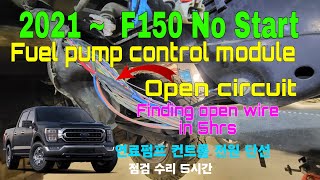
![[1/3] Ford Transit Not Starting - Fuel Pump Control Module Fix! 2015 Ford Transit Van 350 3.7L- Rd.↓](https://img.youtube.com/vi/-xxCHQ1xJEo/mqdefault.jpg)

Used OEM Parts in Stock
New Aftermarket Parts Available


The information in this article is provided for general reference and educational purposes only. Vehicle specifications, procedures, and part compatibility can vary by production date, trim level, and region. Always consult your vehicle's factory service manual and verify part numbers before purchasing or performing repairs. Safety-critical components such as airbags, seat belts, and braking systems should be installed by a qualified professional.
- Ford TRANSIT:
- 🧭 Diagnostic Flowchart
- 🎬 Helpful Videos
- 🛍️ Shop This Part
- What's Unique About the 2023-2024 Ford TRANSIT
- Symptoms You May Notice
- Most Likely Causes
- Rare But Worth Checking
- Diagnosis Steps
- Parts You'll Likely Need
- Related Codes That Often Appear With This One
- Technical Service Bulletins (TSBs) & Recalls
- Platform-Specific Known Issues
- Mechanic-Grade Diagnostic Values
- Hidden / Shadow Codes Worth Checking
- Scan Tool Commands That Help
- Wiring & Ground Locations
- Real Owner Repair Stories
- OEM Part Supersession History
- Model Year Variations Within This Range
- 🎟️ Get 5% Off