

U0109 on 2007-2011 GMC Yukon Denali: Lost Communication with FPCM Causes and Fixes
On a 2007-2011 GMC Yukon Denali, code U0109 almost always points to a problem with the Fuel Pump Control Module (FPCM) or its power supply. The most common cause is corrosion at the FPCM or its connector due to its vulnerable location on the frame rail above the spare tire. Before replacing the module, always inspect fuse #21 (20A) in the underhood fuse box for corrosion, as this is a frequent and cheaper fix. Expect to pay $100-$250 for a new module.
- U0109 on a 2007-2011 Yukon Denali means the Fuel Pump Control Module (FPCM) is not communicating with the vehicle's main computer.
- Before replacing any parts, inspect fuse #21 in the underhood fuse box for corrosion, as this is a simple and common fix.
- The most likely cause is a failed FPCM or a corroded connector, due to its exposed location on the driver's side frame rail.
- Do not immediately replace the in-tank fuel pump; this code points to an electrical communication problem, not a mechanical pump failure.
- If multiple 'U' codes are present, the problem may be a more complex network wiring issue as described in TSB 08-07-30-021H.
What's Unique About the 2007-2011 Gmc YUKON DENALI
On the GMT900 platform, which includes the 2007-2011 Yukon Denali, the Fuel Pump Control Module (FPCM), also called a Fuel System Control Module (FSCM), is notoriously prone to failure. It is mounted to a frame crossmember, typically above the spare tire. This location exposes the module and its downward-facing electrical connector to a constant barrage of water, road salt, and debris kicked up by the tires. This leads to a very high rate of corrosion on the connector pins and internal failure of the module itself, making U0109 a common and well-documented code for these trucks.
Diagnostic Flowchart
Tap your situation to follow the diagnostic path that matches what you're seeing on this vehicle.
Symptoms You May Notice
- Engine cranks but will not start.
- Engine stalls while driving, sometimes intermittently.
- Check Engine Light is on.
- "Reduced Engine Power" message on the driver information center.
- No audible 'hum' or 'whine' from the fuel pump for a few seconds when the key is turned to the 'ON' position.
- In some cases of a wider network issue, the transmission may not shift correctly, door locks may cycle, and other warning lights may appear.
- Replacing the in-tank fuel pump when the actual fault is with the FPCM, its wiring, or its fuse. The U0109 code specifically points to a communication failure, not a mechanical pump failure. A crank-no-start is the symptom, but U0109 is the diagnostic clue pointing away from the pump itself.
Most Likely Causes
- Failed Fuel Pump Control Module (FPCM) 🔴 High Probability → Shop Fuel Pump Water intrusion from its exposed mounting location on the frame rail above the spare tire causes internal corrosion and electronic failure. Vibration and thermal cycles also contribute to its high failure rate.
How to confirm: After confirming good power, ground, and communication wires to the module, the FPCM is the likely culprit. A bi-directional scan tool can attempt to communicate directly with the module; a failure to do so points to a bad module. Visually, the module's casing may be swollen or show signs of corrosion.
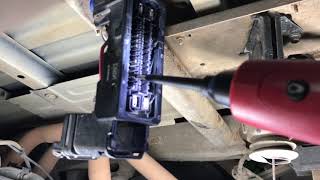
Typical fix: Replace the Fuel Pump Control Module. Many aftermarket options (like Dorman) come pre-programmed and do not require dealer calibration, making it a viable DIY job. 🎬 See this guide on FPCM replacement and programming options. However, OEM modules require programming to the vehicle's VIN.
Est. part cost: $100-$250 - Corroded or Damaged FPCM Connector/Wiring 🔴 High Probability The FPCM is located on the driver's side frame rail, making its electrical connector highly susceptible to moisture and corrosion from road spray. The connector pins can corrode and break, or the connector body itself can become brittle and fail to seat properly.
How to confirm: Visually inspect the FPCM and its connector for green or white corrosion, swollen or broken pins, or frayed wires. Wiggle the harness while checking for communication to see if the connection is intermittent.
Typical fix: Clean the connector with a terminal cleaning brush and dielectric grease if corrosion is minor. If damage is severe, replace the connector with a new pigtail.
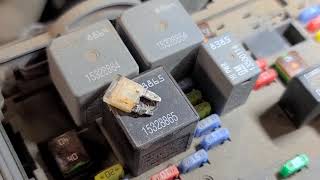
Est. part cost: $20-$50 - Corroded Underhood Fuse Block / Blown FPCM Fuse 🟡 Medium Probability → Shop Fuse Box The underhood fuse block can allow moisture entry, causing corrosion on the fuse terminals that power the FPCM. This is a very common point of failure that mimics a bad FPCM. 🎬 Watch: Troubleshooting a stubborn U0109 no-start on a GM truck.
How to confirm: Check fuse #21 (20A), labeled 'FSCM' or similar, in the underhood fuse block. Look for corrosion on the fuse legs and within the fuse slot itself. Test for power on both sides of the fuse with a multimeter. Some reports also mention fuses #20 and #56 as being related.
Typical fix: Replace the fuse and thoroughly clean the terminals in the fuse block. If the block is severely corroded, it may need to be replaced.
Est. part cost: $1-$150 - General GMLAN Network Issue ⚪ Low Probability As outlined in TSB 08-07-30-021H, wiring harnesses can chafe near the transmission or other modules, causing shorts or opens in the CAN bus wiring that affect multiple modules.
How to confirm: Scan for other 'U' codes. If multiple communication codes are present (e.g., U0073, U0100, U0101, U0121), the issue is likely network-wide. This requires checking the CAN bus wiring for proper resistance (should be 60 ohms between pins 6 and 14 of the OBD-II port with the battery disconnected) and tracing for shorts/opens.
Typical fix: Locate and repair the damaged section of the wiring harness, often found near the transmission bell housing.
Est. part cost: $5-$100
Rare But Worth Checking
- Poor Frame Ground Connection:
Diagnosis Steps
- Scan for all diagnostic trouble codes. Note if other 'U' (communication) codes are present, which would suggest a wider network problem.
- Locate the underhood fuse block and inspect fuse #21 (20A). Check for corrosion on the fuse and terminals. Test for voltage on both sides. Also check fuses #20 and #56.
- Raise the vehicle and secure it on jack stands. Lower the spare tire to gain access to the FPCM.
- Locate the FPCM on the driver's side frame rail, above where the spare tire was.
- Disconnect the FPCM connector and carefully inspect the module and the harness side for green/white corrosion, water damage, or bent/backed-out pins.
- With the key on, use a multimeter to verify battery voltage and a good ground at the appropriate pins on the harness connector.
- Check the GMLAN communication wires (typically a twisted pair) for shorts to power or ground. With the battery disconnected, check for 60 ohms of resistance between the two CAN lines (Pins 6 & 14 at the OBD-II port).
- If power, ground, and wiring are good, the FPCM has likely failed and should be replaced.
- If multiple communication codes are present, follow the diagnostic procedure in TSB 08-07-30-021H, which involves inspecting network wiring, especially around the transmission and checking for poor ground connections.
Parts You'll Likely Need
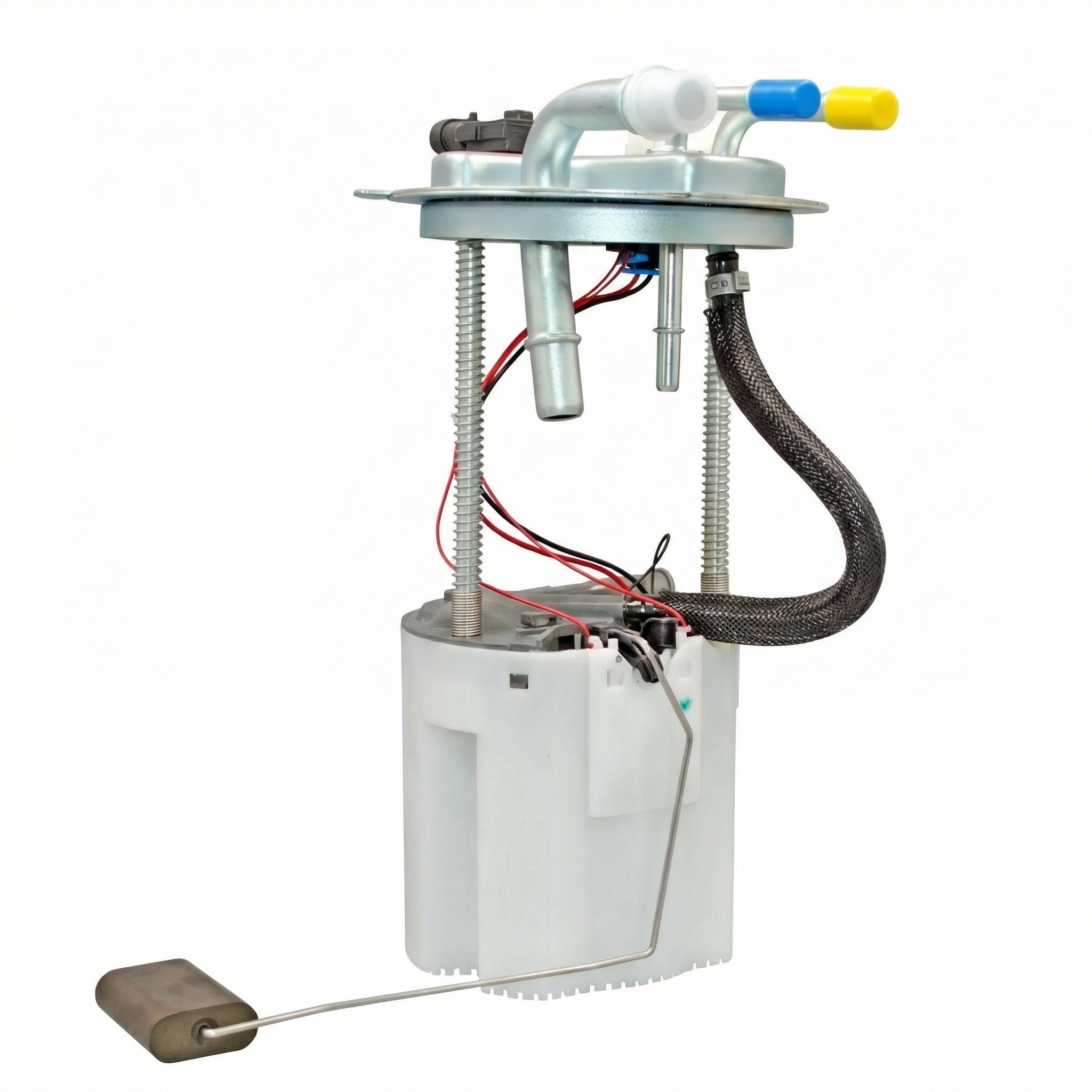
- Fuel Pump Control Module (FPCM)
(OEM #23487338 (supersedes older numbers like 20877116))— This module is the most common point of failure for a U0109 code due to its exposed mounting location leading to internal failure from moisture and corrosion.
Trusted brands: ACDelco (GM Genuine), Dorman OE Solutions (often pre-programmed)
OEM price range: $150-$250
Aftermarket price range: $100-$180 - FPCM Connector Pigtail
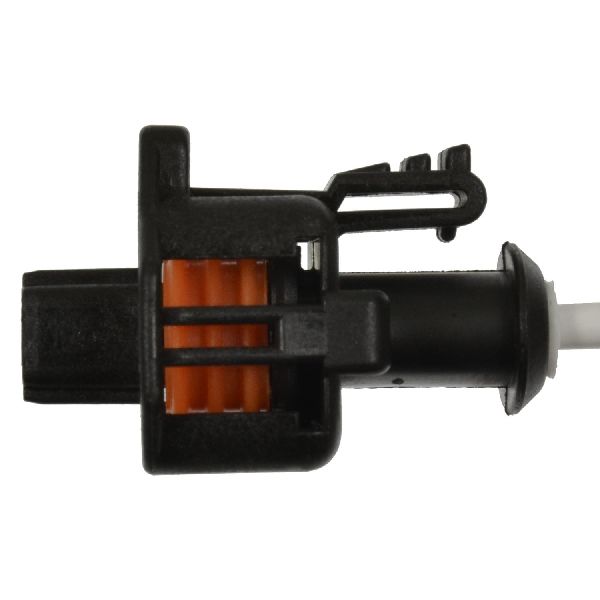
(OEM #PT2782 (check for left/right hand style))— If the original connector is heavily corroded, cleaning it may not be sufficient. Replacing the connector pigtail is necessary to ensure a solid connection to the new module.
Trusted brands: ACDelco, Dorman
OEM price range: $40-$60
Aftermarket price range: $20-$40
Related Codes That Often Appear With This One
- U0073 — Indicates a general Control Module Communication Bus 'A' Off fault, often seen when a major module like the FPCM drops off the network or there is a network-wide wiring issue.
- P069E — Means 'Fuel Pump Control Module Requested MIL Illumination'. This code can be stored before communication is completely lost, indicating the FPCM detected an internal problem and asked the ECM to turn on the check engine light.
- U0100 — Lost Communication With ECM/PCM. This can appear with U0109 if there is a widespread network issue, as described in TSB 08-07-30-021H.
- U0101 — Lost Communication with TCM. Often appears alongside other communication codes when there is a network wiring problem, as described in TSB 08-07-30-021H.
Technical Service Bulletins (TSBs) & Recalls
- 08-07-30-021H: Loss of High Speed GMLAN Communications, Intermittent No Crank, IP Gage Fluctuation, Intermittent Door Lock Cycling, Transmission May Not Shift, DTCs U0073, U0100, U0101, U0102, U0109, U0121 or U0140 set. This TSB provides a detailed diagnostic path for network-wide communication failures.
- PIT4853C
Platform-Specific Known Issues
- TSB 08-07-30-021H documents widespread issues with GMLAN communication across many GM platforms, including the Yukon. It points to potential wiring harness chafing near the transmission, poor connections at module X150/X109, and water intrusion as causes for multiple communication codes, including U0109.
- A related bulletin, PIT4853C, points to poor ground connections at G300 (frame) and G102 as a potential cause for intermittent communication loss on hybrid models, a principle that can apply to non-hybrids as well.
Mechanic-Grade Diagnostic Values
- CAN Bus Termination Resistance — expected: ~60 Ω (with battery disconnected, measured between Pins 6 and 14 of the OBD-II port). Failure: A reading of ~120 Ω indicates an open in the bus or a missing terminating resistor. A reading near 0 Ω indicates a short between the CAN High and CAN Low wires.
- FPCM Connector Pin 32 (Red/White wire) Voltage — expected: Battery Voltage (12V+) with key ON. Failure: No voltage indicates a loss of main power to the module, likely from a blown fuse #21 or a break in the power wire.
- FPCM Connector Pin 15 (Pink wire) Voltage — expected: Ignition 1 Voltage (12V+) with key ON. Failure: No voltage indicates a loss of the ignition 'wake-up' signal to the module.
- FPCM Connector Pin 13 (Dark Green/White wire) Voltage — expected: 12V present for 2-6 seconds with key ON, or constant 12V when cranking.. Failure: No voltage indicates a break in the fuel pump enable signal wire from the ECM or a faulty ECM.
- FPCM Connector Pin 1 (Black wire) Ground — expected: Near 0 Ω resistance to a clean chassis ground point.. Failure: High resistance (OL) indicates a broken or corroded ground wire, which will prevent the module from powering on.
- Fuel Rail Pressure (Scan Tool Data) — expected: Key On Engine Off (pump prime): 58-60 PSI. Engine Idling: 43-45 PSI.. Failure: No pressure during prime or pressure dropping significantly below 43 PSI at idle can indicate a lack of FPCM control, though it can also mean a weak pump.
Scan Tool Commands That Help
- GM Tech2 / GDS2 or equivalent bidirectional scanner: FPCM Communication Status / Direct Communication — This is a primary step. Before testing wires, attempt to communicate directly with the FPCM. If the tool cannot establish communication, it strongly suggests the module is offline due to power, ground, or internal failure.
- GM Tech2 / GDS2 or equivalent bidirectional scanner: Fuel Pump On/Off Command — Used to verify the entire circuit downstream of the FPCM. If you can command the fuel pump on with the scan tool and it runs, it proves the FPCM, wiring to the pump, and the pump itself are functional, pointing the diagnosis towards the communication lines or ECM.
- GM Tech2 / GDS2 or equivalent bidirectional scanner: Module Voltage Display — After installing a new module, you can use the scan tool to verify that the FPCM is seeing correct battery and ignition voltage, confirming the power supply circuits are intact without back-probing the connector again.
Wiring & Ground Locations
- FPCM Connector — On the driver's side frame rail, typically above the spare tire.. This is the central connection point for all power, ground, and communication signals to the FPCM. Corrosion here is the most common cause of U0109.
- G300 — Under the left (driver's) side of the vehicle, on the second body mount.. This is a major body and chassis ground point. Corrosion or looseness here can cause intermittent power and communication issues for multiple modules, including the FPCM.
- ECM Connector (Black) — At the Engine Control Module (ECM) in the engine bay.. Pin 50 (Dark Green/White wire) is the source of the fuel pump enable signal sent to the FPCM. If voltage is missing at FPCM pin 13, checking for 12V at this pin can determine if the ECM is faulty or if the wire is broken between the ECM and FPCM.
- Underhood Fuse Block — Engine bay, driver's side.. Contains Fuse #21 (20A), which provides main battery power to the FPCM. The fuse and its terminals are a known point of corrosion and failure.
- Harness Chafe Point — The Dark Green/White wire harness is known to chafe and break where it runs next to the transfer case.. A break in this specific wire will cut the 'turn-on' signal from the ECM to the FPCM, causing a no-start and U0109, even if the FPCM itself is good.
Real Owner Repair Stories
- YouTube channel "ScannerDanner" (2011 GM Truck (GMT900 platform)) — Intermittent crank-no-start, code U0109 returned after a previous repair.
❌ Tried (didn't work) Initial checks of the FPCM and wiring seemed okay. The power circuit to the FPCM even passed a load test using a headlight.
✅ What actually fixed it The terminals for the FPCM fuse (#21) inside the underhood fuse block were corroded. The connection was intermittent and sensitive to temperature, causing a voltage drop under certain conditions that wasn't caught by a simple load test. The entire fuse block was replaced to resolve the widespread corrosion. - Tahoe Yukon Forum (2011 Tahoe (GMT900 platform)) — Multiple codes stored in the FPCM including P0562 (System Low Voltage) and P2534 (Ignition 1 Switch Circuit Low Voltage), found during a preventative scan.
❌ Tried (didn't work) The user immediately suspected the fuel pump or FPCM.
✅ What actually fixed it Forum veterans advised that seeing multiple low voltage codes across different modules often points to a systemic issue rather than a single bad part. The recommended first step was to test the battery and charging system, as a weak battery or poor ground connections are known to cause various electronic 'gremlins' on this platform.
"I Checked Everything" — The Actual Cause
- In one documented case, the power circuit for the FPCM was load-tested using a headlight and passed, suggesting the wiring and fuse were good. However, the vehicle continued to have an intermittent no-start with code U0109. The actual cause was found to be corrosion deep within the underhood fuse block at the fuse terminals. This created a poor connection that was sensitive to heat and vibration, a condition not always revealed by a static load test. The fix was to replace the entire fuse block.
OEM Part Supersession History
25866052, 25967325, 20759945 (for 2007-2009 models)→23487338 (current number for many applications)— Internal revisions to improve reliability and component sourcing.
Heads up: A new OEM module must be programmed with the vehicle's VIN to function. Using a module from the wrong year range (e.g., a 2010 module on a 2008 truck) may result in a no-start condition even if it plugs in.
Model Year Variations Within This Range
- 2007-2009 vs 2010-2012: The OEM part numbers for the Fuel Pump Control Module are different for these year groups, indicating internal hardware or software changes. For 2007-2009 models, common part numbers include 25967325 and 20759945. For 2010-2012 models, a common part number is 20791901. It is critical to use the correct part for the specific model year.
Helpful Videos

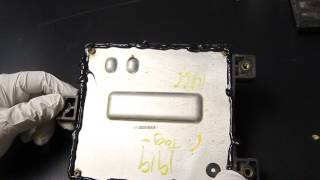
Used OEM Parts in Stock
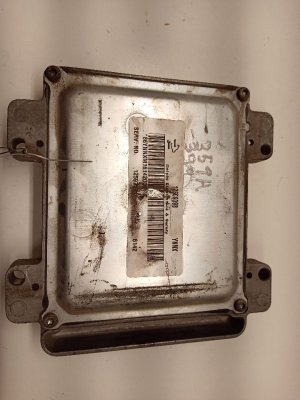
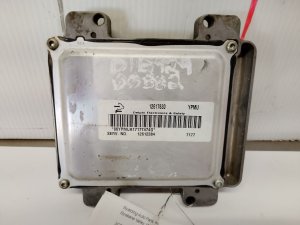
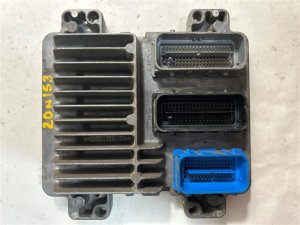
New Aftermarket Parts Available


The information in this article is provided for general reference and educational purposes only. Vehicle specifications, procedures, and part compatibility can vary by production date, trim level, and region. Always consult your vehicle's factory service manual and verify part numbers before purchasing or performing repairs. Safety-critical components such as airbags, seat belts, and braking systems should be installed by a qualified professional.
- Gmc YUKON DENALI:
- 🧭 Diagnostic Flowchart
- 🎬 Helpful Videos
- 🛍️ Shop This Part
- What's Unique About the 2007-2011 Gmc YUKON DENALI
- Symptoms You May Notice
- Most Likely Causes
- Rare But Worth Checking
- Diagnosis Steps
- Parts You'll Likely Need
- Related Codes That Often Appear With This One
- Technical Service Bulletins (TSBs) & Recalls
- Platform-Specific Known Issues
- Mechanic-Grade Diagnostic Values
- Scan Tool Commands That Help
- Wiring & Ground Locations
- Real Owner Repair Stories
- "I Checked Everything" — The Actual Cause
- OEM Part Supersession History
- Model Year Variations Within This Range
- 🎟️ Get 5% Off