

U0109 on 2020-2024 Lincoln Aviator: Lost Communication With Fuel Pump Control Module Causes and Fixes
On a 2020-2024 Lincoln Aviator, code U0109 almost always indicates a wiring or connector problem at the Fuel Pump Control Module (FPCM). Before replacing any parts, thoroughly inspect the FPCM connector (C4033) and ground (G407) for damage or corrosion, as this is the most common fix documented in multiple Ford/Lincoln technical service bulletins. TSB SSM 52482 specifically calls out these points, along with inline connectors C1147 and C3136, as the primary areas to check.
- U0109 on a 2020-2024 Aviator means the main computer has lost communication with the Fuel Pump Control Module (FPCM).
- Do not drive the vehicle. This code indicates a critical fault that can cause the engine to stall without warning.
- The most likely cause is a faulty wiring connection at the FPCM connector (C4033) or its ground (G407), as documented in multiple TSBs.
- Always inspect the wiring and connectors thoroughly before considering replacing the more expensive Fuel Pump Control Module.
- This code is often accompanied by other fuel system codes like P025A, P0627, and P008A, which further reinforces that the problem lies within the FPCM circuit.
What's Unique About the 2020-2024 Lincoln AVIATOR
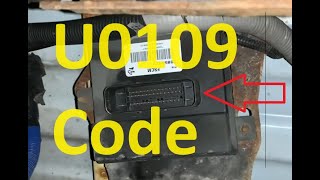
The 2020-2024 Lincoln Aviator, along with its Ford Explorer platform-mate, is subject to several Technical Service Bulletins (TSBs) that specifically address code U0109. These bulletins highlight a known issue with the wiring harness connection to the Fuel Pump Control Module, which is located under the vehicle on the driver's side floor pan. This makes a wiring or connector fault significantly more likely to be the root cause than a failure of the module itself 🎬 Watch: A complete guide to diagnosing and fixing code U0109., a key difference from a generic diagnosis. TSB SSM 52482 even points to specific inline connectors (C1147 and C3136) as potential failure points between the PCM and FPCM.
Diagnostic Flowchart
Tap your situation to follow the diagnostic path that matches what you're seeing on this vehicle.
Symptoms You May Notice
- Check Engine Light (Malfunction Indicator Lamp) is on
- Engine cranks but will not start
- Engine stalls unexpectedly while driving
- Lack of power or hesitation during acceleration
- Rough running or misfiring
- No audible hum from the fuel pump when the key is turned to the 'ON' position
- Replacing the in-tank fuel pump assembly. The U0109 code points specifically to a communication failure with the control module, not a mechanical failure of the pump itself. The pump is commanded by the FPCM, so if the FPCM isn't receiving commands, the pump won't run, but the pump itself is likely not the problem.
Most Likely Causes
- Wiring Harness or Connector Issue at the FPCM 🔴 High Probability Multiple manufacturer TSBs (SSM 52482, SSM 51306, SSM 50661, SSM 49618) point to an intermittent or partial disconnect of the harness to the FPCM. This can be due to pushed-out pins, corrosion from water intrusion, or physical damage to the wires. The FPCM is located underneath the vehicle, exposing the connector to the elements.
How to confirm: Visually inspect the FPCM connector C4033 (located on the driver's side floor pan, under the vehicle) and its wiring for any signs of damage, corrosion, or loose pins. Check the ground connection G407 to ensure it is clean, tight, and free of corrosion. A wiggle test on the harness while monitoring communication status with a scan tool can also help identify an intermittent connection. TSB SSM 52482 also advises inspecting inline connectors C1147 and C3136.
Typical fix: Repairing the damaged section of the wiring harness, cleaning the connector terminals with electrical contact cleaner, or replacing the connector pigtail if it is severely damaged. In many forum-documented cases, simply unplugging, cleaning, and securely reseating the connector with a zip tie for added security resolves the issue.
Est. part cost: $15-$75 - Faulty Fuel Pump Control Module (FPCM) 🟡 Medium Probability → Shop Fuel Pump While less common than wiring issues, the module's location under the vehicle makes it susceptible to moisture and physical damage over time, which can lead to internal failure.
How to confirm: If the wiring, connectors (C4033, C1147, C3136), and ground (G407) are confirmed to be in perfect condition with proper power and ground signals present, the module itself is the next suspect. This requires a bi-directional scan tool to attempt to communicate directly with the FPCM. If it doesn't respond despite having good power and ground, it has likely failed.
Typical fix: Replace the Fuel Pump Control Module. The new module may require programming to the vehicle. The OEM part number is subject to change, but a common one is LC5Z-9D370-B.
Est. part cost: $100-$250 - Blown Fuse ⚪ Low Probability
How to confirm: Check the fuse panel in the engine compartment for any blown fuses related to the fuel pump or powertrain control module. A blown fuse indicates an underlying short circuit that must be found and repaired.
Typical fix: Replace the blown fuse after diagnosing and fixing the short circuit that caused it to blow.
Est. part cost: $1-$5
Rare But Worth Checking
- Faulty Powertrain Control Module (PCM): → Shop Engine Control Module (ECM) This is very rare. The PCM should only be considered after all other possibilities, including all wiring, grounds, and the FPCM itself, have been exhaustively tested and ruled out.
Diagnosis Steps
- Read all Diagnostic Trouble Codes (DTCs) with a compatible OBD-II scanner. Note all codes present, especially any related to the fuel system (P025A, P0627, P008A, etc.).
- Check for any blown fuses related to the fuel pump or PCM in the under-hood fuse box.
- Locate the Fuel Pump Control Module (FPCM). On the 2020-2024 Aviator, it is mounted to the underbody, on the driver's side floor pan.
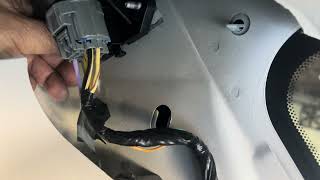
- Carefully inspect the FPCM electrical connector (C4033) for corrosion, moisture, pushed-out pins, or any visible wire damage. Ensure it is fully latched.
- Locate and inspect the FPCM ground point (G407). Ensure it is clean, tight, and free from corrosion. It's good practice to remove, clean, and re-secure it.
- Per TSB SSM 52482, inspect inline harness connectors C1147 and C3136 for being fully seated and free of damage.
- If a visual inspection reveals no issues, perform a continuity test on the CAN bus wires (and power/ground wires) between the PCM and the FPCM to check for opens or shorts. This requires a wiring diagram.
- Test for power and ground at the FPCM connector using a multimeter. If power or ground is missing, trace the circuit back to find the break.
- If wiring, power, and ground are all confirmed to be good, the FPCM is the most likely failed component and should be replaced.
Parts You'll Likely Need
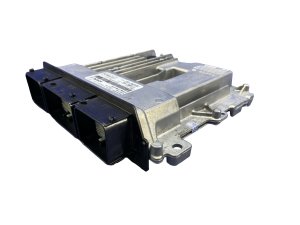
- Fuel Pump Control Module
(OEM #LC5Z-9D370-B (supersedes earlier numbers))— If the wiring and connectors are intact, the module itself may have failed internally, preventing it from communicating with the PCM.
Trusted brands: Motorcraft
OEM price range: $150-$250
Aftermarket price range: $100-$180 - FPCM Connector Pigtail
(OEM #WPT-1287 (Note: Verify exact fitment, as this part number is used for multiple Ford connectors))— If the connector itself is corroded or damaged beyond cleaning or simple wire repair, a new pigtail will be needed to ensure a solid connection.
Trusted brands: Motorcraft, Dorman
OEM price range: $40-$75
Aftermarket price range: $20-$50
Related Codes That Often Appear With This One
- P025A — This code for 'Fuel Pump Module Control Circuit/Open' often appears with U0109, as both point to an electrical issue in the FPCM circuit. This is noted in TSBs SSM 52482, SSM 51306, SSM 50661, and SSM 49618.
- P0627 — 'Fuel Pump 'A' Control Circuit/Open' is another related code indicating a problem in the FPCM's control circuit, often triggered by the same wiring fault as U0109. This is mentioned in TSBs SSM 52482 and SSM 51306.
- P008A — 'Low Pressure Fuel System Pressure - Too Low' can be logged when the FPCM communication fails, as the PCM can no longer verify or command correct fuel pressure. This is cited in TSBs SSM 52482, SSM 51306, and SSM 50661.
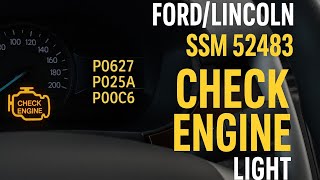
- P00C6 — 'Fuel Rail Pressure Too Low - Engine Cranking' is a direct symptom of the fuel pump not activating due to the communication loss with the FPCM. This is also cited in TSBs SSM 52482, SSM 51306, and SSM 50661.
- P025B — 'Fuel Pump Module 'B' Control Circuit Range/Performance' is another code mentioned alongside U0109 in TSBs like SSM 52482, indicating a problem within the FPCM's operational circuits.
Technical Service Bulletins (TSBs) & Recalls
- SSM 52482: For 2020-2024 Explorer/Aviator, notes that U0109 and other fuel codes may be present. Diagnosis should include checking the fuel pump monitor (VE518) and control (VE225) circuits, and inspecting connectors C4033, C1147, C3136, and ground G407 for damage or being fully seated.
- SSM 51306: States that U0109 on 2020-2023 models may be due to an intermittent or partial disconnect of the harness to the fuel pump control module.
- SSM 50661: Also attributes U0109 to a potential intermittent or partial disconnect of the FPCM harness on 2020-2022 models.
- SSM 49618: Links U0109 and P025A on 2020-2021 models to an intermittent or partial disconnect of the FPCM harness.
Platform-Specific Known Issues
- A series of Technical Service Bulletins (TSBs) have been issued for 2020-2024 Aviator and Explorer models regarding U0109 and other fuel-related codes. They consistently point to an intermittent or partial disconnect of the harness to the fuel pump control module, connector pin issues, or loose/corroded grounds as the primary cause.
- TSB SSM 52482 is the most current and specifically advises technicians to inspect FPCM connector C4033, ground G407, and inline connections C1147 and C3136 before replacing any parts. This highlights known weak points in the wiring harness.
Mechanic-Grade Diagnostic Values
- CAN Bus Network Resistance — expected: Approximately 60 Ohms. Failure: A reading of 120 Ohms indicates an open circuit or a missing terminating resistor in one module. A reading near 0 Ohms indicates a short between the CAN High and CAN Low wires.
- CAN High (CAN_H) Voltage to Ground — expected: Approximately 2.5V to 3.5V when active. Failure: A voltage outside this range, or one that matches the CAN Low voltage, indicates a network fault (short to power, ground, or shorted to CAN_L).
- CAN Low (CAN_L) Voltage to Ground — expected: Approximately 1.5V to 2.5V when active. Failure: A voltage outside this range, or one that matches the CAN High voltage, indicates a network fault.
- FPCM Power Supply Voltage — expected: Battery voltage (approx. 12.6V). Failure: 0 Volts or significantly low voltage indicates a blown fuse, faulty relay, or an open in the power supply wire.
- FPCM Ground Circuit Resistance — expected: Less than 1 Ohm. Failure: High or infinite resistance (OL) indicates a corroded or broken ground connection at G407.
Scan Tool Commands That Help
- Ford IDS / FORScan: Network Test — When first connecting to the vehicle, running a network test can quickly identify which modules are not communicating on the CAN bus, confirming the U0109 fault.
- Ford IDS / FORScan: FPCM Self-Test / On-Demand Self-Test — This command attempts to communicate directly with the FPCM and retrieve any internal codes. If the module doesn't respond, it points towards a communication breakdown (wiring) or a failed module.
- Ford IDS / FORScan: Data Logger / Live Data — Monitor PIDs related to the FPCM, such as 'Fuel Pump Commanded Duty Cycle' or 'FPCM Communication Status'. Wiggling wires at connectors C4033 and G407 while watching this data can reveal intermittent connection faults.
- FORScan: Reset FPCM module — After performing a repair, such as cleaning a connector or fixing a wire, a module reset can clear internal fault states and re-establish communication. This is a good final step before clearing DTCs.
Wiring & Ground Locations
- FPCM (Fuel Pump Control Module) — Mounted to the underbody, on the driver's side floor pan.. This is the module that the PCM has lost communication with. Its location makes it and its connections vulnerable to road debris and moisture.
- C4033 — The main electrical connector that plugs into the FPCM under the vehicle.. This is the primary point of failure cited in multiple TSBs. Corrosion, moisture, or pushed-out pins in this connector will directly cause a U0109 code.
- G407 — The primary ground point for the FPCM, bolted to the vehicle's frame/underbody near the module.. A corroded or loose ground at this point will prevent the FPCM from powering on and communicating, triggering the U0109 code.
- C1147 / C3136 — These are inline harness connectors located between the PCM and the FPCM.. TSB SSM 52482 specifically calls for inspecting these connectors. A poor connection at these points can interrupt the CAN bus signals just as a bad connection at the module itself would.
Real Owner Repair Stories
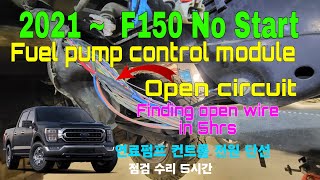
- YouTube video on a 2021 Ford F-150 (platform-mate) (2021 Ford F-150) — Crank no-start, multiple fuel system codes including U0109.
❌ Tried (didn't work) Initial visual inspection of the FPCM connector showed no obvious issues.
✅ What actually fixed it The technician dropped the fuel tank to trace the harness further and found a corroded and broken power wire leading to the FPCM connector. Repairing the wire resolved the U0109 code and the no-start condition.
OEM Part Supersession History
CU2Z-14S411-YA→WPT-1287— Part number consolidation and update.
Heads up: While WPT-1287 is the commonly cited service pigtail, it is used for multiple applications (e.g., ignition coils). Always verify the connector keying and pin count against the vehicle's actual FPCM connector before ordering or installing.
Helpful Videos

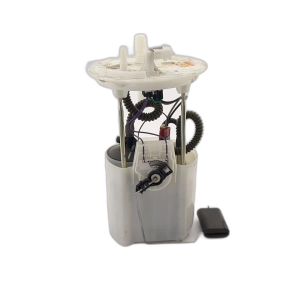
We Have This Part in Stock

The information in this article is provided for general reference and educational purposes only. Vehicle specifications, procedures, and part compatibility can vary by production date, trim level, and region. Always consult your vehicle's factory service manual and verify part numbers before purchasing or performing repairs. Safety-critical components such as airbags, seat belts, and braking systems should be installed by a qualified professional.
- Lincoln AVIATOR:
- 🧭 Diagnostic Flowchart
- 🎬 Helpful Videos
- 🛍️ Shop This Part
- What's Unique About the 2020-2024 Lincoln AVIATOR
- Symptoms You May Notice
- Most Likely Causes
- Rare But Worth Checking
- Diagnosis Steps
- Parts You'll Likely Need
- Related Codes That Often Appear With This One
- Technical Service Bulletins (TSBs) & Recalls
- Platform-Specific Known Issues
- Mechanic-Grade Diagnostic Values
- Scan Tool Commands That Help
- Wiring & Ground Locations
- Real Owner Repair Stories
- OEM Part Supersession History
- 🎟️ Get 5% Off