

U0109 on 2018-2024 Lincoln Navigator: Lost Communication With Fuel Pump Control Module Causes and Fixes
On a 2018-2024 Lincoln Navigator, code U0109 is almost always caused by a wiring problem near the Fuel Pump Control Module (FPCM), as documented in multiple manufacturer bulletins. The fix is typically inspecting and repairing the harness connector (C433) or ground (G403), which is a low parts cost repair but can involve 1-2 hours of diagnostic labor. Do not replace the in-tank fuel pump/module assembly until the external wiring has been proven to be perfect.
- U0109 on a 2018-2024 Navigator indicates a communication failure with the Fuel Pump Control Module (FPCM).
- Do not immediately assume the FPCM or fuel pump has failed. The most probable cause is a wiring issue at the FPCM connector or ground, as documented in multiple TSBs.
- A thorough inspection of the FPCM connector (C433) and ground (G403) is the mandatory first diagnostic step.
- This code indicates a critical fault that can cause the vehicle to stall without warning. Do not drive the vehicle until it is repaired.
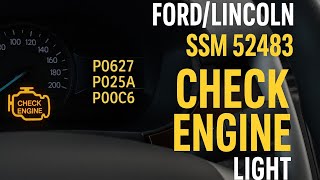
- This code is often accompanied by other fuel-related codes (P025A, P0627, P008A), which further points to the FPCM circuit as the source of the problem.
What's Unique About the 2018-2024 Lincoln NAVIGATOR
For this specific generation of Lincoln Navigator and its platform mates (Ford Expedition, F-150), the U0109 code is overwhelmingly tied to a known wiring harness issue. While the control module itself is located inside the fuel tank as part of the fuel pump assembly, the point of failure is almost always the external wiring. Ford has released several Technical Service Bulletins (TSBs) highlighting that the problem is a poor connection, pushed-out pin, corrosion, or damaged wire at the FPCM harness connector (C433) or ground point (G403). This makes a thorough external wiring inspection the absolute first step before considering the expensive and labor-intensive job of replacing the in-tank module.
Diagnostic Flowchart
Tap your situation to follow the diagnostic path that matches what you're seeing on this vehicle.
Symptoms You May Notice
- Check Engine Light (MIL) is on
- Wrench light may be illuminated
- Engine cranks but will not start
- Engine stalls unexpectedly while driving
- Hesitation or loss of power during acceleration
- Rough idle
- No audible whine from the fuel pump when the key is turned to 'ON'
- Replacing the fuel pump/module assembly. A 'no start' condition might lead a technician to suspect the in-tank assembly, but the U0109 code specifically points to a communication problem. Given the high frequency of external wiring faults documented in TSBs, replacing the expensive in-tank assembly without first exhaustively checking the C433 connector and G403 ground is a common and costly mistake.
Most Likely Causes
- Intermittent or Partial Disconnect of the FPCM Harness 🔴 High Probability This is a well-documented issue cited in multiple manufacturer TSBs (SSM 52483, SSM 51306, SSM 49618, SSM 50661) for this vehicle platform. The connector pins can become loose, corroded, pushed out, or the wires themselves can be damaged, interrupting communication. A real-world example from an F-150 owner with U0109 found 'a semi broken ground and two bare corroded wires' within the harness loom leading to the module.
How to confirm: Visually inspect the FPCM connector (C433) for looseness, corrosion, moisture, or backed-out pins. Perform a 'wiggle test' on the harness while monitoring communication status with a scan tool. 🎬 See how to test your fuel pump and driver module.
Typical fix: Securely reseat the connector. If pins are damaged or corroded, the connector pigtail may need to be replaced. 🎬 Watch: How to fix a faulty fuel pump connector pigtail. Repair any found wire damage and protect with new loom. Clean any corrosion from the module pins and connector.
Est. part cost: $25-$75 for a connector pigtail - Poor Ground Connection 🟡 Medium Probability TSB SSM 49618 and SSM 52483 specifically call out checking for loose or corroded grounds as a potential cause. The primary ground point for the Navigator is specified as G403. Frame grounds are susceptible to corrosion over time, leading to high resistance and communication loss.
How to confirm: Locate ground G403 and inspect it for corrosion or looseness. Perform a voltage drop test on the ground circuit to confirm its integrity.
Typical fix: Remove the ground connection, clean the terminal and the frame mounting point to bare metal, and re-secure it tightly. Apply a dielectric grease to prevent future corrosion.
Est. part cost: $1-$5 for cleaning supplies - Failed Fuel Pump Driver Module (FPDM) ⚪ Low Probability → Shop Fuel Pump Module failure is uncommon compared to wiring faults. On 2018+ Navigators, this module is integrated with the fuel pump assembly inside the fuel tank, making replacement complex and costly. It should only be suspected after all external wiring and connections have been proven to be in perfect condition.
How to confirm: After confirming the wiring harness, connector C433, and ground G403 are all perfect, the module itself becomes the primary suspect. This is diagnosed by exclusion. A bi-directional scan tool may be able to communicate directly with the module to confirm it is unresponsive despite having good power and ground.
Typical fix: Replace the entire Fuel Pump and Sender Assembly, which includes the integrated Fuel Pump Driver Module. This requires dropping the fuel tank.
Est. part cost: $350-$600 for the assembly
Rare But Worth Checking
- CAN Bus Network Fault: If other modules on the vehicle are also setting communication codes (U-codes), it could indicate a broader network problem rather than an issue specific to the FPCM circuit.
- Blown Fuse: While less common than harness issues for this specific code, a blown fuse for the fuel pump circuit can cause this code. Check the fuse panel in the engine compartment.
- PCM Fault: It is extremely rare for the Powertrain Control Module (PCM) to fail in a way that it only loses communication with a single module. This should only be considered after all other possibilities have been exhausted.
Diagnosis Steps
- Scan the PCM for all stored Diagnostic Trouble Codes (DTCs). Note if any other fuel-related or communication codes are present.
- Confirm the primary failure points identified by Ford. The Fuel Pump Driver Module is inside the fuel tank, but the problem is almost always external.
- Following the guidance in TSB SSM 52483 and SSM 49618, locate and inspect the FPCM harness connector C433. This is the main connector for the in-tank fuel pump assembly.
- Thoroughly inspect connector C433 for any signs of damage, corrosion, moisture, pushed-out pins, or damaged terminals. Ensure it is fully seated and latched.
- Locate and inspect ground G403. Ensure it is clean, tight, and free of corrosion. Remove, clean, and re-secure it as a preventative measure.
- If the visual inspection reveals no obvious faults, carefully remove the loom from the harness near connector C433 and inspect the individual wires for chafing, breaks, or corrosion as reported by other owners.
- Perform a 'wiggle test' on the FPCM wiring harness while monitoring the code status with a scan tool to see if the fault is intermittent.
- Only after the external wiring, connector C433, and ground G403 are all verified to be in perfect condition should you consider the FPDM itself to be faulty. This requires replacing the entire in-tank fuel pump assembly.
Parts You'll Likely Need
- FPCM Connector Pigtail
(OEM #Varies, must be matched to connector C433)— If the connector pins are corroded or damaged, replacing the connector pigtail is the standard repair. This is a likely need given the TSBs pointing to connector issues. A Ford dealer can provide the exact pigtail for connector C433.
Trusted brands: Motorcraft
OEM price range: $40-$80
Aftermarket price range: $25-$50 - Fuel Pump and Sender Assembly (with integrated FPDM)
(OEM #HL3Z-9D370-B (module part number, often sold as part of assembly))— This is only needed if the wiring and connections are confirmed to be good, and the module itself has failed. On 2018+ models, this is part of the entire fuel pump assembly inside the fuel tank.
Trusted brands: Motorcraft
OEM price range: $350-$600
Aftermarket price range: $250-$450
Related Codes That Often Appear With This One
- P0627 — This code for 'Fuel Pump 'A' Control Circuit/Open' is frequently stored alongside U0109, as cited in TSBs SSM 52483 and SSM 51306. It indicates a problem in the electrical circuit controlling the fuel pump.
- P025A — 'Fuel Pump Module Control Circuit/Open' is another common companion code mentioned in all four cited TSBs (SSM 52483, SSM 51306, SSM 49618, SSM 50661), directly related to the FPCM's circuitry.
- P008A — 'Low Pressure Fuel System Pressure - Too Low' can be logged because the communication loss with the FPCM prevents it from running the pump to build adequate pressure. This is mentioned in TSBs SSM 52483, SSM 51306, and SSM 50661.
- P025B — 'Fuel Pump Module Control Circuit Range/Performance' is also cited in TSBs SSM 52483, SSM 51306, and SSM 50661, indicating the control signal is not what the PCM expects.
- P00C6 — 'Fuel Rail Pressure Too Low - Engine Cranking' is another symptom-based code that can appear with U0109, as noted in TSBs SSM 52483, SSM 51306, and SSM 50661.
Technical Service Bulletins (TSBs) & Recalls
- SSM 52483: (Latest) For 2018-2024 models, notes U0109 and other fuel codes may be due to a harness disconnect, pin/terminal damage, or bad grounds at the FPCM
Platform-Specific Known Issues
- Multiple Technical Service Bulletins (TSBs) have been issued by the manufacturer for this exact problem. The most recent, SSM 52483, covers 2018-2024 models and states that U0109 (often with other codes) may be caused by an intermittent or partial disconnect of the harness to the FPCM, connector pin push-outs, damaged pins/terminals, or a bad ground.
- TSB SSM 49618 provides specific external component locations for the 2018-2021 Navigator: Connector C433 and Ground G403. The diagnostic process should start here.
Mechanic-Grade Diagnostic Values
- CAN Bus Network Resistance — expected: Approximately 60 ohms. Failure: A reading of 120 ohms indicates an open circuit or a problem with one of the two terminating resistors. A reading significantly lower than 60 ohms can indicate a short in the wiring.
- CAN Bus Voltage (Key On, Engine Off) — expected: CAN High: ~2.7 volts; CAN Low: ~2.3 volts. Failure: Voltages that are stuck high, low, or at battery/ground potential indicate a short or open on the data lines.
- Voltage Drop on Ground Circuit (G403) — expected: Under 0.2 Volts (200mV). Failure: A voltage reading higher than 0.2V while the circuit is under load (e.g., during key-on or cranking) indicates excessive resistance in the ground connection, which can disrupt module communication.
Scan Tool Commands That Help
- Ford IDS (Integrated Diagnostic System): Powertrain > Fuel System Test — This function within the dealer-level scan tool can run specific self-tests on the fuel system components, potentially including output state control of the FPCM, to verify if the module is responding to commands from the PCM.
Wiring & Ground Locations
- G403 — Behind the rear of the right rear quarter panel.. This is the primary ground point for the fuel pump module circuit cited in TSBs. Corrosion or looseness here directly causes high resistance, leading to communication loss and code U0109.
- C433 — The main harness connector for the in-tank fuel pump assembly, located on the vehicle's frame rail, providing the connection to the fuel tank.. This connector is the primary point of failure cited in multiple TSBs. Issues like pushed-out pins, corrosion, or wire damage at this connector are the most common cause of U0109 on this platform.
- Fuel Pump Fuse — Located in the engine compartment fuse box (also called the Power Distribution Box).. A blown fuse will cut power to the FPCM, causing it to go offline and triggering a U0109 code.
Real Owner Repair Stories
- Chevy Colorado/GMC Canyon forum user (Chevy Colorado (platform with similar FPCM architecture)) — Crank no-start, intermittent fuel pump operation, codes U0109 and P0230.
❌ Tried (didn't work) Replacing parts, considering programming the FPCM at the dealer.
✅ What actually fixed it Found corrosion on a wire inside the wiring harness loom along the driver's side frame rail. The user noticed green corrosion around a plastic harness clip, which led them to open the loom and find the eaten-away wire. Repairing this section of wire solved the problem.
Model Year Variations Within This Range
- 2018-2024: For the 2018 model year and newer Navigators, the Fuel Pump Driver Module (FPDM) is integrated into the fuel pump and sender assembly located inside the fuel tank. This is a significant change from prior generations (e.g., 2013-2017) where the module was a separate component mounted externally on the frame, making it an easy DIY replacement.
Helpful Videos

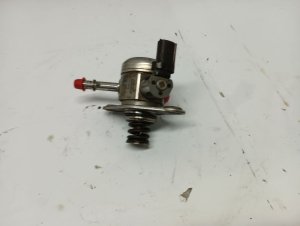
Used OEM Parts in Stock
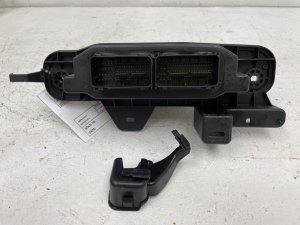
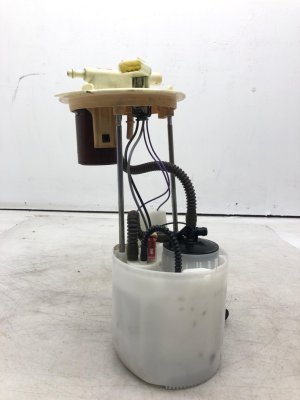
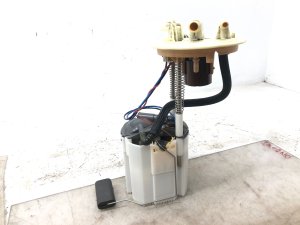
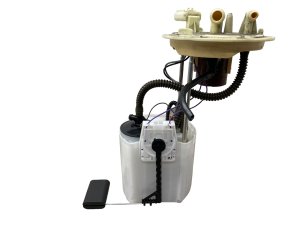
New Aftermarket Parts Available


The information in this article is provided for general reference and educational purposes only. Vehicle specifications, procedures, and part compatibility can vary by production date, trim level, and region. Always consult your vehicle's factory service manual and verify part numbers before purchasing or performing repairs. Safety-critical components such as airbags, seat belts, and braking systems should be installed by a qualified professional.
- Lincoln NAVIGATOR:
- 🧭 Diagnostic Flowchart
- 🎬 Helpful Videos
- 🛍️ Shop This Part
- What's Unique About the 2018-2024 Lincoln NAVIGATOR
- Symptoms You May Notice
- Most Likely Causes
- Rare But Worth Checking
- Diagnosis Steps
- Parts You'll Likely Need
- Related Codes That Often Appear With This One
- Technical Service Bulletins (TSBs) & Recalls
- Platform-Specific Known Issues
- Mechanic-Grade Diagnostic Values
- Scan Tool Commands That Help
- Wiring & Ground Locations
- Real Owner Repair Stories
- Model Year Variations Within This Range
- 🎟️ Get 5% Off