

U0121 on 2013-2018 Buick LaCrosse: Lost ABS Communication Causes and Fixes
On a 2013-2018 LaCrosse, U0121 often appears as a harmless historical code due to software anomalies, as noted in GM Technical Service Bulletins. If the ABS and Stabilitrak lights are on, the most likely hardware fault is the Electronic Brake Control Module (EBCM). Always check for software updates and verify the code is 'Active' before replacing the EBCM, which requires professional programming.
- On the 2013-2018 LaCrosse, U0121 is often a harmless software-related code; check for active warning lights before worrying.
- If the ABS and Stabilitrak lights are on, the code is likely indicating a real fault.
- Do not immediately replace parts. The first step for an active code is to check for available software updates at a dealership.
- If a hardware repair is needed, the most likely culprit is the EBCM (ABS module) itself, followed by its wiring connections.
- Never replace a wheel speed sensor to fix a U0121 code.
What's Unique About the 2013-2018 Buick LACROSSE
For this specific generation of Buick LaCrosse and its platform mates, code U0121 is frequently a 'ghost code' that does not indicate a true hardware failure. Manufacturer service bulletins confirm that this code can be set falsely by software glitches in other modules or appear as a normal characteristic in a vehicle's history. [TSB #PIT5599, TSB #PIC5652C] TSB PIC5652C explains this happens at key-up when the Multi-axis Acceleration Sensor Module expects an instant response from the EBCM, sets the code, and then immediately moves it to history once communication is established. This makes it critical to verify whether the code is active and accompanied by warning lights before starting any expensive repairs.
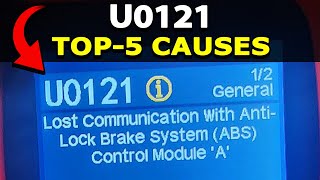
🎬 Watch: A quick breakdown of the U0121 communication code.Diagnostic Flowchart
Tap your situation to follow the diagnostic path that matches what you're seeing on this vehicle.
Generation note: This range covers the end of the second generation (2013-2016, on the Epsilon II platform) and the start of the third generation (2017-2018, on the E2XX platform). While the U0121 definition is the same, specific part numbers for the EBCM and wiring harness locations differ. The Epsilon II platform is particularly well-documented for this issue across its sibling vehicles. The 2017+ models use a Bosch ABS 9.0 system where the EBCM and brake pressure modulator valve are serviced as separate parts.
Symptoms You May Notice
- ABS warning light illuminated
- Traction Control / Stabilitrak warning light illuminated
- "Service Stabilitrak" message on the driver information center
- Cruise control may be disabled
- Brake warning light (red) may be illuminated
- On AWD models, "Service All-Wheel Drive" message may appear
- Replacing wheel speed sensors. A faulty wheel speed sensor will typically set a 'C' code (e.g., C0035) and will not cause a U0121 communication code unless its wiring is shorted to ground or power.
- Replacing the EBCM without checking for software updates or confirming the code is 'Active', leading to unnecessary expense for a benign historical code.
Most Likely Causes
- Software Anomaly / Benign Historical Code 🔴 High Probability GM has issued at least two Technical Service Bulletins (TSBs) for this platform explaining that U0121 can be set falsely. TSB #PIT5599 notes a software issue in the Fuel Volume Control Module can cause it, and TSB #PIC5652C states it can appear in the Multi-axis Acceleration Sensor Module history as a normal characteristic at key-up before the EBCM fully initializes.
How to confirm: Use a scan tool to see if the code is 'Active' or 'History'. If it's in history and no warning lights are on, it can likely be ignored. If active, check for available software updates for related modules.
Typical fix: Clear the code and monitor. If it returns as active, have a dealer check for and apply any relevant software updates. Do not replace any parts based on this cause alone.
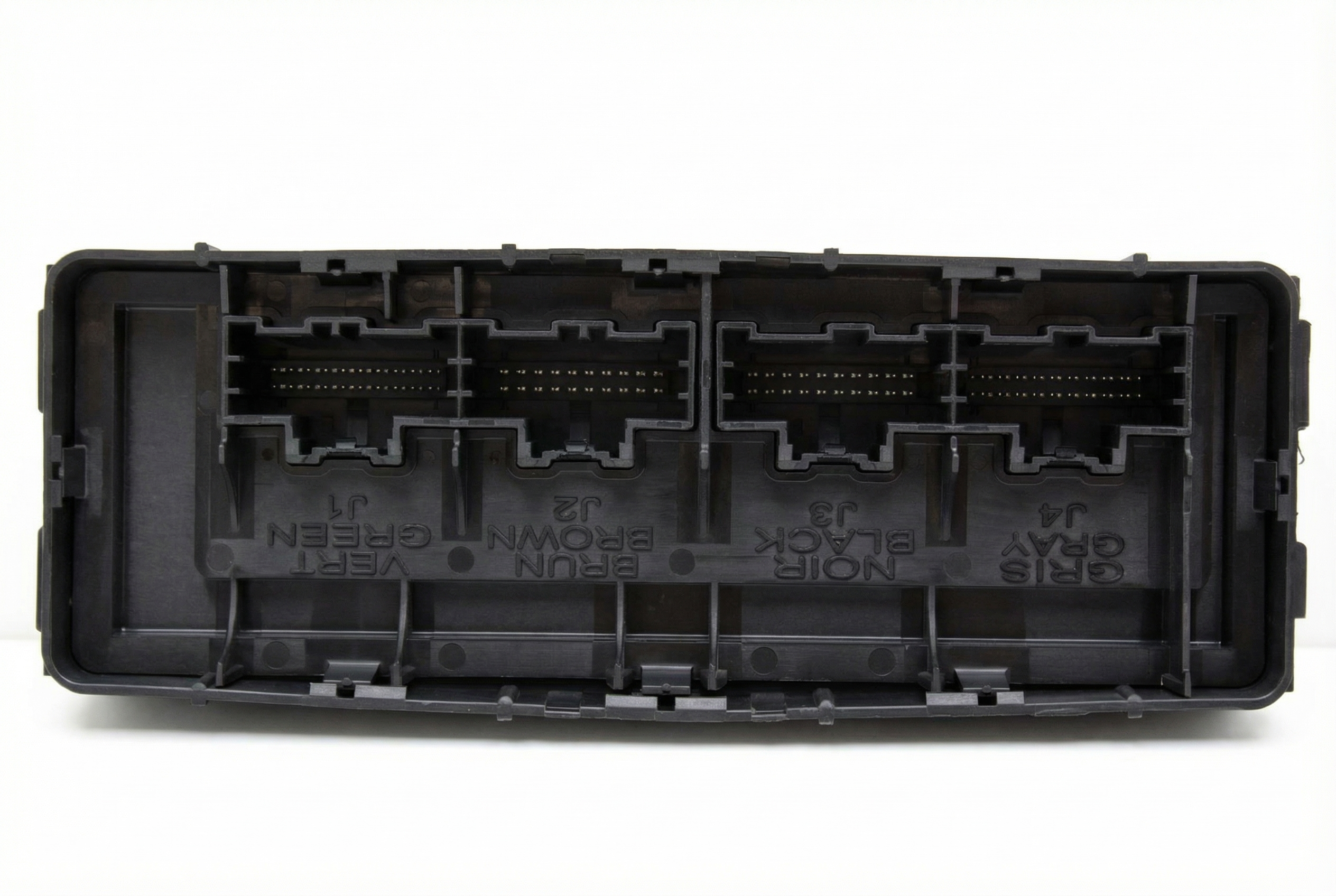
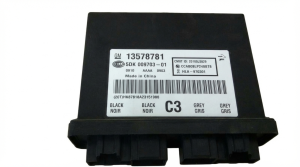
Est. part cost: $0-$200 (for dealer software update) - Failed Electronic Brake Control Module (EBCM) 🟡 Medium Probability → Shop ABS Control Module The EBCM is a complex electronic module exposed to heat and vibration in the engine bay. Internal component failure (e.g., memory chip, processor, or internal power regulation) can cause it to stop communicating entirely. This is the most common hardware failure.
How to confirm: Using a high-end scan tool, attempt to communicate directly with the EBCM. If the module does not respond, and its power, ground, and communication enable circuits are confirmed to be good, the module itself has failed.
Typical fix: Replace the EBCM/ABS module. This part MUST be programmed to the vehicle's VIN using GM's Techline Connect software. A used module can be programmed if the correct procedure is followed.
Est. part cost: $300-$800 - Poor Power or Ground Connection to EBCM ⚪ Low Probability The EBCM is located in the engine bay, where its wiring is exposed to moisture and heat. Corrosion on the main power/ground connector or a failing ground strap (check ground points like G100/G101/G102 on the frame/strut tower) can interrupt power and cause communication loss.
How to confirm: Visually inspect the wiring harness and connector at the EBCM for corrosion or damage. Use a digital multimeter to verify battery voltage at the power pin and check for low resistance (less than 0.5 ohms) on the ground circuit to a clean chassis point.
Typical fix: Clean the corroded connector pins with a terminal cleaning tool or repair/replace the faulty ground wire. Applying dielectric grease can prevent future corrosion.
Est. part cost: $5-$50 - Low Battery Voltage ⚪ Low Probability → Shop Vehicle Battery Modern vehicles are extremely sensitive to system voltage. A weak or failing battery can cause random communication codes, including U0121, to be set across various modules during startup when voltage drops significantly.
How to confirm: Test the battery with the engine off; a healthy battery should read at least 12.6 volts. With the engine running, the alternator should be charging between 13.7 and 14.7 volts. Perform a load test to confirm battery health.
Typical fix: Recharge or replace the weak battery.
Est. part cost: $150-$300
Rare But Worth Checking
- CAN Bus Wiring Fault: A break or short in the twisted pair of CAN bus communication wires (Tan and Tan/Black) can cause this code. This is often due to physical damage from an accident, rodent damage, or a previous improper repair. A diagnostic check should show ~60 ohms of resistance across the CAN High and CAN Low pins with the battery disconnected.
- Shorted Wheel Speed Sensor Wiring: → Shop ABS Wheel Speed Sensor Though a bad sensor itself causes a 'C' code, GM TSB PIT4056H notes that a short circuit in the wiring to any of the four wheel speed sensors can sometimes short out the entire EBCM, causing it to lose communication and set a U0121. The fix involves inspecting the sensor harnesses for chafing or damage, often near the wheel wells.
Diagnosis Steps
- Scan all vehicle modules with a professional-grade scan tool. Note if U0121 is 'Active' or 'History' and in which module(s) it is stored.
- If the code is in history in the Multi-axis Acceleration Sensor Module and no warning lights are on, clear the code and disregard it per TSB #PIC5652C.
- If the code is active, check for TSBs and software updates, especially TSB #PIT5599.
- Test the battery and charging system. Ensure battery voltage is above 12.6V with the engine off and charging is between 13.7-14.7V with the engine running.
- Visually inspect the EBCM connector and nearby wiring for any signs of corrosion, moisture, or physical damage. The EBCM is attached to the ABS hydraulic unit in the engine bay.
- With the key on, use a multimeter to verify that the EBCM has proper battery voltage on its power pins and a good ground (less than 0.5 ohms resistance to chassis ground).
- With the battery disconnected, measure the resistance between the CAN High and CAN Low pins at the vehicle's OBD-II port (Pin 6 and Pin 14). A healthy network should read approximately 60 ohms.
- If power/ground are good and the scan tool still cannot communicate with the EBCM, the module has likely failed.
- If the CAN bus resistance is incorrect (120 ohms or 0 ohms), or if other 'U' codes are present, a more complex CAN bus network diagnosis is needed to find the wiring short/open.
Parts You'll Likely Need
- Electronic Brake Control Module (EBCM)
(OEM #22754644 (example for 2013-2016 models, always verify with VIN))— This is the most common hardware failure that causes an active U0121 code when software and wiring issues are ruled out. The module's internal electronics fail, causing it to stop communicating.
Trusted brands: ACDelco (GM Original Equipment)
OEM price range: $500-$800
Aftermarket price range: $300-$600
Related Codes That Often Appear With This One
- U0073 — This code means 'Control Module Communication Bus A Off'. It often appears with U0121, indicating a general network problem rather than just an issue with the EBCM alone.
- U0100 — Lost Communication with ECM/PCM. If the main CAN bus has a wiring issue, communication can be lost with multiple critical modules simultaneously.
Technical Service Bulletins (TSBs) & Recalls
- PIT5599: False setting of DTC U0121 in the FVCM due to a software anomaly.
- PIC5652C: A historical U0121 in the Multi-axis Acceleration Sensor Module is a normal characteristic.
Platform-Specific Known Issues
- TSB #PIT5599: A software anomaly in the Fuel Volume Control Module (FVCM) can cause a false U0121 code to be set in the FVCM history with each ignition cycle. The fix is a software update, not part replacement.
- TSB #PIC5652C: A U0121 code stored in the history of the Multi-axis Acceleration Sensor Module is considered a normal characteristic. Technicians are advised not to replace any components for this specific instance of the code, as it sets momentarily on startup before communication is established.
Mechanic-Grade Diagnostic Values
- High-Speed GMLAN Bus Resistance — expected: Approximately 60 ohms (± 5 ohms) measured across pins 6 and 14 of the OBD-II port with the battery disconnected.. Failure: A reading of ~120 ohms indicates an open circuit or one of the two terminating resistors is offline. A reading near 0 ohms indicates the CAN High and CAN Low wires are shorted together.
- High-Speed GMLAN Bus Voltage (Key On) — expected: Approximately 2.5V on both Pin 6 (CAN High) and Pin 14 (CAN Low) when the bus is idle. During communication, CAN High should toggle up by ~1V and CAN Low should toggle down by ~1V.. Failure: A short to ground will pull the voltage to 0V on the affected line. A short to power will pull the voltage to 12V. If the lines are shorted together, the voltage will equalize.
- EBCM Ground Circuit Resistance — expected: Less than 2.0 ohms from the ground pins on the EBCM harness connector to a clean chassis ground.. Failure: Resistance higher than 2.0 ohms indicates a poor ground connection, which can cause the module to drop offline.
Scan Tool Commands That Help
- GM GDS2 / Techline Connect: Vehicle DTC Information — To perform a full network scan and see which modules are reporting the U0121 code, and to check if the code is 'Active' or 'History'.
- GM GDS2 / Techline Connect: Clear All DTCs — Used after a repair or to clear benign historical codes to see if they return as active, which would indicate a persistent problem.
- GM GDS2 / Techline Connect: Module Diagnostics > EBCM > Control Functions — If communication with the EBCM is possible, this allows a technician to command individual ABS solenoids and the pump motor to function, helping to test the hydraulic unit independently of the EBCM's communication status.
- GM GDS2 / Techline Connect: SPS (Service Programming System) > Replace and Reprogram ECU — This function is mandatory after installing a new or used EBCM. It downloads the correct VIN-specific software and calibration files to the module, allowing it to function in the vehicle.
Wiring & Ground Locations
- EBCM Main Ground — The EBCM typically has a dedicated ground wire in its main harness. The ground point itself is often located on the engine block or a nearby frame rail. For example, on similar GM platforms, G101 (engine block) and G106 (front frame cross rail) are critical powertrain grounds.. A corroded or loose main ground is a common cause for the EBCM to lose power and stop communicating, directly triggering a U0121 code in other modules.
- G103 — On similar GM platforms, this ground is located on the cowl in the engine compartment, often above the brake booster.. This ground point serves multiple modules, including the Body Control Module (BCM) and the Data Link Connector (DLC). A fault here can cause widespread communication issues, not just with the EBCM.
- G105 — Typically found at the left front of the engine compartment, behind the cooling fan relays on similar GM platforms.. While primarily for lighting and cooling systems, poor grounds in this area can introduce electrical noise onto the vehicle's electrical system, which can intermittently disrupt module communication.
- DLC (OBD-II Port) Pins 6 & 14 — Under the driver's side dashboard. Pin 6 is the CAN High (Tan/Black wire) and Pin 14 is the CAN Low (Tan wire).. These are the primary diagnostic points for the high-speed GMLAN network. All network resistance and voltage tests are performed here to assess the health of the entire communication bus that the EBCM relies on.
Real Owner Repair Stories
- BobIsTheOilGuy forum user (2008 Buick LaCrosse (similar platform and issue)) — ABS and Traction Control lights were on.
❌ Tried (didn't work) Initial diagnosis was inconclusive.
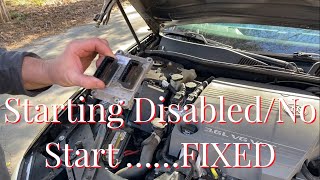
✅ What actually fixed it A wire connection had inadvertently come apart while replacing the battery. A mechanic traced the wiring, reconnected the loose plug, and the problem was solved. - YouTube user Bobby Whiteside (2005 Buick LaCrosse 3.6L (older but relevant EBCM failure)) — No-start condition, multiple communication codes including U1040 (Lost communication with EBCM).
❌ Tried (didn't work) Checking for power at the starter.
✅ What actually fixed it The problem was a dual failure of both the Engine Control Module (ECU) and the Electronic Brake Control Module (EBCM). Replacing both modules and performing the security relearn procedure resolved the issue. The EBCM failure was preventing the car from starting.
OEM Part Supersession History
22911900, 22911902→22754644, 23156466— Standard part revision and updates by the manufacturer.
Heads up: Part number 22754644 is listed for many GM vehicles of this era but has been discontinued by GM. Always verify the correct, current part number with a dealer using the vehicle's VIN before ordering.
Model Year Variations Within This Range
- 2017-2018: The third-generation LaCrosse (starting in 2017) is equipped with a Bosch ABS 9.0 brake system. In this system, the Electronic Brake Control Module (EBCM) and the Brake Pressure Modulator Valve (BPMV) are serviced as two separate components, unlike some earlier designs where they were a single unit.
- 2012-2018 (with option UGN): Vehicles equipped with the Forward Collision Alert system (RPO code UGN) use a different EBCM than standard models. The module must have the capability to control the Collision Imminent Brake Assist functions. Using the wrong module will cause configuration errors and communication codes.
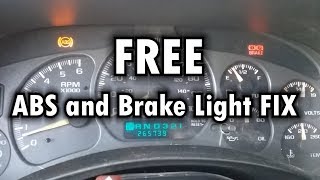
Helpful Videos

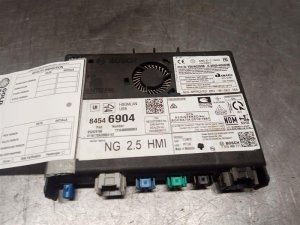
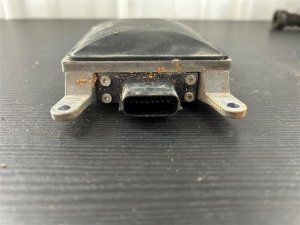
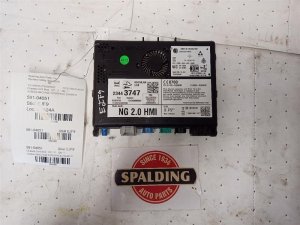
We Have This Part in Stock

The information in this article is provided for general reference and educational purposes only. Vehicle specifications, procedures, and part compatibility can vary by production date, trim level, and region. Always consult your vehicle's factory service manual and verify part numbers before purchasing or performing repairs. Safety-critical components such as airbags, seat belts, and braking systems should be installed by a qualified professional.
- Buick LACROSSE:
- 🧭 Diagnostic Flowchart
- 🎬 Helpful Videos
- 🛍️ Shop This Part
- What's Unique About the 2013-2018 Buick LACROSSE
- Symptoms You May Notice
- Most Likely Causes
- Rare But Worth Checking
- Diagnosis Steps
- Parts You'll Likely Need
- Related Codes That Often Appear With This One
- Technical Service Bulletins (TSBs) & Recalls
- Platform-Specific Known Issues
- Mechanic-Grade Diagnostic Values
- Scan Tool Commands That Help
- Wiring & Ground Locations
- Real Owner Repair Stories
- OEM Part Supersession History
- Model Year Variations Within This Range
- 🎟️ Get 5% Off