

U0121 on 2013-2015 Buick Regal: Lost Communication with ABS Module Causes and Fixes
On a 2013-2015 Buick Regal, code U0121 often appears as a harmless 'history' code due to a known software characteristic described in GM TSB PIC5652C. If there are no ABS or StabiliTrak warning lights, the code can be ignored. If warning lights are on, the issue is likely a wiring problem at the ABS module, a failed module itself, or low battery voltage.
- First, check if the code is 'Active' or 'History'. A history-only U0121 on a 2013-2015 Regal is likely normal per TSB PIC5652C and requires no repair.
- If the ABS and StabiliTrak lights are on, the code indicates a real problem.
- The most common real faults are corroded wiring at the ABS module connector or a failed ABS module itself.
- Do not replace any parts for a history-only U0121 code without active warning lights.
- Replacing the ABS module requires professional programming to match the vehicle's VIN.
What's Unique About the 2013-2015 Buick REGAL
For this specific generation of Buick Regal and its platform mates, General Motors issued Technical Service Bulletin (TSB) #PIC5652C, which is crucial for diagnosis. The bulletin states that it is a normal characteristic for the Multi-axis Acceleration Sensor Module to momentarily set a U0121 code in history during startup because it requests data from the EBCM before the EBCM is fully initialized. This means that finding a U0121 as a history code, without any active warning lights, is not a sign of a problem and no parts should be replaced. This is a key money-saving distinction from an active U0121 code that indicates a real fault.
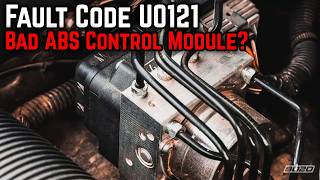
🎬 Watch: A quick breakdown of what the U0121 code means.Diagnostic Flowchart
Tap your situation to follow the diagnostic path that matches what you're seeing on this vehicle.
Symptoms You May Notice
- ABS warning light illuminated on the dashboard.
- Traction Control (TCS) or StabiliTrak (ESC) warning light on.
- "Service StabiliTrak" or "Service Brake Assist" message displayed in the driver information center.
- Loss of anti-lock brake function, causing wheels to lock up during hard braking.
- Cruise control may be disabled as it relies on data from the ABS module.
- Replacing the Multi-axis Acceleration Sensor. TSB PIC5652C explicitly warns against this, as the sensor is only reporting the communication loss; it is not the cause.
- Replacing wheel speed sensors. A faulty wheel speed sensor sets a specific 'C' code (like C0035) and does not cause a U0121 communication failure unless its wiring is severely shorted to the main harness.
Most Likely Causes
- Benign Historical Code (per TSB PIC5652C) 🔴 High Probability GM identified a normal software characteristic where the Multi-axis Acceleration Sensor Module briefly loses contact with the ABS module at startup, logging a history code. This happens because the sensor module 'wakes up' and looks for the EBCM's signal before the EBCM has finished its own startup sequence.
How to confirm: Use a scan tool to check if the code is 'Active' or 'History'. If it is only in history, specifically from the Multi-axis Acceleration Sensor Module, and there are no ABS/StabiliTrak warning lights on the dash, this is the cause. The code will likely return to history on the next startup even if cleared.
Typical fix: No repair is necessary. Do not replace any parts, especially the Multi-axis Acceleration Sensor. This is a documented normal characteristic.
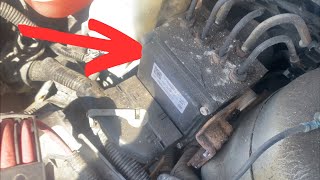
Est. part cost: $0 - Wiring or Connector Issue at ABS Module 🟡 Medium Probability → Shop ABS Control Module The ABS module is located in the engine bay, attached to the hydraulic block, typically under the brake master cylinder. Its main electrical connector is exposed to moisture, road salt, and heat, which can lead to corrosion on the pins or degradation of the wiring. A single pin with high resistance can stop communication.
How to confirm: Visually inspect the main connector at the EBCM for green/white corrosion, bent pins, or damaged wires. Test for stable 12V power and a clean ground (less than 0.5 ohms resistance to chassis) at the connector's power and ground pins using a multimeter. 🎬 See how to diagnose a U0121 no communication fault. The larger pins are typically for power and ground.
Typical fix: Clean the connector pins with a terminal cleaning tool and compressed air. Apply dielectric grease to the connector before reassembly to prevent future moisture intrusion. If corrosion is severe or wires are broken, the connector pigtail may need to be replaced.
Est. part cost: $10-$60 - Failed ABS Control Module (EBCM) 🟡 Medium Probability → Shop ABS Control Module Internal failure of the electronic components within the module can occur from heat cycles and vibration over time. This is a common failure point on many GM vehicles of this era. A failure can also cause a parasitic battery drain if the module fails to shut down properly. 🎬 Watch: How to test for a parasitic battery drain.
How to confirm: If the code is 'Active', and both power/ground and CAN bus wiring to the module have been verified as good, the module itself is the likely point of failure. A professional scan tool will be unable to establish communication with the EBCM.
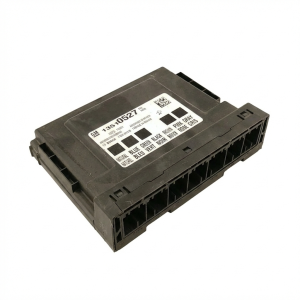
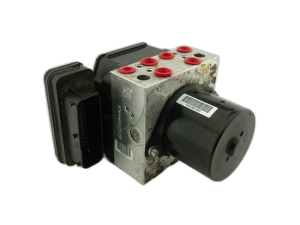
Typical fix: Replace the ABS control module. The new module must be programmed to the vehicle's VIN using GM-specific software, which typically requires a dealer or specialized repair shop. Some companies offer a repair service for the original module.
Est. part cost: $250-$800 - Low Battery Voltage ⚪ Low Probability → Shop Vehicle Battery Modern vehicle electronics are sensitive to voltage. A weak or failing battery can cause random communication codes across multiple modules during engine cranking when system voltage drops significantly below 12V.
How to confirm: Test the battery voltage with the car off using a multimeter. A healthy battery should read between 12.4V and 12.7V. Perform a load test to confirm battery health. Check the charging system voltage while running (should be 13.8V-14.7V).
Typical fix: Charge or replace the battery if it fails a load test.
Est. part cost: $150-$300
Rare But Worth Checking
- CAN Bus Network Fault: A break or short in the CAN bus wiring elsewhere in the vehicle can disrupt communication for multiple modules, including the ABS. This usually sets other 'U' codes as well, like U0073. Diagnosis involves checking CAN bus resistance at the DLC (should be ~60 ohms with battery disconnected) and using an oscilloscope to check the signal.
- Blown ABS Fuse: The EBCM is powered by one or more high-amperage fuses in the underhood fuse block. A blown fuse will cut all power to the module, causing a U0121 code. This is an easy first check. A failure in the module can sometimes cause the fuse to blow.
Diagnosis Steps
- Connect a professional scan tool capable of reading codes from all vehicle modules (ABS, BCM, ECM, etc.).
- Check if code U0121 is 'Active' or 'History'. Note which module(s) are reporting the code.
- If the code is only in the history of the Multi-axis Acceleration Sensor Module and no warning lights are on, follow TSB PIC5652C and take no action. This is normal.
- If the code is 'Active' and/or the ABS and StabiliTrak lights are on, proceed with diagnosis.
- Check and test the battery and charging system to rule out low voltage issues. Voltage should be >12.4V off and 13.8-14.7V running.
- Check the ABS/EBCM related fuses in the underhood fuse block. There may be several (e.g., 30A and 40A).
- Locate the ABS module in the engine compartment. Carefully disconnect its main electrical connector and inspect for any signs of corrosion, moisture, or damaged pins.
- Using a digital multimeter and wiring diagram, verify that the EBCM connector is receiving proper battery voltage on its power pins and has a solid ground connection (test for <0.5 ohms resistance to chassis ground).
- If power and ground are good, check the resistance of the CAN bus circuit at the vehicle's diagnostic port (DLC). With the battery disconnected, resistance between Pin 6 (CAN High) and Pin 14 (CAN Low) should be approximately 60 ohms. A reading of 120 ohms suggests a missing terminating resistor or a break in the wiring.
- If all wiring and network tests pass, and the scan tool still cannot communicate with the EBCM, the ABS control module is the most likely faulty component.
Parts You'll Likely Need
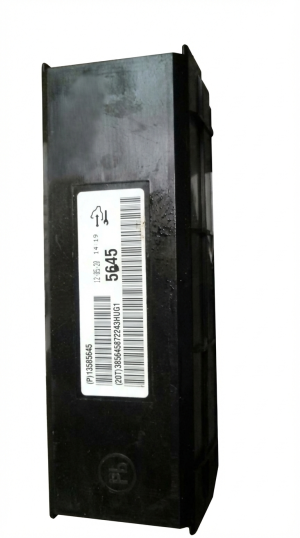
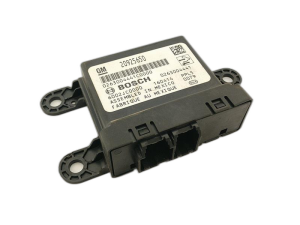
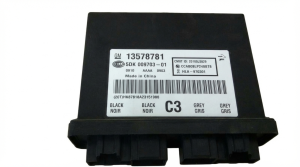
- ABS Control Module (EBCM)
(OEM #22905773 (Note: Part numbers vary by VIN and options like FWD/AWD or Forward Collision Alert (RPO UGN). Always verify with a dealer))— This is the most common point of failure when the U0121 code is active and wiring/power is confirmed to be good.
Trusted brands: ACDelco (GM Genuine), Bosch
OEM price range: $500-$800
Aftermarket price range: $250-$500
Related Codes That Often Appear With This One
- U0073 — This code means 'Control Module Communication Bus A Off' and indicates a general network problem affecting more than just the ABS module, pointing towards a wiring issue rather than a single failed module.
- U0100 — This indicates 'Lost Communication with ECM/PCM'. If the main network has a fault, communication with multiple critical modules can be lost simultaneously.
Technical Service Bulletins (TSBs) & Recalls
- PIC5652C: States that a U0121 code found in the history of the Multi-axis Acceleration Sensor Module is a normal characteristic and components should not be replaced for this specific concern. It explains the module sets the code at key-up before the EBCM responds.
Platform-Specific Known Issues
- Owner Experience: Parasitic Drain: A common real-world symptom of a failing EBCM on this platform is a severe parasitic battery drain. Owners report a new battery dying overnight. This happens when the failed module does not go to 'sleep' with the rest of the vehicle's electronics, continuously drawing power. Pulling the ABS fuse is a temporary diagnostic step to see if the drain stops, confirming the ABS module is the culprit.
- Recall Context: GM #13136: A recall (GM #13136) was issued for some 2013 Regals regarding a faulty Generator Control Module (GCM) that could lead to loss of battery charge and stalling. While not directly related to U0121, it highlights the platform's sensitivity to electrical system issues.
Mechanic-Grade Diagnostic Values
- CAN Bus Resistance at DLC — expected: ~60 Ohms. Failure: A reading of ~120 Ohms indicates an open circuit or a disconnected terminating module. A reading near 0 Ohms indicates a short between the CAN High and Low wires.
- CAN Bus Voltage at DLC (Key On, Engine Off) — expected: CAN High (Pin 6 to Ground): ~2.5V to 3.5V. CAN Low (Pin 14 to Ground): ~1.5V to 2.5V.. Failure: Voltages outside these ranges, or a voltage that is stuck at 0V or 5V, indicates a circuit fault.
- EBCM Ground Circuit Resistance — expected: < 5.0 Ohms. Failure: Resistance greater than 5.0 Ohms indicates a poor ground connection. A reading below 0.3 Ohms is ideal once all modules are asleep.
- Ground G111 Bolt Torque — expected: 9 N·m (80 lb in). Failure: A loose ground bolt can cause high resistance and intermittent communication faults.
Scan Tool Commands That Help
- GM GDS2 (Global Diagnostic System 2): Vehicle DTC Information — This is the first step. It performs a full network scan to see which other modules are reporting a loss of communication with the EBCM. A long list of 'U' codes points to a network-wide problem (like a bad ground) rather than an isolated module failure.
- GM GDS2 (Global Diagnostic System 2): Module Diagnostics > EBCM > Data Display — Use this to attempt to view live data (like individual wheel speeds) from the EBCM. If the scan tool can connect and display data, it suggests the module is powered on and communicating, pointing away from a total module failure.
- GM GDS2 (Global Diagnostic System 2): Output Control Functions / Active Test — This bidirectional control allows the technician to command the EBCM to perform actions, such as cycling the ABS pump motor or individual solenoid valves. Hearing the pump run or valves click confirms the module is receiving commands and has power, which helps isolate the fault to the communication lines or an internal logic issue.
Wiring & Ground Locations
- G111 — In the engine compartment. GM TSB PI1294B includes a diagram showing it located on the driver's side frame rail, near the front of the engine bay.. This is a key ground point for modules on the chassis communication bus, including the Power Steering Control Module. A loose or corroded G111 ground can cause intermittent communication codes for multiple modules, including U0121, even if the EBCM itself is not directly grounded here. The TSB specifically instructs to inspect this ground, ensure it's free of paint, and tighten it to 9 N·m (80 lb in).
- DLC (Data Link Connector) — Inside the vehicle, under the driver's side dashboard.. This is the primary access point for diagnostics. Pin 6 (CAN High) and Pin 14 (CAN Low) are used to test the health of the main communication network. Pin 4 is chassis ground and Pin 16 is battery power.
Real Owner Repair Stories
- Camaro5 Chevy Camaro Forum (2010 Chevrolet Camaro (Similar GM platform and electronics)) — ABS light, brake light, and anti-skid light were on. Scan tool showed U0121 along with a host of other communication codes (U0073, U0140, U0101, etc.).
❌ Tried (didn't work) The owner began extensive troubleshooting of wiring and modules based on a TSB.
✅ What actually fixed it The issue was the scanner itself. The owner was using a new Launch 123E scanner that needed a software update or purchase to unlock full functionality. After updating the scanner's software, all communication codes disappeared, revealing they were false positives generated by the tool. This highlights the importance of using a fully updated, professional-grade scan tool.
Helpful Videos


We Have This Part in Stock

The information in this article is provided for general reference and educational purposes only. Vehicle specifications, procedures, and part compatibility can vary by production date, trim level, and region. Always consult your vehicle's factory service manual and verify part numbers before purchasing or performing repairs. Safety-critical components such as airbags, seat belts, and braking systems should be installed by a qualified professional.
- Buick REGAL:
- 🧭 Diagnostic Flowchart
- 🎬 Helpful Videos
- 🛍️ Shop This Part
- What's Unique About the 2013-2015 Buick REGAL
- Symptoms You May Notice
- Most Likely Causes
- Rare But Worth Checking
- Diagnosis Steps
- Parts You'll Likely Need
- Related Codes That Often Appear With This One
- Technical Service Bulletins (TSBs) & Recalls
- Platform-Specific Known Issues
- Mechanic-Grade Diagnostic Values
- Scan Tool Commands That Help
- Wiring & Ground Locations
- Real Owner Repair Stories
- 🎟️ Get 5% Off