

U0121 on 2013-2015 Cadillac ATS: Lost Communication With ABS Module Causes and Fixes
On a 2013-2015 Cadillac ATS, code U0121 indicates a loss of communication with the ABS module. Before suspecting a faulty module, check the transmission's main X1 wiring connector for loose or corroded pins, a known issue cited in GM Technical Service Bulletin #PIC4740E that can disrupt the entire vehicle network. Also inspect the harness for chafing near the bell housing, another specific failure point mentioned in the TSB.
- U0121 means the ABS module is offline, which disables ABS, traction control, and stability control.
- The most likely cause on a 2013-2015 ATS is a poor connection at the main transmission wiring harness (X1 connector), as per GM TSB #PIC4740E.
- Always inspect the transmission connector before assuming the expensive ABS module has failed.
- This is a safety-critical fault; driving should be done with caution until the issue is repaired.
- Diagnosis can be complex and is best handled by a professional with network diagnostic tools.
What's Unique About the 2013-2015 Cadillac ATS
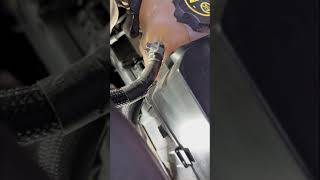
For this specific Cadillac ATS, the diagnostic path for U0121 is unusual. 🎬 Watch: A quick breakdown of the U0121 communication code. While the code points to the ABS module, a well-documented GM issue (TSB #PIC4740E) directs technicians to check the main transmission wiring connector (X1) first. A poor connection at this seemingly unrelated location can disrupt the entire high-speed data network, causing multiple modules, including the ABS, to lose communication. The TSB also specifically calls out inspecting the wiring harness for chafing at the securing bracket on the passenger side where the transmission bell housing attaches to the engine block. This makes inspecting the transmission harness a critical first step before condemning the expensive EBCM.
Diagnostic Flowchart
Tap your situation to follow the diagnostic path that matches what you're seeing on this vehicle.
Symptoms You May Notice
- ABS warning light is on
- Traction Control (TCS) or StabiliTrak warning light is on
- "Service StabiliTrak" or similar message on the driver information center
- Cruise control is inoperative
- Brake warning lamp may be illuminated
- Hard shifting from the transmission
- Vehicle may not crank or start in some cases
- Replacing the EBCM/ABS module without first thoroughly inspecting the transmission X1 connector and related CAN bus wiring as per TSB #PIC4740E.
- Replacing wheel speed sensors. U0121 is a communication network code, not a sensor performance code. A bad wheel speed sensor typically sets a 'C' code and would not be the primary cause.
Most Likely Causes
- Loose or Corroded Terminals in Transmission X1 Connector 🔴 High Probability → Shop Transmission Assembly This is a well-documented issue cited in GM Technical Service Bulletin #PIC4740E. The location of the connector on the transmission makes it susceptible to vibration and moisture, which can cause poor pin connections over time, disrupting the entire CAN bus network. This is the most common non-module failure for this code on this platform.
How to confirm: Disconnect the X1 connector on the transmission (located on the driver's side of the 6L45 transmission) and inspect for any loose, backed-out, or corroded terminal pins. Perform a 'tug test' by gently pulling on each individual wire to ensure it is securely seated in the connector, as a visual check can be misleading.
Typical fix: Reseat any loose terminals. Clean corroded terminals with electrical contact cleaner and apply dielectric grease. If the connector or terminals are damaged, the connector pigtail may need to be replaced.
Est. part cost: $0-$50 - Wiring Harness Damage 🟡 Medium Probability TSB #PIC4740E specifically mentions to inspect the harness for chafing at the securing bracket on the passenger side where the transmission bell housing meets the engine block. Other common chafe points are near wheel wells or where the harness may contact the frame. A user on CadillacForums with a similar platform experienced this issue due to a chafed harness behind the passenger side front wheel well liner.
How to confirm: Visually inspect the wiring harness leading to the EBCM and at the specific location noted in the TSB. Test the CAN bus wires (Pins 6 and 14 at the OBD-II port) for proper resistance (should be ~60 ohms with battery disconnected) and check for shorts to power or ground.
Typical fix: Repair the damaged section of the wiring harness using appropriate splicing and sealing techniques. Reroute the harness if necessary to prevent future chafing.
Est. part cost: $5-$100 - Faulty Electronic Brake Control Module (EBCM) 🟡 Medium Probability → Shop ABS Control Module Like any electronic module, the EBCM can fail internally due to age, heat cycles, or vibration. However, this should only be suspected after all wiring and network checks are performed.
How to confirm: After confirming all wiring, power, and ground connections to the module are good and the CAN network is intact, a professional scan tool will still be unable to communicate with the EBCM. This points to an internal failure of the module itself.
Typical fix: The EBCM must be replaced and programmed to the vehicle's VIN. Services exist that can repair the original module.
Est. part cost: $400-$800 - Low Battery Voltage or Poor Ground Connection ⚪ Low Probability → Shop Vehicle Battery Modern GM vehicles are highly sensitive to voltage. A weak battery or corroded ground can cause widespread, intermittent communication faults as modules fail to initialize properly.
How to confirm: Test the battery voltage with a multimeter. It should be above 12.4V with the engine off and 13.7-14.7V when running. Inspect the battery terminals and main chassis ground connections (e.g., G106, G110) for looseness or corrosion.
Typical fix: Charge or replace the battery. Clean and tighten all battery and ground connections.
Est. part cost: $0-$250
Diagnosis Steps
- Check and record all Diagnostic Trouble Codes (DTCs) from all vehicle modules using a professional scan tool. Note all modules that are not communicating.
- Check battery voltage and inspect battery terminals and chassis grounds for corrosion or looseness. Voltage should be >12.4V engine off, and 13.7-14.7V engine on.
- PRIORITY 1: Follow GM TSB #PIC4740E. Locate and disconnect the transmission X1 wiring harness connector on the driver's side of the transmission. Carefully inspect for any unseated, corroded, or damaged pins. Perform a 'tug test' on each wire.
- PRIORITY 2: Per the same TSB, inspect the wiring harness for chafing at the securing bracket located on the passenger side of the vehicle where the transmission bell housing attaches to the engine block.
- Inspect the wiring harness and connector at the Electronic Brake Control Module (EBCM) for damage or corrosion. Check for good power and ground at the EBCM connector.
- With the battery disconnected, use a multimeter to check the resistance between Pin 6 (CAN High) and Pin 14 (CAN Low) at the OBD-II port. A healthy network should read approximately 60 ohms.
- If wiring, connectors, and network resistance are all good, but communication with the EBCM cannot be established, the EBCM itself is the most likely cause and requires replacement and programming. 🎬 Watch: How to program a replacement Cadillac ABS module.
Parts You'll Likely Need
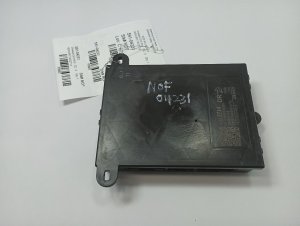
- Electronic Brake Control Module (EBCM)
(OEM #22932433 (Verify with VIN))— If all wiring and network checks pass, the module itself has likely failed internally. This is the most common major component replacement for this code. It requires programming to the vehicle.
Trusted brands: ACDelco (GM Genuine)
OEM price range: $450-$700
Aftermarket price range: $300-$600 (Often remanufactured) - Transmission Connector Pigtail — If the terminals or housing of the X1 transmission connector are damaged beyond repair from corrosion or heat, a new pigtail will be needed to fix the root cause cited in the TSB.
Trusted brands: ACDelco, Dorman
OEM price range: $40-$70
Aftermarket price range: $20-$50
Related Codes That Often Appear With This One
- U0073 — A general network code often seen with specific module communication loss codes like U0121, as noted in TSB #PIC4740E.
- U0100 — Lost Communication With ECM/PCM. This can appear alongside U0121 if the network issue is widespread, such as the transmission connector problem mentioned in TSB #PIC4740E.
- U0140 — Lost Communication With Body Control Module. Also indicates a wider network problem, potentially linked to the same root cause.
- C0561 — System Disabled Information Stored. This is a common code in GM vehicles that indicates the stability control system has been disabled, often as a direct result of a communication fault like U0121.
Technical Service Bulletins (TSBs) & Recalls
- Bulletin #PIC4740E (and later versions): Notes that various communication codes, including U0121, U0073, U0100, and U0140, can be caused by loose/poor-fitting terminals in the transmission X1 connector or by a chafed harness at a specific bracket near the bell housing. It instructs technicians to perform a tug test on the wires.
Platform-Specific Known Issues
- Per TSB #PIC4740E, a poor connection at the transmission X1 connector is a primary cause for U0121 and a host of other communication codes on this platform. This should be the first specific area to inspect after checking the battery.
- The same TSB also identifies a potential harness chafing point at a bracket near the transmission bell housing on the passenger side, which can short out the CAN bus wires.
Mechanic-Grade Diagnostic Values
- High-Speed GMLAN Bus Resistance — expected: ~60 Ω. Failure: A reading of ~120 Ω indicates an open circuit or a fault at one of the two terminating resistors. A reading near 0 Ω indicates a short between the CAN High and CAN Low wires.
- High-Speed GMLAN Bus Voltage (Key On, Engine Off) — expected: CAN High (Pin 6): ~2.6V, CAN Low (Pin 14): ~2.4V. Failure: Voltages stuck high (towards battery voltage), low (towards 0V), or equal to each other indicate a short to power, ground, or between the wires.
- EBCM Power Supply Voltage — expected: > 12.0 V. Failure: Voltage below 11-12V suggests a problem with the battery, charging system, or the power supply circuit/fuse for the EBCM.
- EBCM Ground Circuit Resistance — expected: < 5 Ω. Failure: High resistance indicates a corroded, loose, or broken ground connection, which can prevent the module from powering on and communicating.
Scan Tool Commands That Help
- GM GDS2: Vehicle DTC Information / Full Network Scan — This should be the first step to get a complete picture of which modules are online and which are reporting communication loss codes. A long list of 'U' codes points to a network-wide problem (wiring, ground) rather than a single failed module.
- GM GDS2: Module Diagnostics > EBCM > Data Display — Use this to directly test communication with the EBCM. If the scan tool can access this screen and show live data, it confirms communication is possible, and the fault may be intermittent. If the module is unreachable, it confirms a hard communication failure.
Wiring & Ground Locations
- EBCM (Electronic Brake Control Module) — Located in the engine compartment, forward of the right (passenger side) front strut tower.. This is the module that has lost communication. All power, ground, and network wiring tests culminate here.
- High-Speed Bus Terminating Resistor (Secondary) — Taped to the wiring harness, located forward of the right rear lamp assembly in the trunk/rear body area.. The CAN bus requires two 120-ohm terminating resistors to function. One is internal to the ECM, and this is the second one. If this resistor or its wiring fails, network resistance will read 120 ohms instead of 60, causing communication failures.
- G110 — On the left rear of the engine.. This is a primary engine ground. A poor connection here can cause widespread electrical issues, including communication codes.
- G106 — Located in the engine compartment, near the right (passenger side) hood hinge.. An important chassis ground in the engine bay. Corrosion or looseness can affect nearby modules.
- G401 — Located in the trunk, near the battery well.. This is the main battery ground connection to the chassis. A fault here can cause vehicle-wide voltage and communication problems.
Real Owner Repair Stories
- YouTube user comment on video '07-13 SERVICE STABILITRAK FIX' (2007 Cadillac Escalade (Similar GM platform with Stabilitrak)) — Service Stabilitrak light, random door lock cycling, transmission stuck in one gear, no-start conditions.
❌ Tried (didn't work) Adding a supplementary ground strap, which provided a temporary fix.
✅ What actually fixed it Found the GM-LAN communication wires in the harness running to the transmission had rested against a heat shield. The protective plastic conduit had broken, allowing the wires to melt and ground out. Repairing the melted wires with high-quality splicing tape resolved all electrical issues.
Model Year Variations Within This Range
- 2013: On 2013 models with 4-cylinder engines and automatic transmissions, the location of engine ground G104 changed mid-year. On vehicles built before mid-December 2012, the ground is at the front of the engine. On vehicles built after that date, it is located at the rear of the engine.
Helpful Videos
Used OEM Parts in Stock
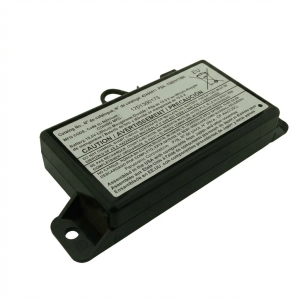
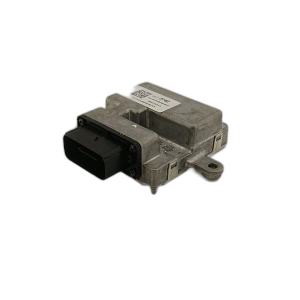
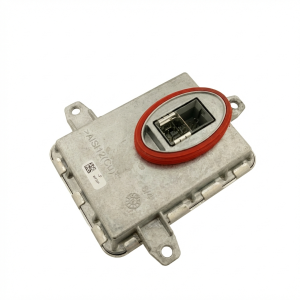
New Aftermarket Parts Available

The information in this article is provided for general reference and educational purposes only. Vehicle specifications, procedures, and part compatibility can vary by production date, trim level, and region. Always consult your vehicle's factory service manual and verify part numbers before purchasing or performing repairs. Safety-critical components such as airbags, seat belts, and braking systems should be installed by a qualified professional.
- Cadillac ATS:
- 🧭 Diagnostic Flowchart
- 🎬 Helpful Videos
- 🛍️ Shop This Part
- What's Unique About the 2013-2015 Cadillac ATS
- Symptoms You May Notice
- Most Likely Causes
- Diagnosis Steps
- Parts You'll Likely Need
- Related Codes That Often Appear With This One
- Technical Service Bulletins (TSBs) & Recalls
- Platform-Specific Known Issues
- Mechanic-Grade Diagnostic Values
- Scan Tool Commands That Help
- Wiring & Ground Locations
- Real Owner Repair Stories
- Model Year Variations Within This Range
- 🎟️ Get 5% Off