

U0121 on 2015-2019 Cadillac Escalade ESV: Lost Communication With Brake Module Causes & Fixes
On a 2015-2019 Escalade ESV, code U0121 is almost always caused by a poor ground connection at the G218 location under the driver's side dash or a damaged wiring harness under the sill plates. Inspecting and fixing these known issues, as documented in GM Technical Service Bulletins, should be your first step before suspecting a faulty ABS module.
- Before buying any parts for a U0121 code on a 2015-2019 Escalade, you MUST inspect two key areas: the G218 ground under the driver's dash and the wiring harness under the door sill plates.
- This code disables your ABS and StabiliTrak systems, making the vehicle less safe in emergency maneuvers. Driving should be done with caution until the issue is resolved.
- A wide array of other communication codes (U0073, U0140, U0126, etc.) frequently accompany U0121, which strongly points to a shared wiring or ground fault rather than multiple failed modules.
- Do not immediately assume the expensive Electronic Brake Control Module has failed. On this specific vehicle, wiring and ground faults are the most probable cause according to GM's own service bulletins.
What's Unique About the 2015-2019 Cadillac ESCALADE ESV
For this specific generation of Cadillac Escalade and its sister GM SUVs on the K2XX platform, the U0121 code is strongly linked to specific, well-documented electrical issues. Manufacturer Technical Service Bulletins (TSBs) point directly to two main culprits: a poor Body Control Module (BCM) ground at a location known as G218, and a wiring harness under the driver and passenger sill plates that is prone to damage. Specifically, TSB #PIT5457D mentions the 'communication enable' circuit (wire 5986) as a frequent point of failure in the sill plate area. These known weak points should be the primary focus of any diagnosis before considering the more expensive replacement of the EBCM itself.
Diagnostic Flowchart
Tap your situation to follow the diagnostic path that matches what you're seeing on this vehicle.
Symptoms You May Notice
- ABS warning light on
- StabiliTrak / Traction Control warning light on
- "Service Stabilitrak" message on dash
- "Service Suspension System" message on the dash
- Instrument panel, radio, or HVAC displays may go blank intermittently
- Reduced or loss of power steering assist
- Engine may stall at low speeds
- Alarm may sound randomly when locking doors
- Replacing the Electronic Brake Control Module (EBCM) without first thoroughly inspecting the G218 ground and the wiring harnesses under the sill plates. Given the multiple TSBs for this vehicle platform, these electrical connection issues are far more likely to be the root cause and are significantly cheaper to fix.
Most Likely Causes
- Poor Body Control Module (BCM) Ground at G218 🔴 High Probability → Shop Body Control Module TSB #PIT5405C and its predecessors specifically identify this as a common cause for a wide range of electrical issues, including the U0121 code. The factory assembly process sometimes allowed sound-deadening insulation material to get trapped under the ground connection's eyelet, leading to a poor, high-resistance contact over time.
How to confirm: Locate the G218 ground stud, which is found under the driver's side of the dashboard, typically near the A-pillar and sometimes behind the dash speaker. Visually inspect and physically check if the 10mm nut is loose or if the black insulation mat is caught under the ground terminal eyelet.
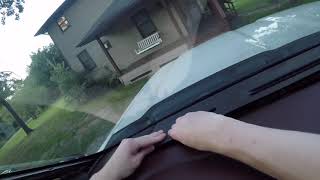
Typical fix: Disconnect the battery. Remove the 10mm nut. Pull the ground eyelet(s) off the stud. Cut or trim away the interfering insulation mat to expose bare metal. Clean the terminal eyelet and the body surface with a wire brush or sandpaper until shiny, and securely retighten the nut to 15 Nm (11 ft-lb). 🎬 Watch: Step-by-step guide to fixing the G218 ground issue.
Est. part cost: $0-$5 - Damaged Wiring Harness Under Sill Plates 🔴 High Probability TSB #PIT5457D points to this specific location as a common trouble spot. The main body harness runs along the floor under the plastic sill plates, where it is susceptible to moisture intrusion, leading to corrosion (often green or white powder on copper wires), and chafing. The communication enable circuit (wire 5986) is often the specific wire that gets damaged.
How to confirm: Remove the driver and passenger side interior sill plates to gain access to the main wiring harness. Carefully peel back the harness tape and inspect the wires, especially splices and the communication enable circuit, for any signs of chafing, corrosion, breaks, or pinched wires.
Typical fix: Repair any damaged sections of wire using proper automotive-grade butt connectors and heat-shrink tubing to seal out moisture. GM has specific bulletins on proper wire repair techniques. Clean any corroded connectors with electrical contact cleaner.
Est. part cost: $10-$30 - Failed Electronic Brake Control Module (EBCM) 🟡 Medium Probability → Shop ABS Control Module While less common than wiring or ground issues on this platform, the module itself can fail internally due to heat, vibration, or age. It is attached to the ABS hydraulic block on the driver's side frame rail.
How to confirm: This should only be suspected after confirming that all power, ground, and communication wires (CAN bus and communication enable circuit) to the module are intact and functioning correctly. A professional scan tool that can attempt to directly communicate with the EBCM is needed; a failure to communicate when all inputs are good points to an internal module fault.
Typical fix: Replace the Electronic Brake Control Module. The new module must be programmed to the vehicle's VIN using dealership-level software.
Est. part cost: $135-$450 - Low Battery Voltage or Poor Battery Connections ⚪ Low Probability → Shop Vehicle Battery Low system voltage can cause unpredictable communication errors between various modules on the CAN bus. TSBs also note the importance of proper battery cable torque and connections to prevent widespread electrical issues.
How to confirm: Test the battery voltage with a multimeter. It should be above 12.4V with the engine off and 13.7-14.7V when running. Check that the battery terminal clamps are clean, tight, and torqued to 7 Nm (62 lb-in). Ensure the battery posts protrude 1-2mm above the clamps.
Typical fix: Charge or replace the battery after performing a load test. Clean the battery terminals and cable ends thoroughly.
Est. part cost: $0-$250
Diagnosis Steps
- Scan all vehicle modules with a high-quality OBD-II scanner capable of reading manufacturer-specific codes. Note all 'U' (communication) codes present and in which modules they are stored.
- Inspect and repair the BCM ground G218. Locate it under the driver's side dash near the A-pillar. Disconnect the battery, remove the 10mm nut, cut away any trapped insulation material, clean all contact surfaces to bare metal, and securely retighten. This is the most common and cheapest fix.
- Remove the driver and passenger front sill plates. Carefully unwrap and inspect the main wiring harness for any signs of corrosion (green/white powder), chafing, or broken wires, paying close attention to splices and the communication enable circuit as detailed in TSB #PIT5457D.
- Check and clean the main battery terminals. Perform a battery load test and verify charging system voltage is between 13.7-14.7V with the engine running. Ensure terminal clamps are torqued correctly.
- Inspect the fuses related to the ABS/EBCM in the underhood fuse block.
- If the above steps do not resolve the issue, check for power, ground, and CAN bus signals directly at the EBCM connector with a multimeter. The CAN bus wires should show approximately 2.5 volts. The communication enable circuit (wire 5986) should have voltage when the ignition is on.
- If power, ground, and network wiring to the module are confirmed to be good, the EBCM itself is likely faulty and requires replacement and programming.
Parts You'll Likely Need
- Electronic Brake Control Module (EBCM)
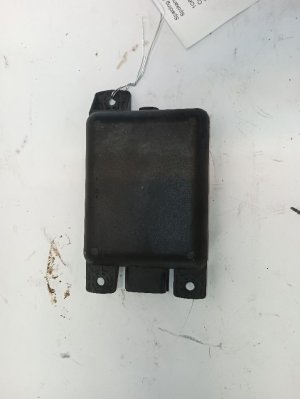
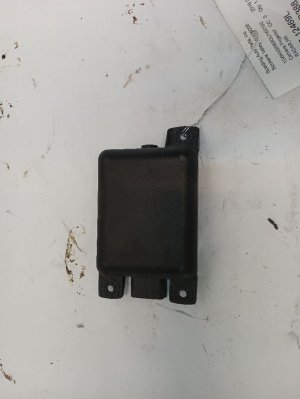
(OEM #84256781)— This is the part to replace if all wiring, ground, and power supply issues have been ruled out. It is the control center for the ABS and stability systems. Part number 84256781 is specified for models without adaptive cruise control and supersedes several previous numbers.
Trusted brands: ACDelco (OEM), Dorman
OEM price range: $250-$450
Aftermarket price range: $150-$300 - Wiring Repair Supplies — Needed to fix common issues in the harness under the sill plates or at the G218 ground. Includes butt connectors, heat shrink tubing, and Tesa tape.
Trusted brands: 3M
OEM price range: $10-$30
Aftermarket price range: $5-$20
Related Codes That Often Appear With This One
- U0073 — Control Module Communication Bus 'A' Off. This is a general CAN bus fault that often appears with specific module communication loss codes like U0121, especially when the G218 ground is the cause.
- U0140 — Lost Communication With Body Control Module. This often sets alongside U0121 because the faulty G218 ground directly affects the BCM, which is the master of the low-speed CAN bus.
- U0100 — Lost Communication with ECM/PCM. A widespread network issue caused by a bad ground or wiring fault can disrupt communication with multiple critical modules.
- U0126 — Lost Communication With Steering Angle Sensor Module. This module is on the same communication bus and is often affected by the same wiring issues under the sill plates, as noted in TSB #PIT5457D.
- U0131 — Lost Communication With Power Steering Control Module. This is another module that can lose communication due to the known wiring and ground faults on this platform.
Technical Service Bulletins (TSBs) & Recalls
- PIT5457D: Addresses loss of communication with EBCM, SWPS, PSCM, and SCM due to wiring issues under the sill plates.
- PIT5405C: Points to a poor BCM ground at G218 as a primary cause for a host of communication DTCs, including U0121.
- PIT5405B: An earlier version of PIT5405C, also identifying the G218 ground issue.
- 13-00-89-008B: General bulletin on GM's approved wiring repair strategies, recommending terminated leads over soldering.
Platform-Specific Known Issues
- TSB #PIT5457D: Sill Plate Harness Damage: Documents a known issue where the wiring harness under the driver and passenger sill plates can become damaged by moisture or chafing, causing loss of communication with the EBCM (U0121) and other modules like the Steering Angle Sensor (U0126) and Power Steering Control Module (U0131).
- TSB #PIT5405C: Poor BCM Ground at G218: Points to a poor BCM ground at location G218 as a primary cause for a host of communication DTCs, including U0121. This is often due to a loose nut or sound deadening material interfering with the connection from the factory.
Mechanic-Grade Diagnostic Values
- High-Speed CAN Bus Resistance — expected: 60 Ohms across CAN High and CAN Low pins (e.g., Pins 12 & 13 at the DLC) with the battery disconnected.. Failure: A reading of 120 Ohms indicates one of the two terminating resistors is offline or there's a break in the wiring. A reading near 0 Ohms indicates a short between the CAN High and Low wires.
- High-Speed CAN Bus Voltage (Key On, Engine Off) — expected: CAN High to Ground: ~2.6V - 3.5V. CAN Low to Ground: ~2.4V - 1.5V. Both wires should idle at approximately 2.5V.. Failure: Voltages stuck at 0V, 5V, or battery voltage, or voltages that do not mirror each other during communication, indicate a short to power/ground or a faulty transceiver.
- Communication Enable Circuit 5986 Voltage (Key On) — expected: Approximately 12V (battery voltage).. Failure: Low or no voltage indicates an open, short to ground, or high resistance in the circuit between the BCM and the EBCM, which will prevent the EBCM from communicating. The BCM will shut down this circuit if the current draw exceeds 0.88 amps.
- Communication Enable Circuit 5986 Load Test — expected: The circuit should be able to illuminate a small test bulb (like a 194 bulb) connected between the circuit at the EBCM connector and a good ground.. Failure: If the bulb does not light, it confirms high resistance in the circuit that may not be apparent with a high-impedance multimeter alone.
Hidden / Shadow Codes Worth Checking
- U0121 with Symptom Byte 71: Indicates 'Invalid Data Received'. This means the EBCM is online, but it is receiving faulty data from one of its own inputs (like a wheel speed sensor). The EBCM then broadcasts this invalid status, causing other modules to set a U0121-71 code. (see via A professional scan tool like the GM GDS2 is required to view symptom bytes. This is a critical distinction, as it shifts the diagnosis from a communication failure to an input sensor failure.)
Scan Tool Commands That Help
- GM GDS2 (Global Diagnostic System 2): EBCM Programming / Setup — This function is mandatory after replacing the Electronic Brake Control Module (EBCM). The new module must be programmed with the vehicle's specific VIN and configuration data to function correctly and communicate with other modules.
- GM GDS2 (Global Diagnostic System 2): Module Status — Before diving into wiring checks, use the 'Module Status' or a similar network test function to see which modules are currently active on the bus. If the EBCM is listed as 'Present', the problem is likely intermittent or related to invalid data (see symptom bytes), not a hard failure.
Wiring & Ground Locations
- G218 — Under the driver's side of the dashboard, near the A-pillar. It is often located behind the dash side panel or near the under-dash speaker.. This is the primary ground for the Body Control Module (BCM). TSB #PIT5405C confirms that a poor connection here, often due to trapped insulation, can cause dozens of communication codes, including U0121, by disrupting the BCM's operation.
- EBCM Connector (X1) — The EBCM is attached to the ABS hydraulic unit (the pump), which is typically mounted on the driver's side frame rail, below the engine bay.. This is the main connector where all power, ground, and communication lines for the ABS module must be tested. Verifying signal integrity at this point is the final step before condemning the module itself.
- Sill Plate Harness — Runs along the floor, under the plastic door sill trim plates on both the driver's and passenger's sides.. TSB #PIT5457D specifically identifies this harness as a location where the Communication Enable Circuit (5986) can chafe or corrode, causing a loss of communication with the EBCM and other modules.
- Splice J365 — Located within the wiring harness under the passenger's front sill plate.. TSB #PIT5457B identifies this splice as a known point of failure for the Communication Enable circuit (5986), which can cause an open or high resistance, leading to code U0121.
Real Owner Repair Stories
- YouTube video on a K2XX platform truck (2014-2018 Chevrolet Silverado/GMC Sierra (mechanically identical platform)) — Intermittent flickering dash lights, radio and HVAC displays going blank, loss of power steering assist, and multiple warning messages including 'Service Stabilitrak'.
❌ Tried (didn't work) Testing the battery and alternator, which were both confirmed to be good.
✅ What actually fixed it The problem was the G218 ground under the driver's side dash. The factory had installed the ground nut over a piece of sound-deadening foam insulation, preventing a solid connection. The fix was to remove the nut, cut away the interfering foam, and re-secure the ground terminals to bare metal.
OEM Part Supersession History
23355954, 84074957, 84074960, 84256789→84256781— Standard part evolution, incorporating design or manufacturing improvements.
Heads up: Part number 84256781 is specified for vehicles WITHOUT adaptive cruise control. Using this part on a vehicle with adaptive cruise will result in system incompatibility. Always verify the correct part number for the specific vehicle's options.
Helpful Videos


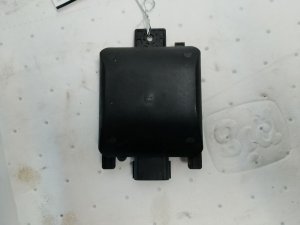
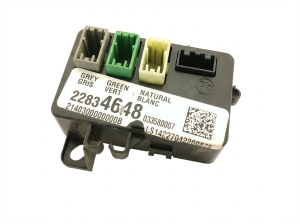
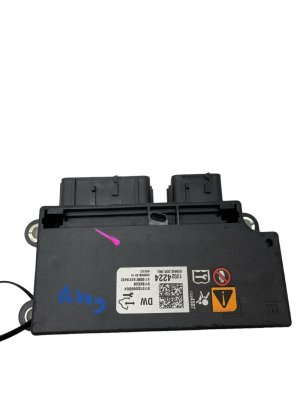
We Have This Part in Stock

The information in this article is provided for general reference and educational purposes only. Vehicle specifications, procedures, and part compatibility can vary by production date, trim level, and region. Always consult your vehicle's factory service manual and verify part numbers before purchasing or performing repairs. Safety-critical components such as airbags, seat belts, and braking systems should be installed by a qualified professional.
- Cadillac ESCALADE ESV:
- 🧭 Diagnostic Flowchart
- 🎬 Helpful Videos
- 🛍️ Shop This Part
- What's Unique About the 2015-2019 Cadillac ESCALADE ESV
- Symptoms You May Notice
- Most Likely Causes
- Diagnosis Steps
- Parts You'll Likely Need
- Related Codes That Often Appear With This One
- Technical Service Bulletins (TSBs) & Recalls
- Platform-Specific Known Issues
- Mechanic-Grade Diagnostic Values
- Hidden / Shadow Codes Worth Checking
- Scan Tool Commands That Help
- Wiring & Ground Locations
- Real Owner Repair Stories
- OEM Part Supersession History
- 🎟️ Get 5% Off