

U0121 on 2007-2012 Chevrolet Avalanche: Lost Communication with ABS Module Causes & Fixes
On a 2007-2012 Avalanche, code U0121 is most often caused by a poor ground connection on the frame under the driver's door (specifically G303), a corroded wiring harness under the driver's door sill plate, or a failed Electronic Brake Control Module (EBCM). Cleaning the ground and inspecting the harness are low-cost first steps before suspecting the more expensive module.
- U0121 means the ABS and StabiliTrak systems are offline, which is a significant safety risk.
- Before replacing any parts, always start by checking the battery and cleaning the main EBCM ground on the frame under the driver's door; this is a very common and cheap fix.
- Do not replace wheel speed sensors for this code; it is a communication error, not a sensor error.
- If the EBCM itself has failed, a replacement module will require professional programming to function with your vehicle.
What's Unique About the 2007-2012 Chevrolet AVALANCHE
The 2007-2012 Avalanche is built on the GMT900 platform, which is known for specific electrical vulnerabilities. The primary ground for the Electronic Brake Control Module (EBCM), often designated G303, is bolted to the outside of the driver's side frame rail, directly exposing it to road salt and moisture. This design makes it highly susceptible to corrosion, which interrupts communication and is a leading cause of code U0121 on these trucks. Additionally, GM Technical Service Bulletins (TSBs) identify other common issues like corroded wiring in the harness under the driver's door sill plate and poor connections at other ground points like G218 (under the driver's kick panel).
Diagnostic Flowchart
Tap your situation to follow the diagnostic path that matches what you're seeing on this vehicle.
Symptoms You May Notice
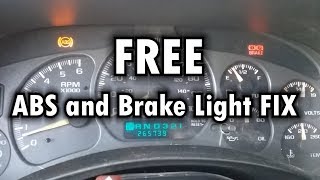
- ABS warning light is on.
- StabiliTrak or Traction Control (TC) warning light is on.
- "Service StabiliTrak" or "Service Traction Control" message on the driver information center.
- Cruise control is inoperative.
- Transmission may exhibit harsh shifting or get stuck in one gear.
- Speedometer may be inaccurate or drop to zero intermittently.
- Brake warning light (red) may be illuminated.
- Remote start may not work.
- Door locks may cycle intermittently.
- Replacing wheel speed sensors. A faulty wheel speed sensor will typically set a specific 'C' code (like C0035) and will not cause a U0121 communication code unless it has an internal short, which is rare but noted in TSB PIT4056H.
Most Likely Causes
- Corroded or Loose EBCM Frame Ground (G303) 🔴 High Probability The main ground for the EBCM (G303) is bolted to the outside of the driver's side frame rail, making it highly susceptible to corrosion from road salt and moisture. Even undercoating applied at the factory or by shops can get between the connector and frame, causing a poor connection.
How to confirm: Locate the ground wire bolted to the frame under the driver's door area, near the EBCM. Disconnect the battery, then unbolt the ground. Visually inspect for rust, paint, or undercoating on the frame surface and the wire's eyelet. Clean all contact surfaces with a wire brush or sandpaper until both are shiny, bare metal, then re-secure it tightly.
Typical fix: Clean the ground contact surfaces and re-secure the bolt. In severe cases, the wire end terminal and bolt may need to be replaced.
Est. part cost: $5-$20 - Chafed or Damaged Wiring Harness 🟡 Medium Probability The wiring harness leading to the EBCM can rub against the frame or other components, causing wires to break or short out. Additionally, water can get into the wiring channels under the driver's door sill plates, causing corrosion in the harness, a problem noted in TSB #PIT5457D. A specific weak point is the communication 'wake-up' signal wire (often light blue, circuit 5986) which can corrode at a splice point within the harness.
How to confirm: Visually inspect the entire length of the harness going to the EBCM for any signs of rubbing, melting, or physical damage. Pull up the driver's side door sill plate and peel back the carpet to inspect the wiring channel for signs of water intrusion, swelling, or green/white corrosion. Check for corrosion in the main EBCM connector itself.
Typical fix: Repair the damaged section of the wiring harness by soldering in a new piece of wire and protecting it with heat-shrink tubing. Reroute the harness if it was rubbing on a component.
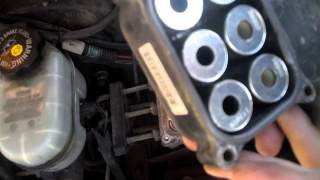
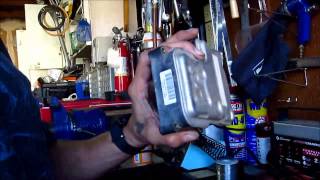
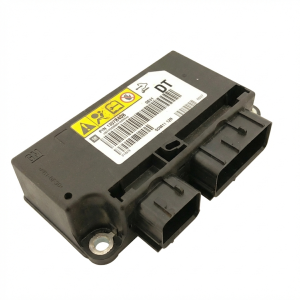
Est. part cost: $10-$50 - Failed Electronic Brake Control Module (EBCM) 🟡 Medium Probability → Shop ABS Control Module The EBCM is located on the driver's side frame rail, where it is exposed to heat, vibration, and potential moisture intrusion, which can lead to internal electronic failure, such as cracks in solder joints on the internal circuit board.
How to confirm: After confirming with a multimeter that power and ground are good at the EBCM connector, a professional scan tool is used. If the scan tool cannot communicate with the EBCM, the module is likely faulty. TSB #PIT4056H notes that even a shorted wheel speed sensor can sometimes cause communication loss, so unplugging sensors one by one can be a final check.
Typical fix: Replace the EBCM. Many companies offer a rebuild service for the original module, which is more cost-effective and does not require programming. A new or used replacement module will require programming by a dealer 🎬 Watch: Step-by-step guide to replacing the Avalanche ABS module or qualified shop with GM-specific software like a Tech2 or GDS2.
Est. part cost: $200 (Rebuild) - $700 (New) - Low Battery Voltage or Poor Connections ⚪ Low Probability → Shop Vehicle Battery
How to confirm: Test the battery voltage with a multimeter. It should be above 12.4V with the engine off and 13.7-14.7V when running. Check that the battery terminals are clean and tight. A weak battery can cause random communication codes across various modules as they are sensitive to low voltage.
Typical fix: Charge or replace the battery and clean the terminals.
Est. part cost: $150-$300
Rare But Worth Checking
- Corroded Underhood Fuse Block: Owners on forums have reported finding corrosion on the pins of fuses and relays within the underhood fuse block, causing intermittent power loss to the EBCM.
- Poor BCM Ground (G218): TSB #PIT5405C points to a body control module ground at G218, located behind the driver-side kick panel, as a cause for multiple communication codes. Insulation can get trapped under the ground from the factory, causing a poor connection.
Diagnosis Steps
- Check the battery voltage to ensure it's above 12.4 volts and that terminals are clean and tight.
- Inspect the large ABS and EBCM related fuses (e.g., 60A, 40A) in the underhood fuse block for integrity and for corrosion on the fuse blades and terminals.
- Locate the main EBCM ground (G303) on the outside of the driver's side frame rail, under the driver's door. Disconnect the battery, then unbolt, thoroughly clean the connection point and terminal with a wire brush to bare metal, and re-secure it tightly. 🎬 Watch: How to properly clean the G303 frame ground
- Pull up the driver's side door sill trim and inspect the wiring harness in the channel for signs of water damage, corrosion, or chafing.
- Visually inspect the EBCM connector and the surrounding wiring harness for obvious damage, corrosion, or loose connections.
- If the problem persists, use a multimeter to test for proper power and ground at the EBCM connector pins. On the GMT900, this is typically Pin 1 (Red/White) for battery power and Pin 19 (Black/White) for ground. A test light should be used to confirm the power and ground circuits can carry a load.
- With a capable scan tool, attempt to communicate directly with the EBCM. If communication fails but power and grounds are good, the EBCM has likely failed.
- If other communication codes are present, test the resistance of the CAN bus at the OBD-II port (Pins 6 and 14). With the battery disconnected, it should be ~60 ohms. A reading of 120 ohms indicates an open circuit or a missing termination resistor, while 0 ohms indicates a short between the CAN high and low wires.
Parts You'll Likely Need
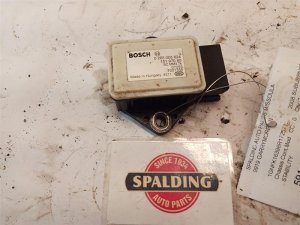
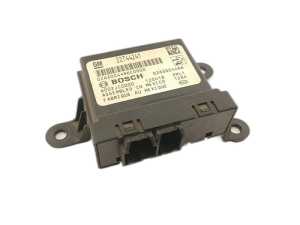
- Electronic Brake Control Module (EBCM)
(OEM #15905737 (2007), 25912635 (2008))— This module is the computer for the ABS. It can fail internally from heat and vibration, or externally from corrosion at its connector. It is the most common component to be replaced after wiring and grounds are confirmed to be good.
Trusted brands: ACDelco (OEM), Dorman, Cardone (Remanufactured)
OEM price range: $500-$700
Related Codes That Often Appear With This One
- U0073 — Control Module Communication Bus 'A' Off. This is a general network code that often appears with more specific U-codes like U0121, indicating a broader communication problem on the CAN bus, often pointing to a wiring or termination resistor issue.
- U0100 — Lost Communication with ECM/PCM. Like U0073, this points to a wider network issue where multiple modules are losing communication, often due to a wiring, ground, or power supply problem affecting the entire GMLAN High Speed bus.
- U0101 — Lost Communication with TCM. This code indicates the Transmission Control Module is also offline, which can cause the harsh shifting symptom sometimes seen with U0121. TSB #08-07-30-021H specifically addresses these codes appearing together.
Technical Service Bulletins (TSBs) & Recalls
- Bulletin #08-07-30-021H: Addresses intermittent electrical issues like door lock cycling, various warning lamps, and communication DTCs U0073, U0100, U0101, U0121, or U0140 due to GMLAN communication loss. Points to wiring harness issues.
- Bulletin #PIT4056H: Addresses inability to communicate with the EBCM (U0121) even when power/grounds are good, suggesting a shorted wheel speed sensor or its wiring as a potential cause.
- Bulletin #PIT5457D: Warns that the wiring harness under the driver and passenger sill plates is susceptible to water damage, causing communication loss with the EBCM.
- Bulletin #PIT5405A: Calls out the body control module ground at G218 (behind driver kick panel) as a cause for multiple communication codes due to trapped insulation from the factory.
Platform-Specific Known Issues
- A GM Technical Service Bulletin (TSB #08-07-30-021H) notes that various communication DTCs, including U0121, can set together, causing symptoms like illuminated warning lamps and the transmission not shifting correctly. The bulletin advises checking for chafed wiring, backed-out terminals in connectors (especially the transmission connector), and corrosion.
- Another TSB, PIT4056H, describes a scenario where the scan tool won't communicate with the EBCM, but all power and ground tests are good. It suggests that a shorted wheel speed sensor wire can bring down the whole module and advises unplugging the sensors one by one to see if communication is restored.
Mechanic-Grade Diagnostic Values
- CAN Bus Resistance at OBD-II Port — expected: ~60 Ohms (between Pin 6 and Pin 14 with battery disconnected). Failure: A reading of ~120 Ohms indicates an open in the bus wiring or a faulty terminating resistor. A reading near 0 Ohms indicates a short between the CAN High and CAN Low wires.
- CAN Bus Voltage at OBD-II Port — expected: CAN High (Pin 6 to ground) should be ~2.5-3.5V. CAN Low (Pin 14 to ground) should be ~1.5-2.5V. The two voltages should be mirror images of each other and add up to ~5V.. Failure: Voltages stuck high or low, or no voltage, indicates a short to power, short to ground, or an open circuit.
- EBCM Connector Power/Ground — expected: Pin 1 (RD/WH) should have Battery Voltage at all times. Pin 19 (BK/WH) should have continuity to ground (<1 Ohm).. Failure: No voltage on Pin 1 indicates a blown fuse or open wire. High resistance on Pin 19 indicates a bad ground (like G303).
Scan Tool Commands That Help
- GM Tech2 / GDS2: SPS (Service Programming System) Programming — Required after installing a new or used EBCM to load the correct software and VIN for the vehicle. Failure to program will result in the module not functioning and the U0121 code persisting.
- GM Tech2 / GDS2: Steering Angle Sensor Calibration — After programming a new EBCM, the steering angle sensor must be calibrated for the StabiliTrak system to function correctly. This is found in the ABS/TCS special functions menu.
- GM Tech2 / GDS2: Automated Bleed / Modulator Bleed — While not directly for the U0121 code, this function is required after replacing the EBCM/BPMV assembly to purge air from the hydraulic unit, which cannot be done with a manual bleed.
Wiring & Ground Locations
- G303 — On the outside of the driver's side frame rail, below the driver's door.. This is a primary ground for the Electronic Brake Control Module (EBCM). Its exposed location makes it extremely prone to corrosion, causing high resistance and loss of communication with the module.
- G218 — Behind the driver's side kick panel, near the Body Control Module (BCM).. This is a critical ground for the BCM. TSB PIT5405C notes that sound deadening material can get trapped under this ground from the factory, causing a poor connection that leads to various communication codes, including U0121.
- EBCM Connector (X1) — The main 38-pin connector on the EBCM itself, located on the driver's side frame rail.. This is the single point of connection for all power, ground, and communication lines to the module. Corrosion here from water intrusion or backed-out pins for power (Pin 1), ground (Pin 19), or CAN lines (Pins 5 & 6) will directly cause a U0121.
- CAN Bus Splice — Inside the main body harness, often near where the EBCM pigtail breaks out. The high-speed GMLAN wires are typically a twisted pair of Light Blue and Tan wires.. A factory splice point for the CAN bus wires can corrode due to moisture wicking into the harness, creating an open circuit and cutting the EBCM off from the rest of the network.
Real Owner Repair Stories
- YouTube user CZeroMedia (2008 Chevrolet Silverado (GMT900 Platform)) — ABS light on, U0121 code (Loss communication with ABS control module).
❌ Tried (didn't work) Checking ABS fuse., Checking wheel speed sensor wiring., Cleaning the main frame ground (G303).
✅ What actually fixed it The final fix was identifying a corroded splice for the blue signal wires inside the main wiring harness near the EBCM. The splice was cut out, re-soldered, and sealed with shrink wrap.
OEM Part Supersession History
15905737→Unknown, part is widely listed but without a direct supersession number from GM.— Standard part lifecycle.
Heads up: This part requires programming with GM software (SPS) after installation.25912635→Discontinued by GM. No direct supersession is listed; replacement is typically with remanufactured units or from remaining new-old-stock.— Part lifecycle, end of production.
Heads up: This part requires programming with GM software (SPS) after installation.
Helpful Videos

We Have This Part in Stock

The information in this article is provided for general reference and educational purposes only. Vehicle specifications, procedures, and part compatibility can vary by production date, trim level, and region. Always consult your vehicle's factory service manual and verify part numbers before purchasing or performing repairs. Safety-critical components such as airbags, seat belts, and braking systems should be installed by a qualified professional.
- Chevrolet AVALANCHE:
- 🧭 Diagnostic Flowchart
- 🎬 Helpful Videos
- 🛍️ Shop This Part
- What's Unique About the 2007-2012 Chevrolet AVALANCHE
- Symptoms You May Notice
- Most Likely Causes
- Rare But Worth Checking
- Diagnosis Steps
- Parts You'll Likely Need
- Related Codes That Often Appear With This One
- Technical Service Bulletins (TSBs) & Recalls
- Platform-Specific Known Issues
- Mechanic-Grade Diagnostic Values
- Scan Tool Commands That Help
- Wiring & Ground Locations
- Real Owner Repair Stories
- OEM Part Supersession History
- 🎟️ Get 5% Off