

U0121 on 2015-2019 Chevrolet Colorado: Lost Communication with ABS Module Causes & Fixes
This code on a 2015-2019 Colorado most often points to a corroded connector at the Electronic Brake Control Module (EBCM), often due to water intrusion. Inspecting and cleaning this connector is the first step. If corrosion is present, GM's TSB advises replacing the EBCM and affected terminals. If the connector is clean, the EBCM itself may have failed.
- U0121 on a Colorado means the Electronic Brake Control Module (EBCM) has stopped communicating.
- The most probable cause is a corroded EBCM connector due to water intrusion, as per a GM service bulletin.
- Always inspect and clean the EBCM connector on the driver's side frame rail before considering module replacement.
- This is a serious safety issue as it disables ABS, traction control, and stability control.
- If the connector is clean and wiring is intact, the EBCM likely needs to be replaced and programmed.
What's Unique About the 2015-2019 Chevrolet COLORADO

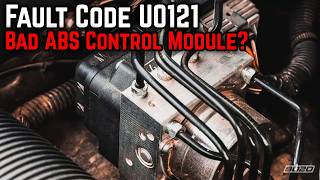
The 2015-2019 Colorado and its platform mate, the GMC Canyon, have a documented vulnerability to water intrusion at the Electronic Brake Control Module (EBCM) connector. General Motors Technical Service Bulletin #PIT5499B specifically calls out this issue, noting that moisture and corrosion on the connector terminals are a primary cause for the loss of communication that triggers the U0121 code. 🎬 Watch: A quick breakdown of the U0121 communication code. This makes checking the EBCM connector a primary diagnostic step, rather than a generic wiring check.
Diagnostic Flowchart

Tap your situation to follow the diagnostic path that matches what you're seeing on this vehicle.
Symptoms You May Notice

- ABS warning light is on
- Traction Control (TC) or StabiliTrak/ESC warning light is on
- "Service StabiliTrak" message on the driver information center
- Cruise control does not work
- Loss of power steering assist (in some cases)
- Brake warning light is on
- Parasitic battery drain (if the failed module keeps the ABS pump running)
- Replacing wheel speed sensors. While wheel speed sensor codes (like C0035) can accompany U0121, they are usually a symptom of the EBCM being offline, not the cause. U0121 is a communication failure, not a sensor failure.
Most Likely Causes

- Water Intrusion / Corrosion at EBCM Connector 🔴 High Probability A manufacturer TSB (#PIT5499B) specifically identifies this as a problem area for the Colorado and GMC Canyon. The location of the module on the frame rail exposes the connector to road spray and moisture.
How to confirm: Visually inspect the EBCM connector for signs of moisture, green or white corrosion, or damaged/backed-out pins. The EBCM is located on the driver's side frame rail, below the driver's door.
Typical fix: Disconnect the battery. Unplug the connector, clean the terminals on both the harness and module side with a specialized contact cleaner and a small brush. Apply dielectric grease before reconnecting to prevent future moisture intrusion. If pins are severely corroded, the connector pigtail may need to be replaced. TSB #PIT5499B advises that if corrosion is found, the EBCM itself should be replaced along with the affected terminals.
Est. part cost: $10-$100 - Failed Electronic Brake Control Module (EBCM) 🟡 Medium Probability → Shop ABS Control Module Internal failure can occur, sometimes prompted by the water intrusion issue or voltage spikes. A failed module can also cause a parasitic battery drain by keeping the ABS pump active.
How to confirm: If the connector and wiring have been verified to be good (correct power, ground, and CAN bus signal integrity), and the module still does not communicate with a professional scan tool, the module itself is faulty.
Typical fix: Replace the EBCM. The new module MUST be programmed to the vehicle's VIN using a dealer-level scan tool (like GDS2 with SPS) to function correctly.
Est. part cost: $250-$600 - Damaged Wiring Harness or Poor Ground ⚪ Low Probability GM vehicles of this era are known for issues with ground splice packs, which are unsealed multi-wire ground junctions that can corrode and cause intermittent electrical faults.
How to confirm: Check the main EBCM ground connection (often labeled G400 per TSB PIT5499B) on the frame for tightness and corrosion. Inspect the CAN bus wiring harness leading to the EBCM for any signs of physical damage, chafing, or rodent damage. Test for continuity and resistance on the power, ground, and CAN bus circuits.
Typical fix: Repair the damaged section of the wiring harness or clean/repair the ground connection. Some owners opt to disassemble problematic ground splice packs, solder the wires together, and create a more robust ground connection.
Est. part cost: $5-$100 - Low Battery Voltage ⚪ Low Probability → Shop Vehicle Battery
How to confirm: Test the battery voltage with the engine off (should be >12.4V) and with the engine running (should be 13.7-14.7V). A weak or failing battery can cause unpredictable communication errors across various modules.
Typical fix: Charge or replace the vehicle's battery.
Est. part cost: $150-$300
Rare But Worth Checking
- Failed Power Steering Control Module (PSCM): A failing power steering module can sometimes disrupt the entire CAN bus network, causing communication codes for other modules like the EBCM. An owner of a 2019 Colorado reported codes U0121 and U0131 together, which was ultimately diagnosed as a power steering module failure.
Diagnosis Steps
- Check Battery Health: Ensure the battery is fully charged (>12.4V engine off) and the charging system is working correctly (13.7-14.7V engine on). A weak battery is a known cause of random communication faults.
- Scan All Modules: Use a professional-grade scan tool to check for codes in all vehicle modules. Note which modules are not communicating. A U0121 code by itself points towards the EBCM, while multiple 'U' codes might suggest a wider network problem.
- Inspect EBCM Connector: Disconnect the battery. Locate the EBCM on the driver's side frame rail. Unplug its main electrical connector and thoroughly inspect for any signs of water, green/white corrosion, or bent pins, as noted in TSB #PIT5499B.
- Clean and Secure Connector: If minor corrosion is found, clean it carefully with electrical contact cleaner. Apply dielectric grease to the seal and reconnect securely. Clear codes and see if communication is restored.
- Check Power and Ground: If the connector is clean, use a multimeter to verify the EBCM has proper battery voltage and a solid ground connection at the connector. Check all related fuses in the underhood fuse block. Ground voltage drop should be less than 200mV.
- Test CAN Bus Wires: With the battery disconnected, check the resistance between the two CAN bus wires at the EBCM connector. It should be ~60 ohms if the module is connected and the network is intact. With the key on, voltage should be approximately 2.5V on each line (CAN High and CAN Low) in the recessive state.
- Suspect EBCM: If all wiring, power, and grounds are good, and the TSB inspection is complete, the EBCM itself is the most likely point of failure. According to TSB #PIT5499B, if significant corrosion was found in step 3, the EBCM should be replaced.
- Professional Diagnosis & Programming: If replacing the EBCM, the new module must be programmed to the vehicle's VIN using GM's Service Programming System (SPS). If the entire hydraulic assembly is replaced, an 'automated bleed' procedure using a scan tool like GDS2 is also required.
Parts You'll Likely Need
- Electronic Brake Control Module (EBCM)
(OEM #84342064)— This module is the most common point of failure for this code once wiring and connector issues are ruled out. It is often replaced due to internal failure or as a precaution when corrosion is found, per TSB guidance.
Trusted brands: ACDelco (GM Genuine)
OEM price range: $400-$600
Aftermarket price range: $250-$450 - EBCM Connector Pigtail
(OEM #19178085 (Verify with dealer))— If the connector is severely damaged by corrosion, it will need to be cut out and replaced to ensure a reliable connection.
Trusted brands: ACDelco, Dorman
OEM price range: $50-$100
Aftermarket price range: $30-$60
Related Codes That Often Appear With This One
- U0131 — Lost Communication With Power Steering Control Module. A network problem or another failing module can cause multiple communication codes to appear simultaneously.
- C0035, C0040, C0045, C0050 — These are wheel speed sensor circuit codes. They often appear with U0121 because when the EBCM stops communicating, other modules can no longer receive wheel speed data from it. TSB #PIT5499B lists these as expected secondary codes.
- U0415 — Invalid Data Received From Anti-Lock Brake System Control Module. This code is set by other modules when they expect a message from the EBCM but the EBCM is offline, corroborating the U0121 fault. It is also mentioned in TSB #PIT5499B.
Technical Service Bulletins (TSBs) & Recalls
- Bulletin #PIT5499B: Notes that codes including U0121, U0415, and various wheel speed sensor codes (C0035, etc.) can be caused by water intrusion or corrosion on the terminals of the Electronic Brake Control Module connector. It instructs technicians to inspect the connector and, if corrosion is found, to replace the EBCM and the affected terminals.
Platform-Specific Known Issues
- A known issue, documented in TSB #PIT5499B, involves water intrusion into the Electronic Brake Control Module connector, leading to corrosion and communication codes like U0121. The TSB applies to both the Colorado and GMC Canyon.
Mechanic-Grade Diagnostic Values
- CAN Bus Network Resistance — expected: ~60 Ohms. Failure: A reading of ~120 Ohms indicates one of the two terminating resistors is offline. An open circuit (OL) indicates a break in the wiring.
- CAN High (CAN-H) Voltage (Key On) — expected: ~2.5V (recessive state) to ~3.5-4.0V (dominant state). Failure: Voltage stuck high, low, or at 0V indicates a short or open in the CAN-H wire.
- CAN Low (CAN-L) Voltage (Key On) — expected: ~2.5V (recessive state) to ~1.0-1.5V (dominant state). Failure: Voltage stuck high, low, or at 0V indicates a short or open in the CAN-L wire.
- Battery Voltage (Engine Off) — expected: >12.4V. Failure: Voltage below 12.4V may cause random communication codes across multiple modules.
- Charging System Voltage (Engine On) — expected: 13.7V - 14.7V. Failure: Voltage outside this range indicates an alternator or battery issue that can disrupt module communication.
Scan Tool Commands That Help
- GDS2 (GM Global Diagnostic System 2): Vehicle DTC Information / Full Scan — To initially scan all modules on the vehicle. A grayed-out or non-responsive EBCM module on the list is a primary indicator of a communication loss.
- GDS2 (GM Global Diagnostic System 2): Automated Bleed Procedure — This is a mandatory service function after replacing the EBCM/BPMV assembly to purge all air from the hydraulic unit. Failure to perform this will result in a spongy pedal and improper ABS function.
- SPS (Service Programming System): Module Programming/Setup — After installing a new EBCM, it must be programmed with the vehicle's specific VIN and configuration data. This function downloads the correct software from GM's servers and flashes it to the new module.
- Professional Scan Tool (e.g., Autel, Foxwell): Active Test / Bi-directional Control — If communication is established, a technician can command the ABS pump motor to engage. Hearing the motor run confirms that the module's power output circuits and the pump motor itself are functional.
Wiring & Ground Locations
- EBCM (Electronic Brake Control Module) — Bolted to the driver's side frame rail, generally below the driver's door area.. This is the module that has lost communication. Its location makes its main connector susceptible to water and corrosion, a primary cause of U0121 per TSB PIT5499B.
- G400 (Ground) — On the frame rail near the EBCM. TSB #PIT5499B refers to this as the EBCM ground.. This is the primary ground point for the Electronic Brake Control Module. A loose or corroded connection here will starve the module of ground, preventing it from powering on and communicating.
- Underhood Fuse Block — On the driver's side of the engine bay.. Contains the primary power fuses for the EBCM. A diagnostic video showed an open circuit originating from a 30A fuse labeled 'ABS Valve' in this location.
- Passenger Compartment Fuse Block — Behind a small door in the passenger side kick panel area.. May contain secondary or logic-related fuses for the ABS system.
- OBD-II Port — Under the driver's side dashboard, to the left of the steering column.. This is the primary diagnostic connection point for scanning codes and testing the CAN bus network.
Real Owner Repair Stories
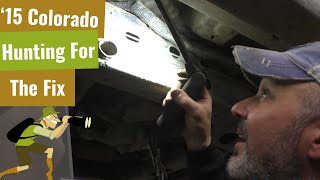
- South Main Auto Repair YouTube Channel (2015 Chevrolet Colorado) — ABS, Brake, and Traction Control lights were on. Cruise control did not work. Scan tool showed no communication with the EBCM.
❌ Tried (didn't work) The previous shop was unable to diagnose with their scan tool.
✅ What actually fixed it The technician found no power on the red with yellow wire at the EBCM connector. Tracing it back, he discovered an open circuit between the underhood fuse box and the EBCM. The specific cause of the open was not shown, but the diagnosis isolated the fault to that specific power wire. - YouTube user '2015-2022 Chevy colorado,GMC canyon stabilitrac,abs diagnostic' (2017 Chevrolet Colorado, 93,000 miles) — ABS light on, humming noise.
❌ Tried (didn't work) Initial test drive did not reveal obvious wheel bearing noise.
✅ What actually fixed it A scan tool revealed code C0035 for the left front wheel speed sensor. Live data showed the sensor dropping out intermittently. Upon disassembly, the magnetic ring on the wheel bearing (which the sensor reads) was found to be cracked and had pieces missing. Replacing the wheel bearing and wheel speed sensor fixed the issue. While not a U0121, this is a classic example of a related fault that can be misdiagnosed.
OEM Part Supersession History
23354053→23414480— Part revision or manufacturer change.
Heads up: A new module requires dealer programming to the vehicle's VIN to function.
Helpful Videos



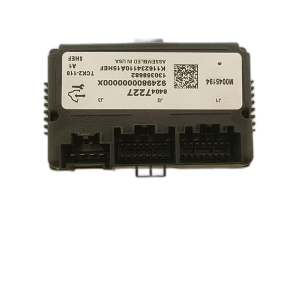
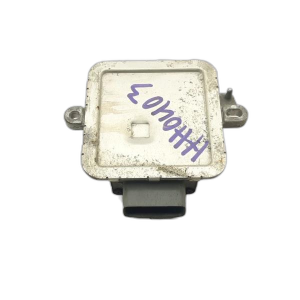
We Have This Part in Stock

The information in this article is provided for general reference and educational purposes only. Vehicle specifications, procedures, and part compatibility can vary by production date, trim level, and region. Always consult your vehicle's factory service manual and verify part numbers before purchasing or performing repairs. Safety-critical components such as airbags, seat belts, and braking systems should be installed by a qualified professional.
- Chevrolet COLORADO:
- 🧭 Diagnostic Flowchart
- 🎬 Helpful Videos
- 🛍️ Shop This Part
- What's Unique About the 2015-2019 Chevrolet COLORADO
- Symptoms You May Notice
- Most Likely Causes
- Rare But Worth Checking
- Diagnosis Steps
- Parts You'll Likely Need
- Related Codes That Often Appear With This One
- Technical Service Bulletins (TSBs) & Recalls
- Platform-Specific Known Issues
- Mechanic-Grade Diagnostic Values
- Scan Tool Commands That Help
- Wiring & Ground Locations
- Real Owner Repair Stories
- OEM Part Supersession History
- 🎟️ Get 5% Off