

U0121 on 2007-2014 Chevrolet Suburban: Lost Communication With ABS Module Fixes
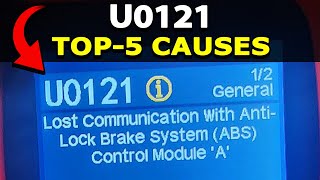
This code means the Anti-lock Brake System (ABS) module has stopped communicating with other computers in the vehicle. The most common causes are faulty wiring or a failed ABS module (EBCM), often due to corrosion from its exposed location under the driver's side of the truck. Expect to pay for 1-3 hours of diagnostic time plus the cost of the part if needed.
- U0121 means your Suburban's ABS and stability control systems are offline, which is a significant safety concern.
- Before condemning the expensive ABS module, thoroughly inspect all related wiring, connectors, and grounds for corrosion or damage, as this is a very common cause.
- Check the battery and ABS-related fuses first, as these are simple and quick checks.
- If the ABS module (EBCM) needs to be replaced, it must be programmed to your vehicle by a shop with the correct equipment.
- This code is almost never caused by a bad wheel speed sensor.
What's Unique About the 2007-2014 Chevrolet SUBURBAN
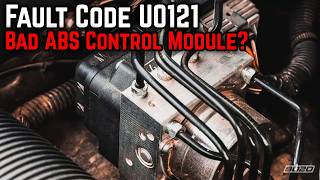
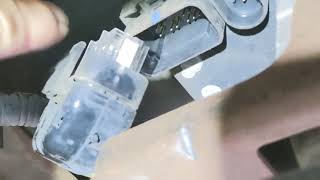
On this generation of GM trucks (GMT900 platform), communication codes can sometimes appear in clusters. A GM Technical Service Bulletin (TSB #08-07-30-021H) notes that U0121 can appear alongside a host of other 'U' codes due to intermittent network issues. 🎬 Watch: A deep dive into diagnosing U0121 communication codes. These trucks are also known for potential corrosion on wiring and ground points under the vehicle, which can directly lead to this communication failure. The Electronic Brake Control Module (EBCM) is mounted to the driver's side frame rail, making its connector and wiring highly susceptible to moisture, 🎬 See how to quickly troubleshoot a lost communication signal. road salt, and debris. A specific NHTSA bulletin also notes that the EBCM harness branch can chafe against the frame or brake components, causing shorts.
Diagnostic Flowchart
Tap your situation to follow the diagnostic path that matches what you're seeing on this vehicle.
Symptoms You May Notice
- ABS warning light illuminated on the dash.
- StabiliTrak or Traction Control (TC) warning light on
- "Service StabiliTrak" or "Service Traction Control" message on the driver information center.
- "Service Brake System" message may appear.
- Cruise control may be disabled.
- Check Engine Light may be on.
- In cases of widespread network failure described in TSBs, the transmission may not shift correctly (stuck in a gear) or door locks may cycle erratically.
- Replacing wheel speed sensors. A U0121 code is a communication error, not a sensor input error. While a faulty wheel speed sensor will trigger the ABS light, it will set a different 'C' code (e.g., C0035) and will not cause a communication loss with the entire module.
Most Likely Causes
- Damaged Wiring or Corroded Connectors 🔴 High Probability The ABS module (EBCM) is located under the vehicle on the driver's side frame rail, exposing its wiring harness and connectors to road salt, moisture, and debris, which can lead to corrosion and connection failure. A specific NHTSA bulletin also identifies a harness chafe point near the brake pressure modulator valve (BPMV) and frame that can cause damage.
How to confirm: Visually inspect the wiring harness and connector pins at the EBCM for any signs of green or white corrosion, chafed wires, or broken plastic. A multimeter can be used to check for proper power, ground, and continuity at the connector. The main power feeds are typically heavy gauge red/black wires, while the ground is a black/white wire.
Typical fix: Clean the connector terminals carefully using a specialized contact cleaner. If the wiring or connector is damaged beyond cleaning, it will need to be repaired with new terminals or a pigtail connector.
Est. part cost: $10-$150 - Failed ABS Control Module (EBCM) 🟡 Medium Probability → Shop ABS Control Module Internal electronic failure of the module can occur over time due to heat cycles and vibration. It's a common failure point on many GM vehicles of this era, sometimes due to internal circuit board issues. GM issued safety recall 14515 for potential module contamination causing shorts.
How to confirm: After confirming the wiring, power, and grounds to the module are good, a professional scan tool is used to attempt communication. If the module does not respond to the scan tool, it is considered faulty. This is the last step after all other possibilities are exhausted.
Typical fix: The ABS control module must be replaced or sent out for remanufacturing. A new or remanufactured module will require programming to the vehicle's VIN with a specialized scan tool.
Est. part cost: $250-$700 - Poor Power or Ground Connection 🟡 Medium Probability Frame grounds, especially the main ground points for the EBCM located on the frame rail under the driver's door, can corrode over time. This causes intermittent voltage drops that disrupt module communication. TSB PIT4853C also points to checking ground G300 for undercoating interference on related hybrid models.
How to confirm: Check battery voltage; it should be above 12.4V with the engine off. Use a multimeter to perform a voltage drop test on the power and ground circuits for the ABS module to ensure a solid connection (less than 0.2V drop is ideal). Key pins to test at the EBCM connector are pins 1 and 18 for power, and 11 and 28 for ground.
Typical fix: Disassemble, clean the corroded ground points on the frame and the wire eyelet until they are shiny metal, then reassemble and protect with a dielectric grease. Replace any faulty ground straps or battery cables.
Est. part cost: $10-$50 - Blown Fuse ⚪ Low Probability
How to confirm: Check the fuses labeled 'ABS' or 'EBCM' in the underhood fuse block. There are typically multiple fuses for this system. A visual inspection or a multimeter can confirm if a fuse is blown.
Typical fix: Replace the blown fuse with a new one of the same amperage rating. If the fuse blows again immediately, it indicates a short circuit that needs to be diagnosed.
Est. part cost: $1-$5
Rare But Worth Checking
- CAN Bus Network Fault: A problem elsewhere on the vehicle's communication network, like a short in the wiring for a different module, can sometimes disrupt communication with the ABS module. This usually sets multiple 'U' codes. TSB #08-07-30-021H specifically mentions checking the 16-way transmission connector for backed-out terminals that can disrupt the entire high-speed network.
- Shorted Wheel Speed Sensor or Wiring: → Shop ABS Wheel Speed Sensor A less common cause is an internal short in a wheel speed sensor or its wiring. GM Preliminary Information bulletin PIT4056H suggests that if communication cannot be established with the EBCM, unplugging the wheel speed sensors one by one may restore communication. If it does, the sensor or wiring that was just disconnected is the source of the short.
Diagnosis Steps
- Check the battery. Ensure the battery voltage is at least 12.4V with the engine off and that the charging system produces 13.8-14.5V when running. A weak battery is a common cause of communication faults.
- Scan for all codes. Use a scan tool capable of reading codes from all modules (ABS, BCM, ECM, TCM). Note if U0121 is the only code or if other 'U' codes are present, which would indicate a wider network issue.
- Check ABS fuses. Inspect all fuses related to the ABS/EBCM system in the underhood fuse box.
- Perform a visual inspection. Carefully inspect the wiring harness and connector going to the ABS module (EBCM) located on the driver's side frame rail. Look for any signs of corrosion, damage, or loose connections. Pay special attention to the harness routing near the BPMV and frame for chafing.
- Test for power and ground. Using a digital multimeter at the EBCM connector, confirm battery voltage on pins 1 and 18, and a solid ground on pins 11 and 28. Also check for a 12V wake-up signal on pin 19 with the key on.
- Test the CAN bus circuit. With the battery disconnected, check the resistance between pins 6 and 14 of the diagnostic port (DLC). It should be around 60 ohms. A reading of 120 ohms indicates an open in the bus or a faulty terminating resistor; 0 ohms indicates a short between the two CAN wires.
- Isolate the module. If the CAN resistance is incorrect, you can unplug the EBCM and re-measure. If the resistance returns to a normal value (e.g., 120 ohms), the EBCM may be shorted internally. This is an advanced step.
- Attempt to communicate with the module. If all wiring, power, and grounds are confirmed good, and a professional scan tool still cannot communicate with the ABS module, the module itself has likely failed.
Parts You'll Likely Need
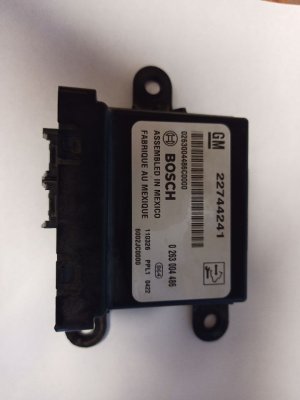
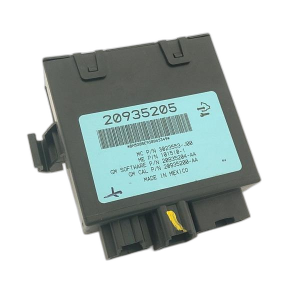
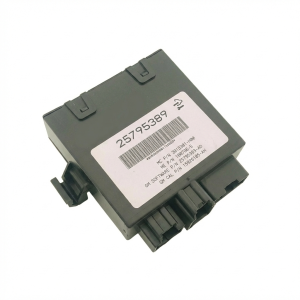
- Anti-lock Brake System (ABS) Control Module / EBCM
(OEM #25912635 (example for 2008, varies by year/options))— This is the computer that controls the ABS. If it fails internally, it will stop communicating, causing a U0121 code. This is the most common part replaced after wiring issues are ruled out.
Trusted brands: ACDelco (OEM), Dorman (Aftermarket/Remanufactured)
OEM price range: $400-$700
Aftermarket price range: $250-$500
Related Codes That Often Appear With This One
- U0073 — Control Module Communication Bus 'A' Off. This is a general network code that often appears with specific module communication faults like U0121, as cited in TSB #08-07-30-021H.
- U0100 — Lost Communication with ECM/PCM. This can appear if the network issue is widespread, as noted in TSB #08-07-30-021H.
- U0101 — Lost Communication with TCM. Another code mentioned in TSB #08-07-30-021H, indicating a broader network problem, potentially related to the transmission harness connector.
- U0140 — Lost Communication with Body Control Module. Also cited in TSB #08-07-30-021H, pointing towards a systemic communication failure rather than just an isolated ABS module issue.
Technical Service Bulletins (TSBs) & Recalls
- Bulletin #08-07-30-021H: Notes that U0121 can be set along with other communication codes like U0073, U0100, U0101, and U0140 due to network issues. It points to potential causes like backed-out terminals in the transmission harness connector, chafed wiring, or corrosion in module connectors.
- Bulletin #PIT4056H: Addresses a specific scenario where the EBCM is non-responsive. It suggests that a short to ground in the voltage supply circuit for the Yaw/Lateral Accelerometer or Steering Wheel Angle sensor, or a shorted wheel speed sensor, can internally disable the EBCM and cause the U0121 code.
Platform-Specific Known Issues
- TSB #08-07-30-021H mentions that various communication DTCs, including U0121, can be set due to intermittent network problems on these vehicles, with a focus on checking the transmission harness connector for backed-out terminals.
- TSB PIT4056H provides a specific diagnostic path for when U0121 is set and communication is lost, suggesting a shorted wheel speed sensor or its wiring could be pulling down the module's internal circuits, preventing communication.
Mechanic-Grade Diagnostic Values
- High-Speed GMLAN Bus Resistance — expected: Approximately 60 Ω (Ohms). Failure: A reading of ~120 Ω indicates an open circuit or missing terminating resistor. A reading of ~0 Ω indicates a short between the CAN High and Low wires.
- CAN Bus Voltage (Recessive State) — expected: Approximately 2.5V on both CAN High and CAN Low wires. Failure: Significant deviation from 2.5V on either wire at rest indicates a bus fault.
- CAN Bus Voltage (Dominant State) — expected: CAN High: ~3.5V, CAN Low: ~1.5V. Failure: Inability to switch to these voltages during communication (viewed with an oscilloscope) indicates a fault.
- EBCM Power, Ground, and Wake-up Signal — expected: Power: Battery Voltage (~12V+) on Pins 1 & 18. Ground: Good continuity to chassis on Pins 11 & 28. Wake-up: ~12V on Pin 19 with key on.. Failure: Missing voltage or high resistance on any of these circuits will prevent the module from operating.
Scan Tool Commands That Help
- Tech2 / GDS2: Attempt Communication with EBCM — This is the first step to see if the module is online at all. If it responds, the issue may be intermittent or on another part of the bus.
- Tech2 / GDS2: ABS Pump Motor Activation — A bidirectional test to confirm if the scan tool can command the module to perform an action, verifying two-way communication and module health.
- Tech2 / GDS2: New Module Programming / VIN Setup — This is a mandatory step after installing a new or used EBCM. The module will not function correctly until it is programmed with the vehicle's VIN and configuration.
Wiring & Ground Locations
- EBCM Connector — On the Electronic Brake Control Module, which is mounted to the driver's side frame rail, under the driver's door area.. This is the main connection point for all power, ground, and communication signals to the ABS module. Corrosion or damage here is a primary cause of U0121.
- EBCM Power/Ground Pins — At the EBCM connector: Pins 1 and 18 are power, Pins 11 and 28 are ground.. These specific pins must be tested to confirm the module is receiving adequate power to operate before condemning the module itself.
- CAN Bus Terminating Resistors — There are two 120-ohm resistors on the High-Speed GMLAN. One is typically inside the Engine Control Module (ECM), and the other is often within the EBCM itself or a separate resistor pack in the harness.. The health of these resistors is critical for network stability. A failure of one resistor will change the bus resistance from 60 ohms to 120 ohms, causing communication errors.
- EBCM Harness Chafe Point — The harness branch leading to the EBCM may rub against the frame or Brake Pressure Modulator Valve (BPMV) behind the radiator surge tank.. An NHTSA bulletin identifies this specific location as a potential spot for wire abrasion, which can cause shorts or open circuits leading to communication loss.
Real Owner Repair Stories
- Chevrolet Forum user 'Jimbo B' (2007 Suburban/Tahoe) — Random ABS, Stabilitrak, traction control warning lights.
❌ Tried (didn't work) Changing wheel bearings, plugs, wires, coils.
✅ What actually fixed it The dealership found and replaced a faulty terminating resistor in the LAN wiring harness and fixed high resistance in the battery cables. - Chevrolet Forum user report (2007 Tahoe) — Randomly illuminating ABS, Stabilitrak, traction control warning lights.
❌ Tried (didn't work) Multiple part replacements including wheel bearings, plugs, wires, coils.
✅ What actually fixed it A scan tool revealed the ECU believed the fuel was 50% ethanol, causing timing adjustments and misfires, which in turn disabled Stabilitrak/ABS as a safety protocol. The fix was to run several full tanks of fuel from full to nearly empty to reset the fuel composition logic.
"I Checked Everything" — The Actual Cause
- A technician could verify the entire CAN bus, power, and ground circuits for the ABS module and find no faults, yet the problem persists. In one documented case, the root cause was the Engine Control Unit (ECU) incorrectly sensing a high percentage of ethanol in the fuel. This caused the engine to misfire, and as a programmed safety response, the ECU commanded the StabiliTrak and ABS systems to shut down, which can manifest as a communication code. The fix had nothing to do with the ABS system itself, but rather correcting the fuel trim data by running several tanks of gasoline.
OEM Part Supersession History
23355954, 84074957, 84074960, 84256789→84256781— Standard part revision and consolidation.
Heads up: Applies to vehicles with vacuum brakes (RPO code JD9). Will not work on hydro-boost or hybrid models.23154721, 23237319, 84074934, 84074964, 84256796, 84609554→85698746— Standard part revision and consolidation.
Heads up: Typically for 2500/3500 HD models. Always verify part number with VIN.
Model Year Variations Within This Range
- 2007-2014: The EBCM part number varies based on the vehicle's brake system. Vehicles with standard vacuum brakes use RPO code JD9 and have a different module than vehicles with hydro-boost brakes. It is critical to verify the RPO code (on the glove box sticker) or match the part number from the original module.
- 2007-2014: GM issued Safety Recall 14515 for potential contamination in the 'chassis electronic module' which can cause an electrical short. This recall applies to the EBCM. A GM dealer can check if this recall is open or has been completed for a specific VIN.
Helpful Videos
We Have This Part in Stock

The information in this article is provided for general reference and educational purposes only. Vehicle specifications, procedures, and part compatibility can vary by production date, trim level, and region. Always consult your vehicle's factory service manual and verify part numbers before purchasing or performing repairs. Safety-critical components such as airbags, seat belts, and braking systems should be installed by a qualified professional.
- Chevrolet SUBURBAN:
- 🧭 Diagnostic Flowchart
- 🎬 Helpful Videos
- 🛍️ Shop This Part
- What's Unique About the 2007-2014 Chevrolet SUBURBAN
- Symptoms You May Notice
- Most Likely Causes
- Rare But Worth Checking
- Diagnosis Steps
- Parts You'll Likely Need
- Related Codes That Often Appear With This One
- Technical Service Bulletins (TSBs) & Recalls
- Platform-Specific Known Issues
- Mechanic-Grade Diagnostic Values
- Scan Tool Commands That Help
- Wiring & Ground Locations
- Real Owner Repair Stories
- "I Checked Everything" — The Actual Cause
- OEM Part Supersession History
- Model Year Variations Within This Range
- 🎟️ Get 5% Off