

U0121 on 2015-2019 Chevrolet Suburban: Lost Communication with ABS Module Causes and Fixes
Code U0121 on a 2015-2019 Suburban means the Electronic Brake Control Module (EBCM) has lost communication with other vehicle computers. This is most commonly caused by a damaged wiring harness under the driver's side sill plate, a well-documented issue covered by GM TSB #PIT5457D. Other causes include poor BCM grounds, software glitches, or a faulty EBCM.
- U0121 means a loss of communication with the ABS/Stabilitrak module, disabling these key safety systems.
- Before suspecting a bad module, inspect the wiring harness under the driver's side door sill plate for damage, as this is a common, documented failure point (TSB #PIT5457D).
- The code can also be a 'ghost' code set by a software glitch in another module (TSB #PIT5599). If there are no warning lights, this may be the cause.
- Always check simple things first: battery voltage and the ABS/EBCM fuses.
- Due to the safety-critical nature of the ABS system and the need for module programming, professional service is highly recommended if the issue isn't a simple wiring repair.
What's Unique About the 2015-2019 Chevrolet SUBURBAN
For this generation of Suburban (K2XX platform), the U0121 code is frequently linked to specific, documented issues. GM has issued Technical Service Bulletins (TSBs) pointing to causes like chafed wiring harnesses under the door sill plates (TSB #PIT5457D) and software anomalies that can set a false code without any actual problem (TSB #PIT5599). [TSB #PIT5599, TSB #PIT5457D] This means that unlike in many other vehicles, the first suspect isn't necessarily a failed ABS module, but rather these known platform-specific quirks. The communication enable circuit, designated 5986, is often the specific circuit that is damaged.
Diagnostic Flowchart
Tap your situation to follow the diagnostic path that matches what you're seeing on this vehicle.
Symptoms You May Notice
- ABS warning light illuminated on the dashboard.
- Stability control (StabiliTrak) warning light illuminated.
- "Service StabiliTrak" message on the driver information center (DIC).
- "Service Suspension System" message on the driver information center (DIC). [TSB #PIT5457D]
- Brakes may lock up during hard braking.
- Loss of traction control functionality.
- Remote start may not work.
- Replacing the EBCM without checking wiring first. Given the known TSBs for wiring issues on the Suburban, inspecting the harness under the sill plates is a critical first step that can save hundreds of dollars.
- Replacing the BCM. While the BCM is part of the communication network, the code specifically points to a loss of signal *from* the EBCM. The BCM is rarely the root cause unless it has a bad ground at G218 as noted in TSB #PIT5405C.
Most Likely Causes
- Damaged Wiring Harness Under Sill Plates 🔴 High Probability TSB #PIT5457D specifically identifies this as a problem area. The harness, particularly the Communication Enable Circuit 5986, can be damaged from foot traffic, moisture, or improper routing, leading to a loss of communication with the EBCM. This is a very common failure point on the K2XX platform.
How to confirm: Remove the driver and passenger front door sill plates and peel back the carpet to visually inspect the wiring harness for chafing, corrosion, or broken wires. TSB #PIT5457D points to this area and also splice J365 under the passenger sill plate as potential fault locations.
Typical fix: Repair the damaged section of the wiring harness. This involves cutting out the bad section, splicing in new wire (of the same gauge), and protecting the repair with solder and heat shrink tubing. GM has specific bulletins on proper wire repair techniques.
Est. part cost: $5-$25 - Poor Body Control Module (BCM) Ground at G218 🟡 Medium Probability → Shop Body Control Module TSB #PIT5405C lists U0121 among many other communication codes that can be caused by a poor BCM ground connection at location G218. This ground is located under the driver's side of the dashboard, and the dash insulator mat can get trapped under the ground eyelet from the factory, causing a poor connection.
How to confirm: Locate ground G218 under the driver's side dash/A-pillar area. Visually inspect for looseness, corrosion, or trapped insulation material. Test the ground circuit integrity with a digital multimeter (should be less than 0.1 ohms to chassis ground).
Typical fix: Remove the nut, clean the ground connection point and terminal with a wire brush, trim away any interfering insulation, and ensure it is securely fastened. The nut should be torqued to 7 Nm (62 lb in). 🎬 Watch: How to locate and clean the G218 ground connection.
Est. part cost: $0-$5 - FVCM Software Anomaly (False Code) 🟡 Medium Probability TSB #PIT5599 states that a software anomaly in the Fuel Vapor Control Module (FVCM) can cause a false U0121 code to be set in history with each ignition cycle, even though no real fault exists. [TSB #PIT5599]
How to confirm: Check if the code is only present in the FVCM and if it moves to history after an ignition cycle. If no other symptoms like ABS/Stabilitrak lights are present, this is a likely cause. A dealer scan tool can confirm the software version.
Typical fix: No repair is needed as there is no actual fault. A dealership may be able to perform a software update to prevent it from recurring. The TSB advises against replacing any modules for this specific condition. [TSB #PIT5599]
Est. part cost: $0 - Failed Electronic Brake Control Module (EBCM) ⚪ Low Probability → Shop ABS Control Module While module failure is always a possibility, it's less common than the wiring and ground issues documented in TSBs for this specific vehicle. It should only be suspected after all other causes are ruled out.
How to confirm: After confirming the wiring (especially circuit 5986), power, and grounds to the EBCM are good, a professional scan tool is used to attempt direct communication. If the module has power and ground but does not respond, it has likely failed.
Typical fix: Replace the EBCM. The new module will require programming to the vehicle's VIN using dealer-level software.
Est. part cost: $300-$600
Rare But Worth Checking
- Low Battery Voltage or Faulty Battery: → Shop Vehicle Battery Control modules are sensitive to voltage. A weak or dying battery (below 12.4V) can cause a variety of communication codes, including U0121, before the vehicle fails to start. Always check battery health and terminal connections first.
- Blown Fuse for ABS/EBCM: A simple blown fuse can cut power to the module, causing a communication loss. Check the fuse boxes in the engine bay and cabin before proceeding with more complex diagnostics.
Diagnosis Steps
- Check Battery Health: Ensure the battery voltage is above 12.4V with the engine off. Clean terminals and test the battery under load. A weak battery is a common cause of random communication faults.
- Scan for All Codes: Use an OBD-II scanner capable of reading codes from all modules (BCM, EBCM, ECM, etc.). Note if U0121 is current or history, and which modules are reporting the loss of communication.
- Check for TSBs: Specifically look for TSBs #PIT5457D, #PIT5405C, and #PIT5599 to see if the symptoms and accompanying codes match the known issues. [TSB #PIT5405C, TSB #PIT5599, TSB #PIT5457D]
- Inspect Fuses: Check all fuses related to the ABS, EBCM, and BCM in both the interior and engine bay fuse panels.
- Inspect Sill Plate Wiring Harness: This is the most critical step. Remove the driver's and passenger's front sill plates and pull back the carpet. Carefully inspect the large wiring harness for any signs of chafing, corrosion, or broken wires, paying close attention to the Communication Enable Circuit 5986 as described in TSB #PIT5457D.
- Inspect BCM Ground (G218): Locate and inspect the main ground connection for the Body Control Module under the driver's side dash. Ensure it is clean, tight, and that the dash insulation is not trapped underneath it, as suggested by TSB #PIT5405C.
- Test EBCM Power and Ground: If wiring appears intact, use a multimeter to verify that the EBCM connector is receiving proper power and has a solid ground connection. TSB #PIT5457D recommends load testing the communication enable circuit (5986) with a small bulb (like a 194) to ensure it can carry current, not just show voltage.
- Professional Diagnosis: If all wiring, power, and grounds are good, the EBCM itself is likely faulty and requires replacement and programming by a professional with a GM-compatible scan tool.
Parts You'll Likely Need
- Electronic Brake Control Module (EBCM)
(OEM #84133424, 23377393 (Part numbers vary by specific vehicle options, always verify with VIN))— This is the module that needs to be replaced if it has failed internally, after all wiring and software issues have been ruled out. Requires programming. 🎬 Watch: How to program a new EBCM using dealer-level software.
Trusted brands: ACDelco (OEM), Dorman
OEM price range: $450-$600
Aftermarket price range: $280-$450 - Wiring Harness Pigtail / Connector — If the wiring is corroded or damaged directly at the EBCM connector, a new pigtail may be needed to perform a solid repair.
Trusted brands: ACDelco, Dorman
OEM price range: $40-$80
Aftermarket price range: $20-$50
Related Codes That Often Appear With This One
- U0077 — Often appears with U0121 per TSB #PIT5457D, indicating a broader communication issue on the chassis high-speed network, likely stemming from the same wiring harness problem on circuit 5986. [TSB #PIT5457D]
- U0126 — Lost Communication with Steering Angle Sensor Module. This sensor's wiring often runs in the same harness as the EBCM circuits, so a single point of damage can trigger both codes. [TSB #PIT5457D]
- U0131 — Lost Communication with Power Steering Control Module. Like the other codes, this is often set due to the same wiring harness or ground issues mentioned in TSBs #PIT5457D and #PIT5405C. [TSB #PIT5405C, TSB #PIT5457D]
Technical Service Bulletins (TSBs) & Recalls
- PIT5457D: Addresses loss of communication with various modules, including the EBCM (U0121), due to a damaged wire harness under the sill plates.
- PIT5405C: Cites U0121 as a possible result of a poor Body Control Module ground connection.
- PIT5599: Warns of a false U0121 code being set by the FVCM due to a software anomaly, and advises against replacing parts.
Platform-Specific Known Issues
- Sill Plate Harness Chafing: A known wiring harness problem under the driver/passenger sill plates can cause communication loss with the EBCM, SWPS, PSCM, and SCM, triggering U0121 and other codes. This is due to the harness rubbing or being pinched. The specific wire is often the Communication Enable Circuit 5986. [TSB #PIT5457D]
- False Code from FVCM: A software anomaly in the Fuel Vapor Control Module (FVCM) can cause a false U0121 code to set in history at every startup without any actual fault present. This can lead to misdiagnosis if not properly identified. [TSB #PIT5599]
- Poor BCM Ground G218: Poor ground connections for the Body Control Module at ground point G218 (driver's side A-pillar kick panel area) are known to cause a wide array of communication DTCs, including U0121. The factory insulation is often the cause of the bad connection. [TSB #PIT5405C]
Mechanic-Grade Diagnostic Values
- High-Speed CAN Bus Resistance — expected: ~60 Ohms (measured between CAN_H and CAN_L pins at the DLC with battery disconnected). Failure: A reading of ~120 Ohms indicates one of the two terminating resistors is offline. An open or shorted circuit will show infinite or near-zero resistance.
- Communication Enable Circuit (5986) Voltage — expected: Approximately 12V when the BCM is awake (e.g., ignition ON).. Failure: Low or no voltage indicates an open, short, or high resistance in circuit 5986, often under the driver's sill plate.
- Communication Enable Circuit (5986) Load Test — expected: A 194 bulb connected between circuit 5986 at the EBCM and a good ground should light up, and voltage across the lit bulb should be at least 11V.. Failure: If the bulb does not light, or if the voltage across it is below 11V, it indicates high resistance in the circuit that can't carry the required current to keep the module awake.
- CAN Bus Voltage (Key On, Engine Off) — expected: CAN_H: ~2.5-3.5V, CAN_L: ~1.5-2.5V. The two voltages should be mirror images of each other and total about 5V.. Failure: Voltages stuck high, low, or at the same level indicate a short to power, ground, or a short between the two CAN lines.
Scan Tool Commands That Help
- GM GDS2 (Global Diagnostic System 2): Module Diagnostics > EBCM > Data Display — To see if the scan tool can establish communication with the EBCM at all. If it can't, it points to a hard failure in the module or its primary power, ground, or communication enable circuits.
- GM GDS2 (Global Diagnostic System 2): Vehicle DTC Information — To perform a full network scan and see which other modules are reporting a loss of communication with the EBCM. This helps confirm the U0121 is a network-wide issue.
- GM GDS2 (Global Diagnostic System 2) with SPS (Service Programming System): Replace and Program ECU > K17 Electronic Brake Control Module — This function is required after physically replacing the EBCM. The new module must be programmed with the vehicle's VIN and specific configuration data to function correctly.
Wiring & Ground Locations
- G218 — Under the driver's side of the dashboard, near the A-pillar. It is a ground stud where the dash insulator mat can get trapped underneath the eyelet.. This is a primary ground for the Body Control Module (BCM). A poor connection here can cause widespread communication issues across the vehicle, including setting U0121, as documented in TSB #PIT5405C.
- EBCM Connector (X1) — On the Electronic Brake Control Module itself, which is attached to the ABS hydraulic block in the engine compartment, typically on the driver's side frame rail.. This is the main 38-pin connector for the EBCM. All power, ground, and communication lines (including the critical Circuit 5986 and the high-speed CAN bus lines) must be tested here for integrity.
- Splice J365 — Located in the wiring harness under the passenger's front sill plate.. TSB #PIT5457D identifies this splice as a potential point of high resistance or an open in the Communication Enable Circuit (5986), which can cause the loss of communication with the EBCM.
- Circuit 5986 — Runs from the BCM through the main cabin harness, under the driver's and passenger's sill plates, to the EBCM and other modules.. This is the Communication Enable or 'wake-up' circuit. If this circuit has an open or high resistance, the EBCM will not power on to communicate with the rest of the network, directly causing code U0121.
Real Owner Repair Stories
- YouTube user comment on 'Stabilitrak Issue FIXED!' video (2018 GM Truck (Denali)) — Stabilitrak light came on immediately after plugging in an aftermarket Bluetooth OBD-II adapter.
❌ Tried (didn't work) The owner was initially trying to diagnose other issues.
✅ What actually fixed it Unplugging the aftermarket Bluetooth OBD-II adapter from the diagnostic port immediately resolved the Stabilitrak warning light. The adapter was likely interfering with the CAN bus communication. - YouTube video 'G218 Ground Issue Fix' (2014-2018 Chevrolet Silverado/GMC Sierra (K2XX Platform)) — Intermittent flickering dash lights, radio/HVAC blanking out, loss of power steering assist, and various warning messages including 'Service Stabilitrak'.
❌ Tried (didn't work) Testing the battery and alternator, which both checked out fine.
✅ What actually fixed it The problem was the G218 ground under the driver's side dash. Sound-deadening foam insulation was trapped under the ground nut from the factory, causing a poor connection. Trimming the foam away and tightening the ground nut resolved all electrical issues.
Model Year Variations Within This Range
- 2014-2020: A specific software error in the EBCM can cause unintended braking on one wheel if a wheel speed sensor fails while in 4WD. GM issued recall N192261050 to reprogram the EBCM to correct this logic flaw. While not a direct cause of U0121, it highlights that the EBCM software on these models has required factory updates.
Helpful Videos

We Have This Part in Stock
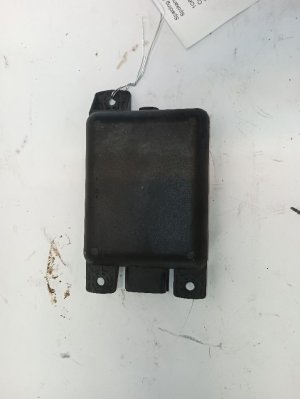
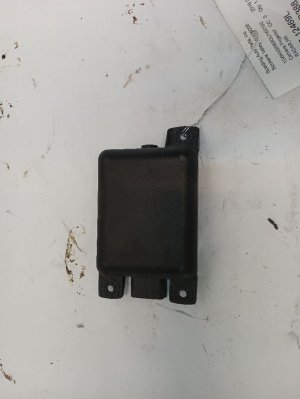
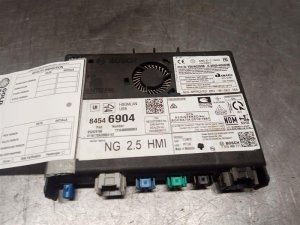
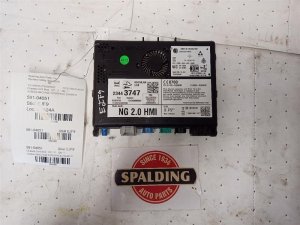
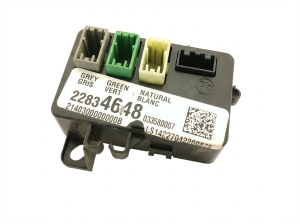

The information in this article is provided for general reference and educational purposes only. Vehicle specifications, procedures, and part compatibility can vary by production date, trim level, and region. Always consult your vehicle's factory service manual and verify part numbers before purchasing or performing repairs. Safety-critical components such as airbags, seat belts, and braking systems should be installed by a qualified professional.
- Chevrolet SUBURBAN:
- 🧭 Diagnostic Flowchart
- 🎬 Helpful Videos
- 🛍️ Shop This Part
- What's Unique About the 2015-2019 Chevrolet SUBURBAN
- Symptoms You May Notice
- Most Likely Causes
- Rare But Worth Checking
- Diagnosis Steps
- Parts You'll Likely Need
- Related Codes That Often Appear With This One
- Technical Service Bulletins (TSBs) & Recalls
- Platform-Specific Known Issues
- Mechanic-Grade Diagnostic Values
- Scan Tool Commands That Help
- Wiring & Ground Locations
- Real Owner Repair Stories
- Model Year Variations Within This Range
- 🎟️ Get 5% Off