

U0121 on 2015-2019 GMC Canyon: Lost Communication With ABS Module Causes & Fixes
This code means the ABS module is offline, disabling the anti-lock brakes and stability control. The most common cause on this truck is water intrusion and corrosion in the Electronic Brake Control Module (EBCM) connector, as noted in GM Technical Service Bulletin #PIT5499B. The EBCM is located on the driver's side frame rail, making it vulnerable. Inspecting and cleaning this connector is the first and most critical step.
- U0121 on a 2015-2019 Canyon means the ABS and stability control systems are offline due to a communication failure with the EBCM.
- Before any other step, inspect the main electrical connector on the EBCM for signs of water damage or corrosion, as this is a known issue (TSB #PIT5499B).
- Do not immediately replace wheel speed sensors, even if their codes are present; they are often symptoms of the U0121 communication fault.
- Driving is possible but risky, as your primary braking safety features are disabled. The vehicle will not have anti-lock braking capability.
- If the EBCM needs replacement, it must be programmed to your vehicle's VIN by a professional.
What's Unique About the 2015-2019 Gmc CANYON
For the 2015-2019 GMC Canyon and its sibling, the Chevrolet Colorado, a known weakness is the potential for water to get into the Electronic Brake Control Module (EBCM) connector. The module is located on the driver's side frame rail, roughly below the driver's seat, where it is exposed to road spray. This specific issue is documented in a GM Technical Service Bulletin (TSB #PIT5499B), making it a primary suspect and the first place to look, rather than immediately assuming the expensive module has failed.
Diagnostic Flowchart
Tap your situation to follow the diagnostic path that matches what you're seeing on this vehicle.
Symptoms You May Notice
- ABS warning light is on
- Traction Control (TC) or Electronic Stability Control (ESC/StabiliTrak) warning light is on
- "Service Trailer Brake" message on the driver information center.
- "Service StabiliTrak" message on the driver information center
- Cruise control may be inoperative.
- Brake warning light may be on
- Replacing wheel speed sensors. The TSB #PIT5499B explicitly notes that wheel speed sensor codes (like C0035, C0040, etc.) can appear alongside U0121 due to the communication failure. The root cause is the communication loss with the entire module, not the individual sensors themselves.
Most Likely Causes
- Water Intrusion / Corrosion at EBCM Connector 🔴 High Probability This is a documented issue for this specific vehicle platform, as outlined in GM TSB #PIT5499B. The location of the EBCM on the driver's side frame rail makes its main electrical connector susceptible to moisture and road spray, leading to corrosion.
How to confirm: Visually inspect the large EBCM electrical connector for any signs of moisture, green or white crust (corrosion), or backed-out/damaged pins. The connector has a lever-lock mechanism; once unplugged, check both the harness side and the module's pins.
Typical fix: Disconnect the battery, then unplug the connector. Clean any corrosion from the pins and the connector housing using a specialized electrical contact cleaner and a small brush. Ensure all pins are straight and making good contact. Apply dielectric grease to the connector seal before reconnecting to prevent future moisture intrusion. If corrosion is severe, the connector pigtail and affected terminals may need to be replaced.
Est. part cost: $10-$75 - Damaged Wiring Harness or Poor Ground 🟡 Medium Probability Wiring for the EBCM runs along the chassis and can be exposed to road debris, moisture, and abrasion, leading to breaks or shorts in the CAN bus wires. GM trucks of this era are also known for issues with ground splice packs (SP105/SP106) located in the engine bay, which can corrode and cause intermittent electrical faults for multiple components, including the EBCM.
How to confirm: Inspect the wiring harness leading to the EBCM for any visible damage. Locate and inspect the main EBCM ground connection on the frame rail under the driver's door area for tightness and corrosion. Test the CAN bus wires (typically a twisted pair) for continuity, shorts to power, and shorts to ground using a digital multimeter.
Typical fix: Repair the damaged section of the wiring harness using solder and heat-shrink tubing. Disassemble, clean, and secure the ground connection. Some owners opt to cut out the factory ground splice packs and solder the wires to a new ring terminal for a more robust connection.
Est. part cost: $10-$100 - Low Battery Voltage or Charging System Fault ⚪ Low Probability → Shop Vehicle Battery
How to confirm: Test the battery voltage with the engine off; it should be at least 12.4V. With the engine running, voltage should be between 13.7V and 14.7V. A weak battery or failing alternator can cause unpredictable communication errors between modules as they are sensitive to low voltage.
Typical fix: Charge or replace the battery. If the charging system is at fault, diagnose and replace the alternator.
Est. part cost: $150-$400 - Failed Electronic Brake Control Module (EBCM) ⚪ Low Probability → Shop ABS Control Module
How to confirm: This is typically diagnosed by exclusion. If the power, ground, and CAN bus communication wires all test good at the module connector, and the module still won't communicate with a professional scan tool, the module itself is the likely culprit. A failed module can sometimes cause a parasitic battery drain.
Typical fix: Replace the EBCM. The new module will require programming by a dealership or a properly equipped independent shop to match the vehicle's VIN and configuration. An 'automated bleed' procedure with a scan tool is also required after replacement.
Est. part cost: $400-$900
Diagnosis Steps
- Scan all vehicle modules for stored trouble codes. Note all codes present and which modules are reporting the U0121 code.
- Prioritize diagnosis based on GM TSB #PIT5499B. Locate the EBCM on the driver's side frame rail. Disconnect the battery. Carefully disconnect and inspect the large electrical connector at the EBCM for any signs of water intrusion, corrosion (green/white powder), or damaged pins.
- If the connector is corroded, clean it thoroughly with electrical contact cleaner and a small brush. Apply dielectric grease before reconnecting. If clean, proceed to the next step.
- Check for blown fuses related to the ABS or EBCM. There is a fuse box in the engine bay and another on the passenger side interior kick panel.
- Verify the battery is fully charged and the alternator is functioning correctly. System voltage should be above 12.4V with the engine off and around 13.7-14.7V when running.
- Inspect the EBCM's main ground wires. There are critical ground splice packs (SP105 on driver's side, SP106 on passenger side) in the engine bay that are known to corrode. Also check the main ground point on the frame rail near the EBCM. Clean and tighten as needed.
- If all connections are good, use a multimeter to test the two CAN bus wires (typically a twisted pair of Tan and Tan/Black wires) between the EBCM connector and the vehicle's diagnostic port for continuity (no opens) and to check for shorts to power or ground.
- If all wiring, power, and grounds are confirmed to be good, and a professional scan tool cannot establish communication with the EBCM, the module itself is the most likely point of failure.
Parts You'll Likely Need
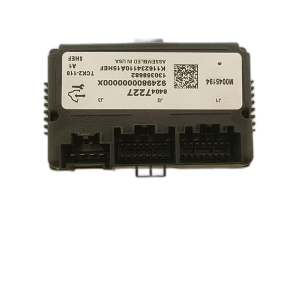
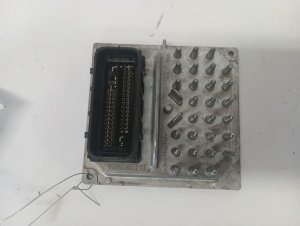
- Electronic Brake Control Module (EBCM)
(OEM #84330122 (Part number can vary by year and options, always verify with VIN))— If wiring and connectors are confirmed to be good, the module itself may have failed internally. This is the most expensive component and requires programming.
Trusted brands: ACDelco, GM Genuine
OEM price range: $600-$900
Aftermarket price range: $400-$700 - EBCM Connector Pigtail — If the connector is severely corroded due to water damage as described in TSB #PIT5499B, it will need to be cut out and replaced to ensure a solid connection.
Trusted brands: ACDelco, Dorman
OEM price range: $50-$100
Aftermarket price range: $30-$60 - Electrical Contact Cleaner — Essential for cleaning minor corrosion from the EBCM connector pins as a first step.
Trusted brands: CRC, WD-40 Specialist
OEM price range: $10-$20
Aftermarket price range: $10-$20
Related Codes That Often Appear With This One
- C0035 - C0050 — These are wheel speed sensor circuit codes. They often set as a secondary result of the EBCM going offline, as the main computer can no longer receive data from them via the EBCM. TSB PIT5499B specifically mentions these codes appearing with U0121.
- U0415 — This code also means 'Invalid Data Received From Anti-Lock Brake System Control Module'. It is often set in other modules (like the power steering module) as a direct result of the EBCM communication failure indicated by U0121.
- U0073 — This is a general 'Control Module Communication Bus 'A' Off' code. It can appear with U0121 if the network problem is more widespread than just the EBCM circuit, potentially pointing to a wiring issue affecting the entire CAN bus.
Technical Service Bulletins (TSBs) & Recalls
- PIT5499B: Addresses symptoms like an ABS light, Service Trailer Brake message, and codes including U0121, U0415, and C0035-C0050. It directs technicians to inspect the Electronic Brake Control Module (EBCM) connector for water intrusion or corrosion as the primary cause.
Platform-Specific Known Issues
- TSB #PIT5499B documents a known issue where water can enter the EBCM connector, causing corrosion and leading to code U0121 along with various wheel speed sensor and trailer brake system codes. The bulletin advises inspecting this connector as a primary diagnostic step. The EBCM is located on the driver's side frame rail, exposed to the elements.
Mechanic-Grade Diagnostic Values
- CAN Bus Network Resistance — expected: ~60 Ohms. Failure: A reading of ~120 Ohms indicates an open in the circuit or that a terminating module (like the EBCM) is offline. A reading significantly lower than 60 Ohms indicates a short or an extra terminating resistor on the network.
- CAN Bus Voltage (Key On, Engine Off) — expected: CAN High (Pin 6) should toggle between 2.5V-3.5V. CAN Low (Pin 14) should toggle between 2.5V-1.5V. Both lines should average around 2.5V.. Failure: Voltages that are stuck high (e.g., 12V), stuck low (0V), or equal to each other indicate a short to power, a short to ground, or the two CAN wires being shorted together.
Scan Tool Commands That Help
- GDS2 (or equivalent professional scanner): Automated Bleed Procedure — This function is required after replacing the EBCM or opening the hydraulic brake system. It cycles the internal ABS pump and valves to purge any trapped air that cannot be removed with a manual bleed alone.
- GDS2 (or equivalent professional scanner): Module Programming/Setup — After installing a new EBCM, it must be programmed with the vehicle's specific VIN and configuration to function correctly.
Wiring & Ground Locations
- EBCM Ground — On the frame rail in the vicinity of the EBCM, which is located under the driver's side of the truck.. A loose or corroded main ground for the EBCM can cause a loss of communication, setting a U0121 code even if power tests correctly at the connector. This has been documented as a final fix after other diagnostics passed.
- DLC (Data Link Connector) — Inside the cabin, typically under the driver's side dashboard.. This is the primary access point for network diagnostics. Pin 6 (CAN High) and Pin 14 (CAN Low) are used to test the resistance and voltage of the entire high-speed communication network that the EBCM uses.
- SP105 / SP106 — Engine bay ground splice packs, typically on the driver's side (SP105) and passenger's side (SP106).. These are known weak points for corrosion on many GM trucks. Since the EBCM is grounded through these circuits, corrosion here can cause intermittent or total loss of module function.
Real Owner Repair Stories
- YouTube channel 'Rainman Rays Repairs' (Chevrolet truck (similar GM platform)) — ABS light on, scan tool showed U0121 and no communication with the anti-lock braking system module.
❌ Tried (didn't work) Scanning for codes., Testing for 12V power at the EBCM connector, which was present.
✅ What actually fixed it The mechanic performed a visual and physical inspection of the EBCM's main ground connection and found the 13mm nut on the ground stud was extremely loose. Tightening the ground nut restored communication and cleared all codes.
OEM Part Supersession History
84004231, 84214765→84330122— Standard part revision and consolidation by the manufacturer.
Heads up: The new module requires programming and setup procedures with a GM-compatible scan tool to match the vehicle's VIN and options.
Helpful Videos


We Have This Part in Stock
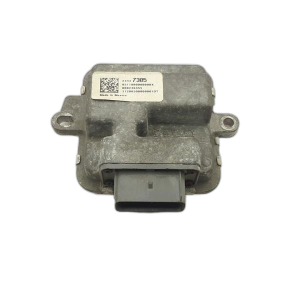

The information in this article is provided for general reference and educational purposes only. Vehicle specifications, procedures, and part compatibility can vary by production date, trim level, and region. Always consult your vehicle's factory service manual and verify part numbers before purchasing or performing repairs. Safety-critical components such as airbags, seat belts, and braking systems should be installed by a qualified professional.
- Gmc CANYON:
- 🧭 Diagnostic Flowchart
- 🎬 Helpful Videos
- 🛍️ Shop This Part
- What's Unique About the 2015-2019 Gmc CANYON
- Symptoms You May Notice
- Most Likely Causes
- Diagnosis Steps
- Parts You'll Likely Need
- Related Codes That Often Appear With This One
- Technical Service Bulletins (TSBs) & Recalls
- Platform-Specific Known Issues
- Mechanic-Grade Diagnostic Values
- Scan Tool Commands That Help
- Wiring & Ground Locations
- Real Owner Repair Stories
- OEM Part Supersession History
- 🎟️ Get 5% Off