

U0121 on 2015-2017 GMC Sierra: Lost Communication with ABS Module Fixes
On a 2015-2017 GMC Sierra, code U0121 usually means a communication failure with the ABS module, often caused by a poor ground connection (G218) under the driver's dash or a damaged wiring harness under the door sill plates. These are well-documented issues in GM Technical Service Bulletins. Cleaning the ground or repairing the specific wires is the most likely fix, costing little in parts but potentially a few hours in labor.
- U0121 on this truck means the ABS/StabiliTrak module (EBCM) is offline, disabling these safety features.
- The most likely cause is NOT a bad module, but a poor ground (G218 under the dash) or damaged wires under the door sill plates.
- Always start diagnosis by checking the G218 ground and the sill plate wiring before considering replacing any parts.
- Driving with this code is risky as you will not have anti-lock brakes or stability control.
- If the code is only in 'history' and no warning lights are on, it could be a harmless phantom code per TSB #PIT5599.
What's Unique About the 2015-2017 Gmc SIERRA

The 2014-2019 (K2XX generation) GMC Sierra and its platform mates are known for specific electrical vulnerabilities that trigger the U0121 code. The most notorious is the BCM ground point G218, which was often poorly installed at the factory with sound-deadening insulation trapped under the terminal, causing widespread communication faults as documented in TSB #PIT5405C. 🎬 Watch: How to locate and repair the G218 ground point. Additionally, GM has issued TSB #PIT5457D, which points directly to the 'communication enable' circuit (Circuit 5986) in wiring harnesses under the door sill plates as a common point of corrosion and failure for these trucks. These known issues should be the first place to look before suspecting the expensive EBCM itself.
Diagnostic Flowchart

Tap your situation to follow the diagnostic path that matches what you're seeing on this vehicle.
Symptoms You May Notice

- ABS warning light is on
- StabiliTrak or Traction Control (TC) warning light is on
- "Service StabiliTrak" or "Service Brake System" message on the dashboard
- Cruise control may not work
- Loss of power steering assist (in cases of severe network failure, often linked to the G218 ground issue)
- Instrument panel cluster (IPC) or radio may go blank intermittently
- Replacing the EBCM without first checking the G218 ground and sill plate wiring harnesses. These wiring and ground issues are far more common and much cheaper to fix, and are specifically highlighted in GM service bulletins.
Most Likely Causes

- Poor Body Control Module (BCM) Ground (G218) 🔴 High Probability → Shop Body Control Module TSB #PIT5405C and its predecessors directly link a list of communication codes, including U0121, to this ground. The G218 ground, located under the driver's side dash near the A-pillar speaker, is frequently found with sound-deadening insulation trapped under the terminal eyelet from the factory. This creates a high-resistance connection that disrupts the BCM, a central hub for network communications.
How to confirm: Locate the G218 ground stud under the driver's side dash/kick panel area, to the left of the steering column. Visually inspect if the dash insulator mat is pinched under the eyelet. Check if the 10mm nut is loose. The issue may be intermittent and triggered by electrical load, like turning the steering wheel.
Typical fix: Disconnect the battery. Remove the 10mm nut and the wire eyelet. Cut or trim back any trapped insulation or matting. Clean the metal contact surfaces of the eyelet and the body stud to bare metal, then securely retighten the nut.
Est. part cost: $0-$5 - Damaged Wiring Harness Under Door Sill Plates 🟡 Medium Probability TSB #PIT5457D specifically calls out this location. Wires in the channel under the driver and passenger door sills can become corroded, chafed, or broken from moisture ingress or foot traffic. The 'Communication Enable' circuit (Circuit 5986, a light blue wire) is particularly susceptible. A fault on this circuit prevents the BCM from 'waking up' the EBCM, causing a U0121 code.
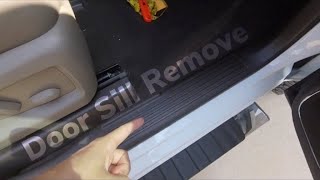
How to confirm: Remove the plastic sill plates on both driver and passenger sides. Peel back the carpet/tape and inspect the wiring harness for signs of green or white corrosion, pinched wires, or obvious breaks. TSB #PIT5457D also points to splice J365 under the passenger sill plate as a potential failure point.
Typical fix: Repair the damaged section of wire. This involves cutting out the corroded section, splicing in a new piece of same-gauge wire using weatherproof heat-shrink butt connectors or by soldering and sealing with heat shrink tubing.
Est. part cost: $5-$25 - Low Battery Voltage or Poor Connections ⚪ Low Probability → Shop Vehicle Battery Modern control modules are highly sensitive to voltage drops. TSB #PIT5405C also lists a discharged/faulty battery and high resistance in battery cables as a primary cause for these electrical issues.
How to confirm: Test the battery voltage with a multimeter; it should be above 12.4V with the engine off and 13.7-14.7V when running. Perform a load test. Check for corrosion on the battery terminals and ensure the main power and ground cables are tight at the battery, fuse block, and engine block per TSB specs (e.g., 45 Nm at engine block).
Typical fix: Clean the battery terminals and cable ends with a wire brush. Charge or replace the battery if it fails a load test. Ensure all connections are torqued to specification.
Est. part cost: $0-$250
Rare But Worth Checking
- Faulty Electronic Brake Control Module (EBCM): → Shop ABS Control Module While this is the module that has lost communication, it is less likely to be the root cause than wiring or ground issues on this platform. It should only be considered after all wiring (CAN Bus, power, ground, enable circuit) has been thoroughly tested directly at the EBCM connector.
- Phantom Code from Front View Camera Module (FVCM): According to TSB #PIT5599, a software anomaly in the FVCM can cause a false U0121 code to be stored in history. If the code is not 'current', there are no warning lights, and no other symptoms are present, it should be cleared and ignored.
- Shorted B+ Cable at Starter: TSB #PIT5405C also notes that the main battery cable can short against the starter heat shield, causing massive electrical fluctuations and a flood of communication codes, including U0121. This would likely be accompanied by other severe symptoms like a no-start condition.
Diagnosis Steps
- Check Battery and Fuses: Ensure battery voltage is stable and above 12.4V (engine off) and 13.7-14.7V (engine running). Inspect all fuses related to the EBCM, BCM, and StabiliTrak in the underhood and interior fuse panels.
- Scan All Modules: Use a professional scan tool capable of reading all vehicle modules. Note which modules are reporting a loss of communication with the EBCM. Check if the U0121 code is 'current' or 'history'. A flood of 'U' codes points to a network-wide issue.
- Inspect BCM Ground G218: This is the most common fix. Remove the driver's side kick panel/trim to access the G218 ground stud. Disconnect the battery, remove the 10mm nut, and check for trapped insulation under the terminal. Clean the connection to bare metal regardless of appearance and retighten securely.
- Inspect Sill Plate Harnesses: Per TSB #PIT5457D, remove the driver and passenger door sill plates. Carefully unwrap and inspect the wiring harnesses for signs of corrosion (green powder), chafing, or breaks. Pay special attention to the light blue 'Communication Enable' wire (Circuit 5986) and splice J365 on the passenger side.
- Test EBCM Power, Ground, and Enable Circuit: If wiring seems okay, use a multimeter to verify that the EBCM connector is receiving proper battery voltage, has a solid ground (<0.1 ohms to chassis), and has voltage on the communication enable circuit (Pin 19, light blue wire) when the ignition is on.
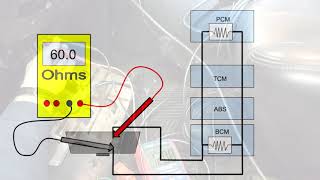
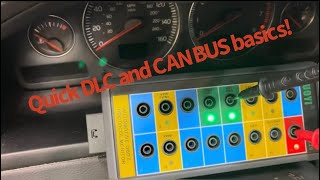
- Test CAN Bus Wires: This is an advanced step. With the battery disconnected, measure the resistance between the two CAN bus wires (CAN High and CAN Low) at the diagnostic port. It should be approximately 60 ohms. If it's 120 ohms or open/shorted, there is a wiring or module issue on the bus.
- Consider EBCM Failure: If all wiring, grounds, power, and network tests are good, the EBCM may have failed internally. Replacement requires programming to the vehicle's VIN.
Parts You'll Likely Need
- Electronic Brake Control Module (EBCM)
(OEM #84133433, 23377802 (Varies by VIN and options, verify with dealer))— This part is only needed if it has failed internally, which is less co
Related Codes That Often Appear With This One
- U0140 — Lost Communication with Body Control Module. This code strongly points to the G218 ground or a BCM-related issue, as the BCM is a central gateway for network traffic and the source of the communication enable signal.
- U0073 — Control Module Communication Bus 'A' Off. This is a general network code that indicates a broader problem on the CAN bus, often triggered by the same ground or wiring fault causing U0121.
- U0100 — Lost Communication with ECM/PCM. When a major ground or network issue occurs, communication can be lost with multiple modules, including the engine controller.
- U0126 — Lost Communication With Steering Angle Sensor Module. This code is often listed alongside U0121 in TSBs #PIT5457D and #PIT5405C, indicating a shared electrical or network fault, often related to the sill plate harness or G218 ground.
Technical Service Bulletins (TSBs) & Recalls
- PIT5457D: Loss of communication with EBCM, SWPS, PSCM, and/or SCM due to wiring harness issues under sill plates.
- PIT5405C: Multiple communication DTCs, including U0121, caused by a poor BCM ground, shorted starter cable, or high resistance in battery cables.
- PIT5599: History DTC U0121 may be set falsely by the Front View Camera Module (FVCM) due to a software anomaly.
Platform-Specific Known Issues
- TSB #PIT5457D: Points to loss of communication with the EBCM (and other modules) being caused by an open or high resistance in the Communication Enable Circuit (5986) located in the wiring harnesses under the driver and passenger sill plates.
- TSB #PIT5405C: Cites a long list of communication DTCs, including U0121, that can be caused by a poor body control module ground (G218) due to trapped dash insulation.
- TSB #PIT5599: Warns that a history U0121 code may be set falsely by the Front View Camera Module and should be ignored if there are no other symptoms or active warning lights.
Mechanic-Grade Diagnostic Values
- CAN Bus Network Resistance — expected: ~60 Ohms (± 5 Ohms). Failure: A reading of ~120 Ohms indicates an open in the bus or a missing terminating resistor. A reading significantly lower than 60 Ohms indicates a short between the CAN High and CAN Low wires.
- Communication Enable Circuit Voltage — expected: ~12 Volts (Battery Voltage). Failure: Low or no voltage when the ignition is on indicates an open or high resistance in Circuit 5986, preventing the EBCM from waking up.
- Battery Cable Clamp Torque — expected: 7 Nm (62 lb in). Failure: Loose clamps can cause intermittent voltage drops and communication faults.
- Negative Battery Cable to Engine Block Torque — expected: 45 Nm (33 ft lb). Failure: A loose main engine ground can cause widespread electrical issues.
Scan Tool Commands That Help
- GDS2 (GM Global Diagnostic System 2): Module Presence Verification — To see a list of all expected control modules and which ones are currently communicating on the network. This quickly confirms if the EBCM is the only module offline.
- GDS2 (GM Global Diagnostic System 2): Clear All DTCs — After a repair, this command clears codes from all modules simultaneously. A subsequent 'Read All DTCs' after a key cycle or test drive will confirm if the U0121 fault returns.
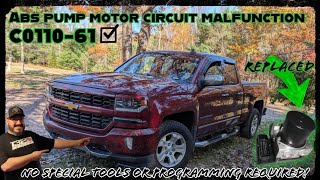
- High-end bidirectional scanner (e.g., iCarsoft CR MAX): ABS Pump Motor Activation — If communication can be established, this active test commands the ABS pump to run. If it responds, it helps confirm the module's internal processing and motor control circuits are functional, pointing away from an internal module failure.
Wiring & Ground Locations
- G218 — Under the driver's side of the instrument panel, near the A-pillar and speaker.. This is the primary ground for the Body Control Module (BCM). TSB #PIT5405C identifies that insulation trapped under this ground from the factory is a high-probability cause for network communication codes, including U0121.
- EBCM Connector — On the Electronic Brake Control Module, which is mounted to the ABS hydraulic block, typically under the truck near the driver's side frame rail.. This is the main connection point for all power, ground, and communication signals to the ABS module. Key pins for testing are Pin 19 (Communication Enable) and the CAN bus wires.
- Splice J365 — In the wiring harness located under the passenger front door sill plate.. TSB #PIT5457D identifies this splice as a known failure point for Circuit 5986 (Communication Enable). Corrosion at this splice can cut power to the EBCM's wake-up circuit.
- DLC (Data Link Connector) — Under the driver's side dashboard, to the left of the steering column.. This is the primary access point for testing the entire CAN bus network. Resistance between Pin 6 and Pin 14 is a key health indicator for the network.
Real Owner Repair Stories
- YouTube user comment on a G218 Ground Fix video (2014-2018 GMC Sierra/Chevy Silverado (specifics not given)) — Unspecified electrical issues, likely including communication codes and warning lights.
❌ Tried (didn't work) Hours of searching online for a solution.
✅ What actually fixed it Following the video's instructions to locate the G218 ground under the driver's dash and fix the connection. The user reported the fix took 30 minutes and resolved all issues.
OEM Part Supersession History
23355954, 84074957, 84074960, 84256789→84256781— Part revision/update by manufacturer.
Heads up: Applies to models without eAssist and with JD9 brakes. Always verify fitment with VIN. Programming is required.23355956, 84074944→84256785— Part revision/update by manufacturer.
Heads up: Applies to models with eAssist. Always verify fitment with VIN. Programming is required.
Helpful Videos




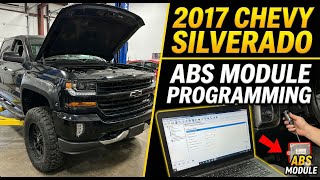
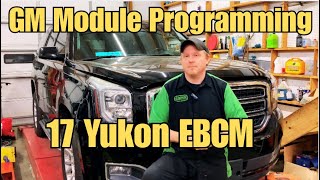
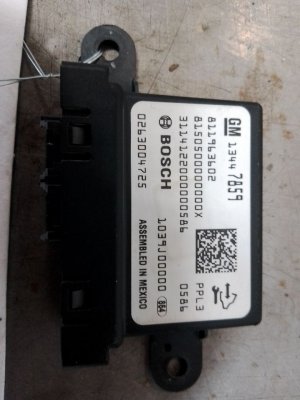
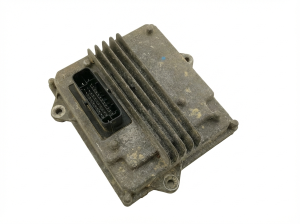
We Have This Part in Stock
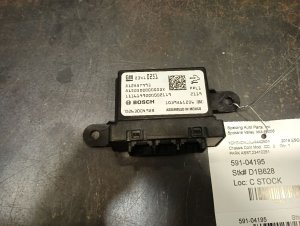

The information in this article is provided for general reference and educational purposes only. Vehicle specifications, procedures, and part compatibility can vary by production date, trim level, and region. Always consult your vehicle's factory service manual and verify part numbers before purchasing or performing repairs. Safety-critical components such as airbags, seat belts, and braking systems should be installed by a qualified professional.
- Gmc SIERRA:
- 🧭 Diagnostic Flowchart
- 🎬 Helpful Videos
- 🛍️ Shop This Part
- What's Unique About the 2015-2017 Gmc SIERRA
- Symptoms You May Notice
- Most Likely Causes
- Rare But Worth Checking
- Diagnosis Steps
- Parts You'll Likely Need
- Related Codes That Often Appear With This One
- Technical Service Bulletins (TSBs) & Recalls
- Platform-Specific Known Issues
- Mechanic-Grade Diagnostic Values
- Scan Tool Commands That Help
- Wiring & Ground Locations
- Real Owner Repair Stories
- OEM Part Supersession History
- 🎟️ Get 5% Off