

U0121 on 2007-2010 GMC Sierra 2500: Lost Communication with ABS Module Causes & Fixes
On a 2007-2010 Sierra 2500, U0121 is most often caused by a poor ground connection (G218) under the driver's dash, corroded wiring under the driver's door sill plate, or a corroded main EBCM ground on the frame rail. Cleaning the grounds or repairing the wires are the most likely fixes, costing little in parts.
- U0121 on a 2007-2010 Sierra 2500 means the ABS module (EBCM) is offline, disabling ABS and StabiliTrak.
- Before suspecting a bad module, ALWAYS inspect the G218 ground under the driver's kick panel and the wiring harness under the driver's door sill plate, as these are documented weak points.
- Ensure the battery is fully charged and healthy, as low voltage can trigger communication faults.
- Driving with this code is not recommended as critical safety systems are inactive.
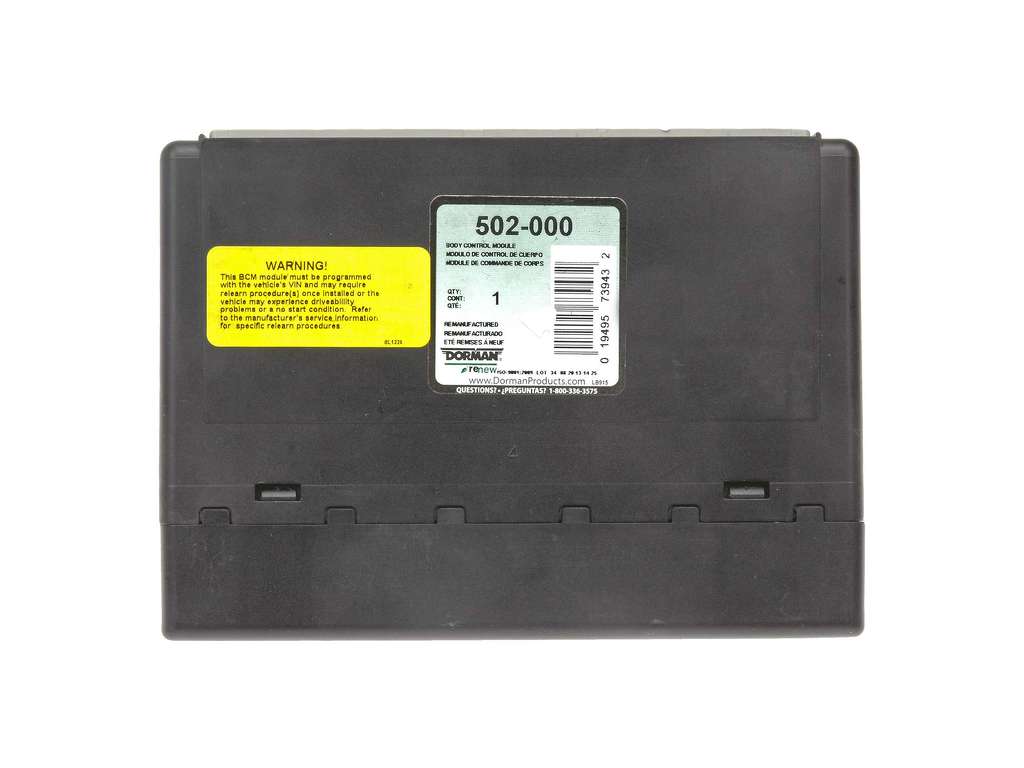
- If the EBCM must be replaced, it will require programming by a dealer or qualified shop to function correctly.
What's Unique About the 2007-2010 Gmc SIERRA 2500
The GMT900 platform, which includes the 2007-2010 Sierra 2500, is well-documented by GM to have specific weak points that trigger the U0121 code. Technical Service Bulletins point directly to a problematic ground point (G218) under the dash and wiring harnesses under the door sill plates that are prone to corrosion and damage. A third common failure point is the main EBCM ground located on the driver's side frame rail, which is highly exposed to road salt and moisture. These known issues mean the cause is far more likely to be a simple wiring or ground fault rather than an expensive module failure.
🎬 Watch: A quick overview of U0121 causes and common fixes.Diagnostic Flowchart
Tap your situation to follow the diagnostic path that matches what you're seeing on this vehicle.
Symptoms You May Notice
- ABS warning light illuminated
- StabiliTrak / Traction Control warning light illuminated
- "Service StabiliTrak" or "Service Traction Control" message on the driver information center
- Transmission may not shift properly or may be stuck in one gear
- Check Engine Light may be on
- Red "BRAKE" warning light may be on
- Cruise control is disabled 🎬 See how these electrical faults can cause a dashboard nightmare.
- Replacing the EBCM (ABS module) without first thoroughly inspecting the G218 ground, the EBCM frame ground, and the wiring harnesses under the door sill plates.
- Replacing a wheel speed sensor. A faulty WSS typically sets a specific 'C' code (like C0035) and would not, by itself, cause a total communication loss 'U' code like U0121.
Most Likely Causes
- Poor Ground Connection at G218 🔴 High Probability This specific ground point is cited in GM Technical Service Bulletin #PIT5405A as a common cause for multiple communication codes, including U0121. The factory sometimes trapped sound-deadening insulation between the ground terminal and the body, leading to a high-resistance connection over time.
How to confirm: Locate ground G218 under the driver's side kick panel, near the A-pillar. Disconnect the battery, remove the 10mm nut, and inspect for trapped insulation or corrosion. Clean all contact surfaces (the terminal, the bolt, and the body) to bare metal and re-secure it tightly.
Typical fix: Clean and re-secure the ground connection, trimming away any interfering insulation.
Est. part cost: $0-$5 - Chafed or Corroded Wiring Under Sill Plates 🔴 High Probability GM TSB #PIT5457D specifically instructs technicians to inspect the wiring harness under the driver and passenger sill plates. Moisture from wet shoes or leaking door seals gets trapped, leading to corrosion. The communication enable circuit (Circuit 5986, a light blue wire) is often the victim, preventing the BCM from waking the EBCM.
How to confirm: Remove the plastic door sill plates and peel back the carpet to inspect the wiring harness. Look for green or white corrosion, pinched wires, or obvious breaks. TSB #PIT5457D also notes that splice J365 under the passenger sill plate is a potential failure point.
Typical fix: Repair the damaged section of wire with a new piece of wire and sealed, weatherproof connectors. Clean any corrosion found.
Est. part cost: $5-$25 - Corroded EBCM Frame Ground 🟡 Medium Probability The main ground for the EBCM is bolted directly to the outside of the driver's side frame rail, near the module itself. Its exposed location makes it extremely vulnerable to corrosion from road salt and moisture, which can starve the module of power and cause it to drop off the network.
How to confirm: Locate the EBCM on the driver's side frame rail, under the driver's door area. Follow the black wire from the EBCM connector to where it bolts to the frame. Disassemble the connection, clean the wire terminal and frame mounting point to bare metal, and re-secure tightly. Applying dielectric grease can help prevent future corrosion.
Typical fix: Clean, and re-secure the ground connection. In severe cases, the ground wire terminal may need to be replaced.
Est. part cost: $0-$10 - Failed Electronic Brake Control Module (EBCM) 🟡 Medium Probability → Shop ABS Control Module While less common than wiring issues, the module itself can fail internally due to age, heat, or vibration. Water intrusion into the connector is also a risk due to its location on the frame rail.
How to confirm: This is diagnosed by exclusion. If all power, ground, and communication wires (CAN bus and communication enable circuit) going to the EBCM test good with a multimeter, and the network is otherwise healthy, the module itself is the likely culprit. A professional scan tool will fail to communicate directly with the EBCM, confirming it is offline.
Typical fix: Replace the EBCM. The new module must be programmed to the vehicle's VIN by a dealer or a properly equipped independent shop.
Est. part cost: $350-$800 - Low Battery Voltage ⚪ Low Probability → Shop Vehicle Battery
How to confirm: Test the battery voltage with the engine off. A healthy battery should read above 12.4 volts. With the engine running, the alternator should produce between 13.7 and 14.7 volts. Low voltage can cause unpredictable communication errors across all modules.
Typical fix: Charge or replace the battery. Test the alternator if the charging voltage is low.
Est. part cost: $150-$300
Rare But Worth Checking
- Faulty Wheel Speed Sensor (WSS) or Wiring: → Shop ABS Wheel Speed Sensor A short circuit in a wheel speed sensor or its wiring can sometimes disrupt the entire EBCM, causing it to stop communicating. TSB #PIT4056H describes a diagnostic procedure where unplugging the faulty WSS restores communication with the EBCM.
Diagnosis Steps
- Check battery voltage. Ensure it is above 12.4V with the engine off and 13.7-14.7V with the engine running.
- Use a professional scan tool to check for codes in ALL vehicle modules. Note if U0121 is the only code or if there are other 'U' codes present, which would indicate a wider network problem.
- Inspect all fuses related to the EBCM, BCM, and ABS in the underhood and interior fuse panels. Check the large 40A or 60A ABS fuses in the underhood block.
- Locate and inspect ground G218 under the driver's side kick panel/A-pillar. Disassemble, clean all contact surfaces to bare metal, and re-secure it tightly.
- Locate and inspect the main EBCM ground on the driver's side frame rail. Disassemble, clean the terminal and frame to bare metal, and re-secure.
- Remove the driver and passenger side door sill plates and inspect the wiring harnesses for corrosion, chafing, or breaks as per TSB #PIT5457D. Pay close attention to the light blue wire (Circuit 5986).
- If wiring and grounds are good, use a multimeter to check for battery power and good ground at the EBCM connector itself.
- Test the CAN bus wires (typically a twisted pair of Tan and Tan/Black wires) for continuity and resistance between the EBCM connector and the vehicle's data link connector. The total resistance across the two CAN bus terminating resistors should be approximately 60 ohms with the battery disconnected.
- If all wiring, power, and grounds are confirmed to be good, the EBCM is likely faulty and requires replacement and programming. 🎬 Watch: How to perform an EBCM repair at home.
Parts You'll Likely Need
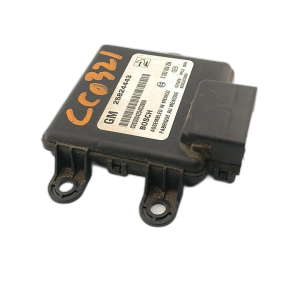
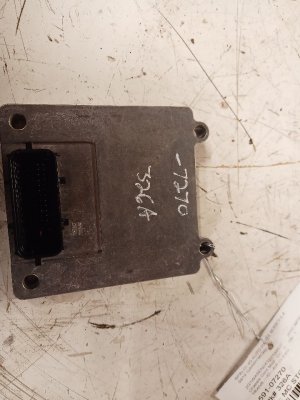
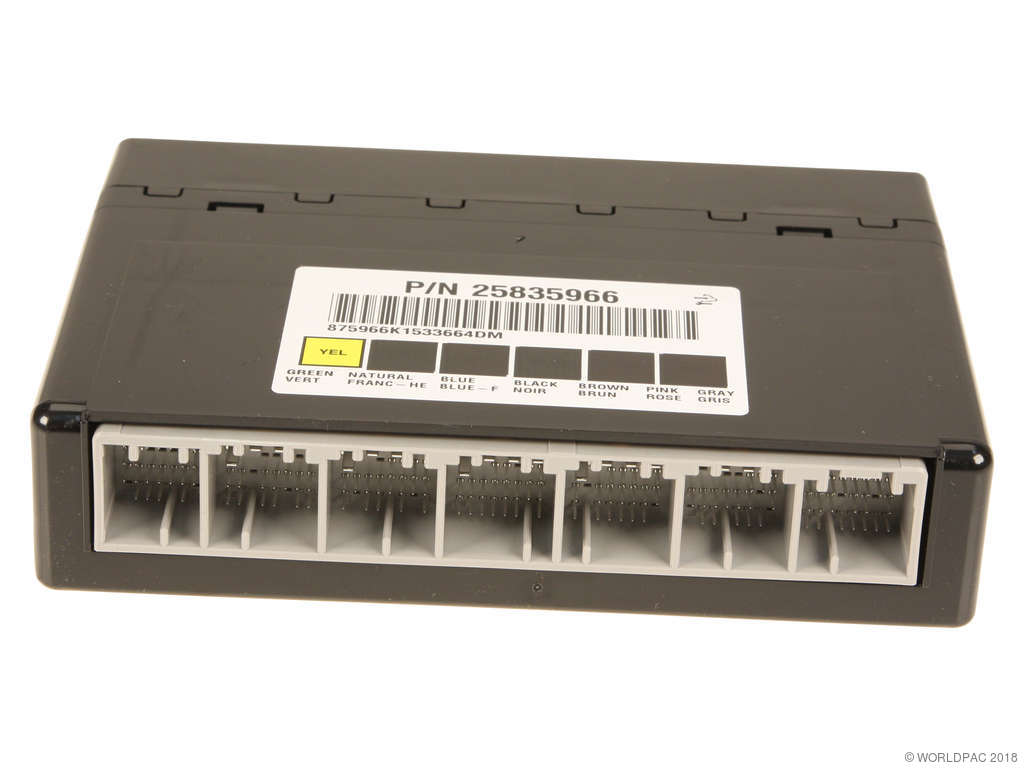
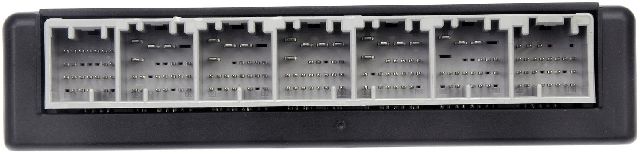
- Electronic Brake Control Module (EBCM)
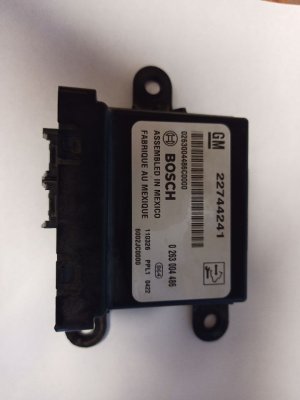
(OEM #ACDelco 20896440, 25913229, 20845990 (Verify by VIN))— This is the part to replace if all wiring, power, and ground checks have been completed and are found to be in good condition.
Trusted brands: ACDelco (Genuine GM)
OEM price range: $500-$800
Aftermarket price range: $350-$600 - Wiring Repair Supplies — Needed to fix common issues like corroded wires under the sill plates or damaged ground terminals. Includes wire, butt connectors, heat shrink tubing, and dielectric grease.
OEM price range: $10-$30
Aftermarket price range: $5-$20
Related Codes That Often Appear With This One
- U0073 — This is a general network code indicating a communication bus is off, often set alongside more specific codes like U0121 when a primary ground or power issue is present.
- U0100 — Indicates Lost Communication with the Engine Control Module (ECM). A severe network issue can cause communication loss with multiple modules.
- U0101 — Indicates Lost Communication with the Transmission Control Module (TCM), which can explain shifting problems that sometimes accompany a U0121 code, as noted in TSB #08-07-30-021H.
- U0140 — Indicates Lost Communication with the Body Control Module (BCM). This is often seen with U0121 as the BCM and EBCM are closely linked on the network, and a bad G218 ground directly affects the BCM.
Technical Service Bulletins (TSBs) & Recalls
- PIT5457D: Addresses loss of communication with various modules including the EBCM (U0121) and points to checking wiring under the sill plates, specifically Circuit 5986 and splice J365.
- PIT5405A/B/C: Cites multiple communication codes, including U0121, and recommends checking the BCM ground at G218 for trapped insulation or looseness.
- 08-07-30-021H: Lists U0121 as a common communication DTC that can cause various instrument panel warnings and shifting problems on the GMT900 platform.
Platform-Specific Known Issues
- TSB #PIT5405A points to the body control module ground at G218 as a source of multiple communication DTCs, including U0121.
- TSB #PIT5457D highlights the wiring harness under the door sill plates as a common area for corrosion and open circuits.
Mechanic-Grade Diagnostic Values
- CAN Bus Network Resistance — expected: ~60 Ω. Failure: A reading of ~120 Ω indicates an open circuit or a missing terminating resistor. A reading near 0 Ω indicates a short between the CAN High and CAN Low wires.
- CAN High Voltage (to ground) — expected: ~2.6V to 3.0V (average, with data active). Failure: Significant deviation from this range can indicate a short or open on the CAN High line.
- CAN Low Voltage (to ground) — expected: ~2.0V to 2.4V (average, with data active). Failure: Significant deviation from this range can indicate a short or open on the CAN Low line.
- EBCM Power and Ground — expected: Battery voltage (~12.6V) at power pins; Near 0V potential and low resistance (less than 1 Ω) to chassis on ground pins.. Failure: Low or no voltage on power pins, or high resistance on ground pins, indicates a wiring or fuse issue preventing the module from powering on. A test light connected to battery positive should light brightly when probing the ground pins.
Scan Tool Commands That Help
- GDS2 (GM Global Diagnostic System 2): Module Status / Data Display — To verify if the EBCM is completely offline or only intermittently dropping from the network. This helps differentiate a hard failure from an intermittent wiring issue.
- GDS2 / Tech2: Automated Test / Actuator Tests — If communication can be established, commanding the ABS pump motor to run can help confirm the module's internal circuits are functional.
- GDS2 / SPS (Service Programming System): EBCM Programming/Setup — This is a mandatory step after replacing the Electronic Brake Control Module. The new module must be programmed with the vehicle's VIN and configuration to function.
Wiring & Ground Locations
- G218 — Under the driver's side of the instrument panel, near the A-pillar, sometimes behind the speaker.. This is a primary ground for the Body Control Module (BCM). A poor connection here, often due to trapped insulation, can cause widespread communication issues, including setting U0121.
- EBCM Frame Ground — On the outside of the driver's side frame rail, near the EBCM itself, under the driver's door area.. This is the main ground for the EBCM. Its exposed location makes it highly prone to corrosion, which can prevent the module from powering on and communicating.
- EBCM Connector (X1) — On the Electronic Brake Control Module, mounted to the driver's side frame rail.. This is the main connection point for all power, ground, and communication wires to the module. Key pins for testing are the main power feeds (Red/Black wires), grounds (Black/White wires), and the CAN bus lines (Tan and Tan/Black twisted pair).
- CAN Bus Wires — Twisted pair of wires, typically Tan and Tan/Black, running through the main vehicle harnesses.. These are the data lines for the high-speed GMLAN network. An open or short in these wires will sever communication with the EBCM. GM's network topology often routes these wires from one module to the next in a daisy-chain fashion, which can look like a series circuit but functions as a parallel network.
Real Owner Repair Stories
- YouTube channel CZeroMedia (2008 Chevrolet Silverado ('NBS' platform)) — ABS light on, AWD light on, multiple communication codes including U0121, U0101, U0109.
❌ Tried (didn't work) Checked ABS fuses in the underhood fuse box (they were good)., Checked the wheel speed sensor wiring for damage and continuity (it was intact).
✅ What actually fixed it The primary cause was a failed Electronic Brake Control Module (EBCM) that showed visible signs of corrosion on the module housing. Replacing the module resolved the issue. - Tahoe Yukon Forum user (2010 GMC Sierra 5.3L, 175k miles, salt-belt vehicle) — Intermittent 'Service Stabilitrak' and 'Service Traction Control' messages, limp mode, multiple U-codes including U0073, U0100, U0101, U0121. Occurred more in warm weather.
❌ Tried (didn't work) Replaced battery, Cleaned Mega Fuse, Cleaned grounds on engine block, firewall, chassis under driver's door, and front frame
✅ What actually fixed it The final fix was cleaning the main EBCM connector and the large splice pack located near it on the frame rail. Corrosion was found inside the splice pack, disrupting communication.
Helpful Videos


Used OEM Parts in Stock
New Aftermarket Parts Available

The information in this article is provided for general reference and educational purposes only. Vehicle specifications, procedures, and part compatibility can vary by production date, trim level, and region. Always consult your vehicle's factory service manual and verify part numbers before purchasing or performing repairs. Safety-critical components such as airbags, seat belts, and braking systems should be installed by a qualified professional.
- Gmc SIERRA 2500:
- 🧭 Diagnostic Flowchart
- 🎬 Helpful Videos
- 🛍️ Shop This Part
- What's Unique About the 2007-2010 Gmc SIERRA 2500
- Symptoms You May Notice
- Most Likely Causes
- Rare But Worth Checking
- Diagnosis Steps
- Parts You'll Likely Need
- Related Codes That Often Appear With This One
- Technical Service Bulletins (TSBs) & Recalls
- Platform-Specific Known Issues
- Mechanic-Grade Diagnostic Values
- Scan Tool Commands That Help
- Wiring & Ground Locations
- Real Owner Repair Stories
- 🎟️ Get 5% Off