

U0121 on 2016-2021 Hyundai Tucson: ABS Communication Loss Causes & Fixes
This code means the ABS module isn't communicating. On this Tucson, the most likely cause is a faulty ABS module (HECU), a known issue leading to recalls (NHTSA #20V543000, Hyundai #195) for fire risk. Check fuses first, but the module itself is the common failure point. The recall remedy may involve a fuse change, software update, or full HECU replacement. If not covered by recall, replacement is costly, ranging from $500 for a used part to over $2000 at a dealer.
- U0121 on a 2016-2021 Tucson is a critical safety issue that disables ABS and stability control.
- There is a significant fire risk associated with this code due to a known defect in the ABS module (HECU), which was subject to Recall 195.
- Do not drive the vehicle. Park it outside and away from structures until it can be inspected.
- While fuses and wiring should be checked, the most probable cause is a failed ABS module requiring replacement.
- Contact a Hyundai dealer with your VIN to see if the recall repair is still open for your vehicle.
What's Unique About the 2016-2021 Hyundai Tucson
The 2016-2021 Hyundai Tucson is part of a generation with a widely documented and recalled issue concerning the ABS module, also known as the Hydraulic Electronic Control Unit (HECU). These units, supplied by Mando, are known to be susceptible to internal corrosion which can cause an electrical short. The root cause is believed to be either a brake fluid leak from piston seals onto the internal electronics or soldering flux residue left during manufacturing that corrodes over time with heat and humidity. This specific failure can not only trigger the U0121 code but also poses a significant fire risk, even when the vehicle is parked and turned off. This known defect makes the ABS module itself a much higher probability cause on this vehicle compared to typical wiring or fuse issues.
Symptoms You May Notice
- ABS warning light illuminated on the dashboard
- Electronic Stability Control (ESC) or Traction Control (TCS) warning light illuminated
- Brake system warning light illuminated
- Cruise control is inoperative
- A 'Service ABS' or similar message may appear in the instrument cluster
- Brakes will function for normal stops, but will lock up during a panic stop
- Scan tool is unable to establish communication with the ABS module
- Possible burning or melting odor from the engine bay
- Replacing wheel speed sensors. U0121 is a communication code, not a sensor performance code. While a faulty wheel speed sensor will trigger the ABS light, it will set a different code (e.g., C-codes) and will not cause a loss of communication with the entire module.
Most Likely Causes
- Faulty ABS Control Module (HECU) 🔴 High Probability → Shop ABS Control Module Hyundai issued recalls (including #195, NHTSA #20V543000) for 2016-2021 Tucsons because the HECU can corrode internally, causing an electrical short. This is a well-documented, widespread failure on this platform and its Kia Sportage platform-mate.
How to confirm: After verifying power, ground, and fuses are good, the inability to communicate with the ABS module using a professional scan tool points to an internal module failure. A technician may also check for signs of brake fluid leakage around the module, which is a known failure mode leading to the short.
Typical fix: If the vehicle is part of the recall, a dealer will perform the remedy free of charge, which may include installing a new fuse kit, updating software, or replacing the entire HECU. If not covered, the ABS module/HECU must be replaced. The new module will need to be programmed to the vehicle ('Variant Coding') and the brake system will require a specialized bleeding procedure.
Est. part cost: $800-$1500 - Blown ABS Fuse(s) 🟡 Medium Probability An internal short in the recalled ABS module can cause the main ABS fuse to blow. The official recall remedy involves installing a new, multi-fuse kit with different amperage ratings to mitigate fire risk. While replacing the fuse might temporarily restore communication, it often blows again if the underlying module fault isn't fixed.
How to confirm: Locate the fuse box in the engine bay. Check all fuses labeled for 'ABS', 'ESC', or 'Brakes'. A visual inspection or a multimeter can confirm if a fuse is blown. The recall kit (P/N 91KIT-D325AQQH or 91KIT-D330AQQH depending on HECU) contains specific 25A or 30A fuses.
Typical fix: Replace the blown fuse. If the vehicle is under recall, the dealer will install a revised fuse kit. If the fuse blows repeatedly, the ABS module is likely shorted and needs replacement.
Est. part cost: $1-$25 - Wiring or Connector Issues ⚪ Low Probability
How to confirm: Visually inspect the wiring harness and the main connector at the ABS module for any signs of corrosion, moisture, or physical damage. A technician would use a digital multimeter to check for proper power, ground, and CAN bus signal voltages (typically ~2.5V on CAN High and CAN Low) at the connector.
Typical fix: Repair the damaged section of wiring or clean the corroded connector terminals. Ensure the connector is securely seated.
Est. part cost: $10-$100 - Low Battery Voltage or Poor Ground ⚪ Low Probability → Shop Vehicle Battery
How to confirm: Test the battery voltage with a multimeter; it should be above 12.4V with the engine off. Low voltage can cause communication errors across various modules. Inspect the battery terminals for corrosion and ensure the main chassis ground connections are clean and tight.
Typical fix: Charge or replace the battery. Clean the battery terminals and ground connection points.
Est. part cost: $150-$300
Diagnosis Steps
- Check for Recalls: First, enter your vehicle's VIN on the NHTSA website or call a Hyundai dealer to check for open recalls. Recall 195 (NHTSA #20V543000) specifically addresses the HECU fire risk. If it's open, a dealer must perform the repair free of charge.
- Scan for Other Codes: Use an OBD-II scanner capable of reading chassis codes to check for any other trouble codes. Address other U-codes (network codes) first, as they could indicate a broader network problem.
- Check Battery Voltage: Ensure the battery is fully charged (above 12.4V) and the terminals are clean and tight.
- Inspect ABS Fuses: Check all fuses related to the ABS and ESC systems in the engine compartment fuse panel. The recall involves replacing these fuses with a specific kit, so pay close attention to their amperage.
- Inspect ABS Module Connector: Disconnect the battery. Locate the ABS module (HECU) in the engine bay. Visually inspect its large electrical connector for corrosion, moisture, bent pins, or signs of melting. Unplug and reseat the connector to ensure it's secure.
- Professional Diagnosis: If the above steps do not resolve the issue, the vehicle needs to be diagnosed by a professional. They will use a multimeter and oscilloscope to test for power, ground, and valid CAN bus signals at the ABS module connector to definitively determine if the module itself has failed or if there is a wiring issue.
Parts You'll Likely Need
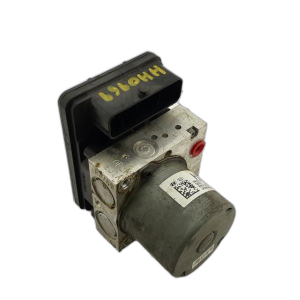
- ABS Control Module / Hydraulic Electronic Control Unit (HECU)
(OEM #58920-D3100, 58920-D3300, 58920-D3530, 58920-D3550 (Varies by model year and options, always verify with VIN))— This is the most common point of failure for this code on the 2016-2021 Tucson due to a known manufacturing defect that was subject to a safety recall.
Trusted brands: Hyundai (OEM), Mando (Original Supplier)
OEM price range: $1100-$1600
Aftermarket price range: $450-$900 (Remanufactured or Used) - ABS Fuse Kit (Recall Remedy)
(OEM #91KIT-D325AQQH (25A), 91KIT-D330AQQH (30A))— The fuse may blow as a result of the short-circuiting ABS module. The recall remedy involves installing one of these specific kits to prevent overcurrent.
Trusted brands: Hyundai (OEM)
OEM price range: $20-$40
Aftermarket price range: N/A
Related Codes That Often Appear With This One
- C1616 - CAN Bus Error
- C1702 - Variant Coding Error
Technical Service Bulletins (TSBs) & Recalls
- Hyundai Recall 195 / TSB 21-01-010H: Addresses the potential for internal corrosion and electrical short in the Anti-lock Brake Hydraulic Electronic Control Unit (HECU). Details the procedure to install a fuse kit and, if necessary, update software.
- NHTSA Campaign ID: 20V543000: The official US government recall number that expands on Hyundai's internal recall #195, covering 652,024 vehicles.
Platform-Specific Known Issues
- Recall 195 (NHTSA #20V543000): Hyundai recalled 652,024 Tucson models from 2016-2021 because the HECU can corrode internally, leading to an electrical short and potential for an engine compartment fire. The remedy involves installing a new fuse kit and, for some models, a software update or complete HECU replacement.
- Fire Risk: Due to the nature of the HECU failure, there is a risk of fire even when the vehicle is parked and turned off. Hyundai explicitly advised owners to park outside and away from structures until the recall repair was completed.
Mechanic-Grade Diagnostic Values
- CAN Bus Network Resistance — expected: Approximately 60 Ω between CAN High and CAN Low pins at the DLC with the battery disconnected.. Failure: A reading of 120 Ω indicates one of the two terminating resistors (one of which is in the ABS module) is offline. A reading significantly different from 60 Ω or 120 Ω suggests a wiring short or open circuit.
- CAN Bus Voltage (at DLC or ABS connector) — expected: Approximately 2.5V on both CAN High and CAN Low lines when the bus is idle (Key On, Engine Off).. Failure: Voltages that are stuck high, low, or at 0V indicate a short to power, short to ground, or an open circuit. An oscilloscope should show CAN High swinging to ~3.5V and CAN Low swinging to ~1.5V during active communication.
- ABS Module Power and Ground (at HECU connector) — expected: At least 12V+ at the power supply pins and less than 1 Ω of resistance on the ground pins to a known-good chassis ground.. Failure: Low or no voltage, or high resistance on the ground side, will prevent the module from powering on and communicating.
Hidden / Shadow Codes Worth Checking
- C1702: Variant Coding Error. This code sets when a new ABS/ESC module is installed but has not been correctly programmed (coded) to the vehicle's specific options (e.g., electronic parking brake, smart cruise control). (see via A professional-level scan tool like the Hyundai GDS (Global Diagnostic System) is required to see this chassis code.)
Scan Tool Commands That Help
- Hyundai GDS (or equivalent advanced scan tool): Variant Coding — This function is mandatory after replacing the ABS/HECU module. It configures the new module to match the specific equipment and features of the vehicle. Failure to perform variant coding will result in a C1702 code and the ABS/ESC system will not function correctly.
- Hyundai GDS (or equivalent advanced scan tool): ECU Upgrade (Software Update) — As part of the recall remedy (Recall 195), a software update for the ABS/ESC module may be required in addition to the fuse kit installation, depending on the original HECU part number. This is performed by the dealer.
- Hyundai GDS (or equivalent advanced scan tool): Sensor Calibration — After HECU replacement, the GDS tool is used to perform calibrations for the Steering Angle Sensor, and on models with an Electronic Parking Brake (EPB), the Longitudinal and Lateral G Sensors and Pressure Sensor.
Wiring & Ground Locations
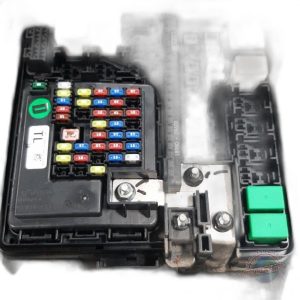
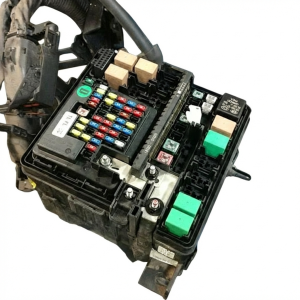
- Engine Compartment Junction Block — Located in the left front corner of the engine bay, near the battery.. This fuse block contains the primary 40A ABS1 and ABS2 fuses that are the subject of Recall 195. The recall procedure involves modifying the wiring on the underside of this block to install a new fuse kit.
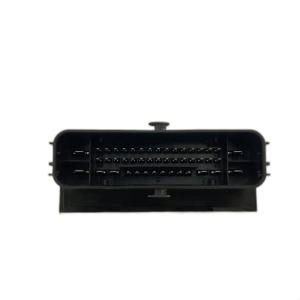
- HECU Main Connector — The large electrical connector attached directly to the ABS module/pump assembly in the engine bay.. This is the primary point for testing power, ground, and CAN bus signals directly at the module. A generic wiring diagram shows CAN High and CAN Low are often on pins 36 and 37, but this must be verified with a vehicle-specific diagram. Corrosion here can cause the U0121 code.
- Data Link Connector (DLC / OBD-II Port) — In the driver's side footwell, under the dashboard.. This is the access point for testing the integrity of the main CAN bus. Pins 6 (CAN High) and 14 (CAN Low) can be tested here for voltage and resistance to assess the health of the entire network.
Real Owner Repair Stories
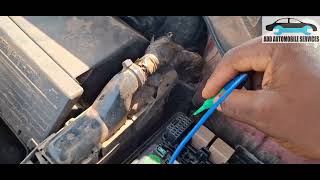
- YouTube Channel 'ADD AUTOMOBILE SERVICES' (2017 Hyundai Tucson) — No communication with multiple modules, including the instrument cluster (no gear indicator, etc.), and a 'horrible can signal' on an oscilloscope.
❌ Tried (didn't work) Scanning for codes initially showed no communication., Checking CAN signals at the DLC showed a corrupted waveform.
✅ What actually fixed it The technician traced the issue to a multi-purpose junction connector that had green corrosion inside. After disconnecting, cleaning, and reconnecting the corroded connector, the CAN signal returned to normal and communication was restored to the modules. This highlights that a wiring/connector issue can mimic a failed module.
OEM Part Supersession History
58920-D3100→N/A— This part number applies to 2016-2018 models. The recall remedy for this specific HECU is the installation of fuse kit 91KIT-D330AQQH (30A).58920-D3530 / 58920-D3550→N/A— These part numbers apply to later models (approx. 2019-2021). The recall remedy for these HECUs is the installation of fuse kit 91KIT-D325AQQH (25A) and a potential software update.
Heads up: Using the wrong fuse kit for the HECU part number can lead to improper circuit protection.
Model Year Variations Within This Range
- 2016-2018: Primarily used HECU part number 58920-D3100. The recall fix for these years typically involves the 30A fuse kit (91KIT-D330AQQH).
- 2019-2021: These post-facelift models primarily used HECU part numbers 58920-D3530 and 58920-D3550. The recall fix for these involves the 25A fuse kit (91KIT-D325AQQH) and may also require an ABS/ESC software update.
Diagnostic Flowchart
Other Known Issues on This Vehicle
Issues unrelated to this code that are worth knowing about as an owner of this generation:
- Theta II Engine Failure 🔴 High — Widespread issue affecting multiple Hyundai/Kia models, including some 2017 Tucsons, leading to class-action lawsuits and recalls. Failures often relate to connecting rod bearing wear, which can cause knocking, oil consumption, and eventual engine seizure. (Ref: Multiple recalls and warranty extensions exist, including NHTSA campaign 21V727000 for some 2017 models.)
- 7-Speed Dual-Clutch Transmission (DCT) Hesitation and Failure 🟠 Medium → Shop Transmission Assembly — Common on 1.6L Turbo models. Owners report hesitation from a stop, jerky shifting, and complete failure to engage gears. The issue is often linked to the transmission control module (TCM) logic or failure of the clutch actuator. (Ref: TSB 21-AT-014H provides a software update and procedure for diagnosing clutch judder.)
- Peeling White Paint 🟡 Low — Affects many 2017-2021 Tucsons with white or pearl-white paint. The paint can bubble and peel off in large sheets, particularly on the hood and roof. (Ref: Hyundai extended the paint warranty to 10 years/unlimited miles for this specific issue (Warranty Extension Z05).)
Used vs. New Parts: Buying Guide for This Vehicle
When a used part is the smart pick: For the HECU/ABS module on this specific vehicle, a used part from a salvage yard is **NOT RECOMMENDED**. The part has a known, widespread manufacturing defect that leads to internal shorts and a fire risk. A used part from another 2016-2021 Tucson will likely have the same latent defect and poses the same safety hazard. A professionally remanufactured unit from a reputable rebuilder who specifically addresses and corrects the internal corrosion/shorting issue is a viable, cost-effective alternative to a new OEM part.
What to inspect on the donor part:
- For remanufactured units, verify the rebuilder offers a warranty (1-2 years is common).
- Confirm the rebuilder's process includes correcting the known internal shorting/corrosion flaw, not just replacing basic components.
- Ensure the part number on the remanufactured unit exactly matches the original part number from your vehicle.
OEM-only on this vehicle (don't cheap out):
- ABS Fuse Kit (Recall Remedy): These kits (91KIT-D325AQQH, 91KIT-D330AQQH) are specific to the Hyundai recall and should only be sourced as genuine OEM parts to ensure correct amperage and fitment.
Aftermarket brands forum-validated for this vehicle:
- For remanufactured modules, companies specializing in ABS module repair are the best source (e.g., Module Mechanics, Flagship One), though individual research on company reputation is advised.
Brands owners have reported issues with on this vehicle:
- Unknown or unbranded used modules from online marketplaces like eBay or AliExpress carry a significant risk of having the original, uncorrected fire-risk defect.
Real Owner Stories
Aggregated from forums and TSBs cited above. Mileages and costs reflect what owners reported in those sources.
2019-2020 Hyundai Tucson
Symptoms: The owner was alerted to a recall notice regarding the ABS fire risk and the 'park outside' warning. A technician clarified that the HECU can short out internally.
What fixed it: Installation of a new fuse kit and, depending on the specific model, a software update or complete HECU replacement as per Recall 195.
Source hint: Reddit thread titled '2019-2020 Tucson ABS Fire Recall (195) : r/Hyundai'
Related OBD-II Codes
Frequently Asked Questions
Is my 2016-2021 Hyundai Tucson part of a recall for the ABS issue causing code U0121?
Why does Hyundai recommend parking my Tucson outside until the ABS module is fixed?
Can I just replace the blown ABS fuse to fix the U0121 communication error?
What is 'Variant Coding' and why is it mentioned for my Tucson's ABS repair?
Does the Kia Sportage have the same U0121 and ABS fire risk as my Tucson?
Will the dealer charge me to fix the HECU issue if my Tucson is under recall?
Helpful Videos

We Have This Part in Stock

The information in this article is provided for general reference and educational purposes only. Vehicle specifications, procedures, and part compatibility can vary by production date, trim level, and region. Always consult your vehicle's factory service manual and verify part numbers before purchasing or performing repairs. Safety-critical components such as airbags, seat belts, and braking systems should be installed by a qualified professional.
- Hyundai Tucson:
- 🧭 Diagnostic Flowchart
- 🎬 Helpful Videos
- 🛍️ Shop This Part
- What's Unique About the 2016-2021 Hyundai Tucson
- Symptoms You May Notice
- Most Likely Causes
- Diagnosis Steps
- Parts You'll Likely Need
- Related Codes That Often Appear With This One
- Technical Service Bulletins (TSBs) & Recalls
- Platform-Specific Known Issues
- Mechanic-Grade Diagnostic Values
- Hidden / Shadow Codes Worth Checking
- Scan Tool Commands That Help
- Wiring & Ground Locations
- Real Owner Repair Stories
- OEM Part Supersession History
- Model Year Variations Within This Range
- Other Known Issues on This Vehicle
- Used vs. New Parts: Buying Guide for This Vehicle
- Real Owner Stories
- 2019-2020 Hyundai Tucson
- Related OBD-II Codes
- Frequently Asked Questions
- 🎟️ Get 5% Off