

OBD-II Code U0124: Lost Communication With Lateral Acceleration Sensor Module
What U0124 means, why it triggers, and how to fix it
- Code U0124 disables your Electronic Stability Control (ESC), increasing the risk of spin-outs on wet or icy roads.
- Inspect the wiring harness and connectors first; corrosion or rodent damage causes over 50% of U0124 faults, not a failed sensor.
- Test your 12V battery before replacing parts; a resting voltage below 12.4V triggers false communication codes across multiple modules.
- Verify the sensor receives 5V or 12V power, has less than 1 ohm of ground resistance, and shows ~60 ohms across the CAN bus lines before condemning it.
- Allocate $100 to $180 for a mandatory zero-point calibration using a bidirectional scan tool if you replace the sensor or alter the suspension.
What Does U0124 Mean?
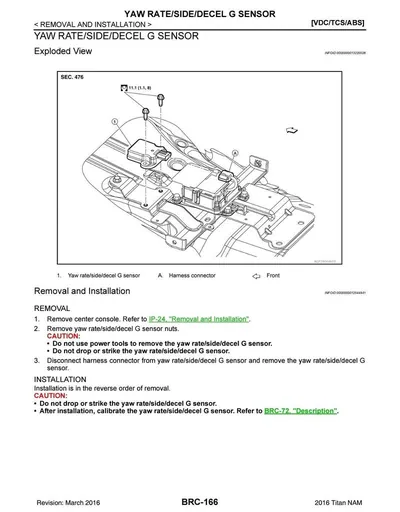
The code U0124 means your car's main computer has lost its communication link with the Lateral Acceleration Sensor Module. This sensor measures side-to-side G-forces to detect when the car begins to slide. When the computer loses this signal, it disables the stability and traction control systems as a precaution, triggering a dashboard warning light.
Technical definition: The official SAE/OBD-II definition is "Lost Communication With Lateral Acceleration Sensor Module." This code sets when a primary control unit (like the PCM or Skid Control ECU) fails to receive data from the Lateral Acceleration Sensor Module for a specified period, typically 1 second. This indicates a complete breakdown in the communication pathway, not an incorrect sensor reading.
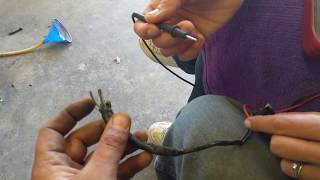
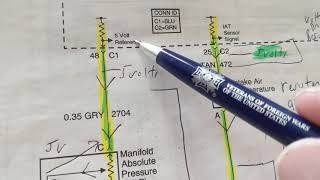
🎬 Watch: Understanding the wiring diagram for yaw and acceleration sensors.Can I Drive With U0124?
Yes, But With Caution. Yes, you can continue to drive, but your vehicle's Electronic Stability Control (ESC) and Traction Control System (TCS) are disabled. This significantly increases the risk of losing control during sudden maneuvers or on slippery roads. Disabling these systems removes a critical safety feature; while the car operates, its ability to prevent a skid is gone. Have the vehicle diagnosed immediately to restore these functions.
Common Causes

- Damaged or Corroded Wiring/Connectors (Very Common) — The wiring harness leading to the sensor is exposed to moisture, road salt, and physical damage. Corrosion on the connector pins or rodent damage to the wires under seats or consoles causes over 50% of U0124 faults.
- Low System Voltage / Weak Battery (Very Common) — Control modules require stable voltage. A weak 12V battery causes voltage drops during engine startup that disrupt communication between modules, setting a false U0124 code even if the sensor and wiring are perfect.
- Power or Ground Supply Issues (Common) — The sensor requires a stable 5V or 12V supply and a solid ground connection. A blown fuse, a corroded ground wire, or a broken power wire prevents the module from powering on and communicating.
- Faulty Lateral Acceleration Sensor Module (Common) — The sensor module fails internally due to cracked solder joints from vibration or moisture intrusion causing a short circuit.
- Incorrect or Failed Zero-Point Calibration (Less Common) — After replacing the sensor, performing a wheel alignment, or altering the suspension, the sensor must be calibrated to learn the vehicle's 'zero' position. A skipped calibration causes communication errors as the system receives conflicting data.
- Faulty ABS or Main Control Module (Less Common) — An internal hardware fault or corrupted software in the receiving module (like the ABS or Vehicle Stability Control module) makes it incapable of processing the sensor's signal, interpreting it as a loss of communication.
- CAN Bus Network Fault (Rare) — A short or open circuit in the main Controller Area Network (CAN bus) wiring isolates multiple modules, leading to a cascade of 'U' codes alongside U0124.
Symptoms

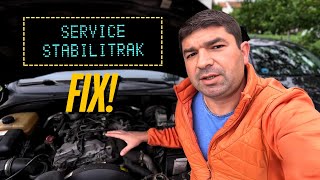
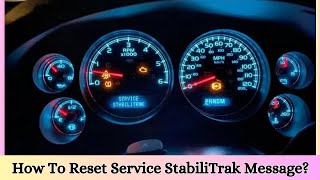
- Stability/Traction Control Light & Error Messages — The dashboard warning light for ESC, VSC, or TCS illuminates immediately. The instrument cluster displays messages like "Service Stability System" or "Check VSC System." 🎬 Watch: How to fix the Service StabiliTrak message on GM vehicles.
- ABS Light On — Because the stability system integrates directly with the Anti-lock Braking System, the ABS warning light illuminates simultaneously.
- Reduced Cornering Stability — With electronic aids disabled, the vehicle feels less stable and is highly prone to sliding in turns on wet, icy, or uneven road surfaces.
- Disabled Cruise Control — Modern cruise control systems rely on the stability control system to function safely. A U0124 code disables cruise control entirely.
Diagnostic Flowchart
Tap your situation to follow the diagnostic path that matches what you're seeing on this code.
Common Fixes & Costs
- Repairing Damaged Wiring or Connectors — Parts: $10-$50, Labor: $150-$400, ~1.5 hr book time (Intermediate)
- Replacing a Weak 12V Battery — Parts: $150-$250, Labor: $0-$50, ~0.5 hr book time (DIY)
- Replacing the Lateral Acceleration Sensor Module
— Parts: $250-$600, Labor: $150-$300, ~1.2 hr book time
(Intermediate)
Toyota Sienna (2011-2015): OEM
Lexus ES350 (2007-2012): OEM
Chevrolet/GMC Trucks (2007-2014): OEM - Performing Zero-Point Calibration — Parts: $0, Labor: $100-$180, ~1 hr book time (Professional)
- Replacing the ABS Control Module — Parts: $500-$1500, Labor: $200-$400, ~2 hr book time (Professional)
Used vs. New Parts: Buying Guide
When a used part is worth it: Purchase a used sensor from a reputable salvage yard only for older vehicles (>150k miles) when the OEM part exceeds $500 or is discontinued.
Donor-vehicle mileage cap: roughly under 80000 miles for the part to have meaningful remaining life.
Donor quality checklist:
- Verify the part number matches exactly; CAN bus modules are rarely interchangeable.
- Ensure the donor vehicle was not in a flood or fire.
- Inspect the connector pins for green or white corrosion before purchasing.
Decision logic:
- If The vehicle has less than 80k miles → Buy a new OEM or high-quality aftermarket part. The risk of premature failure of a used part outweighs the savings.
- If The cost of a new part is over $500 and the budget is tight → A used part with a 90-day warranty is acceptable, but budget for potential repeat labor costs if it fails.
- If The vehicle is a GM truck from the Salt Belt → Buy a new part. A used sensor from the same environment already has severe corrosion-related weaknesses.
Warranty tradeoff: Used parts include a 30-90 day parts-only warranty. New aftermarket parts offer 1-year to lifetime warranties. New OEM parts carry a 1-year warranty.
Worst-case if a used part fails: $250-$580 if a used part fails, requiring repeat labor for diagnosis, replacement, and calibration.
What Happens If You Wait — Timeline
- 0-2 weeks: The ESC/TCS warning light is on, and safety systems are disabled. The vehicle operates normally, but the risk of losing control in an emergency maneuver increases significantly. (MPG impact: 0%% · Added cost: $0 (unless an accident occurs))
- 2 weeks - 6 months: The underlying electrical fault worsens. Driving without ESC causes slightly accelerated and uneven tire wear in aggressive driving conditions. (MPG impact: 0%% · Added cost: $50-$200 (minor tire wear))
- 6-12 months: Moisture travels up the wiring harness via capillary action from a damaged connector seal, spreading corrosion to the main body harness. (MPG impact: 0%% · Added cost: $400-$1,500 (complex harness repair))
- 12+ months: A short in the harness overloads and destroys the main ABS control module. The repair requires replacing both the original fault and the expensive secondary damage. (MPG impact: 0%% · Added cost: $1,500-$3,000+)
Cost of Not Fixing It
- Immediate: Electronic Stability Control (ESC) and Traction Control System (TCS) are disabled. The risk of losing control and crashing during sudden maneuvers or on slippery roads increases drastically. (Added cost: Potential for catastrophic cost from an accident.)
- Short-Term (Weeks to Months): Driving without stability control causes uneven tire wear, as the system no longer corrects minor slips during normal driving. Emergency braking performance is compromised. (Added cost: $0 - $200 (premature tire wear).)
- Long-Term (6+ months): A simple damaged connector seal allows moisture to travel up the wiring harness via capillary action, destroying the main ABS control module. (Added cost: $1000 - $2500 (secondary failure in the ABS module).)
Diagnosis Steps

- Scan for All Trouble Codes
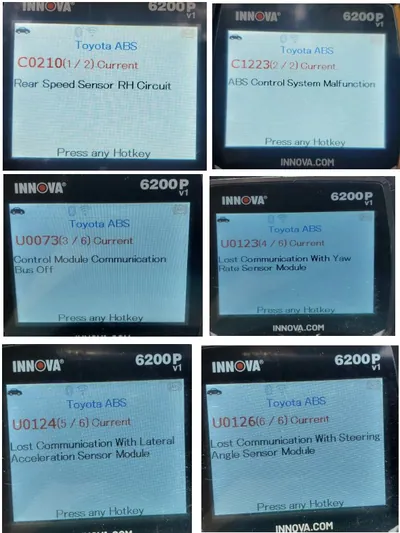
Read codes from all modules (ABS, PCM, BCM). Confirm U0124 is present. If U0073 (Communication Bus Off) is present, stop and diagnose the network-wide failure first. If U0123 (Yaw Rate Sensor) is present, the fault is isolated to the shared sensor assembly.
Tools: Advanced OBD-II Scanner (Beginner) - Inspect Battery Voltage and Fuses
With the car off, check the battery voltage; it must be at least 12.4V. A weak battery causes false communication faults. Next, locate and inspect the fuses for the ABS and Stability Control systems.
Tools: Multimeter, Fuse puller (Beginner) - Visually Inspect Wiring and Connectors
Locate the lateral acceleration sensor (under the center console, passenger seat, or frame rail). Unplug it and inspect the pins for green corrosion or moisture. Follow the harness, looking for chafing or chewed wires from rodents.
Tools: Flashlight, Trim removal tools (Intermediate) - Test Power and Ground with Voltage Drop
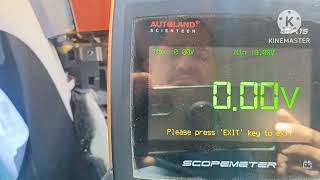
With the sensor plugged in and ignition on, back-probe the connector. Connect the red multimeter lead to battery positive and black to the sensor's power pin; the drop must be <0.2V. Connect the black lead to battery negative and red to the sensor's ground pin; the drop must be <0.2V. High readings indicate bad wiring.
Tools: Multimeter, Back-probe pins (Advanced) - Test the CAN Bus Wires
Disconnect the battery. Measure resistance between the CAN-H and CAN-L wires at the sensor's connector. It should read ~120 ohms. Measure at the OBD-II port; it should read ~60 ohms. Different readings indicate a broken CAN wire or failed terminating resistor.
Tools: Multimeter (Advanced) - Live Data Analysis
Monitor live data PIDs for the Lateral Acceleration Sensor. The Lateral G-force PID should read 0.0 m/s² when stationary on a level surface. If the value is stuck, erratic, or shows 'N/A' while other modules report data, the communication loss is isolated to this sensor.
Tools: Advanced OBD-II Scanner (Advanced) - Perform Zero-Point Calibration
If the sensor is replaced or all wiring tests pass, perform a zero-point calibration using a professional scan tool. This resets the sensor's baseline on a level surface and is mandatory for the system to function.
Tools: Advanced Scan Tool (Professional)
When This Code Triggers (Freeze-Frame Conditions)
- Vehicle Speed: > 4 mph (7 km/h) (The fault is detected once the vehicle is in motion, as the main control unit expects an active signal from the sensor.)
- System Voltage: 10V - 17.4V (Low voltage on startup triggers the code, but the freeze frame shows normal voltage at the time the continuous fault is logged.)
- Time Since Fault Detection: 1-5 seconds (The module sets the code if data is missing for as little as one second while driving.)
- Engine State: Running (The engine is running and the vehicle is being driven.)
Related Codes
- U0073 — Control Module Communication Bus 'A' Off. Indicates the entire CAN bus has shut down. Diagnose U0073 first by checking network integrity; U0124 is just a symptom of this larger failure.
- U0123 — Lost Communication With Yaw Rate Sensor Module. The yaw rate and lateral acceleration sensors share the same physical module and wiring. Seeing both codes points to a failure of the combined unit or its connector.
- U0125 — Lost Communication With Multi-axis Acceleration Sensor Module. This is an alternative name for the combined yaw and lateral acceleration sensor. Diagnosis is identical to U0124.
- U0126 — Lost Communication With Steering Angle Sensor Module. If data from the steering, yaw, and lateral sensors are all missing, suspect a broader CAN bus issue or a faulty main ABS/VSC module.
Climate & Environmental Factors
- High Humidity and Road Salt: Moisture and salt accelerate corrosion on wiring connectors and ground points, especially for frame-mounted sensors on GM trucks. This corrosion increases electrical resistance and causes communication loss.
- Extreme Heat: Sustained high temperatures cause thermal expansion and contraction of circuit boards, leading to micro-fractures and internal module failures over time.
- Extreme Cold: Cold temperatures reduce battery efficiency. The resulting lower system voltage during engine startup triggers false communication codes like U0124.
How to Talk to a Mechanic About This Code
Say this: "I have a U0124 code and the ABS/ESC lights are on. Please test the sensor's power, ground, and CAN bus wiring, and check the 12V battery health before replacing any parts."
This directs the mechanic toward a logical diagnostic process (wiring and battery first) rather than immediately replacing the expensive sensor. It establishes you as an informed customer.
Avoid saying:
- 'My stability control light is on, just fix it.' (Too vague, invites expensive guesswork).
- 'I think the sensor is bad, can you replace it?' (You've pre-diagnosed and will pay for a part you don't need).
- 'Just do whatever it takes to get the light off.' (This is an open invitation for maximum upselling).
Questions to ask before authorizing the repair:
- Did you test the sensor's power and ground wires, and what were the readings?
- Did you check the CAN bus resistance and signal? Were they normal?
- If the sensor needs to be replaced, does the estimate include the mandatory zero-point calibration?
- Can you show me the corroded connector or damaged wire you found?
- What is the warranty on the proposed repair, including both parts and labor?
Where to Take It: Dealer vs Independent vs Chain
- Dealer:
A safe but expensive choice. Best used if other shops are stumped or if the vehicle is still under warranty.
Best for: Vehicles under warranty., Complex, brand-specific electrical issues (e.g., on German luxury cars)., When a known Technical Service Bulletin (TSB) requires a specific software update.
Downsides: Highest labor rates and part costs, often 40-50% more than independent shops., May default to replacing an entire module assembly when a simpler wiring repair would suffice. (Typical cost: +50% vs. baseline) - Independent Shop:
Best fit for most cases. A good independent diagnostician focuses on finding the root cause (often wiring) and saves you hundreds compared to a dealer. Ensure they have the tools to perform a zero-point calibration.
Best for: Out-of-warranty vehicles where cost is a factor., Shops with strong reputations for electrical and diagnostic work., Getting a second opinion on a dealership's expensive quote.
Downsides: Quality and expertise vary widely; look for ASE certifications in electrical systems., May not have the latest manufacturer-specific scan tools for calibration on very new models. (Typical cost: +0% vs. baseline) - Chain Shop:
AVOID for this code. U0124 requires advanced electrical diagnosis, not just reading a code and replacing a part.
Best for: Simple, unrelated maintenance like oil changes or tires.
Downsides: Technicians often lack the specialized electrical diagnostic training for complex 'U' codes., High pressure to meet sales quotas leads to misdiagnosis and unnecessary part replacement., Unlikely to have the bidirectional scan tools needed for the required zero-point calibration. (Typical cost: -10% vs. baseline)
When to Walk Away From the Repair
If the total estimated repair cost exceeds 40-50% of the car's private-party value, it's time to seriously consider selling or trading it in.
- Car worth $5000, fix is $2500: Walk away. The repair cost is 50% of the car's value. It's not a financially sound investment.
- Car worth $15000, fix is $1200: Fix it. The repair is well below the threshold and restores a critical safety feature.
- Car worth $3000, fix is $800: Borderline. The cost is ~27% of the value. Get a second opinion to ensure the diagnosis is correct before proceeding. If other major repairs are looming, consider selling.
What Scan Tool You Need for This Code
Minimum: A scanner that reads and clears codes from the ABS/VSC/TCS system, and performs the 'Zero-Point Calibration' for the lateral acceleration and yaw rate sensors.
A cheap $20 code reader will not see the U0124 code at all, as it only communicates with the engine computer. A scanner without the zero-point calibration function makes a DIY sensor replacement impossible.
Budget: BlueDriver Pro (~$100) — Reads and clears ABS/SRS/VSC codes and provides live data to help diagnose.
Mid-range: Foxwell NT510 Elite (~$150) — Reads and clears codes from all modules and offers brand-specific bidirectional functions, including zero-point calibration for many vehicle makes.
Professional: Autel MaxiCOM MK808S (~$450-800) — Full bidirectional control. Reads codes from all modules, views live data, and reliably performs the zero-point calibration across a wide range of vehicles.
Rent vs buy: Basic code readers can be borrowed from auto parts stores for free, but they are insufficient for this job. Since a bidirectional tool is required for calibration, a DIYer must either purchase a mid-range scanner or pay a shop for the final calibration step.
How to Clear the Code After You Fix It
- Use an OBD-II scan tool to clear all diagnostic trouble codes (DTCs).
- Perform a zero-point calibration using a bidirectional scan tool if the sensor was replaced or suspension work was done.
- Perform a complete drive cycle to allow all system monitors to run their self-tests.
Drive cycle (~30 minutes): Start the engine cold (after sitting for 8+ hours), idle for 3 minutes, then drive a mix of city and highway routes. Include 5 minutes of steady cruising at 55 mph and periods of stop-and-go traffic.
Readiness monitors affected: Clearing this code resets all emissions readiness monitors. You must complete a full drive cycle before passing an emissions test.
Before emissions retest: drive at least 50 miles to fully set monitors.
Watch out for:
- Clearing the code does not fix the problem; the code returns within minutes if the root cause is not repaired.
- Failing to perform a required zero-point calibration after sensor replacement guarantees the code returns.
- Testing emissions immediately after clearing the code results in an automatic failure due to 'Not Ready' monitor status.
Will This Fail Emissions / State Inspection?
Yes — this code typically fails an OBD-II emissions inspection.
- California: An ABS/ESC light fails the state-mandated vehicle safety inspection required for revived salvage vehicles. Clearing the code resets OBD-II readiness monitors, requiring extensive driving before a Smog Check.
- New York: An illuminated ABS or stability control warning light is immediate grounds for failing the annual safety inspection.
- Texas: An illuminated ABS or stability control light does NOT cause a failure of the annual safety inspection, as the state only checks the mechanical service brakes.
Most Commonly Affected Vehicles
- Toyota Sienna (2011-2015) — The sensor is integrated into the airbag ECU assembly, complicating diagnosis and increasing replacement costs.
- Lexus ES350, GS300 (2007-2012) — Frequently appears with U0123. The combined sensor unit under the center console is a known target for rodent wiring damage.
- Chevrolet / GMC Silverado, Sierra, Tahoe, Suburban (2007-2014) — The sensor is mounted on the frame rail, making it highly susceptible to corrosion from road salt. Check for green corrosion on the connector pins.
- Ford F-150, Explorer (2009-2014) — Failures are linked to the Restraints Control Module (RCM) or its wiring harness. TSBs exist for related stability control issues.
- Toyota Prius (2010-2015) — A combination of codes U0073, U0124, and C1259 almost always points to a failing 12V auxiliary battery, not a bad sensor.
- Hyundai / Kia Various (2011-2016) — The lateral G-sensor is combined with the yaw rate sensor under the passenger seat. A failed calibration is a common cause.
- Subaru Outback, Forester (2010-2014) — Traced to a faulty yaw rate/lateral G sensor assembly under the center console. Replacement requires removing the console and recalibrating.
- Volkswagen / Audi Jetta, Golf, A4 (2008-2015) — Frequently linked to internal failures in the ABS module rather than the sensor itself. Suspect the ABS module if other communication codes are present.
Manufacturer-Specific Notes
- Toyota/Lexus: The lateral acceleration sensor is integrated into the Airbag ECU or Yaw Rate Sensor assembly under the center console. TSB T-SB-0005-12 addresses communication issues, recommending a software update for the Skid Control ECU.
- General Motors (GM): On trucks and SUVs, the sensor is mounted to the frame rail beneath the driver's door, making it vulnerable to water and salt. TSB 07-08-47-004 discusses fretting corrosion on these connectors causing communication codes.
- Ford: Logs this code due to an internal failure of the Restraints Control Module (RCM). TSB 10-18-5 addresses intermittent electronic stability control activation linked to sensor communication problems.
- BMW/Mercedes-Benz: U0124 is often a secondary code. The primary fault is a failing Dynamic Stability Control (DSC) or ABS module, which stops polling other sensors when it detects an internal fault.
Real Owner Stories
2013 Chevy Silverado 1500 at 110K miles
"Service StabiliTrak" and ABS lights appeared intermittently during wet weather. Code U0124 was present.
What they tried:
- Replaced the lateral acceleration sensor ($180 part) based on the code alone. The lights returned within a week.
Outcome: A mechanic found the sensor connector on the frame rail was filled with green corrosion. The repair involved replacing the corroded connector pigtail ($30 part) and a section of the harness. Total cost with diagnostics and labor was $350.
Lesson: For frame-mounted sensors on trucks in the Salt Belt, always suspect a wiring or connector issue before replacing the module. Visual inspection of the connector is the most important first step.
2010 Lexus ES350 at 170K miles
VSC and ABS lights came on with codes U0123 and U0124 after the car was parked for an extended period.
What they tried:
- Owner suspected a failed sensor assembly and was quoted over $1,200 for replacement at the dealership.
Outcome: The owner inspected the sensor area under the center console and found a rodent nest and chewed wires. An independent shop repaired the damaged wires for $280. The codes did not return.
Lesson: If multiple sensor communication codes appear suddenly after the vehicle has been sitting, inspect the shared wiring harness for rodent damage before condemning the expensive sensor module.
2012 Toyota Prius at 95K miles
A cascade of warning lights appeared, including ABS and VSC. Codes U0073, U0124, and others were stored.
What they tried:
- The shop initially suspected a major CAN bus failure or a faulty Skid Control ECU.
Outcome: A technician checked the 12V auxiliary battery voltage, which read below 11.8V. Replacing the weak 12V battery ($220) cleared all communication codes permanently.
Lesson: A weak 12V battery causes a flood of seemingly unrelated communication codes. Always verify the battery has a static charge of at least 12.4V before beginning complex CAN bus diagnostics.
2017 Toyota Tacoma after 2" lift kit installation
Immediately after installing a suspension lift, the VSC/TRAC OFF lights illuminated with code U0124.
What they tried:
- The owner tried the DIY "paperclip method" to perform a zero-point calibration several times without success.
Outcome: The owner took the truck to a dealership, which performed a zero-point calibration using the Techstream scan tool for $180. This cleared the code and restored normal VSC function.
Lesson: Any change to vehicle ride height requires a zero-point calibration. Modern vehicles require a professional bidirectional scan tool to complete the procedure successfully.
How to Prevent This Code From Triggering
- Apply Dielectric Grease to Connectors (Once every 2-3 years or during any related service) — For sensors exposed to the elements, applying dielectric grease inside the connector creates a barrier that repels moisture and prevents pin corrosion.
- Regular Undercarriage Washes (in Salt Belt) (Monthly during winter) — Road salt accelerates corrosion on frame-mounted sensors and ground wires. Washing the undercarriage removes salt deposits before they cause damage.
- Take Rodent Prevention Measures (Ongoing, especially if parking outdoors) — Rodents chew on wires, causing direct electrical failures. Using peppermint oil or ultrasonic repellents deters them from nesting in the center console.
- Perform Regular Battery Health Checks (Annually, especially for batteries over 3 years old) — A weak battery causes voltage drops during startup that trigger random communication codes like U0124. Ensuring the battery is healthy prevents ghost faults.
Frequently Asked Questions
Can I fix a U0124 code myself?
Fixing a blown fuse or replacing a battery is a simple DIY task. Diagnosing wiring or replacing the sensor requires intermediate skills and a multimeter. Sensor replacement always requires a professional-grade scan tool to perform the mandatory zero-point calibration.
How much does it cost to fix U0124?
A professional diagnosis costs $100-$180. Wiring repairs average $150-$400, while replacing the sensor module ranges from $400 to $900 including parts, labor, and calibration.
What is a common misdiagnosis for U0124?
The most common mistake is replacing the lateral acceleration sensor without testing its power, ground, and CAN bus wiring. The fault is usually in the wiring or connector. Another error is replacing the sensor when a weak 12V battery is causing the communication drop.
Where is the lateral acceleration sensor located?
Locations vary by manufacturer. Common spots include under the center console (Toyota/Lexus), under the front seats (Kia/Hyundai), or mounted directly to the frame rail beneath the driver's door (GM trucks).
Will clearing the code fix the problem?
No. Clearing the code only turns off the warning light temporarily. The control module runs a self-test immediately, and the code returns within minutes if the underlying electrical fault remains.
Is the lateral acceleration sensor the same as a yaw rate sensor?
They are different sensors but manufacturers often house them in the same physical module. The lateral acceleration sensor measures side-to-side sliding, while the yaw rate sensor measures rotational spinning.
What is a zero-point calibration?
It is a software reset performed with a scan tool that teaches the sensor the vehicle's exact level and straight position. It is mandatory after replacing the sensor, altering the suspension, or getting a wheel alignment. Skipping this step guarantees the U0124 code returns.
Can a bad wheel alignment cause a U0124 code?
A bad alignment does not cause a communication code directly. However, failing to perform a zero-point calibration after an alignment confuses the stability system, triggering related fault codes.
Key Takeaways
- Code U0124 disables your Electronic Stability Control (ESC), increasing the risk of spin-outs on wet or icy roads.
- Inspect the wiring harness and connectors first; corrosion or rodent damage causes over 50% of U0124 faults, not a failed sensor.
- Test your 12V battery before replacing parts; a resting voltage below 12.4V triggers false communication codes across multiple modules.
- Verify the sensor receives 5V or 12V power, has less than 1 ohm of ground resistance, and shows ~60 ohms across the CAN bus lines before condemning it.
- Allocate $100 to $180 for a mandatory zero-point calibration using a bidirectional scan tool if you replace the sensor or alter the suspension.
Helpful Videos

Shop the Parts Behind U0124
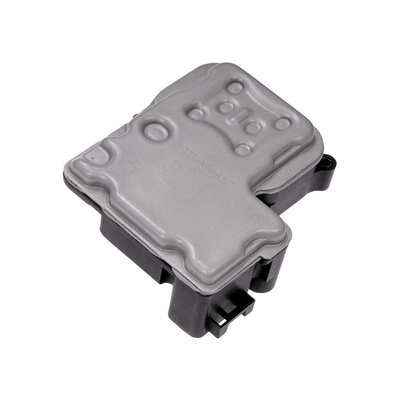
Below are the parts most often responsible for code U0124, ranked by how frequently each one is the actual culprit (per the diagnosis above). Tap any to see what we have for your vehicle.



The information in this article is provided for general reference and educational purposes only. Vehicle specifications, procedures, and part compatibility can vary by production date, trim level, and region. Always consult your vehicle's factory service manual and verify part numbers before purchasing or performing repairs. Safety-critical components such as airbags, seat belts, and braking systems should be installed by a qualified professional.
- 🧭 Diagnostic Flowchart
- 🎬 Helpful Videos
- 🛍️ Shop This Part
- What Does U0124 Mean?
- Can I Drive With U0124?
- Common Causes
- Symptoms
- Common Fixes & Costs
- Used vs. New Parts: Buying Guide
- What Happens If You Wait — Timeline
- Cost of Not Fixing It
- Diagnosis Steps
- When This Code Triggers (Freeze-Frame Conditions)
- Related Codes
- Climate & Environmental Factors
- How to Talk to a Mechanic About This Code
- Where to Take It: Dealer vs Independent vs Chain
- When to Walk Away From the Repair
- What Scan Tool You Need for This Code
- How to Clear the Code After You Fix It
- Will This Fail Emissions / State Inspection?
- Most Commonly Affected Vehicles
- Manufacturer-Specific Notes
- Real Owner Stories
- 2013 Chevy Silverado 1500 at 110K miles
- 2010 Lexus ES350 at 170K miles
- 2012 Toyota Prius at 95K miles
- 2017 Toyota Tacoma after 2" lift kit installation
- How to Prevent This Code From Triggering
- Frequently Asked Questions
- Can I fix a U0124 code myself?
- How much does it cost to fix U0124?
- What is a common misdiagnosis for U0124?
- Where is the lateral acceleration sensor located?
- Will clearing the code fix the problem?
- Is the lateral acceleration sensor the same as a yaw rate sensor?
- What is a zero-point calibration?
- Can a bad wheel alignment cause a U0124 code?
- Key Takeaways
- 🎟️ Get 5% Off