

U0126 on 2014-2015 Cadillac ELR: Lost Communication with Steering Angle Sensor Fixes
On a 2014-2015 Cadillac ELR, code U0126 often points to a network-wide problem, not just a bad sensor. Before replacing parts, inspect the Body Control Module (BCM) ground (G218) in the passenger footwell and chassis wiring, as specified in GM Technical Service Bulletins. This is a common cause for multiple communication codes appearing at once, an issue shared with its platform-mate, the Chevrolet Volt.
- U0126 on a 2014-2015 ELR disables the StabiliTrak safety system and requires prompt attention.
- Do not assume the Steering Angle Sensor is bad. The most likely cause, according to GM service bulletins, is a poor ground for the Body Control Module (BCM) or a fault in the chassis wiring harness.
- Diagnosis should begin with a full vehicle code scan and an inspection of the BCM ground point in the passenger-side cowl.
- Due to the involvement of safety systems and the need for specialized network diagnostics and potential module programming, professional service is strongly recommended.
What's Unique About the 2014-2015 Cadillac ELR
The Cadillac ELR, based on the complex first-generation Chevrolet Volt platform, has a sophisticated electrical architecture where modules are highly interdependent. For this vehicle, a U0126 code is frequently a symptom of a broader network communication failure rather than an isolated sensor fault. Authoritative GM Technical Service Bulletins (TSBs) for this platform strongly suggest that technicians first investigate shared grounding points and network wiring harnesses before condemning the Steering Angle Sensor itself. TSB #PIT5405B specifically points to a poor Body Control Module (BCM) ground at location G218 as a known cause for a cluster of communication codes, including U0126.
Diagnostic Flowchart
Tap your situation to follow the diagnostic path that matches what you're seeing on this vehicle.
Symptoms You May Notice
- "Service StabiliTrak" or "Traction Control Off" warning light on the dashboard.
- ABS warning light illuminated.
- Center stack display (radio/HVAC controls) may go blank or reset intermittently, as noted in TSB #PIT5405B.
- Steering may feel heavy or different, especially if variable-effort power steering is affected.
- A cluster of other warning lights may appear simultaneously.
- Engine may stall at low speeds or fail to start in severe cases of BCM ground failure.
- Immediately replacing the Steering Angle Sensor without first inspecting the BCM ground (G218) and testing the chassis CAN bus wiring, as strongly recommended by GM's service bulletins and extensive owner experiences.
Most Likely Causes
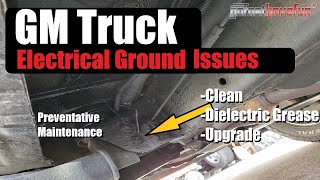
- Poor Body Control Module (BCM) Ground Connection 🔴 High Probability → Shop Body Control Module As documented in GM TSB #PIT5405B/C, a faulty BCM ground at location G218 is a known cause for a wide array of communication codes, including U0126. The issue is often caused by sound-deadening material getting trapped under the ground terminal from the factory, leading to a poor connection.
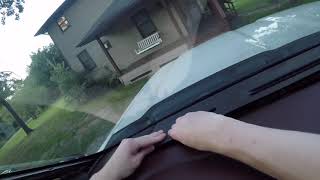
How to confirm: Inspect the BCM ground connection G218, located in the passenger-side footwell, behind the kick panel near the A-pillar. 🎬 Watch: How to locate and clean the G218 ground connection. Check for looseness, corrosion, or trapped insulation material under the 10mm nut.
Typical fix: Disconnect the 12V battery. Remove the 10mm nut, pull back the wire terminal, and clean the grounding stud and body surface to bare metal. Cut away any interfering insulation mat. Securely re-fasten the ground wire.
Est. part cost: $0-$5 - Wiring Harness Fault on Chassis Bus 🔴 High Probability TSB #PIT5076E explicitly directs technicians to diagnose the 'Chassis bus' when U0126 appears with other chassis-related codes, indicating this is a known failure point. Wires can chafe, break, or corrode over time, especially in harnesses that run through the firewall or under door sill plates.
How to confirm: Perform a CAN bus diagnostic check. Disconnect the 12V battery. Using a multimeter, measure the resistance between Pin 6 (CAN High) and Pin 14 (CAN Low) of the OBD-II port. A reading of approximately 60 ohms indicates good network integrity. Readings of 120 ohms suggest an open circuit or a missing terminating resistor, while 0 ohms indicates a short between the wires.
Typical fix: Locate and repair the damaged section of the wiring harness using solder and heat-shrink tubing.
Est. part cost: $10-$50 - Faulty Steering Angle Sensor (SAS) Module 🟡 Medium Probability → Shop Steering Angle Sensor The sensor is an electronic component located in the steering column that can fail internally. However, on the ELR and Volt, it should only be suspected after definitively ruling out the more common ground and wiring issues.
How to confirm: If all wiring, grounds, and network communications test good, and the SAS module is the only one unresponsive to a professional scan tool, the module itself is likely faulty.
Typical fix: Replace the Steering Angle Sensor, which is often integrated with the clock spring assembly. This requires careful removal of the steering wheel and airbag. 🎬 See this walkthrough for replacing the steering wheel position sensor. A calibration procedure must be performed afterward using a GM-specific scan tool.
Est. part cost: $150-$350 - Low 12V Battery Voltage ⚪ Low Probability → Shop Vehicle Battery The ELR's complex electronic systems are extremely sensitive to voltage. A weak or failing 12V auxiliary battery can cause sporadic and widespread communication errors between modules, including U0126, even if the main high-voltage battery is charged.
How to confirm: Test the 12V battery's voltage and perform a load test. A healthy, resting battery should read above 12.4 volts. Voltage should not drop significantly during cranking.
Typical fix: Recharge or replace the 12V auxiliary battery. Ensure new battery meets OEM specifications.
Est. part cost: $150-$250
Rare But Worth Checking
- Faulty Body Control Module (BCM): → Shop Body Control Module While the BCM's ground is a common issue, the module itself can fail internally. This is rare but possible if U0126 is accompanied by many other BCM-related codes and the G218 ground connection is confirmed to be perfect.
- Aftermarket OBD-II Device Interference: Low-quality or incompatible OBD-II devices (such as insurance trackers or Bluetooth dongles) left plugged in can interfere with CAN bus communication, causing random error codes like U0126. This was a confirmed fix for Stabilitrak issues on other GM vehicles.
Diagnosis Steps
- Check the state of charge and health of the 12V auxiliary battery. Ensure voltage is stable and above 12.4V at rest.
- Use a professional scan tool to read codes from ALL vehicle modules. Note every code present, as U0126 is often part of a larger group.
- If multiple codes listed in TSB #PIT5405B are present (e.g., U0073, U0140, U0121), immediately inspect the BCM ground connection (G218). It is located behind the passenger-side kick panel/cowl area. Disconnect the battery, remove the 10mm nut, then clean away any trapped insulation, sand the contact surfaces to bare metal, and tighten the ground securely.
- If other chassis codes from TSB #PIT5076E are present, perform a CAN bus network diagnostic. Disconnect the 12V battery and measure the resistance between Pin 6 and Pin 14 of the OBD-II port. A reading of approximately 60 ohms indicates good network integrity; readings of 120 ohms or 0 ohms suggest an open or shorted wire.
- Inspect the wiring harness and connectors leading to the Steering Angle Sensor, which is located in the steering column. Look for any signs of chafing, pinching, or corrosion.
- If all grounds, wiring, and network tests pass, and the SAS module is the only module not communicating, it is the most likely failed component.
- After replacing the Steering Angle Sensor, a calibration/learn procedure must be performed using a GM GDS2 scan tool or equivalent to restore function. 🎬 Watch: How to perform a steering angle sensor calibration.
Parts You'll Likely Need
- Steering Angle Sensor
(OEM #13589991)— This is the module that the code directly references. It is replaced only after ruling out more common wiring and ground faults. It is often integrated with the steering column module or clock spring.
Trusted brands: ACDelco, Dorman
OEM price range: $100-$200
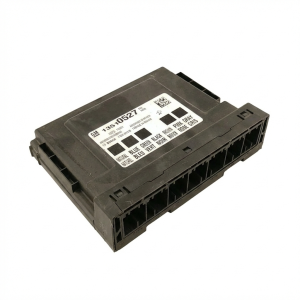
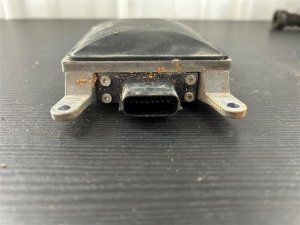
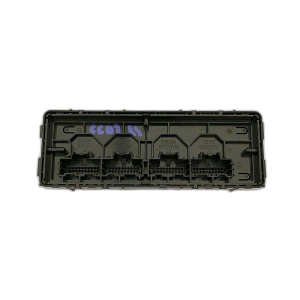
Aftermarket price range: $80-$150 - Body Control Module (BCM)
(OEM #13593775)— Rarely, the BCM itself fails, causing this and other communication codes. It requires programming by a dealer or specialist upon installation.
Trusted brands: ACDelco
OEM price range: $300-$500
Aftermarket price range: $200-$400
Related Codes That Often Appear With This One
- U0073 — Cited in TSB #PIT5405B. This code indicates a general Control Module Communication Bus 'A' Off fault, often triggered by the same BCM ground issue that causes U0126.
- U0140 — Cited in TSB #PIT5405B. This code means 'Lost Communication With Body Control Module,' pointing directly to the BCM or its ground as the root of the network failure.
- U0121 — Cited in TSB #PIT5405B. This is for 'Lost Communication With Anti-Lock Brake System (ABS) Control Module,' which relies on data from the SAS and shares the same network.
- C0544 — Cited in TSB #PIT5405B. This code is often related to steering assist control, which is directly impacted by the loss of data from the steering angle sensor.
Technical Service Bulletins (TSBs) & Recalls
- PIT5405B (August 2016): Reduced Power Steering Assist Engine Stall IPC / Radio / HVAC Goes Blank Various DTCs
- PIT5076E (May 2015): Diagnostic trouble code C710 symptom code 71 set in the electronic brake control module or the power steering control module
- NHTSA Campaign 14V137000 (GM Recall #14087, March 2015): Electronic Stability Control Software Calibration
Platform-Specific Known Issues
- A widely known issue documented in GM TSB #PIT5405B and its revisions points to a group of communication codes, including U0126, being caused by a poor ground for the Body Control Module at G218, often due to trapped insulation.
- GM TSB #PIT5076E advises that U0126, when set with other chassis codes, warrants a full diagnosis of the 'Chassis bus' wiring harness for faults before replacing components.
- A recall was issued for some 2014 ELR models (NHTSA Campaign 14V137000, GM recall #14087) for an electronic stability control software issue, which could also be a factor if not performed.
Mechanic-Grade Diagnostic Values
- CAN Bus Resistance at OBD-II Port — expected: 54 to 69 Ω (approximately 60 Ω). Failure: A reading of ~120 Ω indicates an open circuit or a missing terminating resistor. A reading of 0 Ω indicates a short between the CAN High and CAN Low wires.
- Steering Angle Sensor Branch Wire Resistance — expected: 54 to 69 Ω. Failure: A reading outside this range indicates an open or short in the harness between the main CAN bus and the SAS module.
Hidden / Shadow Codes Worth Checking
- U0126 71: Indicates 'Invalid Serial Data Received'. This is a highly specific fault meaning the control module is receiving data from the SAS, but the data is corrupt or nonsensical. It points strongly to a connection integrity issue (pin fitment, corrosion) or a wiring fault rather than a complete communication loss. (see via Requires a professional scan tool capable of reading GM-specific symptom bytes, such as a GM GDS2/Tech2 or equivalent.)
Scan Tool Commands That Help
- GM GDS2 (or equivalent professional scanner): Steering Angle Sensor Learn/Calibration — This procedure is mandatory after replacing the Steering Angle Sensor or the steering column. It zeroes the sensor's position relative to the straight-ahead position of the wheels. Failure to calibrate will result in a persistent U0126 or other stability control codes.
- GM GDS2: Module Diagnostics > Power Steering Control Module > Data Display — To view live data from the steering angle sensor. If the angle value changes smoothly as the wheel is turned, the sensor is likely communicating. If the value is frozen, erratic, or absent, it points to a sensor, wiring, or power/ground issue.
Wiring & Ground Locations
- G218 — Located on the right-hand (passenger side) A-pillar, behind the plastic kick panel/cowl trim in the footwell.. This is the primary ground for the Body Control Module (BCM). TSB #PIT5405C identifies a poor connection here (often due to trapped insulation from the factory) as a root cause for a cascade of communication codes, including U0126.
- X225 — A major inline electrical connector, likely located in the driver's side of the instrument panel or near the steering column.. Wiring diagrams show serial data lines for various modules, including those related to the steering column, passing through this connector. A poor pin fit or corrosion here could interrupt communication.
- 12V Auxiliary Battery — Located in the rear compartment (trunk area), behind the left rear closeout panel.. Unlike a conventional car, the 12V battery is not in the engine bay. All control modules rely on this battery for stable power. A weak or failing battery in this location can cause widespread, intermittent communication faults.
Real Owner Repair Stories
- YouTube user Cfarmer (2018 Chevrolet Silverado (similar GM electrical architecture)) — Intermittent 'Service Stabilitrak' light, cruise control kicking off.
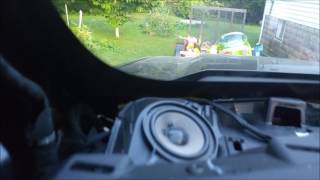
❌ Tried (didn't work) Multiple dealership visits that found no codes., Replacing two weak/bad batteries., Checking grounds behind the speakers.
✅ What actually fixed it The root cause was a Bluetooth OBD-II adapter (for the Torque app) that was left plugged in. The device was interfering with the CAN bus network, causing the Stabilitrak system to fault. Removing the device permanently resolved the issue.
OEM Part Supersession History
13579709, 13584209, 13589257, 20959922→13589991— Part consolidation and potential design updates over time.
Heads up: The replacement part 13589991 requires programming and calibration with a GM-specific scan tool (GDS2) after installation to function correctly.
Model Year Variations Within This Range
- 2016 (vs. 2014): The 2016 model year ELR (after a hiatus for 2015) received significant performance upgrades. Total system horsepower increased from 217 to 233, and torque jumped from 295 to 373 lb-ft. The programming was changed to allow the gas engine to engage more readily for better performance, especially in Sport mode. While not directly causing U0126, these software and powertrain logic changes mean that diagnostic approaches may differ slightly from the 2014 model.
Helpful Videos


We Have This Part in Stock

The information in this article is provided for general reference and educational purposes only. Vehicle specifications, procedures, and part compatibility can vary by production date, trim level, and region. Always consult your vehicle's factory service manual and verify part numbers before purchasing or performing repairs. Safety-critical components such as airbags, seat belts, and braking systems should be installed by a qualified professional.
- Cadillac ELR:
- 🧭 Diagnostic Flowchart
- 🎬 Helpful Videos
- 🛍️ Shop This Part
- What's Unique About the 2014-2015 Cadillac ELR
- Symptoms You May Notice
- Most Likely Causes
- Rare But Worth Checking
- Diagnosis Steps
- Parts You'll Likely Need
- Related Codes That Often Appear With This One
- Technical Service Bulletins (TSBs) & Recalls
- Platform-Specific Known Issues
- Mechanic-Grade Diagnostic Values
- Hidden / Shadow Codes Worth Checking
- Scan Tool Commands That Help
- Wiring & Ground Locations
- Real Owner Repair Stories
- OEM Part Supersession History
- Model Year Variations Within This Range
- 🎟️ Get 5% Off