

U0126 on 2015-2020 Cadillac Escalade: Lost Communication With Steering Angle Sensor Fixes
On a 2015-2020 Cadillac Escalade, code U0126 almost always points to a wiring harness problem, not a failed sensor. Check for pinched or damaged wires under the driver's side dash and along the door sill plates, as specified in GM Technical Service Bulletins, before replacing any parts.
- U0126 on a 2015-2020 Escalade is most likely a wiring issue, not a bad sensor.
- Before buying parts, inspect the wiring behind the left side of the dashboard and under the door sill plates, as per GM TSBs.
- Symptoms include 'Service Stabilitrak' warnings and heavy or unresponsive steering.
- This code disables important safety features; drive with caution until it is repaired.
- Due to the complexity of network diagnostics and safety system involvement, professional diagnosis is recommended if the problem isn't an obvious wiring fault.
What's Unique About the 2015-2020 Cadillac ESCALADE
For this generation of Cadillac Escalade and its K2XX platform mates (Tahoe, Suburban, Yukon), the U0126 code is frequently caused by specific, well-documented wiring harness issues. GM has issued multiple Technical Service Bulletins (TSBs) alerting technicians to check for pinched or damaged wiring in the left instrument panel area and under the driver and passenger sill plates. These bulletins often point to a fault in the 'Communication Enable circuit 5986' or poor grounds, making a wiring fault a much higher probability than a failed Steering Angle Sensor module itself, which is a common misdiagnosis.
Diagnostic Flowchart
Tap your situation to follow the diagnostic path that matches what you're seeing on this vehicle.
Symptoms You May Notice
- "Service Stabilitrak" or "Service Suspension System" message on the dash
- ABS and Traction Control warning lights are illuminated.
- Loss of, or reduced, power steering assist, making the wheel feel heavy.
- Steering may feel jerky or jittery.
- Rear wiper may be inoperative (as noted in TSB #PIT5288G)
- Instrument cluster lights flashing erratically, gauges sweeping.
- No-start or no-crank condition in severe cases.
- "Service Brake Assist" or "Service Parking Brake" messages.
- Replacing the Steering Angle Sensor module without first thoroughly inspecting the wiring harnesses as per GM TSBs. The problem will persist if the underlying cause is a wiring fault.
Most Likely Causes
- Pinched or Damaged Wiring Harness (Sill Plates & Dash) 🔴 High Probability As documented in GM TSBs #PIT5288G and #PIT5457D, the wiring harnesses are prone to being pinched or damaged. Specifically, the 'Communication Enable circuit 5986' can develop high resistance or an open where it runs under the driver and passenger door sill plates. Another common spot is the harness being pinched by the instrument panel structure on the left side of the dash.
How to confirm: Visually inspect the wiring harness in the areas mentioned in the TSBs. For PIT5457D, remove the sill plates and look for corrosion (especially from water intrusion) or physical damage to the harness. Pay close attention to splice J365 under the passenger front sill plate. For PIT5288G, inspect the harness behind the left side of the dash near the parking brake mechanism. A multimeter can be used to check for low or no voltage on circuit 5986 at an affected module (like the EBCM or PSCM).
Typical fix: Repair the damaged section of the wire harness. This involves carefully exposing the damaged wires, splicing in new sections if necessary, and protecting the repair with heat shrink and loom. Reroute the harness to prevent future damage. For corroded splices like J365, the splice must be cut out and replaced.
Est. part cost: $5-$25 - Low Battery Voltage or Poor Ground Connection 🟡 Medium Probability → Shop Vehicle Battery These vehicles are highly sensitive to voltage, and several specific ground points are known to fail. TSB 18-NA-161 and other reports point to loose battery fuse block connections, high resistance in the short battery jumper cables, a poor BCM ground at G218, or the dash insulator mat being trapped under the main dash ground stud.
How to confirm: Test the battery voltage; it should be above 12.4V engine-off. Load test the battery. Inspect and physically wiggle the main battery terminals, fuse block connections, and the main engine block ground. Specifically inspect ground G218 and the ground stud on the body behind the driver's side dash insulator.
Typical fix: Charge or replace the battery. Tighten all power and ground connections to their specified torque. If the dash insulator mat is interfering with the ground connection, it must be cut away.
Est. part cost: $0-$250 - Failed Steering Angle Sensor (SAS) Module ⚪ Low Probability → Shop Steering Angle Sensor
How to confirm: This should only be suspected after confirming the wiring, connectors, and power/ground to the module are all intact and functioning correctly. A professional scan tool can be used to attempt direct communication with the SAS module. If it doesn't respond despite having good power, ground, and CAN bus wiring, the module itself is likely faulty.
Typical fix: Replace the Steering Angle Sensor module. The new module will require calibration using a compatible professional scan tool.
Est. part cost: $150-$400
Diagnosis Steps
- Check Battery Health & Grounds: Ensure the battery voltage is stable and above 12.4 volts. Load test the battery. Inspect and tighten main battery terminals, fuse block connections, and the engine block ground.
- Scan for All Codes: Use a full-system OBD-II scanner to read codes from all modules. Note all 'U' (network) codes present, as a cluster of codes points towards a shared wiring or power/ground issue.
- Inspect Dash Wiring (TSB #PIT5288G): Carefully inspect the wire harness on the left side of the instrument panel. Look for any signs of it being pinched or chafed by dashboard components or the parking brake mechanism.
- Inspect Sill Plate Wiring (TSB #PIT5457D): Remove the driver and passenger door sill plates. Inspect the 'Communication Enable circuit 5986' for corrosion from water intrusion or physical damage. Pay special attention to splice J365 under the passenger side sill plate.
- Inspect Specific Ground Points: Inspect BCM ground G218 for tightness and corrosion. Pull back the carpet/insulator on the driver's side to inspect the main dash ground stud, ensuring the insulator mat is not trapped underneath the ground eyelet.
- Test the CAN Bus & Circuit 5986: If you have advanced tools, check for proper resistance (around 60 ohms) on the CAN bus wires at the OBD-II port. Use a voltmeter to test for ~12V on the Communication Enable circuit 5986 at one of the affected modules (e.g., EBCM connector). A low-amperage test light can also be used to check its integrity.
- Suspect the Module: If all wiring, power, and ground tests pass, the Steering Angle Sensor module itself may have failed. Attempt to communicate directly with it using a scan tool.
Parts You'll Likely Need
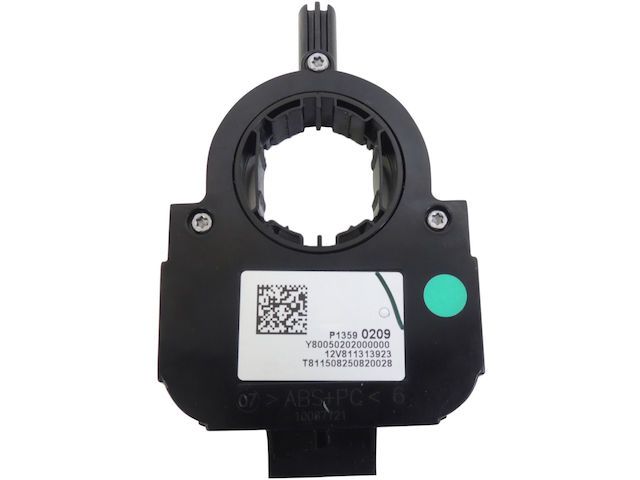
- Steering Angle Sensor
(OEM #13590209)— This is the part that needs to be replaced if it is confirmed to be faulty after all wiring issues have been ruled out. Note: This part may be integrated into the steering column assembly; always verify the exact part needed with the vehicle's VIN.
Trusted brands: ACDelco, Dorman
OEM price range: $250-$400
Aftermarket price range: $150-$280 - Wiring Repair Supplies — More often than not, the fix is repairing a damaged wire or corroded splice, which requires basic supplies like wire, butt connectors, heat shrink, and Tesa tape.
OEM price range: $10-$30
Aftermarket price range: $5-$20
Related Codes That Often Appear With This One
- U0077 — Indicates a general High Speed Communication Bus issue, often set alongside more specific codes like U0126 when a wiring problem exists. It is cited in both TSBs #PIT5288G and #PIT5457C.
- U0121 — Lost Communication with Electronic Brake Control Module (EBCM). This module relies on data from the SAS, and a shared wiring harness issue (like a fault on circuit 5986) can cause both codes to appear. It is cited in TSB #PIT5457C.
- U0415 — Invalid Data Received From Electronic Brake Control Module. This often appears when the EBCM sets its own codes due to missing data from other sensors. It is cited in both TSBs #PIT5288G and #PIT5457C.
- U0131 — Lost Communication With Power Steering Control Module (PSCM). The PSCM needs SAS data to function, and a shared wiring issue can trigger this code. It is cited in TSB #PIT5457C.
Technical Service Bulletins (TSBs) & Recalls
- PIT5288G: Addresses multiple communication DTCs, including U0126, caused by a pinched wire harness in the left instrument panel.
- PIT5457C / PIT5457D: Addresses loss of communication codes (U0126, U0121, U0131, etc.) caused by an open or high resistance on the Communication Enable Circuit (5986), often found under the sill plates or near the spare tire crossmember.
Platform-Specific Known Issues
- TSB #PIT5288G notes that a pinched wire harness in the left instrument panel area can cause U0126 along with a host of other communication codes, potentially leading to a dead battery or an inoperative rear wiper.
- TSB #PIT5457D points to issues with the 'Communication Enable circuit 5986' under the driver and passenger sill plates as a cause for loss of communication with multiple modules. This can be an open, short, or high resistance from corrosion, especially at splice J365 on the passenger side.
- TSB 18-NA-161 (and related bulletins) identify poor grounds as a major source of widespread electrical issues on this platform. Specific points of failure include the BCM ground G218 and the main dash ground stud being insulated by the carpet padding.
Mechanic-Grade Diagnostic Values
- High-Speed CAN Bus Resistance — expected: ~60 Ω (Ohms) when measured between Pins 6 and 14 of the OBD-II port with the battery disconnected.. Failure: A reading of ~120 Ω indicates an open in one of the termination circuits. A reading significantly lower than 60 Ω suggests a short between the CAN High and CAN Low wires.
- Communication Enable Circuit (5986) Voltage — expected: Approximately 12V (battery voltage) when the ignition is in ACC or ON positions.. Failure: Low or no voltage indicates an open or high resistance in the circuit, a common cause for this code. The circuit should be load-tested with a small bulb (e.g., a 194 bulb), as a simple multimeter reading can be misleading. Voltage should remain above 11V under this small load.
- CAN Bus Voltage (Key-On, Engine-Off) — expected: CAN High (Pin 6) should be ~2.6V. CAN Low (Pin 14) should be ~2.4V.. Failure: Voltages stuck near 0V or 5V, or no differential swing, indicate a hard fault on the bus.
Scan Tool Commands That Help
- GM GDS2 (or equivalent professional scanner): Steering Angle Sensor Learn / Calibration — This procedure is required after replacing the Steering Angle Sensor, the BCM, or the EBCM, or after performing a wheel alignment. It centers the sensor's value to the straight-ahead position.
- GM GDS2 (or equivalent professional scanner): Live Data - Steering Angle Sensor — During diagnosis, monitor the sensor's degree output while turning the steering wheel. The reading should be smooth and directly correspond to the wheel's movement. A frozen, jumping, or erratic value points to a fault in the sensor or its wiring.
Wiring & Ground Locations
- G218 — On the left A-pillar, behind the driver's side kick panel, near the Body Control Module (BCM).. This is a primary ground for the BCM, which controls the communication enable circuit (5986). A poor connection here, sometimes caused by the dash insulator mat getting trapped under the ground lug, can cause widespread communication issues.
- J365 — A wire splice located in the harness that runs under the passenger-side front door sill plate.. This splice is part of the communication enable circuit (5986) and is a known failure point due to water intrusion and corrosion, leading to high resistance and communication loss with multiple modules.
- EBCM Connector — The main electrical connector on the Electronic Brake Control Module (EBCM), located on the ABS pump assembly in the engine bay.. This is an accessible point to test the CAN bus wires (typically Tan and Tan/Black) and the Communication Enable circuit (typically a Dark Green wire) for proper voltage and resistance without having to access the SAS module directly.
- Spare Tire Crossmember Harness — On short wheelbase models (standard Escalade), the chassis harness can be pinched or shorted between the body and the spare tire crossmember.. TSB PIT5457D and PIT5556 identify this as a potential chafe point for circuit 5986, causing an open or short that leads to communication DTCs.
Real Owner Repair Stories
- GM-Trucks.com forum user (2015 Chevrolet Silverado (K2XX Platform)) — Service Stabilitrak message, multiple communication codes including U0126, U0077, U0121.
❌ Tried (didn't work) Checking wiring under sill plates (found no issues)., Inspecting grounds in the cab.
✅ What actually fixed it Found a corroded ground wire *inside* the main chassis harness that runs along the driver's side frame rail, near the transfer case. The corrosion was not visible from the outside. The fix involved cutting out the bad section of the ground wire and splicing in a new piece. - CadillacForums.com user (2016 Cadillac Escalade) — Intermittent Service Stabilitrak, ABS, and parking assist warnings with multiple U-codes.
❌ Tried (didn't work) Dealer replaced the Body Control Module (BCM), but the problem returned.
✅ What actually fixed it A single CAN bus wire was found to be chafed and broken under the driver's seat carpet where it was rubbing against a seat bracket. The location was not near the common TSB-identified areas (sill plates/dash). Repairing the single wire resolved all communication codes.
OEM Part Supersession History
13590209→13590209 is the current and widely used part number for this application.— N/A
Heads up: Crucially, on many GM vehicles, this sensor is sold as part of the larger steering column assembly or clock spring/turn signal switch assembly. Always confirm with a dealer using the VIN whether the sensor can be replaced independently or if a larger assembly is required for your specific vehicle configuration.
We Have This Part in Stock

The information in this article is provided for general reference and educational purposes only. Vehicle specifications, procedures, and part compatibility can vary by production date, trim level, and region. Always consult your vehicle's factory service manual and verify part numbers before purchasing or performing repairs. Safety-critical components such as airbags, seat belts, and braking systems should be installed by a qualified professional.
- Cadillac ESCALADE:
- 🧭 Diagnostic Flowchart
- 🛍️ Shop This Part
- What's Unique About the 2015-2020 Cadillac ESCALADE
- Symptoms You May Notice
- Most Likely Causes
- Diagnosis Steps
- Parts You'll Likely Need
- Related Codes That Often Appear With This One
- Technical Service Bulletins (TSBs) & Recalls
- Platform-Specific Known Issues
- Mechanic-Grade Diagnostic Values
- Scan Tool Commands That Help
- Wiring & Ground Locations
- Real Owner Repair Stories
- OEM Part Supersession History
- 🎟️ Get 5% Off