

U0126 on 2015-2020 Cadillac Escalade ESV: Steering Sensor Communication Loss Causes and Fixes
On a 2015-2020 Escalade, code U0126 almost always points to a damaged or pinched wiring harness, not a failed sensor. Multiple GM Technical Service Bulletins (TSBs) direct technicians to inspect harnesses in the driver's side dash and under the door sill plates. Specifically, the 'Communication Enable' circuit (Circuit 5986) is often the culprit. The fix is typically a wire repair, which is inexpensive for parts but can take 1-3 hours of labor.
- U0126 on a 2015-2020 Escalade is most often a wiring problem, not a bad part.
- Always inspect the wiring harnesses in the driver's side dash and under the door sills before replacing any components.
- This code disables the StabiliTrak system, a key safety feature. Do not ignore it.
- If the Steering Angle Sensor is replaced, it must be calibrated with a professional scan tool for the system to work correctly.
- Check for other communication codes (U-codes). A large number of them points towards a more significant network or wiring issue.
What's Unique About the 2015-2020 Cadillac ESCALADE ESV
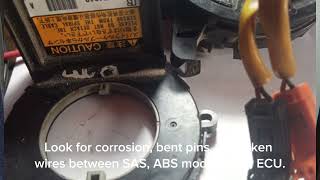
For this specific generation of Escalade and its GM K2XX platform mates (Tahoe, Yukon, Suburban), the U0126 code is very frequently a symptom of a known wiring problem rather than a failed sensor. General Motors 🎬 Watch: Diagnosing U0126 lost communication with the steering angle sensor. has issued multiple Technical Service Bulletins (TSBs) that identify specific areas where the vehicle's wiring harness can get pinched or chafed. The most common locations are behind the left instrument panel near the dash mounting bracket and under the driver/passenger door sill plates where the Communication Enable circuit (5986) gets damaged. This makes a thorough harness inspection the most critical first step in diagnosis, potentially saving hundreds of dollars by avoiding unnecessary module replacement.
Diagnostic Flowchart
Tap your situation to follow the diagnostic path that matches what you're seeing on this vehicle.
Symptoms You May Notice
- "Service StabiliTrak" or "Service Suspension System" message on the driver information center. [Bulletin #PIT5457D]
- Traction control and stability control warning lights illuminated.
- Loss or reduction of power steering assist, making the wheel feel heavy.
- Rear wiper may be inoperative. [Bulletin #PIT5288H]
- Potential for a dead battery due to modules not shutting down correctly. [Bulletin #PIT5288H]
- Remote Keyless Entry (RKE), Passive Entry, or push-to-start features may be inoperative. [Bulletin #PIT5288H]
- Radio, touch screen, or audio may be inoperative.
- Replacing the Steering Angle Sensor module without first performing a thorough inspection of the wiring harnesses at the locations specified in TSBs #PIT5288H and #PIT5457D.
Most Likely Causes
- Pinched or Chafed Wiring Harness 🔴 High Probability Multiple TSBs (#PIT5288H, #PIT5457D) confirm that harnesses on this platform are susceptible to damage. TSB PIT5288H points to the dash harness being pinched by the left I/P dash mounting bracket, visible after removing the fuse block cover. TSB PIT5457D identifies damage to the Communication Enable circuit (5986) in the harness that runs under the driver and passenger door sill plates.
How to confirm: Visually and physically inspect the wiring harness in two key areas. First, remove the driver's side dash end panel and inspect the harness near the I/P mounting bracket for pinching. Second, remove the driver and passenger door sill plates and inspect the harness channel for chafed, broken, or corroded wires, specifically looking for damage to the Communication Enable circuit (often a tan wire).
Typical fix: Repair the damaged section of the wire harness. This involves cutting out the damaged portion, splicing in a new piece of automotive-grade wire using crimp-and-seal connectors, and protecting the repair with heat shrink tubing and Tesa tape. Reroute the harness to prevent future pinching.
Est. part cost: $5-$25 - Failed Steering Angle Sensor (SAS) Module 🟡 Medium Probability → Shop Steering Angle Sensor
How to confirm: If a thorough wiring inspection reveals no damage and all power/ground connections to the module are good, the module itself is the likely culprit. A professional scan tool can attempt to communicate directly with the module; a failure to respond points to an internal fault.
Typical fix: Replace the Steering Angle Sensor. After replacement, the new sensor must be calibrated using a compatible scan tool.
Est. part cost: $150-$400 - Power Steering Control Module (PSCM) Software Error ⚪ Low Probability A known calibration error can cause the PSCM to retain communication DTCs as 'current' even after the root cause is fixed, causing persistent warning messages. [Bulletin #17-NA-345, Bulletin #PIT5593B]
How to confirm: If the code persists after wiring repairs, check with a dealer if the PSCM has the latest software calibration. This is diagnosed using GM's service software.
Typical fix: Reprogram the Power Steering Control Module with the latest calibration available from GM.
Est. part cost: $0 (if done under warranty) or cost of labor
Rare But Worth Checking
- Low Battery Voltage or Poor Ground Connection: → Shop Vehicle Battery Control modules can stop communicating properly if system voltage drops too low. Before complex diagnostics, ensure the battery and charging system are healthy. A dead battery is a common trigger for this code.
- Failed Body Control Module (BCM): → Shop Body Control Module The BCM acts as a central gateway and powers the Communication Enable circuit (5986) that wakes up the SAS module. TSB #PIT5405C suggests checking the BCM when a large number of communication codes, including U0126, are present.
Diagnosis Steps
- Check battery voltage and charging system health. Ensure voltage is stable and above 12.4V with the engine off.
- Scan all vehicle modules for DTCs with a professional-grade scan tool. Note all present codes, paying special attention to other 'U' codes.
- Carefully inspect the wire harness at the left side of the instrument panel, behind the dash end cap/fuse panel cover. Loosen the I/P mounting bracket bolts to check if the harness is pinched between the bracket and the body, as described in TSB #PIT5288H.
- Remove the driver and passenger front door sill plates and inspect the wire harness that runs along the floor for any signs of chafing, corrosion, or damage, as per TSB #PIT5457D. Pay close attention to the Communication Enable circuit (Circuit 5986).
- If damage is found, repair the affected wires securely using butt connectors and heat shrink.
- If no wiring damage is visible, use a multimeter to check for proper power, ground, and CAN bus network resistance (typically ~60 ohms between pins 6 and 14 of the OBD-II port) at the Steering Angle Sensor connector.
- If wiring, power, and ground are confirmed to be good, the Steering Angle Sensor module is the most likely cause of failure.
- After any repair, clear all DTCs and perform the Steering Angle Sensor calibration procedure using a scan tool.
Parts You'll Likely Need
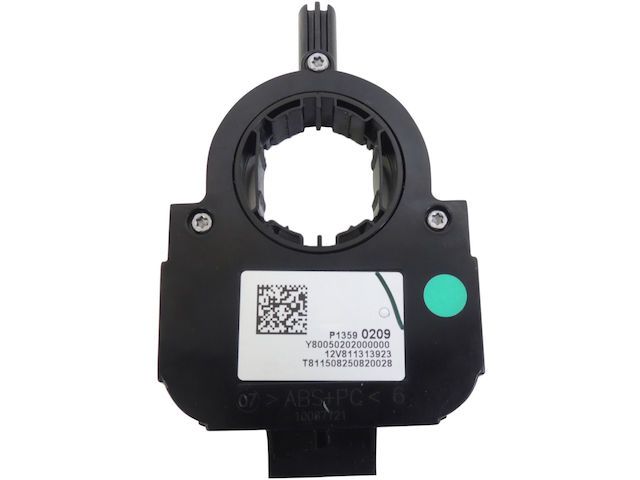
- Steering Angle Sensor
(OEM #ACDelco 23480102 (Verify by VIN))— If wiring and connections are confirmed to be good, the sensor module itself may have failed internally.
Trusted brands: ACDelco GM Genuine Parts
OEM price range: $250-$400
Aftermarket price range: $150-$280 - Wiring Repair Supplies — This is the most common fix. Supplies include automotive-grade wire, butt connectors (crimp-and-seal style recommended by GM), heat shrink tubing, and Tesa tape to properly repair a chafed or broken wire in the harness.
Trusted brands: 3M
OEM price range: $10-$30
Aftermarket price range: $5-$20
Related Codes That Often Appear With This One
- U0077 — Indicates a general High Speed Communication Bus issue, often set alongside specific module codes like U0126 when a harness is damaged. [Bulletin #PIT5288H, Bulletin #PIT5457D]
- U0121 — Lost Communication with Electronic Brake Control Module (EBCM). This often appears with U0126 as they are both on the same high-speed network and critical for stability control. [Bulletin #PIT5457D]
- U0415 — Invalid Data Received From Electronic Brake Control Module (EBCM). This is another code pointing to a communication breakdown on the chassis network. [Bulletin #PIT5288H, Bulletin #PIT5457D]
- C0710 — Steering Wheel Position Sensor Signal. This code is more specific to the sensor's signal plausibility and often accompanies the U0126 communication loss code. [Bulletin #PIT5288H]
Technical Service Bulletins (TSBs) & Recalls
- PIT5288H: Addresses multiple communication DTCs, including U0126, caused by a pinched wire harness in the left instrument panel.
- PIT5457D: Points to a damaged wire harness (specifically Communication Enable Circuit 5986) under the sill plates as a cause for U0126 and other communication loss codes.
- PIT5405C: Mentions U0126 in a long list of codes that may be resolved by inspecting the
Platform-Specific Known Issues
- Pinched Dash Harness: A pinched wire harness in the left instrument panel area, between the I/P mounting bracket and the body, is a known issue that can cause U0126 along with other codes and symptoms like a dead battery or inoperative rear wiper. [Bulletin #PIT5288H]
- Chafed Sill Plate Harness: The wire harness running under the driver and passenger sill plates is prone to damage, specifically affecting the Communication Enable circuit (5986). This leads to loss of communication with various chassis modules, including the SAS, triggering U0126. [1, Bulletin #PIT5457D]
- PSCM Software Glitch: A software glitch in the Power Steering Control Module (PSCM) can cause communication DTCs to remain active even after a fix, requiring a module reprogram with the latest GM calibration. [Bulletin #17-NA-345]
Mechanic-Grade Diagnostic Values
- High-Speed CAN Bus Resistance — expected: 60 Ω (± 5 Ω). Failure: A reading of ~120 Ω indicates an open circuit or a missing termination resistor. A reading significantly less than 60 Ω suggests a short between the CAN lines.
- Communication Enable Circuit (5986) Voltage — expected: Approx. 12V (Battery Voltage). Failure: Low or no voltage when the ignition is in ACC or ON indicates an open or high resistance in the circuit, often under the sill plates.
- High-Speed CAN Bus Voltage (Key On, Engine Off) — expected: CAN High (Pin 6): ~2.6V to 3.5V; CAN Low (Pin 14): ~2.4V to 1.5V. Failure: Voltages stuck high, low, or near-zero indicate a short to power, short to ground, or an open circuit on that specific line.
- SAS Module Ground Resistance — expected: < 0.1 Ω. Failure: Higher resistance indicates a poor ground connection, which can cause the module to drop off the network intermittently.
Scan Tool Commands That Help
- GM GDS2 (or equivalent professional scanner): Steering Angle Sensor Learn/Calibration — This procedure is required after replacing the Steering Angle Sensor, Power Steering Control Module, or performing a wheel alignment to zero the sensor's position.
- GM GDS2: Module Communication Test / Network Diagnostics — Used to actively poll the SAS module. If the scan tool cannot establish communication with the SAS module but can communicate with other modules on the same network, it helps isolate the fault to the SAS module itself or its direct wiring/power/ground.
Wiring & Ground Locations
- Splice J365 — Located in the wire harness trough under the passenger front sill plate.. This is a known high-risk area where the Communication Enable Circuit (5986) can develop high resistance or an open, causing loss of communication with multiple modules, including the SAS.
- BCM Ground — Inside the cabin, beside the front left speaker. Requires removal of the A-pillar trim and lifting the front dash trim to access.. The Body Control Module (BCM) provides the wake-up signal on Circuit 5986. A poor ground for the BCM can cause erratic behavior, including failure to activate the communication circuit for the SAS module.
- Chassis Frame Grounds — On the frame, located right behind both front wheels.. These grounds are in a terrible location prone to corrosion from tire splash. Poor chassis grounds can create floating voltages and intermittent communication issues across various modules.
- G103 — On the cowl at the left rear of the engine compartment, above the brake booster.. This is a major ground point for the BCM, Instrument Panel Cluster (IPC), and the Data Link Connector (DLC), all of which are critical for network communication diagnostics.
Real Owner Repair Stories
- YouTube user 'Hunter Wilson' (2014-2018 GMC Sierra (K2XX Platform mate)) — Flickering dash lights, StabiliTrak warning, radio shutting off, multiple warning messages.
❌ Tried (didn't work) Initial diagnosis was inconclusive.
✅ What actually fixed it The final fix was repairing a broken ground wire. The main ground cable from the battery negative terminal splits, with one large cable going to the engine block and a smaller wire going to a ground point on the body/fender. The smaller wire had corroded and broken completely at the terminal lug, causing widespread electrical issues. The repair involved cutting back the wire to clean copper, crimping on a new terminal lug, and re-securing it to the body. - YouTube user 'Fixing Stabilitrak Error' (2013 Chevrolet Express Van) — Service StabiliTrak message, engine stalling, security light.
❌ Tried (didn't work) Focusing on the StabiliTrak system itself.
✅ What actually fixed it The root cause was an unrelated wire for a booster fuel pump that had chafed against a metal bracket and was intermittently shorting to ground. This electrical short was enough to disrupt the vehicle's network and trigger the StabiliTrak error and cause stalling, even though the wire was not part of the engine or stability control systems. The fix was to repair and insulate the damaged wire.
Helpful Videos


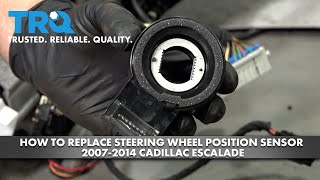
We Have This Part in Stock

The information in this article is provided for general reference and educational purposes only. Vehicle specifications, procedures, and part compatibility can vary by production date, trim level, and region. Always consult your vehicle's factory service manual and verify part numbers before purchasing or performing repairs. Safety-critical components such as airbags, seat belts, and braking systems should be installed by a qualified professional.
- Cadillac ESCALADE ESV:
- 🧭 Diagnostic Flowchart
- 🎬 Helpful Videos
- 🛍️ Shop This Part
- What's Unique About the 2015-2020 Cadillac ESCALADE ESV
- Symptoms You May Notice
- Most Likely Causes
- Rare But Worth Checking
- Diagnosis Steps
- Parts You'll Likely Need
- Related Codes That Often Appear With This One
- Technical Service Bulletins (TSBs) & Recalls
- Platform-Specific Known Issues
- Mechanic-Grade Diagnostic Values
- Scan Tool Commands That Help
- Wiring & Ground Locations
- Real Owner Repair Stories
- 🎟️ Get 5% Off