

U0126 on 2013-2015 Chevrolet Malibu: Lost Communication with Steering Angle Sensor Fixes
On a 2013-2015 Malibu, code U0126 means the Steering Angle Sensor has stopped communicating, disabling StabiliTrak and ABS. The most likely causes are wiring issues on the chassis CAN bus or a weak battery/faulty negative battery cable, not necessarily a failed sensor. Diagnosis should start with checking the battery, grounds, and network wiring before replacing parts.
- U0126 disables key safety systems like StabiliTrak and ABS, so it should be addressed promptly.
- Do not immediately replace the Steering Angle Sensor. The most common causes on a 2013-2015 Malibu are wiring faults on the chassis CAN bus or a weak battery/bad ground.
- Diagnosis requires a professional scan tool and a multimeter to test the CAN network's integrity.
- If the Steering Angle Sensor does need replacement, it must be calibrated by a professional to restore function.
What's Unique About the 2013-2015 Chevrolet MALIBU
For the 8th generation Malibu and related GM Epsilon II platforms, a U0126 code is frequently a network or electrical problem rather than a failure of the sensor itself. GM's own Technical Service Bulletin #PIT5076E points technicians toward diagnosing the 'Chassis bus' when this and other communication codes appear together. This suggests that wiring harnesses, connectors, and ground points are common failure areas on this vehicle. A particularly known issue on related platforms like the Chevy Cruze is a faulty negative battery cable with a poor internal crimp, which can cause widespread communication faults. Owners can waste money by replacing the sensor when the true fault lies in the communication pathway or power supply.
Diagnostic Flowchart
Tap your situation to follow the diagnostic path that matches what you're seeing on this vehicle.
Symptoms You May Notice
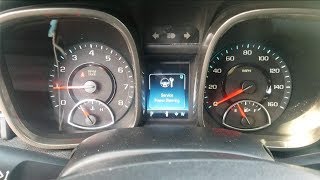
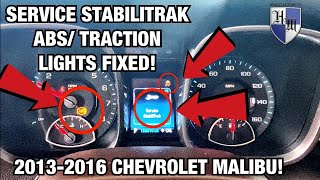
- "Service StabiliTrak" message on the driver information center.
- "Service Power Steering" message may appear.
- Illuminated ABS warning light.
- Illuminated Traction Control System (TCS) warning light (car with squiggly lines).
- Steering may feel heavy or have reduced power assist, especially at low speeds.
- Stability and traction control systems are disabled.
- In some cases on related platforms, the car may enter a 'limp mode' with reduced engine power.
- Replacing the Steering Angle Sensor without first testing the battery, grounds, and CAN bus wiring. The problem is often in the communication pathway, not the sensor itself.
- Replacing the clock spring. While located near the SAS, the clock spring typically causes airbag lights or failures of steering wheel buttons, which may not be present with a U0126 code.
Most Likely Causes
- Chassis CAN Bus Wiring Fault 🔴 High Probability As noted in GM TSB #PIT5076E, network wiring issues are a primary diagnostic path for a group of communication codes including U0126. Wires in or around the steering column can chafe from rotation, or connectors can become loose or corroded over time. A recall for some 2013 models involved a power seat wiring harness chafing on the seat frame, demonstrating a precedent for wiring vulnerability on this platform.
How to confirm: A technician will perform a CAN bus diagnostic test. With the battery disconnected, the resistance between pins 6 (CAN High) and 14 (CAN Low) of the OBD-II port should be approximately 60 ohms. A reading of 120 ohms indicates an open circuit (like a broken wire or unplugged module), while a reading significantly less than 60 ohms suggests a short circuit. A visual inspection of harnesses in the steering column and near the EBCM is also necessary.
Typical fix: Locate and repair the damaged section of the wiring harness. Clean, tighten, or replace faulty connectors. Applying dielectric grease to connectors can help prevent future corrosion.
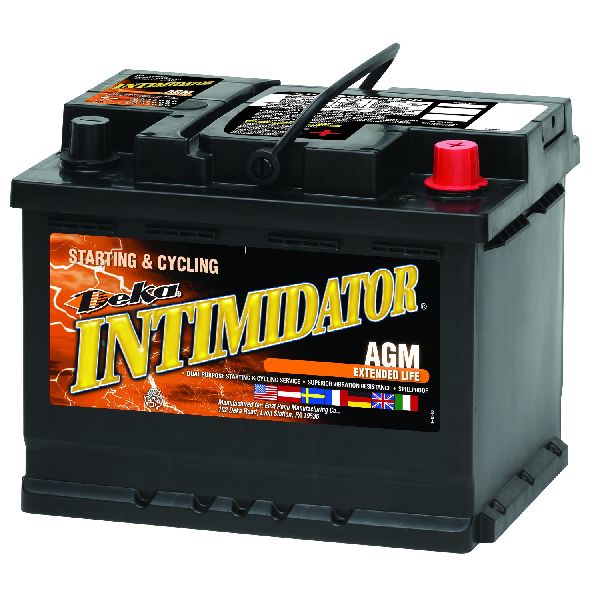
Est. part cost: $10-$100 - Low Battery Voltage or Poor Grounds 🟡 Medium Probability → Shop Vehicle Battery Modern vehicles are highly sensitive to voltage. A weak battery or a poor ground connection can cause communication modules to drop offline intermittently. A known issue on the related Chevy Cruze is a faulty negative battery cable where the terminal crimp fails internally, causing high resistance and a host of electrical problems, including communication codes like U0126.
How to confirm: Test the battery with a dedicated load tester; voltage should be above 12.4V 🎬 Watch: How to test your battery and fix Stabilitrak messages. with the car off. Check the main battery ground cable and chassis ground points for corrosion or looseness. A visual inspection of the negative battery cable's terminal crimp may reveal the fault.
Typical fix: Recharge or replace the battery. Clean and tighten all main ground connections. On many GM models of this era, replacing the negative battery cable 🎬 See this walkthrough on replacing a faulty negative battery cable. is a common and effective fix for widespread communication issues.
Est. part cost: $25-$250 - Faulty Steering Angle Sensor (SAS) Module ⚪ Low Probability → Shop Steering Angle Sensor While it is the module named in the code, the sensor itself is less likely to fail than the wiring or power supply to it. It should only be suspected after all other possibilities are exhausted. Over time, grease from the steering shaft can leak down and contaminate the sensor, causing failure.
How to confirm: If wiring, grounds, and power supply to the module are all confirmed to be good (verifying 12V power and a solid ground at the sensor's connector), and a professional scan tool still cannot communicate with the SAS module, the module itself is likely faulty.
Typical fix: Replace the Steering Angle Sensor. This requires removing the steering wheel 🎬 Watch: How to access and replace the steering angle sensor. and airbag. The new sensor must be calibrated using a compatible scan tool after installation.
Est. part cost: $80-$250
Rare But Worth Checking
- Faulty Electronic Brake Control Module (EBCM): → Shop ABS Control Module The EBCM is a primary controller on the chassis CAN bus. An internal failure in the EBCM can disrupt the entire network, causing other modules like the SAS to lose communication. This is usually accompanied by other communication codes, like U0121 (Lost Communication with EBCM). Water intrusion into the EBCM connector is a possible cause of failure.
Diagnosis Steps
- Check the battery and charging system. Ensure voltage is stable and above 12.4V with the engine off and 13.7-14.7V when running. A weak battery is a common cause.
- Scan all vehicle modules for other DTCs. Note all communication (U-prefix) codes. A group of U-codes strongly suggests a network-wide problem.
- Using a professional scan tool, attempt to read live data from the Steering Angle Sensor. If there is no data or the data is frozen, a communication problem is confirmed.
- Disconnect the battery. Measure the resistance between Pin 6 (CAN High) and Pin 14 (CAN Low) on the OBD-II diagnostic port. A healthy reading is ~60 Ohms. A reading of ~120 Ohms points to an open circuit. A reading significantly less than 60 Ohms indicates a short circuit.
- Visually inspect wiring harnesses, especially in the steering column and near the EBCM, for any signs of chafing, corrosion, or damage.
- Inspect the negative battery cable, paying close attention to the terminal crimp. Consider replacing it as a preventative measure if other electrical issues are present, as this is a known GM failure point.
- If wiring and network resistance test good, check for power and ground at the Steering Angle Sensor connector using a multimeter and a wiring diagram.
- If all wiring, power, and grounds are confirmed good, the Steering Angle Sensor module is the most likely culprit.
Parts You'll Likely Need
- Steering Angle Sensor
(OEM #13589991 (supersedes 13579709, 13589257, and others))— This is the part to replace if all wiring, network, and power supply tests pass, indicating an internal failure of the sensor module. Note that this part requires calibration with a scan tool after installation.
Trusted brands: ACDelco (GM Genuine), Dorman
OEM price range: $110-$200
Aftermarket price range: $80-$150 - Negative Battery Cable
(OEM #23298211 (for 2.5L engine))— On related GM platforms, a faulty negative battery cable with a poor internal crimp is a known cause of widespread electrical and communication issues. It's an inexpensive and common starting point before more complex diagnostics.
Trusted brands: ACDelco (GM Genuine), Standard Motor Products, Duralast
OEM price range: $50-$70
Aftermarket price range: $25-$50
Related Codes That Often Appear With This One
- U0074 — Mentioned in TSB #PIT5076E as another code indicating a Chassis CAN bus fault.
- U0125 — Lost Communication With Multi-axis Acceleration Sensor Module. This sensor is also on the chassis bus and is critical for StabiliTrak, so a network fault often affects both.
- C0045 / C0050 — These are codes for wheel speed sensor circuits. While sometimes a separate issue, a major electrical fault or a problem with the magnetic ring on a wheel bearing can trigger these alongside network codes.
- U0121 — Lost Communication with Anti-Lock Brake System (ABS) Control Module. This often appears with U0126 because the ABS/EBCM is the primary module that needs the steering angle data.
Technical Service Bulletins (TSBs) & Recalls
- PIT5076E: Advises diagnosing the 'Chassis bus' when U0126 is found with other communication codes like U0074 and U0125, pointing towards a network wiring issue rather than a specific component failure.
Platform-Specific Known Issues
- Faulty Negative Battery Cable on Chevy Cruze: → Shop Vehicle Battery A user on chevycruzetalk.com with a 2012 Cruze experienced a Christmas tree of warning lights, including 'Service Stabilitrak' and 'Service Power Steering', along with numerous communication codes. After replacing the alternator and battery with no success, the fix was replacing the negative battery cable. The original cable had high resistance due to a bad factory crimp, a well-documented issue that also affects the Malibu. This should be a primary suspect for any widespread electrical issues.
Mechanic-Grade Diagnostic Values
- High-Speed CAN Bus Voltage (Key On, Engine Off) — expected: CAN High (Pin 6 at DLC): ~2.6V. CAN Low (Pin 14 at DLC): ~2.4V.. Failure: A stuck line or significant deviation from these bias voltages indicates a physical layer fault (short or open).
- High-Speed CAN Bus Termination Resistance — expected: 60 Ω ± 5 Ω across Pin 6 and Pin 14 of the Data Link Connector (DLC) with battery disconnected.. Failure: A reading of ~120 Ω indicates an open circuit or a missing terminator (e.g., unplugged module). A reading significantly below 60 Ω suggests a short between the CAN lines.
Hidden / Shadow Codes Worth Checking
- U0126 with Symptom Byte 71: Indicates "Invalid Serial Data Received". This means the EBCM is receiving data from the SAS, but the data is corrupt or nonsensical. It strongly points to a connection integrity issue (corrosion, pin fitment) or wiring fault rather than a completely dead sensor. (see via Requires a professional scan tool capable of reading GM-specific codes and data, such as a GM GDS2/Tech2 or equivalent high-end scanner.)
Scan Tool Commands That Help
- GM GDS2 (or equivalent): Steering Wheel Angle Sensor Learn/Calibration — This procedure must be performed after replacing the Steering Angle Sensor or the Electronic Brake Control Module (EBCM). It zeroes the sensor's position when the wheels are straight ahead. Failure to calibrate will cause the U0126 code to return immediately.
- GM GDS2 (or equivalent): PSCM (Power Steering Control Module) Programming — In rare cases, a software glitch or calibration error within the PSCM can prevent communication DTCs like U0126 from clearing. Reprogramming the module with the latest software via TIS2Web can resolve these persistent software-based faults.
Wiring & Ground Locations
- G101 — Left front of the engine compartment.. This ground serves the Electronic Brake Control Module (EBCM), a critical node on the chassis CAN bus that communicates with the Steering Angle Sensor. A poor connection here can cause the EBCM to set communication codes.
- G305 — Located in the left kick panel area, inside the passenger compartment.. This is a primary interior ground point that serves the Data Link Connector (DLC) and Body Control Module (BCM). A fault at G305 can disrupt network communications and scan tool connectivity.
- EBCM Connector (X1) — On the Electronic Brake Control Module, located in the engine compartment, typically attached to the ABS hydraulic unit.. The Chassis CAN bus wires for the Steering Angle Sensor terminate here. Specifically, on some GM platforms, Pins 5 and 6 are the Chassis Expansion Bus from the SAS. The High-Speed GMLAN wires are on pins 26 and 27. Checking for corrosion, pin tension, and correct voltages at this connector is a key diagnostic step.
- G218 (on related platforms) — On related GM trucks, located under the top dash panel, behind the speaker.. This is a known problematic ground on other GM vehicles of the same era. Sound-deadening material was often trapped under the ground lug from the factory, causing intermittent and widespread communication faults, including StabiliTrak messages. While not confirmed specifically for the Malibu, it's a valuable pattern to be aware of for hard-to-diagnose electrical issues.
Real Owner Repair Stories
- Reddit user in r/Chevy (2015 Chevrolet Malibu) — Service Stabilitrak and Service Power Steering warnings, heavy steering.
❌ Tried (didn't work) A repair shop diagnosed and replaced the steering control module at a cost of ~$2000.
✅ What actually fixed it The problem returned three days after the expensive repair. The user was advised by others that the actual fault was likely a wiring or ground issue that was missed, not the module itself, highlighting a common misdiagnosis. The final fix was not posted, but the story serves as a strong cautionary tale against replacing the module without exhaustive wiring checks.
Model Year Variations Within This Range
- 2014: The 2014 model year received a significant refresh, including a new front-end design, more rear legroom, and a revised 2.5L base engine. While the core electrical architecture (GM Epsilon II) remained, suspension and steering systems were retuned. These changes could lead to slight differences in harness routing or component access compared to the 2013 model.
- 2013: A recall was issued for 14,909 model-year 2013 Malibus with 8-way power adjustable front seats. The wiring harness could chafe against the seat frame, potentially causing shorts, flickering lights, and communication issues. While not directly linked to U0126 in the recall notice, it establishes a known pattern of harness chafing issues for this model year.
Helpful Videos
We Have This Part in Stock



The information in this article is provided for general reference and educational purposes only. Vehicle specifications, procedures, and part compatibility can vary by production date, trim level, and region. Always consult your vehicle's factory service manual and verify part numbers before purchasing or performing repairs. Safety-critical components such as airbags, seat belts, and braking systems should be installed by a qualified professional.
- Chevrolet MALIBU:
- 🧭 Diagnostic Flowchart
- 🎬 Helpful Videos
- 🛍️ Shop This Part
- What's Unique About the 2013-2015 Chevrolet MALIBU
- Symptoms You May Notice
- Most Likely Causes
- Rare But Worth Checking
- Diagnosis Steps
- Parts You'll Likely Need
- Related Codes That Often Appear With This One
- Technical Service Bulletins (TSBs) & Recalls
- Platform-Specific Known Issues
- Mechanic-Grade Diagnostic Values
- Hidden / Shadow Codes Worth Checking
- Scan Tool Commands That Help
- Wiring & Ground Locations
- Real Owner Repair Stories
- Model Year Variations Within This Range
- 🎟️ Get 5% Off