

U0126 on 2015-2020 Chevrolet Tahoe: Lost Communication with Steering Angle Sensor Fixes
On a 2015-2020 Tahoe, code U0126 almost always points to a wiring issue, not a failed sensor. Check for pinched or damaged wire harnesses under the driver's side dash (specifically at the I/P mounting bracket) and along the driver/passenger sill plates, as specified in GM Technical Service Bulletins. Repairing the wiring is often all that's needed.
- U0126 means the Steering Angle Sensor has stopped communicating with other modules.
- On the 2015-2020 Tahoe, the most likely cause is a pinched or damaged wire harness, not a bad sensor.
- Before replacing any parts, thoroughly inspect the wiring under the driver's side dash and along the floor sill plates, as per GM TSBs.
- Driving with this code is possible but risky, as your StabiliTrak and ABS safety systems are disabled.
- Due to the complexity of network diagnostics and the safety-critical nature of the systems involved, professional diagnosis is strongly recommended.
What's Unique About the 2015-2020 Chevrolet TAHOE
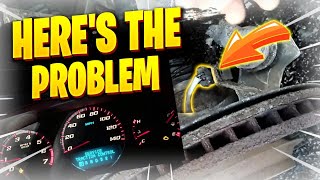
For this generation of Chevrolet Tahoe (K2XX platform), the U0126 code is frequently caused by specific, well-documented wiring harness problems rather than a failure of the sensor itself. General Motors has issued multiple Technical Service Bulletins (TSBs) pointing technicians to check for pinched or damaged wires. Key locations include the harness being pinched by the left instrument panel (I/P) mounting bracket and damage to the 'Communication Enable circuit 5986' under the driver and passenger sill plates. [Bulletin #PIT5288H, Bulletin #PIT5457D] 🎬 Watch: This video shows how to find the pinched harness. This pattern failure means a visual inspection of these key areas should be the first diagnostic step.
Diagnostic Flowchart
Tap your situation to follow the diagnostic path that matches what you're seeing on this vehicle.
Symptoms You May Notice
- "Service StabiliTrak" or "Service Suspension System" message on the dashboard. [Bulletin #PIT5457D]
- ABS and Traction Control warning lights are illuminated.
- Steering feels heavy or "Steering Assist is Reduced Drive with Care" message appears.
- Rear wiper may be inoperative or the vehicle may have a dead battery (when related to the specific wiring issue in TSB #PIT5288H). [Bulletin #PIT5288H]
- "No Fob Detect" message on Driver Information Center (DIC).
- Radio/touch screen inoperative or display is blank.
- Replacing the Steering Angle Sensor without checking the wiring first. Given the known TSBs for this Tahoe generation, the wiring is a more likely culprit than the sensor itself.
Most Likely Causes
- Pinched or Damaged Wiring Harness 🔴 High Probability Multiple GM Technical Service Bulletins (#PIT5288H, #PIT5457D) identify specific points where the vehicle's wiring harness can become pinched, chafed, or corroded, leading to network communication failures.
How to confirm: Visually inspect the wire harness at the left side of the instrument panel, specifically where it can be pinched by the I/P mounting bracket. [Bulletin #PIT5288H] Also, remove the driver and passenger sill plates to inspect the wiring harnesses (specifically Communication Enable circuit 5986) for damage or corrosion. [Bulletin #PIT5457D] Another known chafe point is in the rear of the vehicle where the main harness passes through the chassis near the spare tire, which can sever wires.
Typical fix: Repair the damaged section of the wire harness. This involves carefully separating the affected wires, repairing any breaks with solder and heat shrink, insulating them properly, and re-routing the harness to prevent future damage.
Est. part cost: $5-$25 - Faulty Steering Angle Sensor (SAS) Module 🟡 Medium Probability → Shop Steering Angle Sensor While less common than wiring issues on this platform, the sensor can fail internally. One owner on tahoeyukonforum.com reported a flaky sensor that eventually failed completely, causing a constant Stabilitrak error whenever the steering wheel was turned.
How to confirm: If a thorough inspection reveals no wiring issues, and power and ground to the module are confirmed, the module itself may be faulty. A professional scan tool can attempt to communicate directly with the SAS module; a failure to communicate points to an internal module fault.
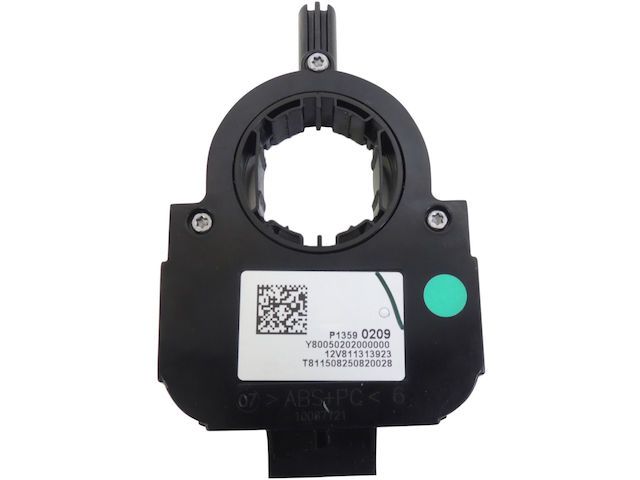
Typical fix: Replace the Steering Angle Sensor module (OEM Part #13590209). After replacement, the new sensor must be calibrated using a compatible scan tool.
Est. part cost: $80-$250 - Power Steering Control Module (PSCM) Calibration Error ⚪ Low Probability A GM TSB (#18-NA-192, referenced in search result) notes a calibration error in the PSCM can cause it to retain communication DTCs like U0126 as 'current' even after the initial fault is gone, causing persistent warning messages at every startup.
How to confirm: If the code reappears immediately after clearing despite no apparent wiring faults, a PSCM software issue may be the cause. This is confirmed if reprogramming the module resolves the issue.
Typical fix: Reprogram the Power Steering Control Module (PSCM) with the latest software calibration available from GM. This must be done by a dealer or a qualified shop with access to GM's TIS2WEB service.
Est. part cost: $0 (if only labor)
Rare But Worth Checking
- Low Battery Voltage or Poor Ground: → Shop Vehicle Battery Control modules are sensitive to voltage. A weak battery or corroded ground connection can cause intermittent communication dropouts across various systems, triggering codes like U0126. A user on Reddit suggested checking ground points in the front wheel well and under the dash.
- Aftermarket OBD-II Device Interference: Some aftermarket devices that plug into the OBD-II port, such as insurance trackers or Bluetooth code readers, can interfere with the CAN bus network. In one documented case, simply unplugging a Bluetooth dongle permanently resolved 🎬 Watch: A quick guide on fixing common Stabilitrak and ABS lights. the 'Service Stabilitrak' message.
Diagnosis Steps
- Scan all vehicle modules for codes using a tool that can read 'U' (network), 'B' (body), and 'C' (chassis) codes, not just 'P' (powertrain) codes.
- Check for and temporarily remove any aftermarket devices plugged into the OBD-II port (e.g., insurance trackers, Bluetooth dongles).
- Check battery voltage and charging system health. Ensure voltage is stable and above 12.4V with the engine off.
- Carefully inspect the wire harness on the left side of the instrument panel for signs of being pinched by the I/P mounting bracket, as per TSB #PIT5288H.
- Remove the driver and passenger sill plates and inspect the wiring harnesses (specifically Communication Enable circuit 5986) running along the floor for damage, corrosion, or open circuits, as per TSB #PIT5457D.
- If wiring appears intact, use a multimeter to test for proper power (approx. 11-14V) and ground (less than 1 Ω resistance) at the Steering Angle Sensor connector.
- Test the CAN bus wires (CAN High and CAN Low) for continuity and for shorts to power or ground. With the battery disconnected, resistance between CAN High and CAN Low at the DLC should be ~60 Ohms. A reading of 120 Ohms indicates an open in the bus, often a broken wire or a missing terminating resistor.
- If all wiring, power, and grounds are good, the Steering Angle Sensor module is the likely suspect.
- If codes persist after clearing, consider having a dealer or qualified shop check for and perform any available Power Steering Control Module (PSCM) software updates, per GM TSB #18-NA-192.
Parts You'll Likely Need
- Steering Angle Sensor
(OEM #13590209)— If wiring and software are ruled out, the sensor's internal electronics may have failed, preventing it from communicating on the network.
Trusted brands: ACDelco (Genuine GM), Dorman
OEM price range: $150-$250
Aftermarket price range: $80-$180 - Wire Repair Supplies — This is the most common fix, needed to repair the pinched or broken wires in the harness as identified by GM's service bulletins.
OEM price range: $5-$25
Aftermarket price range: $5-$25
Related Codes That Often Appear With This One
- U0077 — This code indicates a communication issue on the chassis-specific CAN bus, which is the network the Steering Angle Sensor uses. Its presence alongside U0126 strongly suggests a wiring problem affecting the entire network segment. [Bulletin #PIT5288H, Bulletin #PIT5457D]
- U0121 — Lost Communication with the Anti-Lock Brake System (ABS) Control Module. The ABS module relies heavily on steering angle data, and they communicate on the same network. A wiring fault often affects both modules. [Bulletin #PIT5457D]
- U0415 — Invalid Data Received From Anti-Lock Brake System Control Module. This often sets in other modules when the ABS module itself loses communication with a critical sensor like the SAS. [Bulletin #PIT5288H, Bulletin #PIT5457D]
- U0131 — Lost Communication With Power Steering Control Module. A GM document clarifies that the EBCM can sometimes incorrectly map a U0126 fault as a U0131, which can mislead diagnosis. A technician may need to use vehicle option codes (RPO) to determine if the U0131 truly points to the PSCM or if it's a mis-reported U0126.
Technical Service Bulletins (TSBs) & Recalls
- PIT5288H: Addresses a pinched wire harness at the left instrument panel causing various DTCs including U0126.
- PIT5457D: Points to wire harness issues on 'Communication Enable circuit 5986' under the sill plates causing loss of communication with several modules, triggering U0126.
- GM Document (referenced in NHTSA search result): Discusses the EBCM incorrectly mapping U0126 to U0131, complicating diagnosis.
- GM TSB 18-NA-192 (referenced in NHTSA search result): Details a PSCM calibration error that can cause the U0126 code to remain 'current' instead of moving to 'history', requiring a software update.
Platform-Specific Known Issues
- Pinched I/P Harness (TSB PIT5288H): A known issue documented in TSB #PIT5288H involves the instrument panel wire harness getting pinched between the left I/P mounting bracket and the body, causing U0126 and a host of other communication codes and electrical symptoms.
- Damaged Sill Plate Harness (TSB PIT5457D): A known issue documented in TSB #PIT5457D involves damage or high resistance on the Communication Enable circuit (5986) located under the driver and passenger sill plates, causing loss of communication with multiple chassis modules, including the one that sets U0126.
- PSCM Calibration Error (TSB 18-NA-192): A PSCM calibration error can cause the U0126 code to remain 'current' instead of moving to 'history' after the initial fault is resolved. This requires a dealer to reprogram the module with updated software.
Mechanic-Grade Diagnostic Values
- CAN Bus Resistance at DLC — expected: ~60 Ω (Ohms). Failure: A reading of ~120 Ω indicates an open circuit or one of the two terminating resistors is not being seen by the network. A reading significantly less than 60 Ω suggests the CAN High and CAN Low wires are shorted together.
- CAN Bus Voltage (Key On) — expected: CAN High (Pin 6 at DLC): ~2.6V. CAN Low (Pin 14 at DLC): ~2.4V.. Failure: Voltages that are the same may indicate a short between the two lines. 0V on both may indicate a short to ground.
- Steering Angle Sensor Power Supply — expected: 11 to 14 V at the sensor connector with ignition on.. Failure: Low or no voltage indicates a problem with the power feed circuit to the sensor.
- Steering Angle Sensor Ground — expected: Below 1 Ω resistance between the ground pin at the sensor connector and a known good chassis ground.. Failure: High resistance indicates a poor ground connection, which can cause intermittent module operation.
Scan Tool Commands That Help
- GDS2 (GM Dealer Software): Steering Wheel Angle Sensor Learn/Calibration — This function must be performed after replacing the Steering Angle Sensor to zero its position and allow it to communicate correctly with other modules like the EBCM.
- GDS2 (GM Dealer Software): Data Bus Diagnostic Tool — This integrated tool helps diagnose bus conditions by actively querying modules to see which are responding and identifying the electrical state of the bus (e.g., OK, Open, Short).
- Professional Scan Tool (e.g., Autel, Innova): View Live Data for Steering Angle Sensor — Before replacement, view the live data stream from the SAS. The angle in degrees should change smoothly as you turn the wheel. If the data is frozen, erratic, or absent, it points towards a sensor or wiring issue.
Wiring & Ground Locations
- CAN Bus Terminating Resistor — One of the two 120-ohm terminating resistors for the chassis CAN bus is located in the rear of the vehicle, above the muffler/spare tire area, often taped to a harness near the Fuel Pump Control Module.. If the wiring to this resistor is broken (a common issue), the total bus resistance will read 120 Ω instead of the correct 60 Ω, causing widespread communication codes including U0126. Technicians often check resistance at the DLC first; if it's 120 Ω, this rear harness area is a primary suspect.
- Chassis High-Speed CAN Bus at DLC — Pins 12 and 13 at the Data Link Connector (DLC) under the driver's side dashboard.. On some K2XX trucks, the chassis high-speed network (which includes the SAS) uses pins 12 and 13, not the more common 6 and 14. A technician must confirm the correct pins from a wiring diagram to perform accurate resistance and voltage tests at the DLC.
- Harness Pinch Point (Rear) — The main vehicle harness where it drops down through the chassis in the rear of the vehicle, between the body and the frame near the spare tire.. This area creates a pinch point that can chafe and sever wires over time, including CAN bus and power wires for various modules. This can cause a loss of communication with the Suspension Control Module and others, triggering a cascade of 'U' codes.
Real Owner Repair Stories
- YouTube channel '2015 - 2019 Chevy Tahoe LTZ Service Suspension light/ Service Stabilatrac. Watch this.' (2015-2019 Chevrolet Tahoe LTZ / GMC Yukon / Cadillac Escalade) — Service Suspension System and Service Stabilitrak messages, multiple communication error codes (U0139, B127B), unable to communicate with Suspension Control Module.
❌ Tried (didn't work) Initial diagnosis was difficult due to the complete loss of communication with the module.
✅ What actually fixed it The owner located a severed main power wire and other damaged wires in the main harness at a pinch point between the body and frame in the rear of the vehicle, near the spare tire. Repairing the damaged wires for under $10 resolved all codes and restored function. - YouTube channel 'Stabilitrak Issue FIXED!' (Late model GM truck (specific year/model not stated but behavior is relevant)) — Intermittent 'Service Stabilitrak' message on the dashboard.
❌ Tried (didn't work) The owner was preparing for a complex diagnosis of sensors or wiring.
✅ What actually fixed it The problem was caused by a cheap aftermarket Bluetooth OBD-II dongle (for the Torque app) being left plugged in. The device interfered with the CAN bus. Unplugging the dongle permanently resolved the issue. The owner confirmed this by plugging it into a friend's 2018 Denali, which immediately triggered the same warning light.
Model Year Variations Within This Range
- 2019-2020: The 6.2L V8 engine became more widely available on trims like the Premier, paired with a 10-speed automatic transmission, whereas earlier models primarily used the 5.3L V8 with a 6-speed or 8-speed transmission. This does not directly affect the U0126 code but is a notable powertrain change within the generation.
Helpful Videos
We Have This Part in Stock

The information in this article is provided for general reference and educational purposes only. Vehicle specifications, procedures, and part compatibility can vary by production date, trim level, and region. Always consult your vehicle's factory service manual and verify part numbers before purchasing or performing repairs. Safety-critical components such as airbags, seat belts, and braking systems should be installed by a qualified professional.
- Chevrolet TAHOE:
- 🧭 Diagnostic Flowchart
- 🎬 Helpful Videos
- 🛍️ Shop This Part
- What's Unique About the 2015-2020 Chevrolet TAHOE
- Symptoms You May Notice
- Most Likely Causes
- Rare But Worth Checking
- Diagnosis Steps
- Parts You'll Likely Need
- Related Codes That Often Appear With This One
- Technical Service Bulletins (TSBs) & Recalls
- Platform-Specific Known Issues
- Mechanic-Grade Diagnostic Values
- Scan Tool Commands That Help
- Wiring & Ground Locations
- Real Owner Repair Stories
- Model Year Variations Within This Range
- 🎟️ Get 5% Off