

U0126 on 2011-2015 Chevrolet Volt: Lost Communication With Steering Angle Sensor Fixes
This code means the Steering Angle Sensor has stopped communicating, disabling StabiliTrak and power steering assist. The most likely cause is a wiring or network issue on the chassis bus, not a failed sensor. Check wiring, connectors, and the 12V battery before replacing parts.
- U0126 on a 2011-2015 Volt disables StabiliTrak and power steering assist, making it a serious safety concern.
- Do not immediately assume the Steering Angle Sensor is bad. A GM Technical Service Bulletin points to a wiring or network problem on the 'Chassis bus' as a likely cause.
- Always start diagnosis by checking the 12V auxiliary battery and scanning for other trouble codes.
- Repairing this issue is not DIY-friendly for most people due to the complex network diagnostics and the need for a professional scan tool to calibrate a new sensor.
What's Unique About the 2011-2015 Chevrolet VOLT
For the 2011-2015 Chevrolet Volt, a U0126 code is often part of a larger network communication problem. A Technical Service Bulletin (TSB) for the Volt specifically groups U0126 with other communication codes and directs technicians to diagnose the 'Chassis bus' if the codes won't clear. [TSB #PIT5076E] This indicates that unlike some vehicles where the sensor itself is the primary failure point, on the Volt, the issue is more likely to be in the wiring or communication network that connects various modules. Forum discussions among Volt owners corroborate this, with many instances of intermittent 'Service Power Steering' and 'Service StabiliTrak' messages being traced back to low 12V batteries or loose connectors rather than a failed SAS.
Diagnostic Flowchart
Tap your situation to follow the diagnostic path that matches what you're seeing on this vehicle.
Symptoms You May Notice
- StabiliTrak warning light is on
- ABS warning light is on
- Service Power Steering message displayed
- Loss of power steering assist, making steering feel heavy
- Stability control system is disabled
- Cruise control may disengage or not set.
- Replacing the Steering Angle Sensor without first thoroughly testing the vehicle's 12V battery and CAN bus wiring. On the Volt, a wiring or power supply fault is a more probable cause than a sensor failure for this specific code, a pattern seen across many GM platforms.
Most Likely Causes
- Chassis CAN Bus Wiring Fault 🔴 High Probability As noted in GM Technical Service Bulletin #PIT5076E, U0126 is often associated with general chassis bus faults. Wiring can become chafed, pinched, or corroded over time, interrupting communication between modules. A Reddit user with a 2017 Volt experiencing identical symptoms had their issue traced to an improperly secured X450 connector at the rear left of the car, causing a loose connection. While a different generation, it highlights the platform's sensitivity to connector issues.
How to confirm: A technician will use a scan tool to see which modules are offline. They will then perform a visual inspection of harnesses and connectors, especially around the steering column and under-dash junction blocks. A multimeter is used to test for continuity, shorts to power, or shorts to ground on the CAN bus wires (typically Tan and Tan/Black) between the SAS module and other control units.
Typical fix: Repair the damaged section of the wiring harness or clean/secure the faulty connector. Ensure the harness is properly routed and secured to prevent future damage.
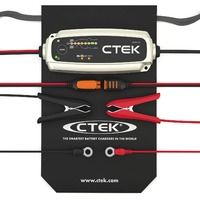
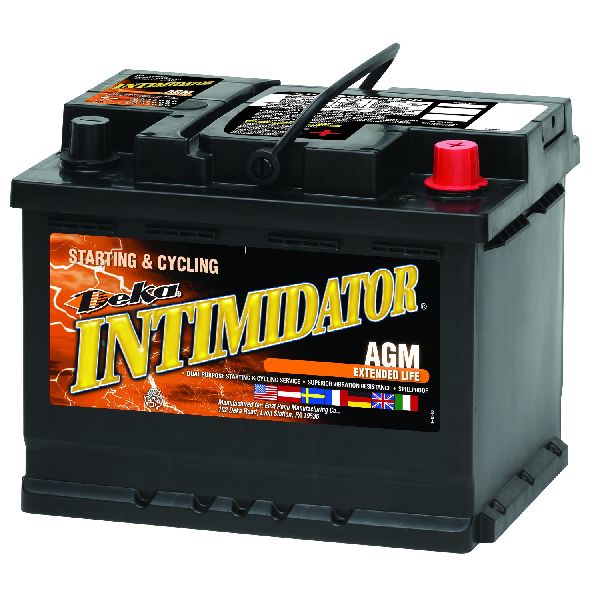
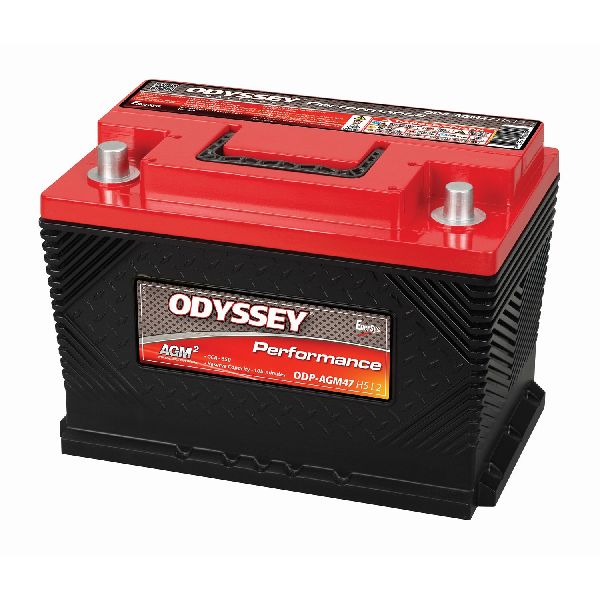
Est. part cost: $5-$50 - Low or Unstable 12V Battery Voltage 🟡 Medium Probability → Shop Vehicle Battery The Chevrolet Volt, like many modern EVs and hybrids, relies heavily on a stable 12V auxiliary battery to initialize its numerous control modules. A weak or failing 12V battery can cause voltage to drop during startup, leading to random communication codes as modules fail to initialize correctly. Multiple Volt owners on forums have resolved 'Service Power Steering' and 'StabiliTrak' warnings, which are symptoms of U0126, simply by charging or replacing their 12V battery. 🎬 Watch: Step-by-step guide to replacing your Volt's 12V battery
How to confirm: Test the 12V auxiliary battery with a multimeter. A healthy, fully charged battery should read approximately 12.4-12.6 volts with the vehicle off. Test the charging system (the APM module on the Volt) to ensure it's providing around 14 volts when the vehicle is on.
Typical fix: Fully charge or replace the 12V auxiliary battery. Ensure battery connections are clean and tight. Clear the codes and see if U0126 returns.
Est. part cost: $150-$250 - Failed Steering Angle Sensor (SAS) Module ⚪ Low Probability → Shop Steering Angle Sensor
How to confirm: This should only be suspected after all wiring, connector, and power/ground issues have been completely ruled out. If the module has proper power and ground at its connector, and the CAN bus wiring tests good (approx. 60 ohms between CAN High and CAN Low), but the module still won't communicate with a scan tool, the module itself has likely failed.
Typical fix: Replace the Steering Angle Sensor. The new sensor must be calibrated using a GM-specific scan tool for the system to function.
Est. part cost: $80-$200
Rare But Worth Checking
- Failed Electronic Brake Control Module (EBCM): → Shop ABS Control Module The EBCM is a primary module that relies on the SAS signal. While rare, an internal failure in the EBCM can sometimes manifest as a communication fault with other modules on the same network. This is usually accompanied by other EBCM-specific codes, such as U0121 (Lost Communication with ABS Module).
Diagnosis Steps
- Check the 12V auxiliary battery voltage. Ensure it is stable and above 12.4 volts with the car off. Check that terminals are tight and free of corrosion. Address any battery issues first.
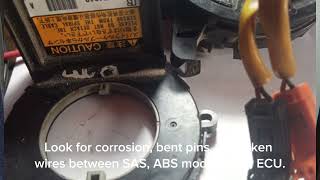
- Use a professional scan tool to check for DTCs in ALL modules. Note which modules are reporting 🎬 See this walkthrough on diagnosing the U0126 communication code a loss of communication with the SAS. A cluster of 'U' codes points to a network issue.
- Attempt to clear the codes. If they return immediately, it indicates a hard fault.
- Following the guidance of TSB #PIT5076E, focus on diagnosing the chassis CAN bus. Visually inspect wiring harnesses in the driver's footwell, under the dash, and around the steering column for any signs of chafing, pinching, or damage.
- Test the CAN bus network. With the battery disconnected, measure the resistance between Pin 12 (Chassis CAN High) and Pin 13 (Chassis CAN Low) on the OBD-II port. It should be approximately 60 ohms. Readings of 120 ohms suggest an open circuit or a missing terminating resistor, while readings below 60 ohms suggest a short.
- If wiring and network tests are good, check for power (12V) and ground (less than 1 ohm to chassis) at the Steering Angle Sensor connector using a multimeter and a wiring diagram.
- If the SAS module has good power, ground, and network connections but still won't communicate, the sensor itself is the likely culprit.
- If the SAS is replaced, perform the mandatory steering angle sensor calibration 🎬 Watch: How to perform a steering angle sensor calibration using a compatible scan tool. This is often found in the EBCM or PSCM menu.
Parts You'll Likely Need
- Steering Angle Sensor
(OEM #13513905 (2013-2015), 13590209 (supercedes earlier parts))— This is the part to replace only after all wiring, network, and power issues have been ruled out. It is the source of the signal that has been lost. Part numbers can vary by year and specific vehicle options.
Trusted brands: ACDelco (OEM), Standard Motor Products
OEM price range: $150-$250
Aftermarket price range: $80-$150 - 12V AGM Auxiliary Battery — A common cause of various electronic faults and communication codes on the Volt. If the battery is more than 3-4 years old or fails a load test, it should be replaced as a primary diagnostic step.
Trusted brands: ACDelco, Optima, Odyssey
OEM price range: $200-$250
Aftermarket price range: $150-$220
Related Codes That Often Appear With This One
- U0074 — A general CAN bus communication code, mentioned alongside U0126 in TSB #PIT5076E for the Volt, indicating a broader network fault.
- U0121 — Lost Communication with Anti-Lock Brake System (ABS) Control Module. This often appears with U0126 because the ABS/EBCM is a primary user of steering angle data and resides on the same chassis bus.
- C0186 — A chassis-related code also listed in TSB #PIT5076E, indicating a broader issue on the chassis communication bus.
- C0196 — Another chassis-related code from TSB #PIT5076E, pointing to a network-wide fault rather than a single component failure.
Technical Service Bulletins (TSBs) & Recalls
- Bulletin #PIT5076E: Mentions that if U0126 is found with other specific codes (U0074, U0125, C0186, etc.) and will not clear, the technician should diagnose the Chassis bus, pointing towards a network/wiring issue rather than a single component.
Platform-Specific Known Issues
- Per TSB #PIT5076E, this code is often found with a group of other 'U' and 'C' codes. When seen together, the primary diagnostic path is to check the integrity of the chassis communication bus rather than focusing on an individual component.
- Owner experiences frequently point to the 12V auxiliary battery as the root cause. A low or failing 12V battery can cause modules to fail their startup checks, leading to this and other communication codes.
Mechanic-Grade Diagnostic Values
- Chassis CAN Bus Resistance — expected: Approximately 60 Ohms. Failure: A reading of 120 Ohms indicates an open in the bus or a missing terminating resistor. A reading significantly less than 60 Ohms indicates a short between the CAN high and low wires.
- CAN Bus Voltage (Key On, Engine Off) — expected: CAN High (Pin 12): ~2.6V, CAN Low (Pin 13): ~2.4V. Failure: Voltages that are the same (e.g., both 2.5V) can indicate a short between the wires. Both at 0V can indicate a short to ground.
Hidden / Shadow Codes Worth Checking
- U0126 71: Symptom byte 71 means "Invalid Serial Data Received". This is a highly specific fault indicating that the EBCM is receiving data from the SAS, but the data is corrupt or nonsensical. This strongly points to a signal integrity problem (wiring, connector corrosion, interference) rather than a complete loss of connection or a failed module. (see via Requires a professional scan tool capable of reading GM-specific symptom bytes, such as the dealer-level GDS2 (Global Diagnostic System 2).)
Scan Tool Commands That Help
- GM GDS2 / Professional Scan Tool: Steering Angle Sensor Learn / Calibration — This procedure is mandatory after replacing the steering angle sensor, EBCM, or performing a wheel alignment. It zeros the sensor's position. The function is typically located in the service menu for the Electronic Brake Control Module (EBCM).
- GM GDS2: Module Status / Communication Check — Before starting diagnosis, use this function to get a network-wide view of which modules are actively communicating and which are not. If multiple modules on the chassis bus are offline, it confirms a network fault rather than a single component issue.
Wiring & Ground Locations
- Chassis Expansion Bus Pins (at OBD-II Port) — Pins 12 and 13 on the primary Data Link Connector (DLC) under the driver's side dashboard.. The Steering Angle Sensor communicates on the Chassis Expansion Bus. Unlike the more common powertrain CAN bus on pins 6 and 14, the SAS and other chassis modules use pins 12 and 13 on the Volt. Testing resistance and voltage here is a primary diagnostic step.
- G302 — Located under the center console at the rear, below the rear fuse block.. This ground serves multiple interior modules and electronics. While not directly for the SAS, a poor connection at this central point can introduce electrical noise and intermittent communication issues for modules on the chassis bus, mimicking a component failure.
Real Owner Repair Stories
- Go-Parts article citing GM TSB #PIT5427B for a similar platform (Equinox) (2010-2017 Chevrolet Equinox (similar GM architecture)) — Service StabiliTrak, ABS light, code U0126 with symptom byte 71 (Invalid Serial Data).
❌ Tried (didn't work) Initial diagnosis might point to replacing the steering angle sensor.
✅ What actually fixed it The documented cause was corrosion inside the X411 electrical connector located under the rear of the vehicle. Cleaning or replacing the connector and terminals resolved the communication issue. This highlights the importance of checking underbody connectors for corrosion, especially in salt-belt regions.
OEM Part Supersession History
13513905→13589991— Part revision or manufacturer change. The function remains the same.
Heads up: According to parts catalogs, 13589991 replaces 13513905, suggesting backward compatibility. However, always verify with a VIN at the dealer to ensure the correct revision is used.
Helpful Videos

We Have This Part in Stock


The information in this article is provided for general reference and educational purposes only. Vehicle specifications, procedures, and part compatibility can vary by production date, trim level, and region. Always consult your vehicle's factory service manual and verify part numbers before purchasing or performing repairs. Safety-critical components such as airbags, seat belts, and braking systems should be installed by a qualified professional.
- Chevrolet VOLT:
- 🧭 Diagnostic Flowchart
- 🎬 Helpful Videos
- 🛍️ Shop This Part
- What's Unique About the 2011-2015 Chevrolet VOLT
- Symptoms You May Notice
- Most Likely Causes
- Rare But Worth Checking
- Diagnosis Steps
- Parts You'll Likely Need
- Related Codes That Often Appear With This One
- Technical Service Bulletins (TSBs) & Recalls
- Platform-Specific Known Issues
- Mechanic-Grade Diagnostic Values
- Hidden / Shadow Codes Worth Checking
- Scan Tool Commands That Help
- Wiring & Ground Locations
- Real Owner Repair Stories
- OEM Part Supersession History
- 🎟️ Get 5% Off