

U0126 on 2015-2017 GMC Sierra: Lost Communication With Steering Angle Sensor Fixes
On a 2015-2017 GMC Sierra, code U0126 is almost always caused by a pinched or chafed wiring harness, not a bad sensor. Inspect the wiring under the driver's side dash near the parking brake pedal, under the door sill plates, and check the BCM ground G218 before replacing any parts. This is a known issue documented in multiple GM Technical Service Bulletins for the K2XX platform.
- U0126 on a 2015-2017 Sierra almost always points to a wiring problem, not a failed sensor.
- Before buying parts, thoroughly inspect the wiring harnesses under the door sill plates and behind the driver's side dash near the parking brake.
- Check and clean the main Body Control Module (BCM) ground connection (G218).
- Driving with this code is not recommended as it disables StabiliTrak and ABS safety systems.
- If the sensor itself must be replaced, it will require a calibration procedure using a professional scan tool.
What's Unique About the 2015-2017 Gmc SIERRA
On this generation of GMC Sierra (K2XX platform), the U0126 code is very frequently a symptom of a specific, well-documented wiring problem rather than a failed sensor. General Motors has issued multiple Technical Service Bulletins (TSBs) that point technicians directly to known locations where wire harnesses get pinched or chafed. The most common culprits are the harness under the driver/passenger sill plates (TSB #PIT5457D) and the harness behind the left side of the instrument panel near the parking brake (TSB #PIT5288E). Another common failure point is the main Body Control Module (BCM) ground stud (G218) 🎬 Watch: How to clean the G218 ground stud, where sound-deadening material can get trapped, causing a poor connection.
Diagnostic Flowchart
Tap your situation to follow the diagnostic path that matches what you're seeing on this vehicle.
Symptoms You May Notice
- "Service StabiliTrak" message on the instrument cluster.
- "Service Suspension System" message (per TSB #PIT5457D).
- ABS and Traction Control warning lights are on.
- Steering may feel heavy or power steering assist may be reduced.
- In rare cases, a dead battery due to a shorted circuit (per TSB #PIT5288E).
- "Service Power Steering" message may appear.
- Replacing the Steering Angle Sensor without first performing a thorough wiring inspection. On the 2015-2017 Sierra, the problem is most often the wiring, not the sensor itself.
Most Likely Causes
- Pinched/Chafed Wiring Harness 🔴 High Probability GM has identified two common problem areas in TSBs. The harness can be pinched between the left instrument panel's metal mounting bracket and the truck's body (TSB #PIT5288H). It can also chafe in the channel under the driver and passenger door sill plates, specifically affecting the Communication Enable circuit 5986 (TSB #PIT5457D).
How to confirm: Visually inspect the wire harness. For TSB #PIT5288H, remove the driver's side lower dash trim and use a flashlight to inspect the harness near the parking brake pedal assembly for pinching against the metal dash bracket. For TSB #PIT5457D, remove the plastic door sill plates and lift the carpet to inspect the wiring in the channel for signs of water intrusion, corrosion, or chafed insulation.
Typical fix: Repair the damaged section of the wire harness. This involves carefully soldering the broken wires, protecting them with heat shrink tubing, and re-wrapping the harness with high-quality fabric tape (e.g., Tesa tape). Re-route the harness to prevent future damage, securing it away from sharp metal edges.
Est. part cost: $5-$25 - Poor Body Control Module (BCM) Ground (G218) 🟡 Medium Probability → Shop Body Control Module TSB #PIT5405C points to checking the BCM in relation to code U0126. A well-documented issue on the K2XX platform is that sound-deadening insulation material gets trapped under the main BCM ground stud (G218), causing a poor connection and widespread communication issues.
How to confirm: Locate the BCM ground stud (G218) under the driver's side dash, on the A-pillar behind the trim. Disassemble the 10mm ground nut, check for the black foam insulation mat being caught under the terminal eyelets. Clean the stud, all terminal eyelets, and the body surface with a wire brush to ensure a clean metal-to-metal connection.
Typical fix: Clean and tighten the ground connection. Many owners trim a small section of the foam insulation away from the stud to prevent it from interfering with the connection in the future. Re-secure the nut firmly.
Est. part cost: $0-$5 - Low Battery Voltage ⚪ Low Probability → Shop Vehicle Battery Modern trucks with dozens of control modules are extremely sensitive to system voltage. A weak or failing battery can cause random communication codes, including U0126, as modules fail to initialize properly during startup.
How to confirm: Test the battery with a multimeter. A healthy, fully charged battery should read about 12.6 volts with the engine off. With the engine running, it should be between 13.7 and 14.7 volts. A load test is the most definitive way to confirm battery health.
Typical fix: Charge or replace the battery if it fails testing.
Est. part cost: $150-$350
Rare But Worth Checking
- Faulty Steering Angle Sensor (SAS) Module: → Shop Steering Angle Sensor This is the module the code directly references, but it is far less likely to be the cause than wiring issues on this specific truck. Only consider replacing it after all wiring and ground faults have been definitively ruled out. Replacement requires calibration with a scan tool.
- Power Steering Control Module (PSCM) Software Error: A specific GM TSB (#20-NA-113) notes that a software glitch in the PSCM can cause U0126 to set and remain as a 'current' code after a low voltage event (like a dead battery), even if the underlying issue is resolved. The fix is to have a dealer reprogram the PSCM with the latest software.
- Faulty Electronic Brake Control Module (EBCM) or Body Control Module (BCM): → Shop ABS Control Module As central communication hubs, a failure within the EBCM or BCM can disrupt the network and cause communication codes for other modules. This is uncommon and usually accompanied by many other fault codes and more severe symptoms.
Diagnosis Steps
- Scan the vehicle for all stored Diagnostic Trouble Codes (DTCs). Note all codes present, as multiple U-codes strongly suggest a network or wiring issue.
- Inspect the battery and charging system. Ensure battery voltage is above 12.4V with the engine off and that terminals are clean and tight.
- Critical Step: Perform a visual inspection of the wiring harness in the known problem areas. First, remove the driver's side lower dash trim and inspect the harness near the parking brake pedal for pinching against the metal dash support bracket, as per TSB #PIT5288H.
- Critical Step: Next, remove the driver and passenger door sill plates and lift the carpet to inspect the wire harness in the channel for chafing, corrosion, or broken wires, paying close attention to the Communication Enable circuit (wire 5986) as per TSB #PIT5457D.
- Critical Step: Locate, disassemble, and clean the BCM ground G218. It is located on the driver's side A-pillar, behind the trim. Remove the 10mm nut and check for trapped foam insulation. Clean all contact surfaces to bright metal and re-secure.
- If no visible damage is found, use a multimeter to check for power, ground, and the integrity of the CAN bus wires at the Steering Angle Sensor connector. The CAN bus wires should have approximately 60 ohms of resistance between them with the battery disconnected.
- If wiring and grounds are confirmed to be good, the issue may be the Steering Angle Sensor module itself.
- If the sensor is replaced, a calibration procedure must be performed with a compatible scan tool for the system to function correctly.
Parts You'll Likely Need
- Wiring Repair Supplies — This is the most common fix, as the issue is typically a broken or chafed wire in a harness that needs to be soldered and protected.
Trusted brands: 3M, Tesa (for harness tape)
OEM price range: $5-$25
Aftermarket price range: $5-$25 - Steering Angle Sensor
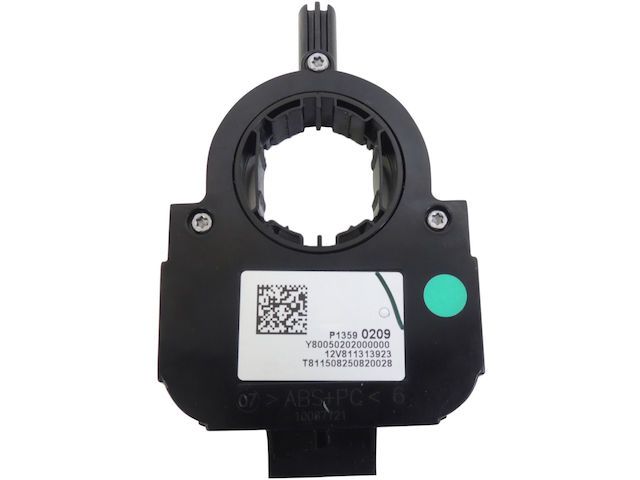
(OEM #13590209)— This part should only be replaced if all wiring and ground issues have been completely ruled out. It is often sold as part of the clock spring assembly and requires programming after installation.
Trusted brands: ACDelco (GM Genuine)
OEM price range: $150-$250
Aftermarket price range: $80-$180
Related Codes That Often Appear With This One
- U0121 — Lost Communication with EBCM. Often appears with U0126 due to the same harness damage affecting multiple communication lines (per TSB #PIT5457D).
- U0077 — Lost Communication with Chassis Control Module 'A'. Also listed in TSB #PIT5457D, indicating a shared wiring harness problem.
- U0131 — Lost Communication with Power Steering Control Module. Also listed in TSB #PIT5457D and #PIT5405C, pointing to a network-wide issue originating from a wiring or BCM problem.
- U0415 — Invalid Data Received from EBCM. This often sets as a consequence of the EBCM losing data from the steering angle sensor (U0126) (per TSB #PIT5288E).
Technical Service Bulletins (TSBs) & Recalls
- PIT5457D: Loss of communication with EBCM, SWPS, PSCM, and/or SCM due to wire harness chafing under sill plates.
- PIT5405C: Multiple electrical issues and DTCs, including U0126, pointing towards checking the Body Control Module ground G218.
- PIT5288H: Multiple DTCs, including U0126, caused by a pinched wire harness in the left instrument panel.
- 20-NA-113: PSCM software calibration error causing codes to remain 'current' after a fault is fixed.
Platform-Specific Known Issues
- TSB #PIT5457D: Documents loss of communication with multiple modules, including the Steering Angle Sensor, due to a chafed wire harness under the driver and passenger sill plates. It specifically calls out checking the Communication Enable circuit (5986) for an open or high resistance.
- TSB #PIT5288H: Points to a pinched wire harness in the left instrument panel area (near the parking brake pedal) as a cause for U0126 and other communication codes.
Mechanic-Grade Diagnostic Values
- High-Speed CAN Bus Resistance — expected: ~60 Ω (Ohms) across CAN High and CAN Low pins (e.g., DLC pins 6 & 14) with battery disconnected.. Failure: A reading of ~120 Ω indicates an open circuit or one of the two terminating resistors is offline. A reading significantly less than 60 Ω suggests a short between the lines or an extra terminating resistor.
- High-Speed CAN Bus Voltage (Key-On, Engine-Off) — expected: CAN High: ~2.6V. CAN Low: ~2.4V.. Failure: Voltages stuck near 0V or 5V, or voltages that are the same on both lines, indicate a short to ground, short to power, or short between the CAN lines.
- Communication Enable Circuit 5986 Voltage — expected: Approximately 12V (battery voltage) when the ignition is in ACC, ON, or START.. Failure: Low or no voltage indicates an open, short, or high resistance in circuit 5986, which is a known issue under the sill plates. The circuit should be able to light a small 194 bulb (drawing ~250mA) with at least 11V measured across it.
Scan Tool Commands That Help
- GM GDS2 / High-End Scan Tool: Steering Angle Sensor Calibration / Reset — This procedure is required after replacing the Steering Angle Sensor, performing a wheel alignment, or replacing other related suspension/steering components. The function centers the steering wheel and zeroes the sensor's value.
- GM GDS2 / High-End Scan Tool: Module Communication Test / Device Control — To actively ping the Steering Angle Sensor Module. If the module does not respond to the scan tool's request but its power, ground, and network wiring are confirmed good, the module itself is likely faulty.
- GM GDS2 / High-End Scan Tool: PSCM (Power Steering Control Module) Reprogramming — As per TSB #20-NA-113, if U0126 persists after a low voltage event (like a dead battery) and all wiring/grounds are good, the PSCM may need a software update to clear a glitch causing the code to remain active.
Wiring & Ground Locations
- G218 — Under the driver's side dash, on the A-pillar behind the kick panel and speaker.. This is the primary ground for the Body Control Module (BCM). TSB #PIT5405C identifies a poor connection here, often due to trapped sound-deadening foam, as a root cause for widespread communication issues, including U0126.
- Circuit 5986 (Communication Enable) — Runs from the BCM through harnesses under the driver and passenger side door sill plates to various modules, including the SWPS, PSCM, and EBCM.. TSB #PIT5457D specifically calls out this circuit as a common point of failure due to chafing or corrosion in the sill plate channels, causing modules like the Steering Wheel Position Sensor (SWPS) to lose communication.
- Splice J365 — Located in the wiring harness under the passenger front sill plate.. This is a known splice for Circuit 5986. Corrosion or a bad connection at this splice can cause the same symptoms as a chafed wire along the harness run.
- G303 — On the lower left 'B' pillar for extended and crew cabs.. This is a key interior body ground. Its proximity to the sill plate area, a known chafe point, makes it a relevant ground to check for corrosion or looseness when diagnosing communication issues in that harness.
- K43 Power Steering Control Module Connectors (X1/X2) — Located on the electric power steering rack itself.. Connector X1 is a 12-pin that carries the GMLAN serial data and Communication Enable wires. Connector X2 is the main power/ground feed. A fault, corrosion, or poor pin tension at either connector can take the PSCM offline, which communicates with the SAS.
Real Owner Repair Stories
- YouTube user C Farmer (Late model GM truck (similar platform)) — Intermittent 'Service Stabilitrak' light and messages.
❌ Tried (didn't work) Initial diagnosis did not point to a clear component failure.
✅ What actually fixed it The problem was caused by an aftermarket OBD-II device that was left plugged into the data link connector. The device was interfering with the CAN bus communication, triggering the Stabilitrak fault. Unplugging the device permanently resolved the issue. The issue was replicated on a friend's 2018 Denali, confirming the device was the cause. - Reddit user on r/Silverado (2014-2018 GM Truck) — 'Service Stabilitrak' message flashed and went away.
❌ Tried (didn't work) User was in the initial diagnosis phase.
✅ What actually fixed it The user was advised by others that the G218 ground was the most likely cause. The fix involves removing the driver-side dash trim, locating the ground stud by the A-pillar, and cleaning the connection point where sound-deadening foam often gets trapped, causing a poor ground.
OEM Part Supersession History
13590209→13590209 (current)— This part number appears to be stable for the specified model years.
Heads up: This part requires programming and/or special setup procedures with a scan tool like GDS2 after installation to ensure proper operation.
Helpful Videos




We Have This Part in Stock

The information in this article is provided for general reference and educational purposes only. Vehicle specifications, procedures, and part compatibility can vary by production date, trim level, and region. Always consult your vehicle's factory service manual and verify part numbers before purchasing or performing repairs. Safety-critical components such as airbags, seat belts, and braking systems should be installed by a qualified professional.
- Gmc SIERRA:
- 🧭 Diagnostic Flowchart
- 🎬 Helpful Videos
- 🛍️ Shop This Part
- What's Unique About the 2015-2017 Gmc SIERRA
- Symptoms You May Notice
- Most Likely Causes
- Rare But Worth Checking
- Diagnosis Steps
- Parts You'll Likely Need
- Related Codes That Often Appear With This One
- Technical Service Bulletins (TSBs) & Recalls
- Platform-Specific Known Issues
- Mechanic-Grade Diagnostic Values
- Scan Tool Commands That Help
- Wiring & Ground Locations
- Real Owner Repair Stories
- OEM Part Supersession History
- 🎟️ Get 5% Off