

U0126 on 2015-2019 GMC Sierra 2500: Causes for Lost Communication With Steering Angle Sensor
On a 2015-2019 GMC Sierra 2500, code U0126 is most often caused by a pinched or chafed wiring harness under the dashboard (TSB #PIT5288H) or sill plates (TSB #PIT5457D), or a poor ground connection at the BCM ground G218 (TSB #PIT5405A). Before replacing the expensive Steering Angle Sensor, a thorough inspection of these specific wiring and ground locations is critical, as confirmed by numerous owner experiences.
- U0126 on a 2015-2019 GMC Sierra 2500 indicates a communication failure with the Steering Angle Sensor.
- The most common cause is NOT a bad sensor, but a wiring issue. Check for pinched wires under the dash and sill plates, and inspect the BCM ground before buying parts.
- This code disables important safety features like StabiliTrak and ABS, so it should be addressed promptly.
- Due to the complex nature of network diagnostics, professional service is highly recommended.
What's Unique About the 2015-2019 Gmc SIERRA 2500
For this generation of GMC Sierra HD trucks (and their platform mates), the U0126 code is very frequently a symptom of a wiring problem, not a failed sensor. General Motors has issued multiple Technical Service Bulletins (TSBs) pointing technicians directly to specific locations where wire harnesses are known to get pinched or chafed, or where ground connections fail. Specifically, the BCM ground G218 is a well-documented 🎬 Watch: How to fix the G218 ground connection issue. failure point where sound-deadening material gets trapped under the ground stud, causing a poor connection. This makes it crucial to diagnose the wiring and grounds before assuming the sensor itself is bad.
Diagnostic Flowchart
Tap your situation to follow the diagnostic path that matches what you're seeing on this vehicle.
Symptoms You May Notice
- "Service StabiliTrak" or "Service Suspension System" message on the dash.
- ABS and Traction Control warning lights illuminated.
- Loss of power steering assist, making the steering feel heavy.
- Rear wiper inoperative or dead battery (in some cases associated with related wiring faults).
- Steering wheel jerks or kicks back when turning at slow speeds.
- Replacing the Steering Angle Sensor without first performing a thorough inspection of the wiring harnesses and ground connections as outlined in GM's Technical Service Bulletins.
- Replacing the ABS module or BCM when the root cause is a simple bad ground (G218) or a chafed wire under a sill plate.
Most Likely Causes
- Pinched or Damaged Wiring Harness 🔴 High Probability GM has identified several specific points where the harness can be damaged. TSB #PIT5288H points to the dash harness being pinched by the left I/P mounting bracket near the fuse block. TSB #PIT5457D notes that the harness can be damaged under the driver and passenger sill plates, often from being rubbed or improperly routed.
How to confirm: Visually inspect the wiring harnesses in the locations specified by the TSBs. For PIT5288H, this requires looking under the driver's side dash to see if the harness is caught between the metal dash bracket and the body. For PIT5457D, remove the plastic sill plates and lift the carpet to inspect the harness channel for chafed or broken wires.
Typical fix: Repair the damaged section of the wire harness using solder and heat shrink or approved connectors, then re-route it to prevent future damage. Ensure the harness is free and not pinched when reassembling panels.
Est. part cost: $5-$50 for wiring repair supplies - Poor Body Control Module (BCM) Ground (G218) 🔴 High Probability → Shop Body Control Module TSB #PIT5405A/B/C specifically calls out checking the BCM ground G218 when U0126 and other communication codes are present. The design allows for the dash insulator mat to get trapped between the ground eyelet and the body stud, causing high resistance and a host of electrical issues.
How to confirm: Locate ground G218, which is a stud on the firewall under the driver's side dashboard, often behind or near the dash speaker. Remove the nut and check if the sound-deadening insulation is trapped underneath the eyelet. Inspect for looseness or corrosion. A voltage drop test can confirm high resistance, with a target of less than 100-200mV drop under load.
Typical fix: Remove the ground nut and eyelet. Cut away the insulation material from around the stud. Clean the ground connection point and the terminal with a wire brush, then securely re-fasten the nut to the specified torque.
Est. part cost: $0-$5 for cleaning supplies - Chassis CAN Bus Network Fault ⚪ Low Probability As noted in TSB #PIT5076E, the issue can be a fault on the chassis communication bus itself, which connects the steering, brake, and suspension modules. This is a network-wide problem often caused by a shorted wire in the harness or a different faulty module pulling the network down.
How to confirm: This requires a professional scan tool and a digital multimeter. Perform a CAN bus resistance test by measuring between pins 6 (CAN High) and 14 (CAN Low) at the OBD-II port with the key off. The reading should be approximately 60 ohms (±5 Ω). A reading of 120 ohms indicates an open circuit or missing terminating resistor, while a reading near 0 ohms indicates a short between the CAN lines.
Typical fix: Isolating and repairing the source of the network fault, which could be a shorted wire, a faulty terminating resistor, or a different module bringing the network down. This is a complex diagnostic task.
Est. part cost: $5-$100 depending on the fault - Failed Steering Angle Sensor (SAS) Module ⚪ Low Probability → Shop Steering Angle Sensor
How to confirm: If all wiring, grounds, and the CAN bus network have been tested and are confirmed to be good, the sensor itself may have failed. A professional scan tool may show the module as completely unresponsive and unable to communicate.
Typical fix: Replace the Steering Angle Sensor. This often requires removing the steering wheel and airbag. The new sensor must be calibrated using a professional scan tool to learn the straight-ahead position.
Est. part cost: $80-$250
Rare But Worth Checking
- PSCM Calibration Error:
Diagnosis Steps
- Scan all vehicle modules for any stored Diagnostic Trouble Codes (DTCs). Note all 'U' codes present, as multiple codes strongly suggest a network or ground issue.
- Check for Technical Service Bulletins (TSBs) related to your VIN and the stored codes. Pay close attention to PIT5288H, PIT5457D, and PIT5405C.
- Inspect the BCM ground G218. Remove the driver's side dash end cap and look under the dash near the A-pillar/speaker area for a ground stud. Disassemble and check for trapped insulation material between the eyelet and the body. Clean and tighten securely.
- Inspect the wire harness at the left side of the instrument panel for pinching against the metal dash bracket, as per TSB #PIT5288H.
- Remove the driver and passenger plastic sill plates and inspect the wire harnesses running in the channel underneath for chafing or damage, as per TSB #PIT5457D.
- If no visible wiring or ground issues are found, perform a CAN bus network resistance test. With the battery disconnected, use a multimeter at the OBD-II port to measure resistance between Pin 6 (CAN-H) and Pin 14 (CAN-L). The reading should be approximately 60 ohms.
- If network tests are inconclusive, check for power and ground at the Steering Angle Sensor connector using a multimeter. Expect 12.0-12.6V at the power pin with the ignition on, and ground resistance to the chassis should be less than 0.05 Ω.
- If all wiring, grounds, and network tests pass, the Steering Angle Sensor itself is the likely culprit. Replace the sensor and perform the required calibration with a scan tool.
Parts You'll Likely Need
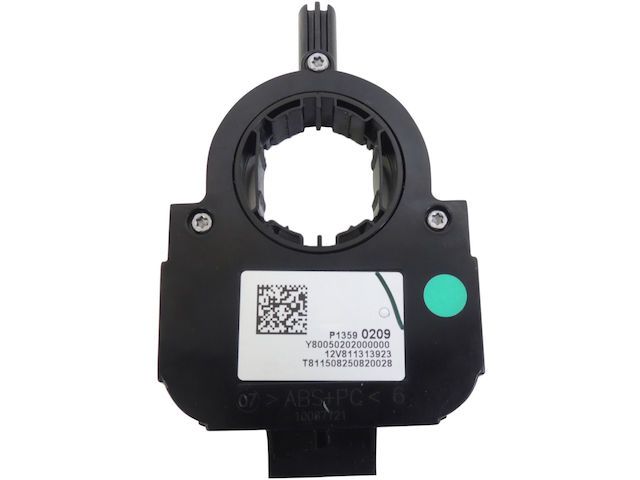
- Steering Angle Sensor
(OEM #13590209)— This is the part to replace ONLY if all wiring and ground faults have been ruled out. It is the module that the code directly references.
Trusted brands: ACDelco
OEM price range: $150-$250
Aftermarket price range: $80-$180 - Wiring Repair Supplies — More often than a failed part, the fix for U0126 on this truck is repairing a damaged wire in one of the known problem areas (under dash or sill plates).
Related Codes That Often Appear With This One
- U0077 — Lost Communication with Body Control Module 'B', often set with other communication codes due to a shared wiring or ground fault.
- U0121 — Lost Communication with Anti-Lock Brake System (ABS) Control Module, which relies on data from the steering angle sensor.
- U0415 — Invalid Data Received from ABS Control Module, another code indicating a problem in the chassis communication network.
- U0140 — Lost Communication with Body Control Module, indicating a widespread communication issue often linked to the G218 ground fault.
- C0544 — A code related to the steering system that often appears alongside communication faults, specifically mentioned in TSBs PIT5288H and PIT5405A.
Technical Service Bulletins (TSBs) & Recalls
- Bulletin #PIT5288H: Cites a pinched wire harness in the left instrument panel as a cause for U0126 and other codes.
- Bulletin #PIT5405A/B/C: Points to a faulty Body Control Module ground (G218) as a potential cause for a host of communication codes, including U0126.
- Bulletin #PIT5457D: Identifies wire harness issues under the sill plates causing loss of communication with the steering and brake modules.
- Bulletin #PIT5076E: Recommends diagnosing the Chassis CAN bus when U0126 and other related codes are present.
Platform-Specific Known Issues
- A pinched wire harness in the left instrument panel area is a known cause for U0126 and other communication codes. (TSB #PIT5288H)
- The wire harness running under the driver and passenger sill plates is susceptible to damage, leading to loss of communication with various chassis modules. (TSB #PIT5457D)
- A poor ground connection for the Body Control Module (BCM) at location G218 can cause a cascade of communication DTCs, including U0126. This is often due to sound deadening material being caught under the ground terminal. (TSB #PIT5405A/B/C)
Mechanic-Grade Diagnostic Values
- CAN Bus Resistance (Key Off) — expected: ~60 Ω (±5 Ω). Failure: A reading of ~120 Ω indicates an open circuit or missing terminating resistor. A reading near 0 Ω indicates a short between the CAN High and CAN Low wires.
- CAN Bus Voltage (Key On) — expected: CAN High (Pin 6): ~2.6V, CAN Low (Pin 14): ~2.4V. Failure: Lines stuck near 0V or 5V, or no differential swing, indicates a hard fault on the bus.
- SAS Module Power Supply — expected: 12.0–12.6 V. Failure: Low or no voltage indicates a power supply circuit issue.
- SAS Module Ground Resistance — expected: < 0.05 Ω. Failure: High resistance indicates a poor ground connection, a common cause for this code.
- Ground Voltage Drop at G218 — expected: ≤100–200 mV. Failure: A higher voltage drop under load confirms high resistance at the ground point.
Hidden / Shadow Codes Worth Checking
- U0131: On some 2020+ HD trucks, the EBCM can improperly map a U0126 fault (Lost Communication With Steering Wheel Angle Sensor Module) and report it as a U0131 (Lost Communication With Power Steering Control Module). While this TSB is for a slightly newer model, similar logic may apply if U0131 is present without other PSCM issues. (see via Professional scan tool like GM GDS2.)
Scan Tool Commands That Help
- GM GDS2 / Professional Scan Tool: Steering Angle Sensor Learn/Calibration — This procedure is required after replacing the Steering Angle Sensor or after performing a wheel alignment to reset the sensor's zero position.
- Autel / Professional Scan Tool: Steering Wheel Angle Sensor Reset — Used to clear old calibration values from the computer before performing the 'Learn' procedure. This can be a critical first step if a new calibration won't save correctly.
- GM GDS2: Data Bus Diagnostic Tool / Module Communication Test — To actively poll modules on the network and see which ones are not responding. This can help differentiate between a faulty SAS module and a network-wide problem.
Wiring & Ground Locations
- G218 — Under the driver's side of the dashboard, on the firewall, often located near or behind the dash speaker.. This is a primary ground for the Body Control Module (BCM). TSB #PIT5405C identifies a poor connection here (often due to trapped insulation) as a root cause for dozens of communication codes, including U0126.
- Steering Angle Sensor (B99) — Located on the steering column, often requiring removal of the lower dash panels to access.. This is the module that has lost communication. It communicates on the Chassis High Speed bus.
- Chassis High Speed Bus — Pins 12 and 13 at the DLC (OBD-II Port) on some GM models. Note: This is different from the main High Speed GMLAN on Pins 6 and 14.. The Steering Angle Sensor communicates on this specific bus. A fault here will directly impact the SAS module's ability to talk to the EBCM and other modules.
Real Owner Repair Stories
- YouTube user comment on 'G218 Ground Issue Fix' video (2014-2018 Chevy Silverado/GMC Sierra (specific year not mentioned)) — Unspecified electrical issues, likely including warning lights and communication codes.
❌ Tried (didn't work) Hours of searching online for a solution.
✅ What actually fixed it Following the video's instructions to locate and clean ground G218 under the driver's side dash fixed the truck in 30 minutes. - YouTube video by Dustin Turner (2014 Chevrolet Silverado High Country) — Flickering headlights and dash lights, park assist disabled message, power steering disabled message, truck shutting off completely while turning at low speeds.
❌ Tried (didn't work) Having the alternator and battery tested (both were fine).
✅ What actually fixed it The final fix was cleaning ground G218. Sound deadening material was trapped under the ground connection, causing a sporadic and poor ground. Trimming the material away and re-securing the ground resolved all symptoms.
OEM Part Supersession History
13590209→N/A— This appears to be the current and widely used part number for the 2015-2019 model years.
Heads up: Part number 13590209 is listed for a wide range of GM trucks and SUVs from 2015-2020+, including Sierra/Silverado 1500/2500/3500, Tahoe, Suburban, and Escalade models, indicating broad compatibility within this platform generation.
Model Year Variations Within This Range
- 2015 vs 2016+: The 2016 model year received a mid-cycle refresh which included updated exterior styling (grille, headlights) and potentially updated infotainment software (Apple CarPlay/Android Auto availability). However, core electrical architecture, including the location of grounds like G218 and the general CAN bus structure, appears to be consistent across the 2015-2019 range, making the common causes for U0126 applicable to all years.
Helpful Videos

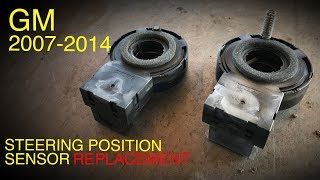
We Have This Part in Stock

The information in this article is provided for general reference and educational purposes only. Vehicle specifications, procedures, and part compatibility can vary by production date, trim level, and region. Always consult your vehicle's factory service manual and verify part numbers before purchasing or performing repairs. Safety-critical components such as airbags, seat belts, and braking systems should be installed by a qualified professional.
- Gmc SIERRA 2500:
- 🧭 Diagnostic Flowchart
- 🎬 Helpful Videos
- 🛍️ Shop This Part
- What's Unique About the 2015-2019 Gmc SIERRA 2500
- Symptoms You May Notice
- Most Likely Causes
- Rare But Worth Checking
- Diagnosis Steps
- Parts You'll Likely Need
- Related Codes That Often Appear With This One
- Technical Service Bulletins (TSBs) & Recalls
- Platform-Specific Known Issues
- Mechanic-Grade Diagnostic Values
- Hidden / Shadow Codes Worth Checking
- Scan Tool Commands That Help
- Wiring & Ground Locations
- Real Owner Repair Stories
- OEM Part Supersession History
- Model Year Variations Within This Range
- 🎟️ Get 5% Off