

U0126 on 2016-2021 Honda Civic: Lost Communication With Steering Angle Sensor Causes and Fixes
On a 10th-gen Honda Civic, code U0126 usually means there's a wiring problem (often rodent damage to the EPS harness near the steering rack) or a faulty steering angle sensor. A weak battery is also a common trigger. Expect to pay $200-$700 for a wiring repair or $400-$750 to replace and calibrate the sensor.
- U0126 will disable your Civic's power steering, ABS, and stability control. Drive with caution to a repair shop.
- Before buying any parts, check the battery's health and thoroughly inspect the wiring harness in the engine bay for any signs of rodent damage.
- Do not replace the steering angle sensor unless you are certain the wiring, fuses, and battery are good.
- If the steering angle sensor is replaced, it MUST be calibrated using a compatible bi-directional scan tool for the warning lights to go away.
What's Unique About the 2016-2021 Honda Civic
The 10th generation (2016-2021) Civic is known for issues with its electronic power steering (EPS) and related wiring. A noteworthy problem is that the soy-based insulation used on some wiring harnesses can attract rodents, leading to chewed wires that cause this specific communication failure. Forum discussions and mechanic videos specifically point to the EPS sub-harness near the steering rack as a common chew point. While the U0126 code can point to a failed sensor, on this Civic, it's frequently a symptom of an external wiring problem between the sensor and the rest of the car. Honda has acknowledged the rodent issue by selling capsaicin-impregnated electrical tape (Part No. 4019-2317) as a deterrent.
🎬 Watch: How to find and repair rodent-damaged wiringSymptoms You May Notice
- Multiple warning lights illuminated on the dashboard (ABS, VSA/Traction Control, Power Steering, Brake System).
- Loss of electric power steering (EPS), making the steering wheel feel very heavy and difficult to turn.
- Driver-assist systems like Adaptive Cruise Control (ACC) and Lane Keeping Assist System (LKAS) are disabled.
- Brake Hold and other brake-related features may be disabled.
- Replacing the steering angle sensor without first thoroughly checking the wiring harness for damage is a very common mistake on this vehicle, leading to wasted money and the code returning.
- Assuming the steering angle sensor is a standalone part. On the 10th gen Civic, it is typically integrated with the clock spring and combination switch assembly.
Most Likely Causes
- Damaged Wiring Harness (Rodent Damage) 🔴 High Probability The soy-based wire insulation used by Honda during this period is known to attract rodents, who chew the wires and cause open or short circuits in the F-CAN network. A common failure point is the EPS sub-harness near the steering rack.
How to confirm: Visually inspect the wiring harnesses in the engine bay, especially around the firewall and down towards the steering rack, for signs of chewing, nests, or frayed wires. A mechanic may need to trace the CAN bus wires from the EPS module.
Typical fix: Repairing the damaged section of the wiring harness. This involves splicing in new wires and properly insulating them. Many owners and shops then wrap the repaired area with Honda's rodent-deterrent tape (P/N 4019-2317).
Est. part cost: $20-$70 (for tape and wire) - Weak or Failing 12V Battery 🟡 Medium Probability → Shop Vehicle Battery Modern control modules are highly sensitive to voltage. A battery that provides unstable or low voltage, especially during startup, can cause intermittent communication dropouts between modules, triggering a U0126 code.
How to confirm: Test the battery voltage with a multimeter. It should be above 12.4V with the car off and between 13.7V and 14.7V while running. A Reddit user with a 2018 Civic reported codes U0126 and U3003-16 (low battery voltage) appearing together, pointing directly to this cause.
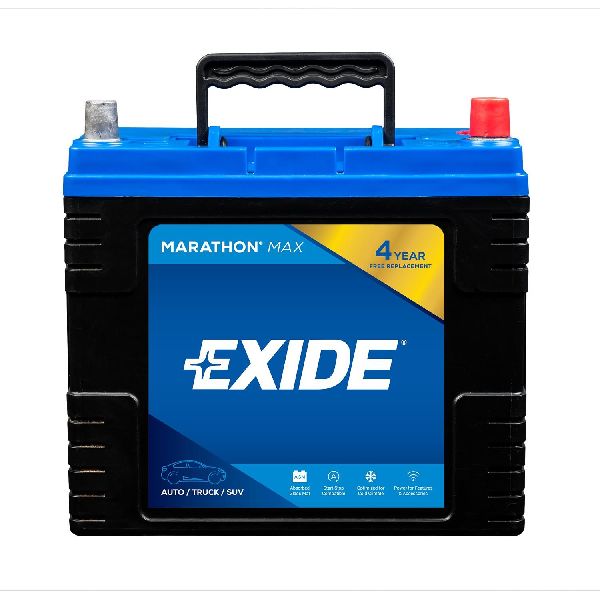
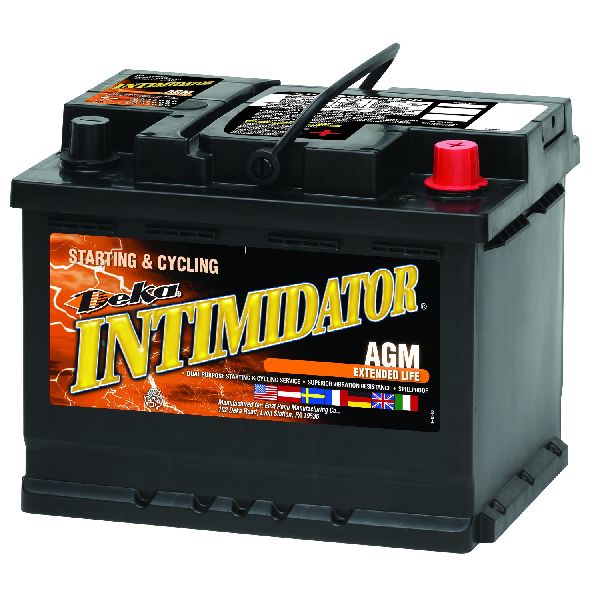
Typical fix: Replace the 12V battery. The 10th Gen Civic typically uses an AGM style battery, Group Size 47 (H5).
Est. part cost: $180-$250 - Faulty Steering Angle Sensor (SAS) 🟡 Medium Probability → Shop Steering Angle Sensor
How to confirm: If wiring, fuses, and battery voltage are all confirmed to be good, the sensor itself is the likely failure point. A professional scan tool that can't communicate with the SAS module, or the presence of code C0051-96 (internal component failure), points to an internal sensor failure. 🎬 See this step-by-step steering angle sensor replacement
Typical fix: Replace the steering angle sensor, which is integrated into the clock spring/combination switch assembly behind the steering wheel. The new sensor must be calibrated using a compatible scan tool.
Est. part cost: $100-$250 - CAN Bus Wiring Fault (Non-Rodent) ⚪ Low Probability
How to confirm: With the battery disconnected, test the resistance between Pin 6 (CAN-H) and Pin 14 (CAN-L) at the OBD-II port. A healthy network should read ~60 Ohms. A reading of ~120 Ohms indicates an open circuit or a missing terminating resistor. A reading near 0 Ohms indicates a short between the CAN high and low lines.
Typical fix: Trace the F-CAN wiring to find and repair the open, short, or corroded connector. This is a job for an experienced technician.
Est. part cost: $5-$50
Rare But Worth Checking
- Blown Fuse: A simple blown fuse for the EPS or VSA system can cut power to the SAS module, causing a communication loss. Specifically, check the fuses in the under-dash fuse box; one video identified fuse B7 as a common fuse for EPS, VSA, and ABS systems. Always check relevant fuses before proceeding with more complex diagnostics.
- Faulty VSA Modulator or EPS Control Unit: In rare cases, another module on the same CAN network can fail in a way that disrupts all communication, causing other modules like the SAS to appear offline. This usually requires advanced diagnostics with a professional scan tool to see which modules are and are not communicating.
Diagnosis Steps
- Read All Fault Codes: Use a quality OBD-II scanner to pull codes from all vehicle modules (ABS, EPS, BCM), not just the engine computer. Note any other codes that appear with U0126, especially C0051-96 or U3003-16.
- Check Battery Health: Test the 12V battery voltage with the car off (>12.4V) and running (13.7V-14.7V). Also perform a load test to check its overall health, as low voltage is a known cause of communication faults.
- Inspect Fuses: Check all fuses related to the VSA, ABS, and EPS systems in both the interior (under-dash) and under-hood fuse boxes. Pay attention to multi-system fuses like the one in position B7 of the interior panel.
- Visual Wiring Inspection: This is a critical step for this vehicle. Thoroughly inspect all visible wiring harnesses in the engine bay, around the firewall, under the dash, and specifically the EPS harness leading down to the steering rack for signs of rodent damage, chafing, or corrosion.
- Test CAN Bus Resistance: Disconnect the battery. Use a multimeter to measure the resistance between pins 6 (CAN-H) and 14 (CAN-L) of the OBD-II port. A reading of ~60 Ω indicates the main network wiring and its two 120 Ω terminating resistors are likely intact. 120 Ω suggests an open circuit, while ~0 Ω suggests a short.
- Live Data Scan: Using a bi-directional scanner, attempt to view live data from the steering angle sensor. If the module is offline or the data doesn't change as you turn the wheel, and all wiring/power is good, the sensor has likely failed.
- Confirm Power and Ground at Sensor: If accessible, use a multimeter and a wiring diagram to confirm the SAS module is receiving proper power and has a solid ground connection at its electrical connector.
Parts You'll Likely Need
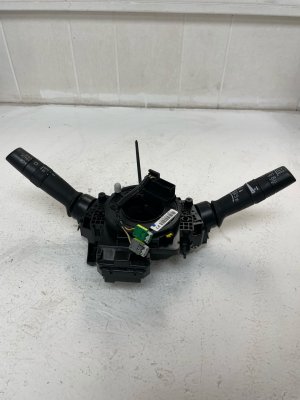
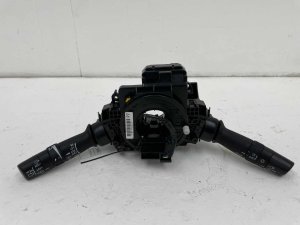
- Combination Switch / Clock Spring Assembly
(OEM #35256-TVA-A11 (Verify with VIN))— If wiring and power are confirmed good, the sensor itself, which is integrated into this assembly, has likely failed. This part number fits some 2019-2021 Civics but VIN verification is mandatory as multiple versions exist.
Trusted brands: Honda (Genuine OEM)
OEM price range: $150-$250
Aftermarket price range: $100-$180 - 12V AGM Battery — If a weak battery is causing the communication faults, it must be replaced. The 10th Gen Civic uses an AGM battery, typically Group Size 47 or H5.
Trusted brands: Deka, Bosch, Interstate
OEM price range: $250-$350
Aftermarket price range: $180-$250 - Rodent-Deterrent Tape
(OEM #4019-2317)— Used to wrap repaired wiring harnesses or as a preventative measure to deter rodents from chewing on the soy-based insulation. It is treated with capsaicin (hot pepper extract).
Related Codes That Often Appear With This One
- C0051-96 — This Honda-specific code indicates an internal failure of the steering angle sensor component. Seeing it with U0126 strongly suggests the sensor itself has failed and is not communicating as a result.
- U3003-16 — This code indicates that a module's supply voltage is below the normal operating threshold. Seeing it with U0126 is a strong clue that a weak or failing battery is the root cause of the communication problem.
- C0051-54 — This code indicates the steering angle sensor is not calibrated. It will often appear *after* a repair (like replacing the sensor or fixing wiring) and signifies that the SAS neutral position relearn procedure must be performed.
Technical Service Bulletins (TSBs) & Recalls
- Honda Service Bulletin 19-091: 'Warranty Extension: 2016-21 Civic A/C Condenser' - Extends warranty to 10 years/unlimited miles for factory-defective condensers.
- Honda Service Bulletin 19-038: 'Warranty Extension: 2016-18 Civic 1.5L: DTC P0300... or P0172' - Addresses oil dilution drivability issues by extending the powertrain warranty on certain components.
Platform-Specific Known Issues
- A widely documented issue involves rodent damage to the engine or firewall wiring harness due to the use of soy-based wire insulation, which is attractive to animals. The EPS sub-harness is a frequent target, leading directly to U0126 and related power steering failure codes.
Mechanic-Grade Diagnostic Values
- F-CAN Bus Resistance at OBD-II Port — expected: ~60 Ω (±5 Ω). Failure: ~120 Ω indicates an open in the bus or a missing terminating resistor. ~0 Ω indicates a short between CAN High and CAN Low lines.
- CAN Bus Voltage (Key On, Engine Off) — expected: CAN High (Pin 6): ~2.6V, CAN Low (Pin 14): ~2.4V. Failure: Voltages that are stuck high, low, or equal to each other indicate a bus fault (short to power, short to ground, or shorted together).
- Power Supply at Steering Angle Sensor Connector — expected: 12.0V - 12.6V (Key On). Failure: Low or no voltage indicates a problem with the power feed circuit or a blown fuse.
- Ground Resistance at Steering Angle Sensor Connector — expected: < 0.1 Ω. Failure: High resistance indicates a poor ground connection, which can cause intermittent module operation.
Scan Tool Commands That Help
- Honda HDS (or compatible advanced scanner like Autel/Launch): VSA Sensor Neutral Position Memorization — This procedure is required after replacing the steering angle sensor, VSA modulator, SRS unit, disconnecting the battery, or performing a wheel alignment. It calibrates the zero point for the steering angle, yaw, and G-sensors.
- Honda HDS (or compatible advanced scanner): ABS/VSA Data List -> STEERING ANGLE (CAN) — Used to view the live data from the steering angle sensor. If the value is stuck at 0 or an extreme number (e.g., 180°) while turning the wheel, it indicates a sensor or communication problem. This is also used to verify the sensor is 180 degrees out of phase before manual adjustment.
Wiring & Ground Locations
- G101 — At the top rear side of the engine (left or right depending on exact configuration).. This is a primary engine and component ground. While not directly for the SAS, a poor engine ground can introduce electrical noise that disrupts CAN bus communication.
- G503 / G504 — Under or at the right side/end of the dashboard.. These are major interior ground points for various modules. The EPS control unit grounds nearby, and a fault here can directly impact the power steering system and its communication with the SAS.
- Steering Angle Sensor Connector — Behind the steering wheel, connected to the clock spring/combination switch assembly.. This is the direct connection point for the sensor. Technicians must verify power, ground, and CAN signals at these pins (e.g., Pin 2 for CAN-H, Pin 3 for CAN-L on some models) to isolate a wiring vs. sensor failure.
Real Owner Repair Stories
- Reddit user in r/AskMechanics (2017 Honda Civic EX-T, 65k miles, Automatic) — Dashboard lit up with multiple warnings (ABS, VSA, Power Steering). Codes C0051-96 (SAS Internal Failure) and U0126-00 (CAN Communication Failure) were present. The issue was intermittent, disappearing and reappearing over several days.
❌ Tried (didn't work) Clearing the codes would make the lights go away temporarily, but they would return.
✅ What actually fixed it The user was advised that due to the intermittent nature and the combination of an internal failure code (C0051-96) with the communication code (U0126), the steering angle sensor itself was the most likely culprit. The intermittent behavior is common for a failing electronic component before it fails completely. The final fix was not posted, but the diagnosis pointed directly to sensor replacement. - Reddit user in r/MechanicAdvice (2019 Honda Civic Si, 95k miles, Manual) — Immediately after a fuel injector replacement (where the battery was disconnected for hours), multiple warnings appeared for stability control, ABS, and power steering. The scanner pointed to the steering angle sensor.
❌ Tried (didn't work) Resetting codes with an OBD scanner, resetting the head unit, and attempting manual recalibration procedures (turning the wheel lock-to-lock) did not provide a permanent fix. The lights would return on the next drive cycle.
✅ What actually fixed it The owner called a trusted shop, who confirmed the sensor is part of the clock spring assembly. The shop owner suspected that the prolonged battery disconnect caused the sensor to lose its calibration permanently, a known Honda quirk. The final fix was to have the dealer or a well-equipped independent shop perform the 'VSA Sensor Neutral Position Memorization' with a proper diagnostic tool like the Honda HDS.
OEM Part Supersession History
Various→35256-TVA-A11— Part consolidation and potential minor revisions.
Heads up: Part number 35256-TVA-A11 is listed for 2019-2021 Civics and 2018+ Accords. Earlier 10th-gen Civics (2016-2018) may use a different part number. Using the wrong clock spring/SAS assembly can lead to non-functional steering wheel controls or immediate fault codes. Always verify the correct part number with the vehicle's VIN.
Model Year Variations Within This Range
- 2016-2018: Early models with the 1.5L Turbo engine were subject to concerns about fuel mixing with engine oil (oil dilution), primarily in cold climates with short trip driving. While not directly related to U0126, this led to a warranty extension and software updates that may affect overall module behavior.
- 2019-2021: The Civic received a mid-cycle refresh for the 2019 (Sedan/Coupe) and 2020 (Hatchback/Si) model years. This included aesthetic updates and making the Honda Sensing suite of safety features (which relies on the SAS) standard on more trims. The infotainment system was also updated with a physical volume knob. Part numbers for related electronics, like the clock spring assembly, may differ post-refresh.
Diagnostic Flowchart
Other Known Issues on This Vehicle
Issues unrelated to this code that are worth knowing about as an owner of this generation:
- A/C Condenser Failure 🔴 High — Very common across all 2016-2021 models. Tiny leaks develop in the condenser tubes. (Ref: Honda Service Bulletin 19-091 extended the warranty for the A/C condenser to 10 years with unlimited mileage.)
- Oil Dilution (1.5L Turbo Engine) 🔴 High — Widespread on 1.5T models, especially in cold climates or with frequent short trips. Fuel mixes with engine oil. (Ref: Honda issued TSBs (e.g., 19-038) and extended powertrain warranties for certain components on affected 2016-2018 models.)
- Sticky Steering 🟠 Medium — More prevalent on later 10th gen and early 11th gen models. Steering feels 'notchy' or sticks momentarily at highway speeds. (Ref: NHTSA investigation opened (Momentary Increased Steering Effort). A recall (24V-744) was issued for some 2022-2025 models, but owners of 2019-2021 models have also reported similar symptoms.)
- Faulty Fuel Injectors (1.5L Turbo Engine) 🟠 Medium — Common cause for P0172 (System Too Rich) code, often related to the oil dilution issue. (Ref: Honda extended the warranty on fuel injectors for some models. The updated OEM part kit is 06160-5PA-305.)
Used vs. New Parts: Buying Guide for This Vehicle
When a used part is the smart pick: A used combination switch/clock spring assembly from a reputable salvage yard can be a cost-effective option, especially if the failure is electronic and not due to physical damage (like a deployed airbag). Wiring harness sections for repairing rodent damage are also excellent candidates for used parts.
Donor-vehicle mileage cap: roughly under 80000 miles for the part to have meaningful remaining life.
What to inspect on the donor part:
- Verify the donor vehicle was not in a major front-end collision.
- Ensure the airbag was not deployed, as this destroys the clock spring.
- Check that the part number matches your original part exactly or is a known compatible supersession.
- Inspect the connectors for any signs of corrosion, bent pins, or cut wires.
- Ask for the donor vehicle's VIN to cross-reference its features (e.g., with/without Honda Sensing) to ensure compatibility.
OEM-only on this vehicle (don't cheap out):
- 12V AGM Battery: While aftermarket is fine, avoid cheap, unproven brands. Stick to reputable OEM suppliers like Bosch, Deka, or Interstate for reliability, as low voltage is a key cause of this code.
Aftermarket brands forum-validated for this vehicle:
- For the clock spring assembly, Standard Motor Products (SMP) and Carquest Premium are generally considered reliable aftermarket alternatives if an OEM part is unavailable.
Brands owners have reported issues with on this vehicle:
- Ultra-cheap, no-name clock spring assemblies from online marketplaces often have poor internal build quality, leading to premature failure or immediate 'out of the box' issues.
Real Owner Stories
Aggregated from forums and TSBs cited above. Mileages and costs reflect what owners reported in those sources.
2018 Honda Civic Hatchback
Symptoms: Intermittent loss of power steering and multiple warning lights appearing on the dashboard.
What fixed it: Replacement of the 12V battery, as the low voltage was causing communication errors between modules.
Source hint: reddit.com/r/hondacivic thread 'Trouble code help'
2021 Honda Civic
Symptoms: The technician found no voltage from the sub torque sensor and codes C1420, C1422, C0051-96, and U0126.
What fixed it: Repaired rodent damage found on the EPS harness near the steering rack.
Source hint: youtube.com video '2016-2021 Honda Civic C1420 C1422 C0051-96 U0126' by mechanicRHP
2016 Honda Civic
Symptoms: ABS, VSA, TPMS, and Steering lights stayed on after an airbag deployment in a salvage vehicle.
What fixed it: Traced the communication fault back to the clock spring area where the steering angle sensor is located.
Source hint: hondacivicforum.com thread 'ABS, VSA, TMPS, Steering lights are on!'
Related OBD-II Codes
Frequently Asked Questions
Why are there so many warning lights like ABS, VSA, and Power Steering on my 2016-2021 Civic dash at once?
Is it true that rodents are attracted to the wiring in my 10th Gen Civic?
Could a weak battery really cause a U0126 communication code?
Does Service Bulletin 19-091 or 19-038 cover the repair for code U0126?
If I replace the Steering Angle Sensor myself, is it a simple plug-and-play fix?
Helpful Videos

Used OEM Parts in Stock
New Aftermarket Parts Available


The information in this article is provided for general reference and educational purposes only. Vehicle specifications, procedures, and part compatibility can vary by production date, trim level, and region. Always consult your vehicle's factory service manual and verify part numbers before purchasing or performing repairs. Safety-critical components such as airbags, seat belts, and braking systems should be installed by a qualified professional.
- Honda Civic:
- 🧭 Diagnostic Flowchart
- 🎬 Helpful Videos
- 🛍️ Shop This Part
- What's Unique About the 2016-2021 Honda Civic
- Symptoms You May Notice
- Most Likely Causes
- Rare But Worth Checking
- Diagnosis Steps
- Parts You'll Likely Need
- Related Codes That Often Appear With This One
- Technical Service Bulletins (TSBs) & Recalls
- Platform-Specific Known Issues
- Mechanic-Grade Diagnostic Values
- Scan Tool Commands That Help
- Wiring & Ground Locations
- Real Owner Repair Stories
- OEM Part Supersession History
- Model Year Variations Within This Range
- Other Known Issues on This Vehicle
- Used vs. New Parts: Buying Guide for This Vehicle
- Real Owner Stories
- 2018 Honda Civic Hatchback
- 2021 Honda Civic
- 2016 Honda Civic
- Related OBD-II Codes
- Frequently Asked Questions
- 🎟️ Get 5% Off