

U0126 on 2019-2025 Toyota RAV4: Lost Communication with Steering Angle Sensor Fixes
This code means the Steering Angle Sensor isn't communicating, disabling safety systems like stability control. Before replacing the sensor, check for a low battery or blown fuses (like the ECU-B fuse). A dead battery after the car sits is a very common trigger for this code. If the sensor needs replacement, expect to pay $600-$1000 at a shop for the part and the required calibration.
- U0126 disables crucial safety systems like VSC and ABS. Do not ignore this code.
- Before assuming the expensive sensor has failed, always check the battery's health and inspect the 'ECU-B' fuse first. A low voltage event is a very high probability cause.
- This is not a DIY-friendly repair for most due to the need to handle an airbag and perform a mandatory electronic calibration with a professional scan tool.
What's Unique About the 2019-2025 Toyota RAV4
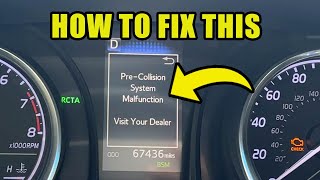
For the fifth-generation RAV4 (2019-2025), the steering angle sensor is deeply integrated with the Toyota Safety Sense suite, including Pre-Collision System and Lane Tracing Assist. A communication failure will disable these features, often displaying multiple warnings on the dash like 'Pre-Collision System Malfunction' and 'Blind Spot Monitor System Malfunction 🎬 Watch: How to fix the Pre-Collision System warning light'. Toyota has also issued a Tech Tip (T-TT-0616-20) for 2019-2021 models noting that a simple battery disconnect or discharge can cause steering-related issues that require a specific recalibration procedure, highlighting the system's sensitivity.
Symptoms You May Notice
- ABS, VSC (Vehicle Stability Control), and Traction Control warning lights illuminated on the dashboard.
- Warning messages related to Pre-Collision System (PCS) or other 🎬 See this DIY fix for the Pre-Collision System malfunction driver aids being unavailable.
- Blind Spot Monitor (BSM) System Malfunction warning.
- AWD System Malfunction warning on all-wheel-drive models.
- Power steering may feel heavy or steering assist may be reduced.
- Lane-keep or lane-assist features are disabled.
- Replacing the steering angle sensor without first checking for simple issues like a weak battery or a blown fuse.
- Replacing other modules like the ABS or main ECU when the U0126 code is isolated to the steering angle sensor communication.
- Failing to perform the zero-point calibration after replacing the battery or the sensor, causing the code to persist.
Most Likely Causes
- Low Battery Voltage or Poor Ground 🔴 High Probability → Shop Vehicle Battery Modern vehicles with many electronic modules are sensitive to voltage fluctuations. A weak or dead battery is a very common cause of the U0126 code on this platform, as control modules fail to initialize properly without stable voltage. The code often appears after a jump-start or battery replacement if calibration is not performed.
How to confirm: Test the battery voltage with a multimeter. It should be approximately 12.6V with the engine off and 13.7-14.7V with the engine running. Check that battery terminals are clean and tight. A code that appears after a dead battery incident strongly points to this cause.
Typical fix: Charge or replace the battery. Clean or repair ground connections. After restoring power, the Steering Angle Sensor Zero Point Calibration may need to be performed by a dealer or a shop with a capable scan tool.
Est. part cost: $150-$300 - Blown Fuse for SAS Module 🟡 Medium Probability
How to confirm: Inspect the fuses, particularly the ECU-B and ECU-IG fuses in the under-hood and in-cabin fuse boxes, as these often provide power to the steering angle sensor module. Check for power on both sides of the fuse with a test light or multimeter.
Typical fix: Replace the blown fuse. If the fuse blows again, it indicates a short circuit that needs to be diagnosed.
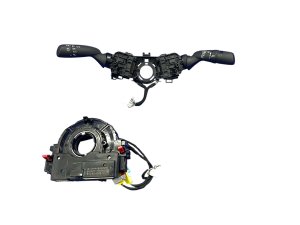
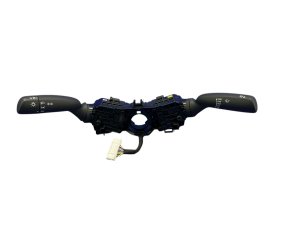
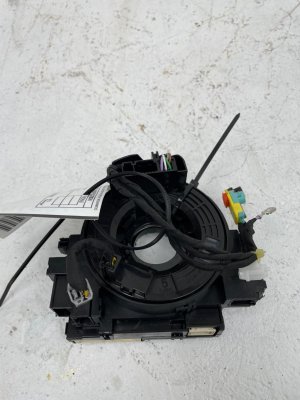
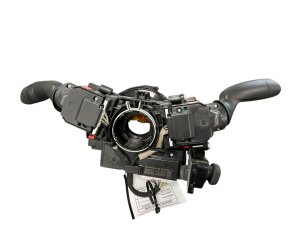
Est. part cost: $1-$5 - Faulty Steering Angle Sensor / Clock Spring Assembly 🟡 Medium Probability → Shop Air Bag Clockspring The sensor is part of the clock spring (or spiral cable) assembly, which contains a flexible ribbon cable that can wear out or break from the constant rotation of the steering wheel. This is a common failure point on many vehicles over time.
How to confirm: After confirming power and ground are good and CAN bus wiring is intact, the sensor itself is the likely failure point. A professional scan tool may show the module as 'offline' or have erratic data readings before failure. A diagnostic test may involve checking for 12V power, ground, and CAN signals at the sensor connector.
Typical fix: Replace the entire steering angle sensor and clock spring assembly, followed by a mandatory zero-point calibration.
Est. part cost: $280-$565 - CAN Bus Wiring or Connector Issue ⚪ Low Probability
How to confirm: Visually inspect the wiring harness and connectors at the base of the steering column for any damage, corrosion, or loose pins. A professional can perform a CAN bus resistance test at the OBD-II port (should be ~60 ohms) and check for proper voltage on the CAN High and Low lines at the sensor connector.
Typical fix: Repair the damaged wiring or clean/re-pin the affected connector.
Est. part cost: $0-$50
Diagnosis Steps
- Scan for all Diagnostic Trouble Codes (DTCs) in all modules. Note if U0126 is the only code or if other communication codes are present.
- Check the vehicle's battery. Ensure it is fully charged and the terminals are clean and tight. A voltage below 12.4V can cause communication issues. This is the most common trigger.
- Inspect relevant fuses. Check the 'ECU-B' and 'ECU-IG' fuses in the engine bay and interior fuse boxes.
- If the code appeared after a battery disconnect/replacement, attempt the Steering Angle Sensor Zero Point Calibration first using a compatible scan tool as described in T-TT-0616-20.
- If fuses and battery are good, gain access to the steering column connectors. Disconnect the battery and wait at least 5 minutes before proceeding to allow capacitors to discharge.
- Visually inspect the connectors to the clock spring/steering angle sensor for damage or backed-out pins.
- Using a multimeter and wiring diagram, test for proper power (12V) and ground (near 0 ohms to chassis) at the sensor's connector.
- Test the CAN bus wires at the connector for proper resistance and voltage to ensure the network wiring is intact.
- If power, ground, and network wiring are all confirmed to be good, the steering angle sensor/clock spring assembly is faulty and needs replacement.
- After replacement, perform the Steering Angle Sensor Zero Point Calibration using a compatible scan tool. This step is mandatory.
Parts You'll Likely Need
- Steering Angle Sensor / Clock Spring Assembly
(OEM #8924B-42010)— This is the component that fails if all wiring and power sources are confirmed to be good. It is often sold as an assembly with the clock spring (spiral cable). Note: Part number can vary based on options like a heated steering wheel; always verify with VIN.
Trusted brands: Toyota (OEM), Dorman
OEM price range: $380-$565
Aftermarket price range: $300-$450
Related Codes That Often Appear With This One
- C1433 — This is a Toyota-specific code for 'Steering Angle Sensor Internal Circuit'. If seen with U0126, it strongly points to the sensor itself having failed internally.
- U0073 — This code means 'Control Module Communication Bus "A" Off'. If you see this along with U0126 and other U-codes, it indicates a wider network problem affecting multiple modules, not just the steering sensor.
- P0335 — Crankshaft Position Sensor 'A' Circuit. This can sometimes appear alongside communication codes after a significant voltage drop or dead battery event, as seen in some owner reports.
- C1A50 — Brake Control System. This can also be triggered by a low voltage event that causes multiple safety systems to report errors simultaneously.
Technical Service Bulletins (TSBs) & Recalls
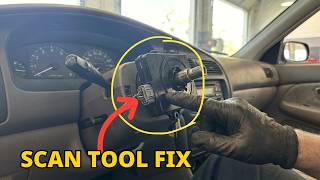
- T-TT-0616-20: Steering Recalibration After 🎬 Watch: How to calibrate the steering angle sensor without a dealer tool Abnormal Steering Sensation or Battery Disconnect.
- T-SB-0061-20: Electronic Power Steering (EPS) Light ON With DTC C05D604.
Platform-Specific Known Issues
- Per Toyota Tech Tip T-TT-0616-20, some 2019-2021 models can experience steering system abnormalities (pulling/drifting) or codes after a battery disconnect. The fix is to perform the 'Steering Angle Neutral Point Memorization' and 'Steering Sensor Zero Point Calibration', which underscores the system's reliance on proper calibration.
- A separate TSB (T-SB-0061-20) exists for some 2019-2020 models that may throw a power steering light and code C05D604 due to sensitive ECU logic. The fix is a software update, which could be relevant if other steering-related codes are present.
Mechanic-Grade Diagnostic Values
- CAN Bus Resistance at OBD-II Port — expected: Approximately 60 Ω. Failure: A reading of 120 Ω suggests an open circuit or one terminating resistor is offline. A reading significantly lower than 60 Ω indicates a short between CAN lines.
- CAN Bus Resistance at SAS Connector — expected: 54 to 69 Ω. Failure: Readings outside this range indicate a problem in the CAN branch wiring or the sensor itself.
- Power Supply Voltage at SAS Connector — expected: 10 to 14 V. Failure: Voltage below 10V indicates a power supply issue to the sensor.
- Ground Circuit Resistance at SAS Connector — expected: Below 1 Ω. Failure: Resistance higher than 1 Ω indicates a poor ground connection, which can cause communication faults.
- Techstream Steering Angle Value (Pre-Calibration) — expected: Should be close to 0° with wheels straight.. Failure: A value greater than +3° or less than -3° with the steering wheel held straight indicates the need for calibration, as noted in T-TT-0616-20.
Scan Tool Commands That Help
- Toyota Techstream: Chassis / ABS/VSC/TRAC / Utility / Reset Memory — This is the first step in the calibration process. It clears any existing (and potentially faulty) zero point calibration data from the Skid Control ECU before you perform a new calibration.
- Toyota Techstream: Chassis / ABS/VSC/TRAC / Utility / Test Mode (VSC Sensor Neutral Position Calibration) — This function is used to perform the zero point calibration of the yaw rate and deceleration sensors, which is often required alongside the steering angle sensor calibration after a part replacement or battery disconnect.
- Toyota Techstream: Communication Bus Check — Use this function to see which modules are currently communicating on the CAN bus. If the 'Spiral cable (Steering Angle Sensor)' is not displayed or shows a communication stop, it confirms the U0126 fault at the network level.
Wiring & Ground Locations
- E11 Connector — At the steering angle sensor, located within the steering column behind the steering wheel.. This is the main electrical connector for the steering angle sensor. All power, ground, and CAN bus signals for the sensor pass through this connector, making it the primary test point for diagnosing wiring faults.
- CAN Bus Terminals at OBD-II Port — Pin 6 (CAN High) and Pin 14 (CAN Low) on the Data Link Connector 3 (DLC3) under the driver's side dashboard.. These pins provide a convenient, non-intrusive point to measure the overall health of the CAN bus network by checking for the characteristic 60 Ω resistance.
Real Owner Repair Stories
- Reddit user in r/MechanicAdvice (2017 Toyota RAV4 (similar platform and issue)) — Multiple dash warnings including 'Pre-Collision System Malfunction', 'Blind Spot Monitor System Malfunction', and 'AWD System Malfunction'. Scan revealed codes U0126, P0335, and C1A50.
❌ Tried (didn't work) Driving the car around did not clear the codes.
✅ What actually fixed it The issue occurred immediately after the battery died and the car was jump-started. The consensus from technicians was that replacing the battery and then clearing the codes and performing a zero-point calibration with a capable scan tool would resolve the issue, as low voltage is a known trigger for this cascade of communication faults. - NHTSA ODI #10925556 — An owner of a similar Toyota model reported that after their dashboard lights came on, a dealer identified error codes U0123, U0124, and U0126. The dealer recommended replacing the ABS actuator pump to resolve the communication faults.
OEM Part Supersession History
8924B-0R020→8924B-12010, 8924B-42010— Standard part evolution and potential minor revisions for reliability or manufacturing improvements.
Heads up: While these parts are often listed as interchangeable for various Toyota models, it is critical to verify the exact part number required for the specific RAV4's VIN, especially considering options like heated steering wheels which can alter the clock spring assembly.
Model Year Variations Within This Range
- 2019-2021: These model years are specifically called out in Toyota Tech Tip T-TT-0616-20 for being susceptible to steering abnormalities and codes after a battery disconnect, requiring a specific recalibration procedure. While the issue may affect later years, the TSB explicitly covers this range.
Diagnostic Flowchart
Other Known Issues on This Vehicle
Issues unrelated to this code that are worth knowing about as an owner of this generation:
- Roof Rail Leak 🔴 High — Common on 2019-2021 models. Caused by faulty mounting clip seals allowing water into the cabin, potentially damaging the headliner and A-pillar electronics. (Ref: Toyota Customer Support Program 22TE05 extends warranty coverage for this issue to 10 years/unlimited miles.)
- Fuel Tank Not Filling Completely (Hybrid) 🟠 Medium — A well-documented issue on 2019-2021 RAV4 Hybrids where the fuel tank shape prevents it from accepting its full 14.5-gallon capacity, often stopping 3-5 gallons short. (Ref: Led to a class-action settlement and an extended customer support program for inspection and repair.)
- 8-Speed Automatic Transmission Hesitation/Rough Shifting 🟠 Medium — Primarily reported on 2019-2020 gas models. Owners report lurching, hesitation, and rough shifts at low speeds. Some issues were addressed with a software update. (Ref: Various TSBs have been issued for software updates.)
- High-Voltage Cable Corrosion (Hybrid) 🔴 High — Known as 'Cablegate', the main high-voltage cable running to the rear motor is susceptible to corrosion, especially in regions with road salt. Repair can be extremely expensive. (Ref: No recall, but warranty extensions have been offered in some regions like Canada.)
- Excessive Wind Noise 🟡 Low — A common complaint across the 5th generation is higher-than-expected wind noise from the doors and mirrors at highway speeds. (Ref: Some owners have had success with dealers adjusting door seals or installing updated mirror gaskets.)
- Infotainment System Glitches 🟡 Low — Owners report issues with the infotainment system freezing, rebooting, or having unstable Bluetooth connections. (Ref: Dealer software updates can sometimes resolve these issues.)
Used vs. New Parts: Buying Guide for This Vehicle
When a used part is the smart pick: A used steering angle sensor/clock spring assembly from a reputable salvage yard can be a cost-effective option, but only if it comes from a low-mileage, collision-free donor vehicle. The risk of a worn-out internal ribbon cable is high, so this is a gamble.
Donor-vehicle mileage cap: roughly under 50000 miles for the part to have meaningful remaining life.
What to inspect on the donor part:
- Verify the part number on the used unit matches your original part exactly.
- Inspect the connectors for any signs of corrosion, bent pins, or damage.
- Ensure the clock spring was locked in the centered position during removal from the donor vehicle; if it spun freely, the internal ribbon is likely damaged.
- Ask for the VIN of the donor vehicle to cross-reference its features (e.g., heated steering wheel) with your own.
OEM-only on this vehicle (don't cheap out):
- Steering Angle Sensor / Clock Spring Assembly
Brands owners have reported issues with on this vehicle:
- Unnamed eBay/Amazon sellers
- Dorman (mixed reviews; some users report premature failure or incorrect connectors for airbag systems, though some have success).
Real Owner Stories
Aggregated from forums and TSBs cited above. Mileages and costs reflect what owners reported in those sources.
2017 Toyota RAV4
Symptoms: Owner reported U0126, P0335, and C1A50 codes along with multiple dashboard warning lights immediately following a dead battery incident.
What fixed it: The issue was triggered by low voltage; the cascade of communication codes required addressing the battery state and clearing the codes generated by the voltage drop.
Source hint: r/MechanicAdvice - 'RAV4 error code after dead battery'
Toyota Owner (NHTSA ODI #10925556)
Symptoms: The owner reported that multiple dashboard lights came on. A local repair shop found no codes, but a Toyota dealer identified error codes U0123, U0124, and U0126.
What fixed it: The dealer stated that the ABS actuator pump required replacement at a cost of over $3,600.
Source hint: NHTSA ODI #10925556
Related OBD-II Codes
Frequently Asked Questions
My 2019 RAV4 has a heavy steering feel and the ABS light is on after a jump-start. Is this related to U0126?
Does Toyota Tech Tip T-TT-0616-20 apply to my 2021 RAV4 if the steering feels 'off' after a battery change?
Could a roof rail leak cause communication codes like U0126 in my 2020 RAV4?
I have a power steering light and code C05D604 on my 2020 RAV4; is this the same as U0126?
Is the Steering Angle Sensor a separate part I can replace on my RAV4?
Which fuses should I check for a U0126 communication error on a 2019-2025 RAV4?
Helpful Videos
We Have This Part in Stock

The information in this article is provided for general reference and educational purposes only. Vehicle specifications, procedures, and part compatibility can vary by production date, trim level, and region. Always consult your vehicle's factory service manual and verify part numbers before purchasing or performing repairs. Safety-critical components such as airbags, seat belts, and braking systems should be installed by a qualified professional.
- Toyota RAV4:
- 🧭 Diagnostic Flowchart
- 🎬 Helpful Videos
- 🛍️ Shop This Part
- What's Unique About the 2019-2025 Toyota RAV4
- Symptoms You May Notice
- Most Likely Causes
- Diagnosis Steps
- Parts You'll Likely Need
- Related Codes That Often Appear With This One
- Technical Service Bulletins (TSBs) & Recalls
- Platform-Specific Known Issues
- Mechanic-Grade Diagnostic Values
- Scan Tool Commands That Help
- Wiring & Ground Locations
- Real Owner Repair Stories
- OEM Part Supersession History
- Model Year Variations Within This Range
- Other Known Issues on This Vehicle
- Used vs. New Parts: Buying Guide for This Vehicle
- Real Owner Stories
- 2017 Toyota RAV4
- Toyota Owner (NHTSA ODI #10925556)
- Related OBD-II Codes
- Frequently Asked Questions
- 🎟️ Get 5% Off