

OBD-II Code U0128: Lost Communication With Park Brake Control Module
The Ultimate Guide to What U0128 Means, Why It Triggers, and How to Fix It
- Code U0128 disables your electronic parking brake, creating an immediate roll-away risk on inclines.
- Corroded wiring from water intrusion and spilled liquids on the center console EPB switch cause over 70% of U0128 failures.
- Test your battery voltage and inspect the 12V EPB fuse before spending $400+ on a replacement control module.
- Check for Technical Service Bulletins (TSBs) first, as 2019-2020 GM trucks and 2010-2012 Range Rovers resolve this code with a simple 1-hour software update.
What Does U0128 Mean?
Code U0128 indicates your car's main computer network lost its connection to the electronic parking brake control module (PBCM). This module is the dedicated 'brain' for the electronic parking brake. Because of this Controller Area Network (CAN bus) breakdown, the system cannot confirm the parking brake's status, triggering warning lights and disabling the brake entirely.
Technical definition: Lost Communication With Park Brake Control Module (PBCM). This diagnostic trouble code (DTC) sets when the PBCM fails to transmit or acknowledge network messages on the Controller Area Network (CAN) bus for a specified period. Other modules on the network report the PBCM as 'offline', triggering the fault.
Can I Drive With U0128?
Yes, But With Caution. You can drive, as your primary hydraulic brakes remain active. However, the electronic parking brake is inoperative, creating a severe roll-away risk on inclines. Certain vehicles, like 2019-2020 GM trucks, enter a 'limp mode' with reduced engine power. Inspect the vehicle immediately to restore parking safety.
Common Causes
- Corroded Wiring or Water Intrusion (Very Common) — The wiring harness for the park brake module sits under the vehicle or in the trunk, making it highly vulnerable to water, road salt, and debris. Water leaking from failed taillight seals or body seams directly shorts the module and corrodes connector pins, interrupting power or data signals. This is the most frequent cause of U0128, notoriously affecting 2014-2018 Jeep Cherokees.
- Faulty Electronic Parking Brake (EPB) Switch (Common) — The center console switch used to activate the brake fails from spilled liquids or daily wear and tear. Damaged internal contacts prevent the switch from sending the correct signal to the module. This is a high-failure item on many Hyundai and Kia models.
- Weak Battery or Failing Alternator (Common) — Vehicle control modules require stable voltage to initialize. A weak battery or failing alternator provides insufficient voltage during startup, causing random communication codes like U0128 as modules fail to boot correctly. Suspect this if multiple unrelated 'U' codes appear simultaneously.
- Failed Park Brake Control Module (PBCM) (Common) — The module fails due to internal issues like cracked solder joints, software corruption, or physical gear breakage. On the Land Rover LR2, the internal plastic gears of the actuator/module assembly strip out, leading to total failure.
- Blown Fuse or Power Supply Issue (Less Common) — The PBCM requires a stable 12-volt power supply. A blown fuse, a bad relay, or a faulty ground connection forces the module to shut down and stop communicating.
- Software Glitch (Rare) — Software bugs trigger this code without physical part failure. Manufacturers release Technical Service Bulletins (TSBs) with software updates to fix known communication timeouts that cause U0128.
- CAN Bus Network Fault (Rare) — A different failing module floods the network with erroneous data, a termination resistor fails, or a short in the main network wiring prevents messages from reaching their destination. This always triggers multiple 'U' codes.
Symptoms
- EPB Warning Light or Message — The electronic parking brake warning light illuminates or flashes, and a 'Service Electronic Parking Brake' message appears on the instrument cluster.
- Parking Brake Stuck or Unresponsive — The electronic parking brake button does nothing. The brake remains permanently stuck on or off.
- Vehicle Won't Shift Out of Park — As a safety measure, the transmission locks in 'Park' because the status of the parking brake is unknown.
- Loud Screeching or Grinding Noise — On models like the Land Rover LR2, a loud mechanical screeching noise when using the parking brake indicates internal gear failure within the actuator assembly.
- Vehicle Enters 'Limp Mode' — Certain vehicles, particularly 2019-2020 GM trucks, enter a reduced power mode as a precaution when critical brake system communication drops.
Diagnostic Flowchart
Tap your situation to follow the diagnostic path that matches what you're seeing on this code.
Common Fixes & Costs
- Replace Electronic Parking Brake Switch
— Parts: $60-$120, Labor: $50-$150, ~0.8 hr book time
(DIY)
Subaru Outback/Legacy (2015-2019): OEM {'brand': 'Subaru', 'part_number': '83370AL00A', 'price': '$60-$80'}
Jeep Cherokee (2014-2018): OEM {'brand': 'Mopar', 'part_number': '68373898AA', 'price': '$80-$110'} - Repair Wiring or Replace Connector — Parts: $20-$100, Labor: $150-$300, ~1.5 hr book time (Intermediate)
- Replace Blown Fuse or Battery — Parts: $5-$250, Labor: $0-$50, ~0.5 hr book time (DIY)
- Update Module Software — Parts: $0, Labor: $100-$200, ~1 hr book time (Professional)
- Replace Park Brake Control Module (PBCM)
— Parts: $150-$900, Labor: $150-$400, ~1.5 hr book time
(Professional)
Jeep Cherokee (2014-2018): OEM {'brand': 'Mopar', 'part_number': '68330407AA', 'price': '$150-$220'} (Alt: {"brand": "Standard Motor Products (PBA001)", "price": "$125-$150"}, {"brand": "Dorman", "price": "$130-$160"})
Land Rover LR2 (2008-2012): OEM {'brand': 'Land Rover', 'part_number': 'LR027141', 'price': '$50-$100 (actuator only)'}
Land Rover (Misc. Models): OEM {'brand': 'Land Rover', 'part_number': 'LR019223', 'price': '$600-$800'} (Alt: {"brand": "Various", "price": "$200-$400"})
Used vs. New Parts: Buying Guide
When a used part is worth it: A used PBCM is cost-effective for older vehicles if sourced from a low-mileage donor vehicle scrapped for non-electrical reasons.
Donor-vehicle mileage cap: roughly under 100000 miles for the part to have meaningful remaining life.
Donor quality checklist:
- Verify the exact part number matches; superseded numbers require dealer programming.
- Avoid modules from flood-damaged vehicles.
- Purchase from a salvage yard offering a 90-day warranty.
Decision logic:
- If The fix requires software programming or VIN-matching → Buy a new or professionally refurbished pre-programmed module. Used modules often cannot be reprogrammed by standard shops.
- If The vehicle is less than 10 years old and the part is under $400 new → Buy new for the warranty and guaranteed compatibility.
- If The failure is a known mechanical issue (e.g., Land Rover LR2 screeching gears) → Buy new. A used part carries the exact same mechanical wear and will fail shortly.
Warranty tradeoff: Used parts carry a 30-90 day part-only warranty. New aftermarket parts offer 1-year warranties. New OEM parts carry 1-2 year warranties covering labor if dealer-installed.
Worst-case if a used part fails: $300-$500 if a used module fails, covering repeat diagnostic and installation labor.
What Happens If You Wait — Timeline
- 0-1 month: Intermittent 'Service Park Brake' light appears after hitting bumps. The code clears on its own. The system remains functional but unreliable. (MPG impact: 0%% · Added cost: $0)
- 1-3 months: The warning light becomes permanent, and the EPB is completely inoperative. The vehicle refuses to shift out of Park, requiring a tow. (MPG impact: 0%% · Added cost: $100-$250 (towing cost))
- 3-6 months: An intermittent short causes the brake to drag while driving, leading to glazed pads, warped rotors, and decreased fuel economy. (MPG impact: 5-10%% · Added cost: $300-$800 (premature rear brake job))
- 6+ months: Continued moisture exposure short-circuits the module, affecting other modules on the CAN bus network or causing the brake to apply unexpectedly while driving. (MPG impact: Up to 15%% · Added cost: $1000-$2500+ (module cascade failure))
Cost of Not Fixing It
- Immediate: No functional parking brake creates a severe roll-away risk on inclines, potentially leading to property damage or injury. (Added cost: Varies (potential for major liability))
- Short Term (days to weeks): The vehicle refuses to shift out of 'Park' as a safety precaution, leaving you stranded. (Added cost: $100-$250 (towing cost))
- Long Term (months): Intermittent faults cause the brake to drag while driving, destroying rear brake pads and rotors while decreasing fuel economy. (Added cost: $300-$800 (rear brake job))
Diagnosis Steps
- Check for Other Codes
Use an OBD-II scanner to read all fault codes. The presence of other 'U' codes points to a larger network or voltage problem rather than an isolated PBCM failure.
Tools: OBD-II Scanner (Beginner) - Test Battery and Inspect Fuses
Test the battery to ensure it holds at least 12.4V resting voltage. Then, consult the owner's manual to locate and check all fuses related to the 'Electronic Parking Brake' or 'BCM'. Replace any blown fuses.
Tools: Multimeter, Fuse Puller (Beginner) - Test the EPB Switch
Access the center console switch connector and use a multimeter in continuity mode. Verify the switch creates a closed circuit when pressed/pulled and an open circuit when released. Replace sticky or non-responsive switches.
Tools: Multimeter, Trim Removal Tools (Intermediate) - Visually Inspect the Module and Wiring
Locate the Park Brake Control Module (often in the trunk near the spare tire or under the rear axle). Inspect for water intrusion, green corrosion on the connector pins, or frayed wires. On Subarus, check for a broken plastic locking tab on the rear brake caliper connector.
Tools: Flashlight (Intermediate) - Test Module Power and Ground
With the ignition on, use a multimeter to verify 12V+ power at the module's main connector. Measure resistance between the ground pin and the chassis; a reading under 0.5 Ω is required. A poor ground is a frequent, overlooked cause.
Tools: Multimeter, Vehicle Wiring Diagram (Intermediate) - Attempt Direct Communication
Use a bi-directional scan tool to communicate directly with the PBCM. If the tool cannot connect, and you confirmed power, ground, and network wiring are intact, the module has failed internally.
Tools: Advanced Bi-Directional Scan Tool (Advanced) - Check CAN Bus Network Resistance
With the battery disconnected, measure resistance between the CAN High and CAN Low pins at the module's connector. A healthy network reads 60 ohms. A reading of 120 ohms indicates a broken wire or missing termination resistor.
Tools: Multimeter, Wiring Diagram (Advanced) - Check CAN Bus Voltages
With the battery connected and ignition ON, measure DC voltage on the CAN lines. CAN High should be 2.5V-3.5V, and CAN Low should be 1.5V-2.5V. Voltages stuck at 0V or 12V indicate a short to ground or power.
Tools: Multimeter, Wiring Diagram (Advanced) - Isolate the Module
If multiple 'U' codes are present, disconnect the PBCM and re-scan the vehicle. If other modules resume communication, the PBCM is shorting the network and requires replacement.
Tools: Advanced Bi-Directional Scan Tool (Professional)
When This Code Triggers (Freeze-Frame Conditions)
- Vehicle Speed: 0 mph (During startup or when attempting to apply/release the park brake.)
- Battery Voltage: 11.5-12.5V (Ignition ON, Engine OFF. Low voltage triggers communication faults.)
- System State: N/A (The code sets when the ignition turns on and modules perform their initial network check-in.)
- Time Since Code Set: < 1 second (The fault logs immediately after the communication timeout period exceeds.)
Related Codes
- U0100 — 'Lost Communication with ECM/PCM'. If present with U0128, the problem is network-wide. Suspect a main CAN bus wiring fault, a bad gateway module, or a power/ground issue affecting the entire network.
- U0121 — 'Lost Communication With Anti-Lock Brake System (ABS) Control Module'. The EPB relies on the ABS system. Prioritize diagnosing U0121 first, as the U0128 is likely a symptom of the ABS module being offline.
- C008E-00 — 'ECU Internal Performance'. On 2014-2018 Jeep Cherokees, this code points directly to water intrusion inside the electronic parking brake module connector (TSB 08-060-16).
- U0151 — 'Lost Communication With Occupant Restraint Controller'. On 2019 Jeep Cherokees, this code appears alongside U0128 due to a software issue requiring a PCM reprogram (TSB 18-077-22).
Climate & Environmental Factors
- Road Salt / High Humidity: Salt and humidity accelerate corrosion on underbody wiring and connectors. The salt mixture creates an electrolyte solution that destroys connector pins, causing high resistance or open circuits.
- Extreme Cold: Temperatures below -13°F (-25°C) increase mechanical resistance in frozen brake components and drop battery voltage, triggering temporary communication faults.
How to Talk to a Mechanic About This Code
Say this: "I have a U0128 code for the parking brake module. Please verify power, ground, and wiring integrity at the module connector before recommending a full module replacement."
This signals you understand the cause is often a simple wiring or power issue. It sets a clear diagnostic path and discourages the shop from jumping to the most expensive conclusion.
Avoid saying:
- 'My parking brake light is on, can you fix it?'
- 'Just do whatever it takes to fix the code.'
- 'I think I need a new parking brake module.'
Questions to ask before authorizing the repair:
- Did you find the module had proper 12-volt power and a solid ground connection?
- What were the CAN bus resistance and voltage readings at the connector?
- Were there any Technical Service Bulletins (TSBs) for this code on my specific vehicle?
- Does the new part require programming or calibration to my vehicle's VIN, and is that included in the quote?
Where to Take It: Dealer vs Independent vs Chain
- Dealer:
Recommended if a software update is the likely fix or if a new module requires programming.
Best for: Vehicles under warranty, Vehicles with known software-related TSBs (e.g., GM, Dodge, Land Rover), Complex repairs requiring VIN-specific module programming
Downsides: Highest labor rates, Defaults to module replacement rather than intricate wiring repair (Typical cost: +50% vs. baseline) - Independent Shop:
Best fit for most scenarios, especially if the cause is wiring or a known mechanical issue. Choose a shop with strong electrical diagnostic reviews.
Best for: Out-of-warranty vehicles, Diagnosing and repairing common wiring, connector, or switch failures, Vehicles with well-documented issues (e.g., Jeep Cherokee water leaks)
Downsides: Quality is variable; ensure they specialize in electrical diagnostics, Lacks specific tools to program all manufacturer modules (Typical cost: +0% vs. baseline) - Chain Shop:
AVOID for U0128 diagnosis. This code requires specialized knowledge beyond what chain shops handle.
Best for: Checking fuses or battery health as a first step
Downsides: Technicians lack advanced electrical or network diagnostic skills, High risk of misdiagnosis and recommending unnecessary expensive parts (Typical cost: -10% vs. baseline)
When to Walk Away From the Repair
If the estimated repair cost for the U0128 fault exceeds 50% of your car's current private-party value, consider alternatives.
- Car worth $3000, fix is $1500: Walk away. The repair cost is too high relative to the car's value. Sell as a 'mechanic's special'.
- Car worth $15000, fix is $1200: Fix it. The repair cost is a reasonable fraction of the vehicle's value and restores a critical safety feature.
- Car worth $8000, fix is $400: Fix it. This is a low-cost repair well worth maintaining the vehicle's safety and value.
What Scan Tool You Need for This Code
Minimum: A scanner that reads codes from ALL vehicle systems (ABS, SRS, BCM, etc.) and features Electronic Parking Brake (EPB) service functions.
A cheap $20 scanner only reads 'P' (powertrain) codes and cannot see the 'U' (network) code U0128. Furthermore, replacing parts requires calibration using a scanner with EPB functions.
Budget: XTOOL A30M / ANCEL BD500 (~$80) — These Bluetooth dongles read all system codes, including U0128. Their apps include the EPB service functions needed to put the system in maintenance mode.
Mid-range: Foxwell NT510 Elite / Autel MaxiDiag MD808 Pro (~$150) — Provides full system diagnostics and a comprehensive suite of service functions, including robust EPB reset, calibration, and service mode capabilities.
Professional: Autel MaxiCOM MK808 / Thinkcar Thinkscan 689BT (~$450-600) — Offers full bi-directional control, allowing you to directly command the EPB module and actuators to test functionality. Includes all OE-level service functions.
Rent vs buy: Rent for free from a parts store to initially read the code, but their loaner tools LACK the EPB service functions required to complete the repair. If you plan to do the repair yourself, BUY a scanner with EPB capabilities.
How to Clear the Code After You Fix It
- Use an OBD-II scan tool with EPB functions to clear the U0128 code.
- Perform a system recalibration using the scan tool's 'Parking Brake Calibration' function.
- If a scan tool is unavailable, disconnect the battery for 30 minutes, reconnect, and cycle the EPB switch 5 times.
Drive cycle (~15 minutes): Start the engine. Apply and release the electronic parking brake 5 times to confirm function. Drive for 15 minutes in mixed conditions, coming to a complete stop and parking several times to verify operation.
Readiness monitors affected: This communication code does not affect emissions-related readiness monitors.
Watch out for:
- Clearing the code without fixing the root cause results in the code returning immediately.
- Failing to perform the electronic calibration after replacing a module leaves the system in a fault state.
- Disconnecting the battery clears the code but resets radio presets and window auto-up functions.
Will This Fail Emissions / State Inspection?
No — by itself this code doesn't fail OBD inspection (but it can keep readiness monitors from setting, which causes a separate fail).
- General Note: Code U0128 does not illuminate the Check Engine Light or affect emissions monitors. It will not cause a failure of an OBD-II emissions test.
- States with Safety Inspections (e.g., Texas, New York, Virginia): An illuminated brake warning light is an automatic failure during comprehensive safety inspections. The vehicle fails until the U0128 fault is repaired.
- California: While U0128 won't fail the emissions test, technicians refuse to test vehicles deemed unsafe to drive onto the testing equipment due to brake warning lights.
Most Commonly Affected Vehicles
- Jeep Cherokee (2014-2018) — Extremely prone to water intrusion in the rear cargo area. Water corrodes the PBCM and its connector in the spare tire well (TSB 08-060-16). Repairs cost $400-$700.
- Land Rover LR2 (2008-2012) — The electronic parking brake actuator/module suffers mechanical failure, producing a loud screeching noise as internal gears strip. Replacement costs $800-$1200.
- Land Rover Range Rover (2010-2012) — A software glitch triggers U0128 alongside an erratic fuel gauge (TSB LTB00566NAS2). A software update fixes the issue without hardware replacement.
- Chevrolet / GMC Silverado / Sierra 1500 (2019-2020) — The Brake System Control Module (BSCM) stays awake after shutdown, triggering U0128 (TSB PIT5735B). An updated software calibration resolves this.
- Subaru Outback, Legacy (2015-2019) — The plastic locking tab on the rear brake caliper connector breaks, causing a loose connection over bumps (TSB 06-87-22R). A zip tie is a reliable DIY fix.
- Hyundai / Kia Various Models (i40, Tucson, Sportage, etc.) (2013-2021) — Failures stem from a faulty or sticky parking brake switch in the center console rather than the module itself.
- Volkswagen Tiguan, Passat (2009-2017) — Issues trace to the electronic parking brake switch or unseated wiring connectors near the rear caliper motors.
- Ford Fusion, Edge (2013-2016) — A broken wire in the harness leading to the rear caliper motors is the primary cause. Technicians test for power directly at the caliper connector.
Manufacturer-Specific Notes
- Land Rover: On 2010-2012 Range Rovers, code U0128 links to an erratic fuel gauge due to an instrument cluster software glitch. TSB LTB00566NAS2 dictates a software update, not a brake module replacement.
- Jeep: On 2014-2018 Cherokees, water leaking from faulty taillight seals shorts the PBCM in the spare tire well. TSB 08-060-16 details the connector repair.
- Subaru: On 2015-2019 models, the plastic locking tab on the rear brake caliper connector breaks. The official fix is a repair kit (Part #X9904AL110), but a zip tie provides a permanent DIY solution.
- GMC / Chevrolet: On 2019-2020 trucks, the Brake System Control Module (BSCM) stays powered on after shutdown if the truck rolls slightly. TSB PIT5735B advises a BSCM software update.
- Hyundai / Kia: The root cause of EPB failure is almost always the control switch in the center console. Switch contacts fail from wear or spilled liquids.
Real Owner Stories
2015 Subaru Outback with intermittent U0128
At 80,000 miles, the 'Service Electronic Parking Brake' light illuminated intermittently after hitting potholes. The parking brake became inoperative.
What they tried:
- Ignored it as it cleared upon restart.
- A mechanic found no active codes.
- Searched forums for 'Subaru U0128 after bump'.
Outcome: The owner discovered the brittle plastic clip on the rear caliper's electrical connector was broken. Securing the connector tightly with a zip tie cost less than $1 and permanently resolved the code.
Lesson: Intermittent faults triggered by bumps indicate loose physical connections. Check model-specific known issues like the Subaru connector clip before paying for diagnostics.
2014 Jeep Cherokee with U0128 and a wet trunk
The 'Service Parking Brake' light stayed on, the brake stuck engaged, and the spare tire area carpet was damp after a rainstorm.
What they tried:
- Scanned codes U0128-00 and C10CD-01.
- Checked fuses.
- Disconnected the battery to reset the system, but the fault returned immediately.
Outcome: The owner located the PBCM in the spare tire well and found the connector green with corrosion. They replaced the water-damaged module ($250) and connector pigtail, then sealed the leaking taillight. Total DIY cost was $400.
Lesson: On Jeep Cherokees, U0128 stems from water intrusion. Inspect the module in the trunk for water damage before attempting electrical diagnosis.
2011 Land Rover LR2 with a loud screeching noise
Engaging the parking brake produced a high-pitched screeching sound from the rear, triggering a 'Parking Brake Fault' message and code U0128.
What they tried:
- Suspected brake shoes or cables.
- Received a $1,200 shop quote to replace the EPB actuator assembly.
- Searched forums for 'Land Rover EPB screech'.
Outcome: The owner purchased a new EPB actuator module online for $600 and replaced it themselves. The screeching noise vanished, and the U0128 code cleared.
Lesson: A loud mechanical noise accompanying an electronic fault confirms hardware failure. On Land Rovers, the 'screech of death' dictates module replacement.
2019 Dodge Charger with multiple 'U' codes
The 'Service Electronic Parking Brake' light appeared alongside ABS and Stability Control warnings. The scanner showed U0128, U0121, and a dozen other communication codes.
What they tried:
- Tested the battery (healthy).
- Visually inspected wiring for damage.
Outcome: The dealer found TSB #18-012-22 describing this exact scenario caused by a PCM software glitch. A 1-hour software update ($180) resolved all codes.
Lesson: A sudden cluster of unrelated communication codes points to a software glitch or network-wide problem. Always check for TSBs before replacing modules.
How to Prevent This Code From Triggering
- Clean and Protect Underbody Connectors (Every 1-2 years) — Disconnecting the PBCM connector, spraying electrical contact cleaner, and applying dielectric grease prevents moisture and road salt from causing communication-interrupting corrosion.
- Maintain Battery Health (Test annually after 3 years of age) — Control modules require stable voltage. Replacing a weak battery (below 12.4V at rest) prevents random 'U' codes during startup.
- Inspect for Water Leaks (Annually) — On vehicles like the Jeep Cherokee, proactively checking for dampness in the trunk allows you to fix leaks before they destroy the expensive electronic module.
- Ensure Proper Use of EPB Service Mode (During any rear brake service) — Failing to put the system into 'Service Mode' using a scan tool before compressing caliper pistons damages the internal mechanisms of the caliper motors.
Key Takeaways
- Code U0128 disables your electronic parking brake, creating an immediate roll-away risk on inclines.
- Corroded wiring from water intrusion and spilled liquids on the center console EPB switch cause over 70% of U0128 failures.
- Test your battery voltage and inspect the 12V EPB fuse before spending $400+ on a replacement control module.
- Check for Technical Service Bulletins (TSBs) first, as 2019-2020 GM trucks and 2010-2012 Range Rovers resolve this code with a simple 1-hour software update.
Shop the Parts Behind U0128
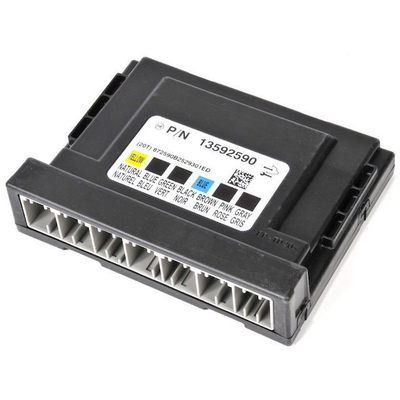
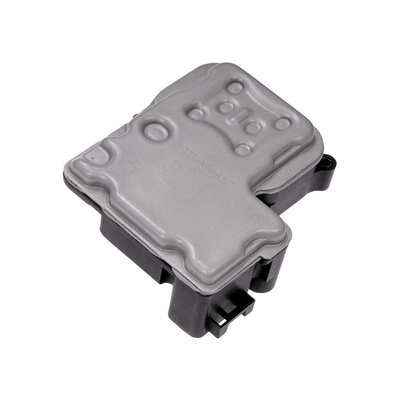
Below are the parts most often responsible for code U0128, ranked by how frequently each one is the actual culprit (per the diagnosis above). Tap any to see what we have for your vehicle.






The information in this article is provided for general reference and educational purposes only. Vehicle specifications, procedures, and part compatibility can vary by production date, trim level, and region. Always consult your vehicle's factory service manual and verify part numbers before purchasing or performing repairs. Safety-critical components such as airbags, seat belts, and braking systems should be installed by a qualified professional.
- 🧭 Diagnostic Flowchart
- 🛍️ Shop This Part
- What Does U0128 Mean?
- Can I Drive With U0128?
- Common Causes
- Symptoms
- Common Fixes & Costs
- Used vs. New Parts: Buying Guide
- What Happens If You Wait — Timeline
- Cost of Not Fixing It
- Diagnosis Steps
- When This Code Triggers (Freeze-Frame Conditions)
- Related Codes
- Climate & Environmental Factors
- How to Talk to a Mechanic About This Code
- Where to Take It: Dealer vs Independent vs Chain
- When to Walk Away From the Repair
- What Scan Tool You Need for This Code
- How to Clear the Code After You Fix It
- Will This Fail Emissions / State Inspection?
- Most Commonly Affected Vehicles
- Manufacturer-Specific Notes
- Real Owner Stories
- 2015 Subaru Outback with intermittent U0128
- 2014 Jeep Cherokee with U0128 and a wet trunk
- 2011 Land Rover LR2 with a loud screeching noise
- 2019 Dodge Charger with multiple 'U' codes
- How to Prevent This Code From Triggering
- Key Takeaways
- 🎟️ Get 5% Off