

U0128 on 2019-2020 Chevrolet Silverado 1500: Lost Communication with Park Brake Module Fixes
This code means the Park Brake Control Module (PBCM) has stopped communicating. The most common causes are a chafed engine wiring harness near the left cylinder head, a faulty module, or a software glitch. Check for wiring damage first, as per GM Technical Service Bulletin #PIT5713A, which was later superseded by #21-NA-149.
- U0128 on a 2019-2020 Silverado indicates a communication loss with the electronic parking brake module.
- Before suspecting the module itself, thoroughly inspect the engine wiring harness for chafing near the driver's side cylinder head, as this is a known issue (TSB #PIT5713A).
- This code is often accompanied by a large number of other 'U' (communication) codes, pointing to a network-wide issue rather than a single failed part.
- Software updates for the Brake System Control Module (BSCM) can resolve some instances of this code.
- Due to the complexity of network diagnostics and the safety-critical nature of the brake system, professional diagnosis is highly recommended.
What's Unique About the 2019-2020 Chevrolet SILVERADO 1500
For the 2019-2020 Silverado (T1 platform), U0128 is frequently linked to broader network communication issues, not just an isolated park brake module failure. GM has issued several Technical Service Bulletins (TSBs), notably #21-NA-149 (which supersedes PIT5713A), pointing to specific engine harness chafing points that can cause a cascade of communication codes, including U0128. This means a U0128 code on these trucks often signals a wiring problem affecting multiple systems rather than a simple module swap. These wiring issues are exacerbated by normal engine movement during driving.
Diagnostic Flowchart
Tap your situation to follow the diagnostic path that matches what you're seeing on this vehicle.
Symptoms You May Notice
- "Service Parking Brake" message on the instrument panel
- "Service ESC" (Electronic Stability Control) message.
- Electronic parking brake warning light is on or flashing.
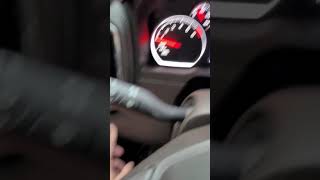
- Inability to engage or release the electronic parking brake. 🎬 Watch: How to enter brake service mode to retract the pistons.
- Instrument panel gauges may sweep while driving.
- Check Engine Light (MIL) may be illuminated.
- Transmission may be locked in Park.
- Multiple other warning lights and messages appearing simultaneously.
- Replacing the parking brake switch on the dashboard without diagnosing the system. The switch is an input to the module; a U0128 code indicates the module itself is not communicating.
- Unnecessarily replacing the ECM. TSB #21-NA-149 explicitly warns that the ECM is often replaced in error when the root cause is the chafed wiring harness.
Most Likely Causes
- Engine Wiring Harness Chafing 🔴 High Probability → Shop Engine Wiring Harness TSB #21-NA-149 (superseding PIT5713A) identifies multiple specific locations where the engine wiring harness can rub through. Common chafe points include the left-hand cylinder head, the generator bracket, the lower air cleaner housing, and the left-front upper control arm bushing. Engine rock during normal operation causes the harness to contact these sharp edges, eventually shorting circuits.
How to confirm: Visually inspect the engine wiring harness in the areas detailed in TSB #21-NA-149. This may require removing the driver's side wheel and wheelhouse liner for a clear view of the harness routing near the frame and suspension components. Look for rubbed-through conduit, exposed copper wires, or shiny spots on brackets.
Typical fix: Repair the damaged wires using approved splicing techniques. Protect the harness from future damage by wrapping it with anti-abrasion tape (e.g., Kent® Automotive P/N KT13487 or equivalent) and securing it away from contact points with zip ties or rerouting. GM provides specific part numbers for protective sleeves and clips in the TSB.
Est. part cost: $20-$75 for wiring repair supplies like Tesa tape, splices, and protective sleeves. - Faulty Park Brake Control Module (PBCM) / Electronic Brake Control Module (EBCM) 🟡 Medium Probability → Shop ABS Control Module Internal failure of the module due to software corruption, circuit board damage from vibration, or water intrusion can cause it to stop communicating. On these trucks, the PBCM function is often part of the larger EBCM.
How to confirm: After confirming power, ground, and CAN bus wiring to the module are intact, a professional scan tool will show the module as 'offline' or non-responsive. Water intrusion is a known failure mode for ABS modules.
Typical fix: Replace the Park Brake Control Module or EBCM. The new module will require programming to the vehicle's VIN using GM's Service Programming System (SPS).
Est. part cost: $600-$900 for a refurbished module, $900-$1300 for a new OEM module. - Brake System Control Module (BSCM) Software Glitch 🟡 Medium Probability → Shop ABS Control Module TSB #PIT5735B notes that the BSCM can stay awake after the vehicle is shut down, often triggered by slight vehicle movement (like rolling on an incline after parking). This can cause it to set various communication DTCs at the next startup.
How to confirm: The issue will typically present with a cluster of communication codes set only by the BSCM, with no actual brake system faults. A dealer or qualified shop can check the current software version against the latest available from GM.
Typical fix: Reprogram the Brake System Control Module (BSCM) with the latest calibration available from GM. This requires a dealer or a shop with a subscription to GM's programming software.
Est. part cost: $0 if covered by warranty, otherwise $125-$250 for one hour of labor for reprogramming. - Low Battery Voltage or Poor Ground Connection ⚪ Low Probability → Shop Vehicle Battery Modern vehicles are highly sensitive to voltage. A weak or failing battery can cause unpredictable communication errors across various modules, especially during startup. Forum users have reported various electrical issues, including communication codes, immediately after battery replacement, suggesting system sensitivity.
How to confirm: Test the battery voltage (should be >12.4V at rest) and perform a load test. Inspect the main battery terminals and chassis ground points (especially the battery-to-frame ground on the passenger side) for corrosion or looseness.
Typical fix: Charge or replace the battery. Clean, tighten, or repair ground connections. Some newer vehicles may require a battery registration procedure after replacement.
Est. part cost: $150-$350 for a new AGM battery
Diagnosis Steps
- Connect a professional scan tool capable of reading all vehicle modules. Check for U0128 and any other DTCs. Note which modules are setting codes and which are not communicating.
- Attempt to communicate directly with the Park Brake Control Module (PBCM) or Electronic Brake Control Module (EBCM). If it's non-responsive, proceed with physical checks.
- Check the battery and charging system to ensure stable voltage (>12.4V at rest). A weak battery is a common cause of random communication faults.
- Inspect fuses related to the Park Brake Control Module and Electronic Brake Control Module in the underhood fuse block.
- Following TSB #21-NA-149, perform a thorough visual inspection of the engine wiring harness. Key areas are: where it passes the driver's side cylinder head, the generator bracket, and near the upper control arm. This may require removing the driver's side wheel and wheelhouse liner.
- If wiring appears intact, locate the EBCM (typically on the driver's side frame rail). Check its connector for corrosion, moisture, or bent/backed-out pins.
- Using a multimeter, verify the module is receiving proper battery voltage and has a solid ground connection.
- Test the CAN bus wiring at the module connector. With the battery disconnected, resistance between the two CAN bus wires should be approximately 60 ohms. With the key on, you should see around 2.5V on each line, with one slightly higher and one slightly lower.
- If wiring, power, and grounds are all confirmed good, and the software is up to date, the EBCM is the most likely failed component.
Parts You'll Likely Need
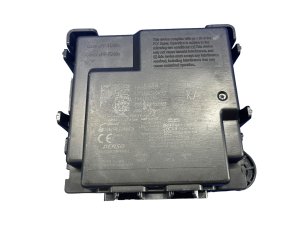
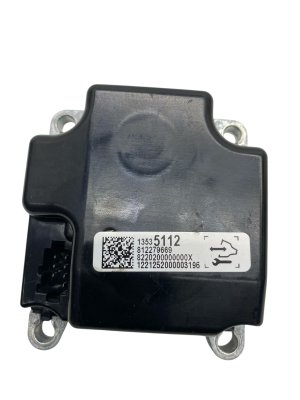
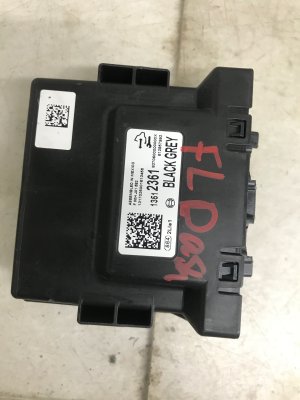
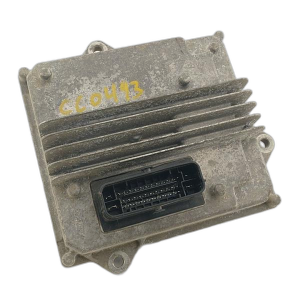
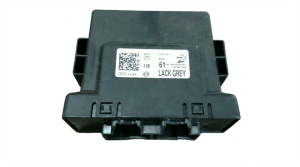
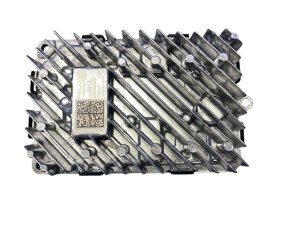
- Electronic Brake Control Module (EBCM)
(OEM #84527252)— If wiring and software are ruled out, the module itself may have failed internally, causing the communication loss. This part often integrates the functions of the PBCM.
Trusted brands: ACDelco (GM Original Equipment)
OEM price range: $900-$1300
Aftermarket price range: $600-$900 - Engine Wiring Harness Repair Supplies — Often the fix is repairing a chafed section of the engine harness as per TSB #21-NA-149, not replacing a module. This includes anti-abrasion tape and wire protection sleeves.
Trusted brands: 3M, Tesa (for harness tape), KENT
OEM price range: $20-$75
Aftermarket price range: $20-$75
Related Codes That Often Appear With This One
- U0073 — Control Module Communication Bus 'A' Off
- U0100 — Lost Communication with ECM/PCM
- U0101 — Lost Communication with TCM
- U0121 — Lost Communication with ABS Control Module
- U0131 — Lost Communication with Power Steering Control Module
- U0140 — Lost Communication with Body Control Module
Technical Service Bulletins (TSBs) & Recalls
- PIT5713A: Addresses multiple communication DTCs, including U0128, caused by the engine wiring harness rubbing on the left cylinder head. (Note: This TSB has been superseded).
- 21-NA-149: This bulletin is a comprehensive replacement for PIT5713A and others. It provides detailed graphics and procedures for inspecting and repairing engine harness chafing at multiple locations for different engines on 2019-2023 models.
Platform-Specific Known Issues
- TSB #21-NA-149 (supersedes PIT5713A): This is the most critical document for this issue. It details multiple specific chafe points on the engine wiring harness for various engines (2.7L, 4.3L, 5.3L, 6.2L, 3.0L) that cause a host of communication codes, including U0128.
- TSB #PIT5735B: Describes a software issue where the Brake System Control Module (BSCM) can set communication codes after shutdown if the vehicle rolls slightly, requiring a software update.
- Recall 19V889000: Issued for a software error in the Electronic Brake Control Module (EBCM) that could disable ESC
Mechanic-Grade Diagnostic Values
- CAN Bus Resistance at DLC (Pins 6 & 14) — expected: Approximately 60 Ω (for 2019 models).. Failure: A reading of 120 Ω indicates an open in the circuit or a module is disconnected. A reading near 0 Ω indicates the CAN High and Low wires are shorted together.
- CAN Bus Voltage at DLC (Key On, Engine Off) — expected: CAN High (Pin 6 to ground) should be ~2.7V. CAN Low (Pin 14 to ground) should be ~2.3V.. Failure: If both lines read ~2.5V, they may be shorted together. If one or both lines have 0V or battery voltage, it indicates a short to ground or power.
- Module Power Supply Voltage at EBCM Connector — expected: Greater than 11V.. Failure: Voltage below 11V indicates a problem with the power supply circuit, fuse, or a high-resistance connection.
Hidden / Shadow Codes Worth Checking
- Multiple 'Current' U-codes with no MIL: The Brake System Control Module (BSCM) and EBCM can log numerous 'current' communication codes (U0100, U0101, U0140, etc.) without illuminating the check engine light or other warning lamps. This can happen due to transient events like low voltage during startup or the software anomaly described in TSB 20-NA-155. (see via A bidirectional scan tool capable of reading DTCs from all modules, not just the ECM. Basic code readers will not see these.)
Scan Tool Commands That Help
- GDS2 / Professional Bidirectional Scanner: Automated Brake Bleed — This function is required after replacing the EBCM or hydraulic components of the ABS system to purge air from the hydraulic unit. It confirms the scan tool can command the module.
- GDS2 / Professional Bidirectional Scanner: BSCM (Brake System Control Module) Reprogramming — Used to apply a software update that corrects an anomaly where the module sets multiple communication DTCs after shutdown if it detects slight vehicle movement, as detailed in TSB 20-NA-155.
Wiring & Ground Locations
- G110 / G114 — G110 is located at the right rear of the engine, on the back of the cylinder head. GM Engineering Information bulletin PIE0548 specifically flags G110 and G114 for potential loose connections on 2019-2020 Silverados.. These are major ground points for the engine and body harnesses. A loose connection can cause widespread communication and electrical issues, including a host of U-codes.
- G132 / G134 — Main engine-to-body ground cable/strap.. TSB PIT5689A identifies a broken or loose strap at these points as a cause for no-start and multiple communication DTCs. A poor engine ground forces modules to find alternate, high-resistance paths to ground, corrupting data signals.
- EBCM Connector — On the driver's side frame rail, under the cabin.. This is the main connection point for the module. TSB 18-NA-144 notes that the chassis harness leading to this connector can chafe on the rear crossmember or leaf spring support bracket, causing shorts or opens in the CAN bus wires.
- Trailer Brake Control Module Connector — Located on a bracket above the spare tire.. While not the primary park brake module, this module communicates on a sub-network (LIN bus) with the brake system. Water intrusion can corrode its terminals, causing related communication codes. Key pins to test are Pin 1 (Power), Pin 9 (Ground), and Pin 12 (LIN Bus, Green/Violet wire).
Real Owner Repair Stories
- GM1500Diesel Forum user 'Ctsha' (2021 GMC Sierra (T1 Platform)) — Rotating error messages including "service ECS", "service parking brake", "service emissions system", check engine light, and limp mode.
❌ Tried (didn't work) The dealership attempted multiple unspecified fixes before contacting GM engineering.
✅ What actually fixed it GM instructed the dealer to replace the entire engine wiring harness. The technician noted it appeared to have heat damage. - Reddit user 'Mholli14' (2020 GMC Sierra 3.0L LM2 Diesel) — While driving on the interstate, would get "service trailer brake", "service ESC", and "service 4x4" messages. All codes were CAN bus communication related.
❌ Tried (didn't work) Dealer visually inspected TSB-specified harness rub spots and found nothing obvious.
✅ What actually fixed it The user was taking the truck to an independent electrical specialist for further diagnosis, as the dealer's only recommendation was a $10,000 full harness replacement without a confirmed fault location. This highlights the difficulty and expense of diagnosing these intermittent wiring issues.
OEM Part Supersession History
84329995→84401914— Part revision by manufacturer. Often includes hardware or internal software improvements to address field issues.
Heads up: While this specific supersession applies to other GM models like the Acadia and Blazer, it demonstrates that EBCM part numbers are frequently updated. Always verify the correct, latest part number for your specific VIN before ordering.
Model Year Variations Within This Range
- 2019 vs. 2020+: The CAN bus diagnostic procedure at the Data Link Connector (DLC) is different. On a 2019 model, measuring resistance between pins 6 and 14 should yield ~60 ohms. On a 2020 and newer model, the same test will show ~120 ohms. This is due to a change in how the DLC is wired into the network. Misinterpreting this reading can lead to a misdiagnosis of an open circuit.
Helpful Videos
We Have This Part in Stock

The information in this article is provided for general reference and educational purposes only. Vehicle specifications, procedures, and part compatibility can vary by production date, trim level, and region. Always consult your vehicle's factory service manual and verify part numbers before purchasing or performing repairs. Safety-critical components such as airbags, seat belts, and braking systems should be installed by a qualified professional.
- Chevrolet SILVERADO 1500:
- 🧭 Diagnostic Flowchart
- 🎬 Helpful Videos
- 🛍️ Shop This Part
- What's Unique About the 2019-2020 Chevrolet SILVERADO 1500
- Symptoms You May Notice
- Most Likely Causes
- Diagnosis Steps
- Parts You'll Likely Need
- Related Codes That Often Appear With This One
- Technical Service Bulletins (TSBs) & Recalls
- Platform-Specific Known Issues
- Mechanic-Grade Diagnostic Values
- Hidden / Shadow Codes Worth Checking
- Scan Tool Commands That Help
- Wiring & Ground Locations
- Real Owner Repair Stories
- OEM Part Supersession History
- Model Year Variations Within This Range
- 🎟️ Get 5% Off