

U0128 on 2021 Chrysler 300: Lost Communication With Park Brake Module Causes & Fixes
This code means the Park Brake Control Module (PBCM) isn't communicating. The most common causes are wiring issues near the module (especially corrosion from water leaks in the trunk), a weak or failing battery (including the secondary start/stop battery), a blown fuse, or a failed module itself. Expect to pay $150-$250 for diagnosis and wiring repair, or $750-$1150 if the module needs replacement and programming.
- U0128 means the Electronic Parking Brake module is offline and is a serious safety issue; do not drive the vehicle.
- Diagnosis should start with the simplest things: check the battery and the fuses for the parking brake system.
- The most likely cause is a wiring or connector problem near the Park Brake Module, or a failure of the module itself.
- If other 'U' codes are present, it points to a wider network issue that requires professional diagnosis.
- Replacing the Park Brake Control Module is expensive and requires programming to the vehicle, making it a job for a qualified shop.
What's Unique About the 2021-2021 Chrysler 300
On the 2021 Chrysler 300, the electronic parking brake is an integral part of the vehicle's safety and convenience systems. Unlike older mechanical systems, this electronic version relies on constant communication between multiple modules. A network fault, which this code indicates, can disable the parking brake and may also affect other related systems like ABS and traction control. Furthermore, models from 2019 onward are equipped with a Security Gateway Module (SGW) that can restrict diagnostic and programming functions for non-authorized scan tools, often requiring a bypass cable or dealer-level equipment for full access.
Diagnostic Flowchart
Tap your situation to follow the diagnostic path that matches what you're seeing on this vehicle.
Symptoms You May Notice
- "Service Electronic Parking Brake" message on the instrument cluster
- Parking brake warning light is illuminated or flashing.
- Inability to engage or disengage the electronic parking brake.
- The vehicle may not shift out of 'Park'.
- In some cases, the vehicle may not start or may stall, especially if the fault is triggered by a battery issue.
- Multiple other warning lights (ABS, traction control) may appear simultaneously.
- Replacing the electronic parking brake switch on the console without diagnosing the system.
- Replacing the rear brake calipers or actuator motors when the problem is electrical communication, not mechanical failure.
- Replacing the main battery without testing the secondary (auto start/stop) battery, if equipped.
Most Likely Causes
- Damaged Wiring or Corroded Connectors 🔴 High Probability A known issue on similar FCA platforms is water leaking into the trunk area, often from failed taillight seals. The PBCM is likely located in the rear cargo area near the spare tire, making its connector highly susceptible to water damage and corrosion, which directly causes a loss of communication.
How to confirm: Visually inspect the wiring harness and connector at the Park Brake Control Module, likely located in the trunk/spare tire area. Check for standing water in the spare tire well. Look for green/white corrosion on the connector pins. Test for power, ground, and CAN bus signals at the connector with a multimeter.
Typical fix: Repair the damaged section of the wiring harness. If corroded, replace the connector with a new pigtail. Crucially, identify and fix the source of the water leak (e.g., reseal taillights).
Est. part cost: $25-$100 for a connector pigtail. - Low or Unstable Battery Voltage 🔴 High Probability → Shop Vehicle Battery Modern Chrysler/FCA vehicles are extremely sensitive to battery voltage. A weak or failing main battery, or even the small secondary battery used for the Auto Start/Stop system, can cause low voltage spikes that lead to random communication errors between modules, triggering U-codes.
How to confirm: Test the main battery's state of charge and health; it should be above 12.4V at rest. A real-world example from a Jeep Compass owner on Reddit showed that a failing secondary battery caused the 'Service Electronic Parking Brake' error and no-start issues, a problem the dealer initially misdiagnosed. A similar issue was reported on a Chrysler Pacifica where a bad auxiliary battery caused multiple warnings.
Typical fix: Charge or replace the failing battery. If the vehicle has a secondary battery for the start/stop system, it should be tested and replaced if faulty.
Est. part cost: $150-$450 - Failed Park Brake Control Module (PBCM) 🟡 Medium Probability → Shop Parking Brake Control Module Internal failure of the electronic module can occur due to thermal stress, but is most often caused by water intrusion leading to a short circuit on the board.
How to confirm: If wiring, fuses, power, and ground are all confirmed to be good, and a professional scan tool still cannot communicate with the module, the module itself is condemned.
Typical fix: Replace the Park Brake Control Module. The new module must be programmed to the vehicle using a 'PROXI Alignment' procedure with a compatible scan tool.
Est. part cost: $150-$350 for the Mopar part. - Blown Fuse or Power Supply Issue 🟡 Medium Probability An electrical short in the wiring or the module itself can cause the fuse protecting the PBCM circuit to blow, cutting off its power.
How to confirm: Locate the fuse for the Park Brake Control Module in the vehicle's fuse box (check owner's manual for location, often in the trunk) and verify it has continuity. Check for battery voltage at the module's power pin.
Typical fix: Replace the blown fuse. If the fuse blows again, a short circuit must be diagnosed and repaired.
Est. part cost: $1-$10
Rare But Worth Checking
- CAN Bus Network Fault: While less common than a direct module or wiring issue, a problem elsewhere on the CAN bus (like a short or a faulty termination resistor in another module) can disrupt all communication, causing this code. This is more likely if multiple 'U' codes are present.
- Software Glitch: TSB 18-013-22 was issued for the 2021 Chrysler 300 to update the Powertrain Control Module (PCM) software to address various issues, including improving network stability. If multiple communication codes are present, a PCM reflash by the dealer could be a potential fix.
Diagnosis Steps
- Check and record any other stored DTCs. The presence of multiple 'U' codes suggests a network-wide problem or a power supply issue.
- Check the vehicle's main and secondary (if equipped) battery voltage and health. A weak battery is a very common cause of communication faults on these vehicles.
- Inspect the fuses related to the electronic parking brake, ABS, and Body Control Module, typically in the trunk and under-hood fuse boxes.
- Locate the Park Brake Control Module (PBCM), which is likely in the trunk/spare tire area. Remove any trim to access it.
- Inspect the PBCM and its connector for signs of water intrusion, damage, or corrosion (green/white powder). Check the spare tire well for standing water and inspect taillight seals for leaks.
- Using a multimeter, verify that the module is receiving proper power (12V+) and has a solid ground connection (less than 0.1 Ω resistance to chassis).
- If power and ground are good, use an oscilloscope or CAN-enabled scan tool to check for proper communication signals (CAN High and CAN Low should show data frames and have specific voltage ranges).
- If wiring and signals are correct but the module is unresponsive, the PBCM itself is the most likely culprit and requires replacement and PROXI alignment.
Parts You'll Likely Need
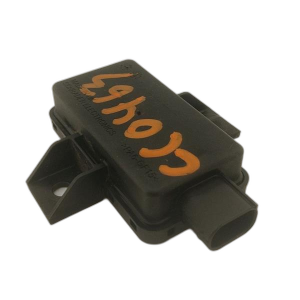
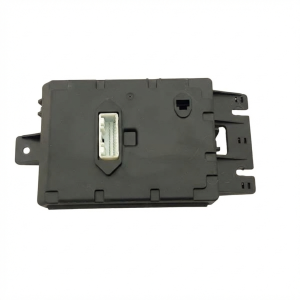
- Park Brake Control Module (PBCM) — If wiring and power are confirmed good, the module's internal electronics have likely failed, often due to water damage. Replacement requires programming (PROXI Alignment).
Trusted brands: Mopar
OEM price range: $150-$350
Aftermarket price range: $100-$250 - PBCM Wiring Connector Pigtail — If the module connector has any signs of water damage or corrosion, it must be replaced by splicing in a new pigtail to ensure a reliable connection.
Trusted brands: Mopar, Dorman
OEM price range: $40-$80
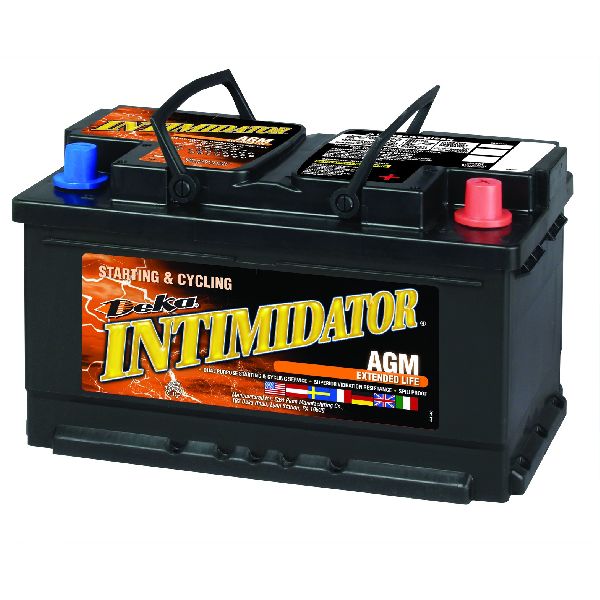
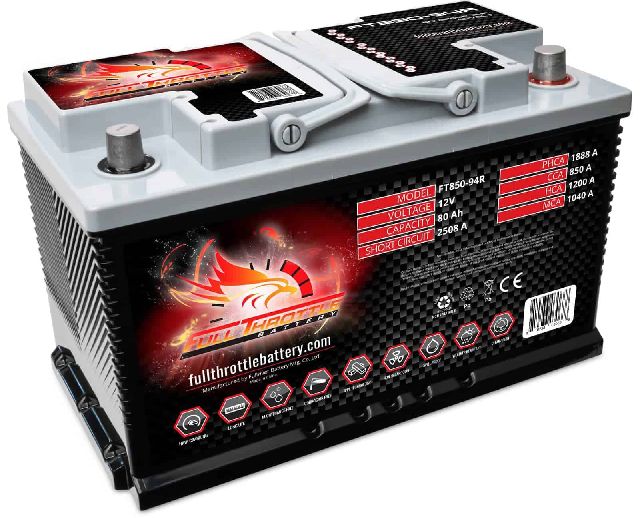
Aftermarket price range: $25-$50 - Automotive Battery (Main or Secondary) — A weak battery is a primary cause of spurious communication codes on this platform. If the vehicle has an auto start/stop system, the small secondary battery can also be the culprit.
Trusted brands: Mopar, Interstate, DieHard
OEM price range: $200-$450
Aftermarket price range: $150-$350
Related Codes That Often Appear With This One
- U0140 — Lost Communication With Body Control Module. The BCM is a central hub, and seeing this code with U0128 strongly suggests a wider network or power supply issue. TSB 18-013-22 addresses general network instability.
- U0129 — Lost Communication With Brake System Control Module. Indicates a broader CAN bus issue affecting multiple brake-related modules.
- U0100 — Lost Communication with ECM/PCM. If the main engine computer is also losing communication, it points to a severe network-wide problem, a major power/ground issue, or a faulty gateway.
Technical Service Bulletins (TSBs) & Recalls
- 18-013-22: Issued January 20, 2022, for the 2021 Chrysler 300. This TSB involves reprogramming the Powertrain Control Module (PCM) to address various issues, including improving network stability and fixing symptoms like loss of Engine Start/Stop (ESS). While not explicitly for U0128, it addresses the underlying software stability that can cause communication codes.
Platform-Specific Known Issues
- Water Intrusion into Rear-Mounted PBCM: A well-documented failure mode on analogous FCA vehicles (like the Jeep Cherokee) is water leaking from taillight seals into the trunk and corroding the Park Brake Control Module and its connector. This is a primary suspect for U0128 and the 'Service Electronic Parking Brake' message. Diagnosis should always include checking the spare tire well for moisture.
- Security Gateway Module (SGW) Complicates Diagnostics: → Shop Body Control Module 2019 and newer models are equipped with a Security Gateway Module (SGW) that can restrict diagnostic and programming functions for non-authorized scan tools, often requiring a bypass cable or dealer-level equipment for full access.
Mechanic-Grade Diagnostic Values
- CAN Bus Network Resistance — expected: ~60 Ω. Failure: A reading of ~120 Ω indicates a missing termination resistor or a break in one of the CAN wires. A reading significantly below 60 Ω (e.g., 40 Ω) suggests an extra termination resistor or a shorted module on the bus.
- CAN Bus Voltage (Key On, Engine Off) — expected: CAN High (CAN_H): ~2.5V to 3.5V (pulsing). CAN Low (CAN_L): ~1.5V to 2.5V (pulsing).. Failure: Voltages stuck high, low, or at 0V indicate a short to power or ground. If both lines are stuck at ~2.5V, the bus may be idle or a module is not communicating.
- PBCM Power Supply Voltage — expected: 12.0V - 12.8V. Failure: Voltage below 12.0V indicates a power supply issue (weak battery, fuse, relay, or wiring) that can cause the module to drop off the network.
- PBCM Ground Circuit Resistance — expected: < 0.1 Ω. Failure: Higher resistance indicates a poor ground connection, which is a common cause of intermittent communication faults.
Scan Tool Commands That Help
- wiTECH (or equivalent professional scanner): PROXI Alignment / Configuration — This is mandatory after replacing the Park Brake Control Module (or many other modules). It synchronizes the new module with the vehicle's master configuration list stored in the BCM. Failure to perform this will result in a flashing odometer and persistent communication faults.
- wiTECH (or equivalent professional scanner): EPB Service Mode / Pad Replacement Mode — This bidirectional command fully retracts the electronic parking brake calipers to allow for safe and proper replacement of the rear brake pads and rotors. It should be used before any mechanical service on the rear brakes.
- wiTECH (or equivalent professional scanner): Network Topology / View All DTCs — Before focusing on U0128, view the entire network map. This function shows which modules are online and which are not communicating. If multiple modules are offline, it points to a shared power, ground, or CAN bus wiring issue rather than a single faulty module.
Wiring & Ground Locations
- Park Brake Control Module (PBCM) — In the trunk area, typically mounted on the driver's side (left side) behind the trim panel, near the spare tire well.. This is the module that is offline. Its location makes it highly vulnerable to water intrusion from taillight seals or body seams, which is a primary cause of connector corrosion and failure.
- Rear Body Ground Point (e.g., G400/G905B) — In the trunk, behind the driver's side trim panel, often near the battery or on the rear body panel. Multiple modules in the rear of the vehicle share this ground.. A corroded or loose main ground point in the trunk will cause communication failures for all modules that use it, including the PBCM. This is a common failure point due to water leaks in the trunk.
- CAN Bus Splice/Junction — The CAN bus wiring for rear modules often runs along the driver's side floor sill plate. There may be factory splices within this harness that can corrode or fail, disrupting the network.. A failure at a splice point can cut off communication to multiple modules downstream, including the PBCM.
Real Owner Repair Stories
- ChallengerTalk Forum Member (Dodge Challenger (similar LX platform)) — Multiple U-codes including for the park brake, ABS, and other systems. "Service Park Brake" light on.
❌ Tried (didn't work) Clearing codes (they returned immediately).
✅ What actually fixed it The root cause was a water leak from the rear window seal that dripped down behind the trunk liner and corroded the main ground stud (G400) on the driver's side. The fix involved removing the ground nut, cleaning all the corroded ring terminals and the stud with a wire brush, re-securing the ground, and resealing the window to prevent recurrence. - Chrysler Pacifica Reddit User (2022 Chrysler Pacifica Touring L) — "Service Shifter" notice and auxiliary battery/start-stop warning light (@! symbol).
❌ Tried (didn't work) Checking CAN bus star connectors.
✅ What actually fixed it The user noted that a bad auxiliary (start-stop) battery was the likely cause, as it can cause both symptoms simultaneously. Replacing the auxiliary battery is the common fix. Another user confirmed that ignoring a bad auxiliary battery will eventually damage the main battery as well.
OEM Part Supersession History
68148902AD, 68148902AE, 68148902AF→68330407AA— Part has been revised and updated by the manufacturer over time to improve reliability or address known issues.
Heads up: When replacing, always use the latest part number specified by the dealer for the vehicle's VIN to ensure compatibility with vehicle software.
Helpful Videos
Used OEM Parts in Stock
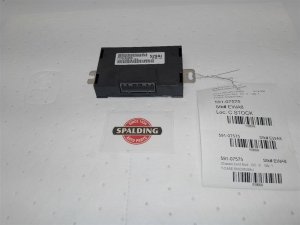
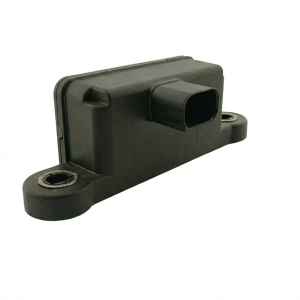
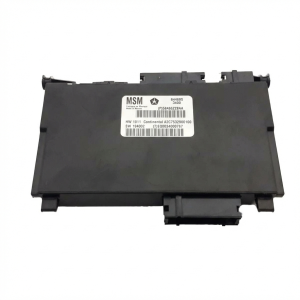
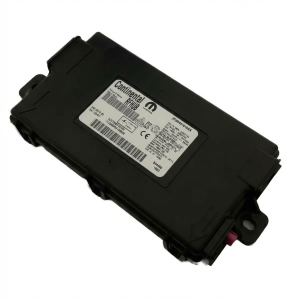
New Aftermarket Parts Available


The information in this article is provided for general reference and educational purposes only. Vehicle specifications, procedures, and part compatibility can vary by production date, trim level, and region. Always consult your vehicle's factory service manual and verify part numbers before purchasing or performing repairs. Safety-critical components such as airbags, seat belts, and braking systems should be installed by a qualified professional.
- Chrysler 300:
- 🧭 Diagnostic Flowchart
- 🎬 Helpful Videos
- 🛍️ Shop This Part
- What's Unique About the 2021-2021 Chrysler 300
- Symptoms You May Notice
- Most Likely Causes
- Rare But Worth Checking
- Diagnosis Steps
- Parts You'll Likely Need
- Related Codes That Often Appear With This One
- Technical Service Bulletins (TSBs) & Recalls
- Platform-Specific Known Issues
- Mechanic-Grade Diagnostic Values
- Scan Tool Commands That Help
- Wiring & Ground Locations
- Real Owner Repair Stories
- OEM Part Supersession History
- 🎟️ Get 5% Off