

U0128 on 2021 Dodge Charger: Lost Communication With Park Brake Module Causes and Fixes
This code means the Park Brake Control Module (PBCM) isn't communicating with the rest of the vehicle. The most common causes are a weak battery, corroded wiring to the module, or a faulty module itself. A 'Service Electronic Parking Brake' message is a key symptom, and the vehicle may be stuck in Park.
- Code U0128 means the Electronic Parking Brake module has stopped communicating.
- Before suspecting expensive parts, have your battery professionally tested; low voltage is a very common cause.
- Check fuses for the ABS and parking brake systems.
- Visually inspect the wiring and connector at the parking brake module for any signs of corrosion or damage.
- Due to the safety-critical nature of the parking brake and the complexity of network diagnostics, professional service is strongly recommended.
What's Unique About the 2021-2021 Dodge CHARGER
The 2021 Dodge Charger relies on a complex Controller Area Network (CAN bus) for all its modules to communicate. A communication code like U0128 is often a symptom of a network-wide issue, frequently triggered by something as simple as low battery voltage, which can cause various electronic modules to malfunction temporarily. The provided NHTSA Technical Service Bulletin (TSB #1801222) confirms this code is a known issue and often appears with a cluster of other communication loss codes, suggesting a potential software glitch or a single point of failure affecting multiple systems.
Diagnostic Flowchart
Tap your situation to follow the diagnostic path that matches what you're seeing on this vehicle.
Symptoms You May Notice
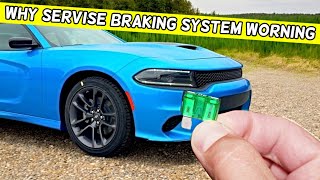
- "Service Electronic Braking System" message on the dashboard. 🎬 Watch: Why this warning message appears on your Charger
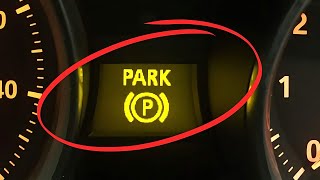
- Electronic Parking Brake (EPB) warning light is illuminated or flashing. 🎬 See how to reset a flashing parking brake light
- Inability to engage or disengage the electronic parking brake.
- The transmission may be locked in 'Park' and refuse to shift.
- The vehicle may not start if the anti-theft system is tied into the park brake module.
- Replacing the parking brake switch on the console without checking for codes or communication issues first.
- Replacing the brake calipers or pads, as this is a communication issue, not a mechanical one. The mechanical parking brake components are inside the rear rotor hub.
Most Likely Causes
- Weak or Failing Battery 🔴 High Probability → Shop Vehicle Battery Modern vehicles like the Charger are packed with electronics that are sensitive to voltage. A battery that provides less than 12.2-12.4 volts at rest can cause random communication faults between modules. A weak battery can cause multiple seemingly unrelated warnings, like for the transmission or power steering, to appear at once.
How to confirm: Test the battery voltage at rest with a multimeter. It should be above 12.4V. A simple voltage test is not enough; a battery can show good voltage but fail under load. Have the battery and charging system professionally load-tested to confirm its health.
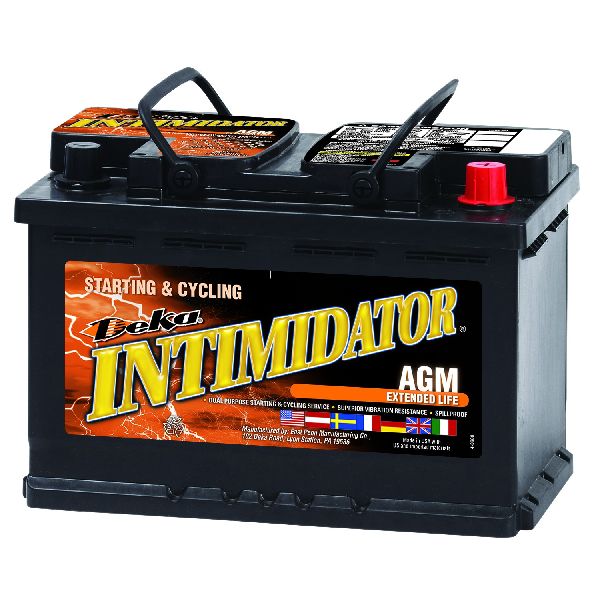
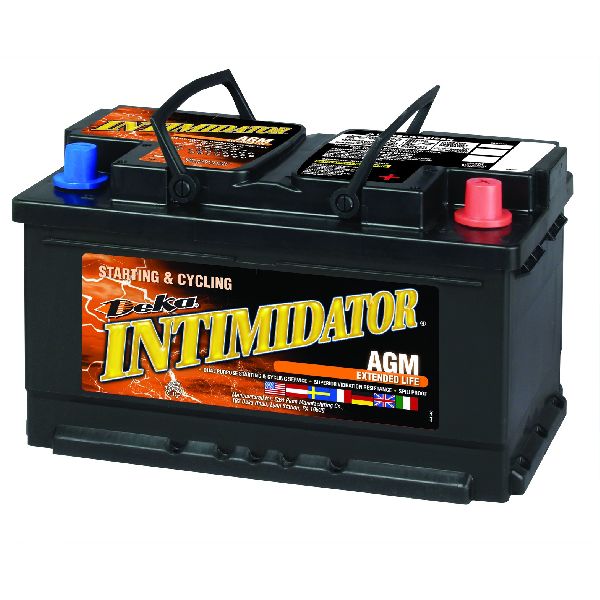
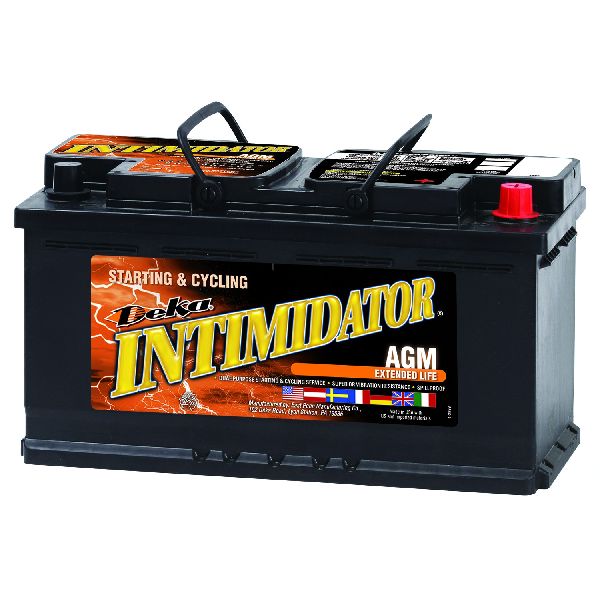
Typical fix: Replace the vehicle's AGM battery. After replacement, some vehicles may require a battery reset procedure.
Est. part cost: $150-$350 - Damaged Wiring or Corroded Connector 🟡 Medium Probability The Park Brake Control Module and its wiring are often located in the rear of the vehicle, exposed to road salt, moisture, and debris, which can lead to corrosion or physical damage over time. Water intrusion from failed taillight seals or underbody shields is a known issue on related platforms that can corrode the PBCM connector.
How to confirm: Visually inspect the wiring harness and connector at the Park Brake Control Module for any signs of chafing, breaks, or green/white corrosion on the pins. Check for stable power (12.0-12.8V) and a clean ground (less than 0.1 Ω resistance) at the module's connector. Corrosion can wick up inside the wire insulation, requiring you to cut back the wire to find clean copper.
Typical fix: Repair the damaged section of the wiring harness or clean/replace the connector with a new pigtail. Use dielectric grease on the connector to prevent future moisture intrusion.
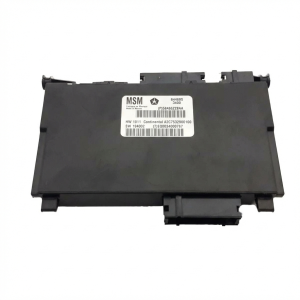
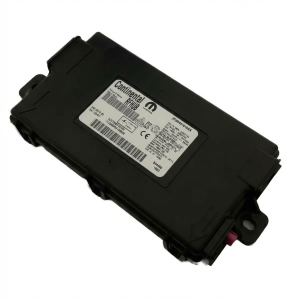
Est. part cost: $20-$200 - Faulty Park Brake Control Module (PBCM) 🟡 Medium Probability → Shop Parking Brake Control Module Internal failure of the electronic module, either from voltage spikes, water intrusion, or component failure (cracked solder joints), can cause it to stop communicating on the network.
How to confirm: After confirming the wiring, power, and ground are good, the module itself is the likely culprit. This is best confirmed with an advanced scan tool that can attempt to directly communicate with the PBCM. If the module is 'offline' or 'non-responsive', it has likely failed.
Typical fix: Replace the Park Brake Control Module. The new module must be programmed to the vehicle's VIN.
Est. part cost: $600-$1300 - Blown Fuse ⚪ Low Probability
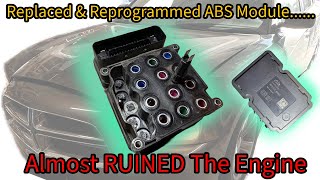
How to confirm: Check the fuses related to the ABS and Electronic Parking Brake system in the vehicle's fuse box. A similar issue on Chargers (U0121) was traced to a blown ABS fuse. 🎬 Watch: How to replace and program a Dodge ABS module The owner's manual will have the correct fuse locations.
Typical fix: Replace the blown fuse. If the fuse blows again, it indicates a short circuit that needs to be diagnosed.
Est. part cost: $1-$5
Rare But Worth Checking
- CAN Bus Network Fault: A problem elsewhere on the vehicle's communication network (like a faulty terminating resistor or another module sending bad data) can interfere with the PBCM's ability to communicate. This usually presents with multiple 'U' codes. Diagnosis involves checking CAN High/Low voltages (CAN_H ≈ 2.5–3.5V, CAN_L ≈ 1.5–2.5V) and termination resistance (around 60 Ω).
- Software Glitch: Sometimes, a module's software can become corrupted. The TSB #1801222 suggests a software update may be part of the fix for a cluster of communication codes, indicating this is a possibility that a dealer would need to perform.
Diagnosis Steps
- Check Battery Health: Start by load-testing the battery. A resting voltage below 12.4V is a major red flag. On modern Mopar vehicles, a weak battery is a primary cause of multiple, random electronic faults and communication codes.
- Scan for All Codes: Use an advanced OBD-II scanner capable of reading manufacturer-specific codes from all modules, not just the engine computer. Note all 'U' codes present, as a cluster of codes points towards a network or power supply issue.
- Attempt to Communicate with PBCM: Use the scan tool to see if you can directly communicate with the Park Brake Control Module. If it's 'offline' or 'not present', the issue is with its power, ground, wiring, or the module itself.
- Inspect Fuses: Check all fuses related to the electronic parking brake, ABS, and stability control systems in the fuse boxes (engine bay and trunk).
- Inspect Wiring and Connector: Locate the Park Brake Control Module (typically mounted in the trunk area, on the driver's side behind the trunk liner) and inspect its electrical connector and surrounding harness for corrosion, moisture, or damage. Water often enters from failed taillight seals. Unplug the connector and check for bent or corroded pins.
- Check Power and Ground: With the ignition on, use a multimeter to verify that the PBCM connector has proper battery voltage (12.0V+) and a solid ground connection (less than 0.1 Ω resistance to chassis ground).
- Check CAN Bus Voltages: This is an advanced step. At the PBCM connector, check the CAN High and CAN Low wire voltages. With the key on, you should see approximately 2.5-3.5V on CAN High and 1.5-2.5V on CAN Low. If these voltages are wrong, it indicates a network wiring problem.
- Isolate the Module: If all wiring, power, ground, and network checks pass, the Park Brake Control Module is the most likely point of failure and should be replaced.
Parts You'll Likely Need
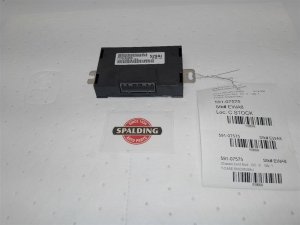
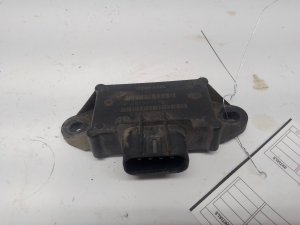
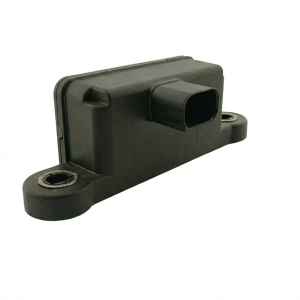
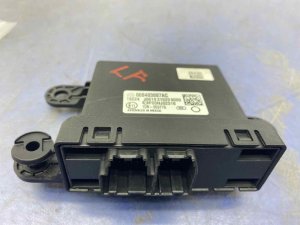
- Park Brake Control Module (PBCM) — If wiring, fuses, and battery are confirmed to be good, the module itself is the most common point of failure for this communication code. Replacement requires VIN programming.
Trusted brands: Mopar
OEM price range: $900-$1300
Aftermarket price range: $600-$900 - AGM Battery — Low system voltage is a very frequent cause of random communication codes on modern Dodge vehicles. These cars are highly sensitive to battery health.
Trusted brands: Interstate, DieHard, Optima
OEM price range: $250-$400
Aftermarket price range: $150-$300
Related Codes That Often Appear With This One
- U0104 — Lost Communication With Cruise Control Module, as cited in TSB #1801222.
- U0125 — Lost Communication With Dynamics Sensor, as cited in TSB #1801222.
- U0129 — Lost Communication With Brake System Control Module 1, as cited in TSB #1801222.
- U0140 — Lost Communication With Body Control Module, as cited in TSB #1801222.
- U0121 — Lost Communication with ABS Control Module. Often appears alongside other brake-related communication faults.
Technical Service Bulletins (TSBs) & Recalls
- 1801222: Addresses multiple 'Lost Communication' codes, including U0128 - Lost Communication With Park Brake Control Module.
Platform-Specific Known Issues
- A known software issue can cause multiple communication codes to be stored simultaneously. TSB #1801222 addresses a scenario where U0128 appears with several other 'U' codes, which may require a dealer software update.
- On the related Jeep Cherokee platform, water intrusion into the rear cargo area is a very common cause of U0128, leading to corrosion of the PBCM connector.
Mechanic-Grade Diagnostic Values
- CAN Bus Network Termination Resistance — expected: ~60 Ω. Failure: A reading of ~120 Ω indicates an open circuit or a fault in one of the two terminating resistors. A reading significantly lower than 60 Ω suggests a short between the CAN High and CAN Low wires.
- CAN High (CAN-C) Voltage — expected: ~2.5V - 3.5V (Key On, Engine Off). Failure: Voltage that is stuck high (near 5V or 12V) or low (near 0V) indicates a short to power or ground.
- CAN Low (CAN-C) Voltage — expected: ~1.5V - 2.5V (Key On, Engine Off). Failure: Voltage that is stuck high or low indicates a short circuit on the network.
- PBCM Ground Circuit Resistance — expected: < 0.5 Ω. Failure: Higher resistance indicates a poor ground connection, which can cause the module to malfunction.
Scan Tool Commands That Help
- wiTECH (OEM Chrysler/Dodge/Jeep Tool): EPB Module Replacement — This is a required service routine to be performed after installing a new Park Brake Control Module. It initializes and calibrates the new module to the vehicle.
- wiTECH or high-end bidirectional scanner: Brake Service Mode / Retract Piston — Used before performing any mechanical service on the rear brakes, such as replacing pads or rotors. This command electronically retracts the caliper pistons. Failure to do this will damage the calipers.
- wiTECH or high-end bidirectional scanner: Network Test / View Active Modules — To see which modules are currently communicating on the CAN bus. If the PBCM is not on the list, it confirms it is offline and is the starting point for diagnosing power, ground, or module failure.
Wiring & Ground Locations
- Park Brake Control Module (PBCM) — In the trunk, mounted on the driver's side, typically behind the trunk liner near the spare tire well or tail light assembly.. This is the module that has lost communication. Its location is prone to water intrusion from failed taillight seals, which can corrode the connector and wiring.
- Ground Point G305 — In the rear of the vehicle, on the driver's side, near the PBCM location. It serves as a chassis ground for several rear components.. A corroded or loose G305 ground point can cause the PBCM to lose its ground reference, leading to a U0128 code even if the wiring at the module connector appears fine.
- CAN-C Star Connector / Junction Block — Typically located behind the passenger side kick panel or under the glove box area. It's a small block where multiple CAN bus wire pairs converge.. This is a central hub for the CAN-C network. Corrosion or a loose pin within this connector can interrupt communication for any module connected to it, including the PBCM. This is often missed when diagnostics focus only on the module itself.
- PBCM Connector Pins — At the connector for the Park Brake Control Module.. Specific pins must be tested: Pin for 12V+ Power, Pin for Ground, Pin for CAN-C High, and Pin for CAN-C Low. Verifying correct voltage and resistance at these pins is a critical diagnostic step.
Real Owner Repair Stories
- RamForum.com user 'North_Texas_Guy' (2017 Ram 1500 (similar EPB system)) — Flashing red parking brake light and inability to use the electronic parking brake.
❌ Tried (didn't work) Initial diagnosis pointed to the module or wiring.
✅ What actually fixed it The user replaced the Electronic Parking Brake Module. After installation, they disconnected the battery for 20 minutes, then reconnected it, started the vehicle, and pressed the brake switch for a few seconds until the light stopped flashing, which reset the system and restored function.
OEM Part Supersession History
Multiple, e.g., 68292671AA, 68292671AB, 68292671AC→68292671AD or later revision— Hardware and software updates to improve reliability and resolve communication glitches.
Heads up: It is always recommended to use the latest available part number revision from the dealer. While older versions may fit, they may not have the latest software fixes that prevent future communication faults.
Helpful Videos
Used OEM Parts in Stock
New Aftermarket Parts Available


The information in this article is provided for general reference and educational purposes only. Vehicle specifications, procedures, and part compatibility can vary by production date, trim level, and region. Always consult your vehicle's factory service manual and verify part numbers before purchasing or performing repairs. Safety-critical components such as airbags, seat belts, and braking systems should be installed by a qualified professional.
- Dodge CHARGER:
- 🧭 Diagnostic Flowchart
- 🎬 Helpful Videos
- 🛍️ Shop This Part
- What's Unique About the 2021-2021 Dodge CHARGER
- Symptoms You May Notice
- Most Likely Causes
- Rare But Worth Checking
- Diagnosis Steps
- Parts You'll Likely Need
- Related Codes That Often Appear With This One
- Technical Service Bulletins (TSBs) & Recalls
- Platform-Specific Known Issues
- Mechanic-Grade Diagnostic Values
- Scan Tool Commands That Help
- Wiring & Ground Locations
- Real Owner Repair Stories
- OEM Part Supersession History
- 🎟️ Get 5% Off