

U0128 on 2010-2013 Land Rover LR4: Causes for Fuel Gauge Errors and Fixes
On a 2010-2013 LR4, code U0128 almost always signals a problem with the fuel gauge system, not the parking brake. The most common fixes are an instrument cluster software update or replacing the in-tank fuel level senders due to corroded wiring pins. This issue is often linked to a simultaneous Electronic Parking Brake (EPB) fault.
- On a 2010-2013 LR4, U0128 means there's a fuel gauge problem, not a parking brake problem, though the two are often linked.
- The first and simplest potential fix is a software update for the instrument cluster, which requires a dealer or specialist.
- If software doesn't fix it, the cause is almost certainly the fuel level senders or their wiring inside the fuel tank.
- Always diagnose and fix any Electronic Parking Brake (EPB) faults first, as this can resolve the fuel gauge issue.
- Do not replace the parking brake module based on this code alone; it will not solve the fuel gauge issue.
- Due to the risk of running out of fuel or the engine shutting down, this issue should be addressed promptly.
What's Unique About the 2010-2013 Land Rover LR4

This is a classic case of a manufacturer-specific code meaning. Land Rover identified a common problem where the fuel gauge would become erratic or stop working and tied it directly to the U0128-00 code in the instrument cluster. The manufacturer released Technical Service Bulletins (TSBs) LTB00566NAS2 and LTB00304NAS8 to guide technicians in diagnosing this specific issue, starting with a software update before moving to a hardware inspection of the fuel senders. This platform-specific definition often causes confusion for those relying on generic code readers. The issue is also shared with the Range Rover Sport from the same model years.
Diagnostic Flowchart

Tap your situation to follow the diagnostic path that matches what you're seeing on this vehicle.
Symptoms You May Notice

- Fuel gauge is inoperative or dead, often reading empty with a low fuel warning light.
- Fuel gauge reading fluctuates erratically.
- Fuel gauge never shows more than half a tank.
- Fuel gauge reading switches on and off intermittently.
- Amber brake warning light illuminates on the dash simultaneously with the fuel gauge failure.
- Flashing red electric handbrake warning light on the dash.
- Engine may surge, run rough, or shut down, believing it is out of fuel (P115a/P115b codes).
- Replacing the Electronic Parking Brake (EPB) module. Owners or shops using generic scan tools may see the standard definition for U0128 and mistakenly diagnose the parking brake system. While the EPB system is often related, simply replacing the module without diagnosing the full circuit (including the fuel system) may not solve the problem.
- Replacing only one fuel level sender. The TSBs advise replacing both senders and the flange assembly to prevent a repeat repair, as it is difficult to isolate which component has failed and the other may fail soon after.
Most Likely Causes

- Instrument Cluster Software Glitch 🔴 High Probability The original software calibration in the instrument cluster was susceptible to this fault, prompting Land Rover to issue a specific update to resolve the U0128-00 code.
How to confirm: A Land Rover-specific diagnostic tool (like SDD) is needed to check the current software version and see if DTC U0128-00 is stored in the Instrument Cluster. TSBs specify using SDD with DVD133.02 v128 or later.
Typical fix: Install the revised software for the Instrument Cluster. This must be done by a dealer or a qualified independent shop with the correct equipment. If the vehicle is under warranty, this is typically a no-cost update. Out of warranty, costs can range from $200-$300.
Est. part cost: $0 - $300 - Fretting Corrosion on Fuel Sender Wiring/Connectors 🔴 High Probability The original electrical connector pins inside the fuel tank were prone to fretting corrosion, which disrupts the signal from the fuel level senders. Land Rover later updated the service parts to use gold-plated pins to mitigate this. This is a known issue across multiple TSB revisions.
How to confirm: If a software update doesn't fix the issue, the fuel tank must be accessed to inspect the internal wiring harness connectors (black connectors) for the fuel senders. This involves checking for corrosion, backed-out pins, or damage.
Typical fix: Replace both fuel level senders and the flange assembly inside the fuel tank. The TSB recommends replacing all components to prevent a repeat repair. Some owners have had success cleaning the contacts, but replacement is the official fix.
Est. part cost: $300-$600 - Poor Connection at Fuel Tank Harness 🟡 Medium Probability The main external electrical connector on top of the fuel tank flange can become loose or develop a poor connection, interrupting the signal to the instrument cluster. This can be caused by road vibration or if other service was performed in the area.
How to confirm: With the ignition off, locate the main connector on the fuel tank. Pull upwards on the connector to simulate a worst-case connection, then turn the ignition on and see if the gauge drops to zero. If the fault is repeatable, the connector or its pins are the issue.
Typical fix: Remove, clean, and ensure all pins are securely seated in the connector. Repair any damaged wires or replace the connector pigtail if necessary. Ensure the connector is fully seated and locked.
Est. part cost: $0-$50 - Faulty Electronic Parking Brake (EPB) Module or Wiring 🟡 Medium Probability Forum reports consistently link the failure of the fuel gauge to a pre-existing or simultaneous fault with the Electronic Parking Brake. A communication failure with the EPB module can cascade, causing the Instrument Cluster to lose the fuel level signal.
How to confirm: Scan the vehicle for EPB-related fault codes. In one documented case, a user freed a physically jammed EPB, cleared codes, and the fuel gauge began working again, confirming the link.
Typical fix: Diagnose and repair the underlying EPB fault first. This could range from freeing a stuck mechanism, repairing a corroded wire, or replacing the EPB module itself. Once the EPB system is communicating correctly, the fuel gauge issue may resolve itself.
Est. part cost: $50 - $800
Rare But Worth Checking
- Cracked Fuel Outlet Flange:
Diagnosis Steps
- Connect a Land Rover-specific diagnostic tool (SDD) to the vehicle.
- Scan all modules for fault codes. Specifically look for U0128-00 in the Instrument Cluster (IC) and any codes in the Electronic Parking Brake (EPB) module.
- If U0128-00 is present, follow TSB LTB00566NAS2 and perform the Instrument Cluster software update.
- If the software is up to date or the update does not resolve the issue, address any EPB codes first. A faulty EPB system can cause the fuel gauge to fail.
- If no EPB faults are present, proceed to hardware diagnostics for the fuel system.
- Inspect the main external wiring harness connector at the top of the fuel tank for looseness, corrosion, or backed-out pins. Perform the 'pull test' as described in TSB LTB00566NAS2.
- If the external connector is good, the fuel tank must be lowered for access. This is a complex job. 🎬 See this walkthrough for replacing a cracked fuel tank cap.
- Inspect the internal wiring for the fuel level senders, looking for corrosion on the black connector pins.
- If corrosion or damage is found, or if the cause cannot be isolated, replace both fuel level senders and the flange assembly as recommended by the TSB. The updated parts use gold-plated pins to prevent future corrosion.
Parts You'll Likely Need

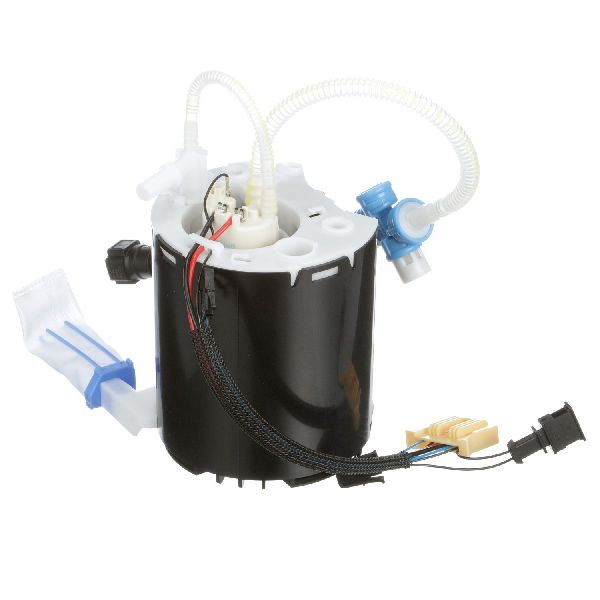
- Fuel Pump and Sender Assembly
(OEM #LR043283 (Note: This part number is for the entire assembly which includes senders. Senders may be available separately but TSBs recommend replacing the unit.))— This assembly contains the fuel level senders and flange, which are the most common hardware failure points due to internal connector corrosion. The TSB recommends replacing them as a unit.
Trusted brands: Land Rover (Genuine), Delphi, Bosch
OEM price range: $450-$1031
Aftermarket price range: $300-$450
Related Codes That Often Appear With This One
- P115a - Low fuel strategy
- P115b - low fuel, forced engine shutdown
Technical Service Bulletins (TSBs) & Recalls
- LTB00566NAS2: Fuel Gauge Operation /DTC U0128-00 Stored
- LTB00304NAS8: Fuel Gauge Operation/DTC U0128-00 Stored
Platform-Specific Known Issues
- Land Rover TSB #LTB00566NAS2 directly addresses this code, linking it to fuel gauge malfunctions and providing a clear diagnostic path starting with a software update.
- The original fuel sender connectors inside the tank were susceptible to fretting corrosion, a known failure point that was later addressed with updated parts using gold-plated pins.
- A strong correlation exists between an EPB module fault and the U0128 code manifesting as a fuel gauge issue, which can be confusing for technicians.
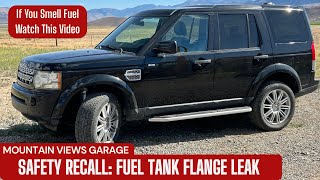
- A recall (NHTSA 21V635) exists for a cracking fuel outlet flange on the fuel tank for 2010-2016 LR4 models, which may be discovered during this repair.
Mechanic-Grade Diagnostic Values
- Fuel Level Sender Resistance — expected: The resistance should change smoothly as the float arm is moved. While exact OEM values are found in the workshop manual, a common test involves using a 1k Ohm resistor to simulate a full tank; this should make the gauge read full, although the low fuel light may remain on temporarily.. Failure: If the resistance reading is infinite (open circuit), zero, or does not change when the float is moved, the sender is faulty.
- Fuel Sender Live Data Voltage (via GAP IID or SDD) — expected: The voltage from each of the two senders should be consistent and change logically when the vehicle's angle changes (e.g., parked on a hill).. Failure: A voltage that is stuck, erratic, or doesn't correspond to the known fuel level points to a sender or wiring issue.
Hidden / Shadow Codes Worth Checking
- U0128-00 (2E) or (28): The '-00' suffix confirms the specific Land Rover fault related to the fuel gauge system as described in TSBs. The hex code in parentheses, like (2E) or (28), is a fault symptom byte that provides more granular detail for advanced diagnostics, indicating things like whether the test failed on the current drive cycle. (see via Advanced scan tools like the GAP IID or Land Rover SDD are required to see the suffix and symptom byte.)
Scan Tool Commands That Help
- Land Rover SDD: Instrument Cluster Software Download — This is the first step prescribed by TSB LTB00566NAS2 when DTC U0128-00 is stored. It flashes the Instrument Cluster with updated software to resolve known glitches causing the fuel gauge issue.
- GAP IID Tool / Land Rover SDD: EPB (Electronic Parking Brake) Unjam / Service Mode — If an EPB fault is present alongside the fuel gauge issue, this function attempts to electronically release or reset the parking brake mechanism. A successful EPB reset may resolve the cascading U0128 fuel gauge fault.
- GAP IID Tool: Fuel Gauge Calibration / MPG Calibration — While not a direct fix for a U0128 electrical fault, this function allows for fine-tuning the fuel gauge reading after a repair or if the gauge is slightly inaccurate. It can be used to adjust the reported MPG, which is tied to the fuel level system.
Wiring & Ground Locations
- Fuel Pump/Sender Ground — The fuel pump and senders are grounded through the main chassis harness. A key ground point for many rear components is located in the luggage compartment, behind the access panel for the taillights.. A poor ground connection at this location can cause erratic readings from the fuel level senders, mimicking a component failure.
- EPB Module Connector — The Electronic Parking Brake module is located near the rear differential, and its main electrical connector is a common point for corrosion and wiring damage.. Damage to the EPB connector or its wiring is a primary cause of the generic U0128 fault, which on this platform, can cascade and cause the fuel gauge to fail.
- A-Pillar Ground Headers — There are major earth header points behind the kick panels at the bottom of both the driver and passenger side 'A' pillars.. These ground points serve numerous modules, including the Instrument Cluster and Body Control Module. Corrosion here, often from sunroof drain leaks, can cause widespread, confusing communication faults, including U0128.
Real Owner Repair Stories
- LandyZone Forum user 'Lawt67' (L320 Range Rover Sport (shares platform/issue with LR4)) — EPB jammed, and after using the emergency release and pulling the EPB fuse, the fuel gauge dropped to zero. The engine began surging and eventually shut down, logging codes P115a (low fuel strategy) and P115b (forced engine shutdown) despite having 70L of fuel.
❌ Tried (didn't work) Putting the EPB fuse back in and clearing codes did not fix the fuel gauge.
✅ What actually fixed it The root cause was the physically jammed EPB. The owner accessed the EPB module, manually freed the jammed mechanism by hitting the brass nut, adjusted the brake shoes, and reinstalled the fuse. After cycling the ignition, the fuel gauge returned to normal and the handbrake began working correctly. - LandyZone Forum user 'dorsetlandy' (2010 Discovery 4 (LR4)) — EPB became stuck on, and after pulling the emergency release cable, the fuel gauge went to zero and the engine would cut out. The U0128 code was present.
❌ Tried (didn't work) Initially just clearing the code did nothing as the EPB was still in a fault state.
✅ What actually fixed it The user replaced a blown fuse for the EPB system. This restored the fuel gauge function and allowed the vehicle to run. However, the EPB then made a high-pitched whine, indicating it needed to be re-calibrated or 're-latched' using a tool like the GAP IID after being manually released. The key was that a simple fuse, likely blown by the struggling EPB motor, cut power and communication, which in turn killed the fuel gauge.
OEM Part Supersession History
Various pre-2012 sender part numbers→Updated sender units (e.g., included in LR043283 assembly)— The original sender units used standard metal connector pins inside the fuel tank that were prone to fretting corrosion. The updated service parts use gold-plated pins to prevent this issue.
Model Year Variations Within This Range
- 2010-2012: These models used a MOST (fiber optic) based infotainment system that did not support Bluetooth audio streaming without an adapter. The 2013 model introduced an updated hard-drive-based system with native BT streaming.
- 2010-Early 2012: These model years of the 5.0L V8 were fitted with earlier-design timing chain tensioners that are more prone to failure. An updated design was introduced in late 2012, making the 2013 model year generally more desirable from an engine reliability standpoint.
Helpful Videos
Used OEM Parts in Stock
New Aftermarket Parts Available

The information in this article is provided for general reference and educational purposes only. Vehicle specifications, procedures, and part compatibility can vary by production date, trim level, and region. Always consult your vehicle's factory service manual and verify part numbers before purchasing or performing repairs. Safety-critical components such as airbags, seat belts, and braking systems should be installed by a qualified professional.
- Land Rover LR4:
- 🧭 Diagnostic Flowchart
- 🎬 Helpful Videos
- 🛍️ Shop This Part
- What's Unique About the 2010-2013 Land Rover LR4
- Symptoms You May Notice
- Most Likely Causes
- Rare But Worth Checking
- Diagnosis Steps
- Parts You'll Likely Need
- Related Codes That Often Appear With This One
- Technical Service Bulletins (TSBs) & Recalls
- Platform-Specific Known Issues
- Mechanic-Grade Diagnostic Values
- Hidden / Shadow Codes Worth Checking
- Scan Tool Commands That Help
- Wiring & Ground Locations
- Real Owner Repair Stories
- OEM Part Supersession History
- Model Year Variations Within This Range
- 🎟️ Get 5% Off