

U0129 on 2021 Chrysler 300: Lost Communication With Brake System Control Module
This code means the Brake System Control Module (ABS module) has lost communication. On the 2021 Chrysler 300, this is often caused by a weak battery, a bad ground, a blown fuse, or a CAN bus wiring issue, not necessarily a failed module. Professional diagnosis is recommended as it affects critical safety systems like ABS and stability control.
- U0129 on a 2021 Chrysler 300 means the Brake System Control Module (ABS) is offline, disabling key safety features.
- Before suspecting the expensive ABS module, always test the battery and check all related fuses and ground connections.
- This code often appears with other 'U' codes, which strongly points to a network-wide issue (wiring, power) rather than a single failed module.
- Diagnosis is complex and best left to a professional with CAN bus diagnostic tools to avoid unnecessary parts replacement.
- Do not drive the vehicle with this code active, as ABS and stability control are compromised.
What's Unique About the 2021-2021 Chrysler 300
On modern, highly networked vehicles like the 2021 Chrysler 300 and its platform mates (Dodge Charger/Challenger), dozens of computers (modules) communicate over a network called the CAN bus. A communication code like U0129 is frequently a symptom of a larger network problem rather than a single failed part. The provided NHTSA technical service bulletin (TSB #1801322) lists U0129 alongside several other 'Lost Communication' codes, strongly suggesting a shared electrical or network fault is a more likely culprit than the brake module itself. A single faulty module or a problem at a central 'star connector' can bring down the entire network, causing multiple U-codes simultaneously.
Diagnostic Flowchart
Tap your situation to follow the diagnostic path that matches what you're seeing on this vehicle.
Symptoms You May Notice
- ABS warning light illuminated on the dashboard.
- Traction Control (ESC/ESP) warning light on.
- Brake warning light on.
- "Service ABS System" or similar message on the instrument cluster.
- Cruise control may be disabled.
- Vehicle may not start or may stall in some cases if the CAN bus network is severely compromised.
- A heavier or inconsistent brake pedal feel may be noticed.
- Replacing the ABS module immediately 🎬 Watch: How to fix no communication with the ABS module without first testing the battery, fuses, and ground connections. This is an expensive mistake, as the underlying issue is often electrical and much cheaper to fix.
Most Likely Causes
- Weak or Failing Battery 🔴 High Probability → Shop Vehicle Battery Modern vehicles with numerous electronic modules, like the Chrysler 300, are highly sensitive to battery voltage. A weak battery can cause unpredictable communication errors across the CAN network during startup or under load, often before causing a no-start condition.
How to confirm: Test the battery with a digital multimeter (should be >12.4V with engine off) and, more definitively, with a professional load tester. Many auto parts stores offer this service for free. A battery can show good voltage but still fail under load.
Typical fix: Replace the vehicle's battery. Ensure the new battery meets or exceeds OEM specifications (AGM type is common). The battery is located in the trunk.
Est. part cost: $150-$300 - Blown Fuse for the ABS Module 🔴 High Probability → Shop ABS Control Module The ABS module is protected by one or more fuses, typically in the front fuse box (Power Distribution Center). A momentary short or voltage spike can blow a fuse, cutting power to the module and causing an immediate U0129 code.
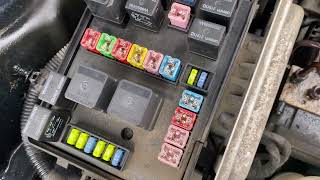
How to confirm: Visually inspect and test the fuses for the ABS system. On a 2011-2021 Chrysler 300, these are often fuses F5, F6, F36, and F39 in the engine bay fuse box. A multimeter should be used to confirm continuity as visual inspection can be misleading.
Typical fix: Replace the blown fuse. If the fuse blows again, it indicates a short circuit in the wiring or the ABS module itself that requires further diagnosis.
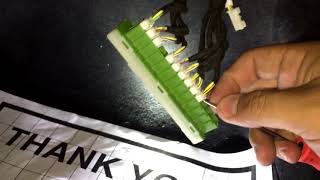
Est. part cost: $1-$5 - Faulty CAN Bus Wiring or Connections 🟡 Medium Probability Chrysler vehicles use star connectors (also called CAN bus junction blocks) to route network communications. A loose pin, corrosion, or damage at these connectors or along the harness can disrupt the entire network. A real-world example on a platform-mate Dodge showed a completely disintegrated connector at the ABS module causing a no-start and multiple codes.
How to confirm: Visually inspect the wiring harness leading to the ABS module for chafing, corrosion, or damage, especially around the wheel wells and under the vehicle. A professional would use an oscilloscope to check for a clean CAN signal or perform a resistance check on the bus (should be ~60 ohms).
Typical fix: Repair the damaged wiring or clean/replace the affected connector. This is often a labor-intensive diagnosis.
Est. part cost: $5-$100 for wiring supplies or a new pigtail connector, but labor can be significant. - Poor Power or Ground Connection to ABS Module 🟡 Medium Probability → Shop ABS Control Module
How to confirm: Verify the ABS module fuse is intact. Use a multimeter to check for 12V at the module's power pin and for low resistance (less than 0.1 Ω) between the module's ground pin and the chassis. A bad ground is a very common cause of module communication issues. Ground points are often located on the frame rail near the module or on a dedicated ground post.
Typical fix: Clean the ground contact point to bare metal and tighten the connection. Replace any blown fuses.
Est. part cost: $1-$10 - Faulty Brake System Control Module (ABS Module) ⚪ Low Probability → Shop ABS Control Module
How to confirm: This is a diagnosis of exclusion. If the battery, fuses, all power/ground connections, and the CAN bus wiring have been verified as good, the module itself is the likely culprit. A professional scan tool will show the module as offline and unresponsive.
Typical fix: Replace the ABS module. The new module must be programmed and configured to the vehicle's VIN and specific options using a compatible scan tool.
Est. part cost: $313-$618
Rare But Worth Checking
- Fault in Another Module: A different module on the same CAN bus (like the Body Control Module or Power Steering Module) can fail in a way that it floods the network with bad data or shorts the bus, preventing other modules from communicating. This is known as a 'bus down' condition and can be diagnosed by systematically unplugging modules at the star connector to see when communication is restored.
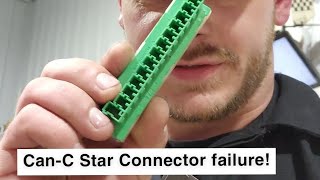
- Faulty Star Connector: In some Chrysler/Dodge/Jeep/Ram vehicles, the star connector itself can fail internally due to a faulty capacitor designed to reduce network noise. 🎬 See how a faulty star connector causes network failure This can cause an entire CAN bus segment to crash intermittently, often after a specific driving distance or time.
Diagnosis Steps
- Check and record all stored trouble codes from ALL modules. Note if other 'U' (communication) codes are present, as this points to a network-wide issue.
- Check the battery. Ensure it is fully charged and passes a load test. Low voltage is a primary cause of communication faults.
- Inspect all fuses related to the ABS and stability control systems, typically located in the engine bay fuse box. Check fuses F5, F6, F36, and F39.
- Perform a thorough visual inspection of the wiring harness and connector at the ABS module. The module is located on the driver's side of the engine bay. Look for any signs of corrosion, moisture, or physical damage.
- Inspect the main chassis and module ground connections for tightness and corrosion. Clean as necessary.
- If using an advanced scan tool (like wiTECH), check the CAN bus network topology to see which modules are online (green) and which are offline (red).
- With the battery disconnected, use a multimeter to check for the correct resistance (approximately 60 ohms) across the CAN High and CAN Low pins at the OBD-II port. This verifies the integrity of the network's termination resistors.
- If multiple modules are offline, locate the CAN bus star connectors (often behind the glove box or kick panels) and begin unplugging branches to isolate the faulty module or wiring section.
- If all wiring, power, and grounds are confirmed good, the ABS module is the most likely point of failure.
Parts You'll Likely Need
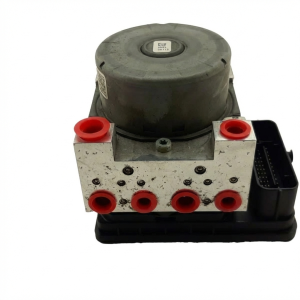
- Brake System Control Module (ABS Module/Pump)
(OEM #68500121AC, 68341606AC, 68341609AD)— If all electrical and network tests pass, the module itself has likely failed internally and is no longer able to communicate. It is often sold as an assembly with the hydraulic pump.
Trusted brands: Mopar
OEM price range: $313-$618
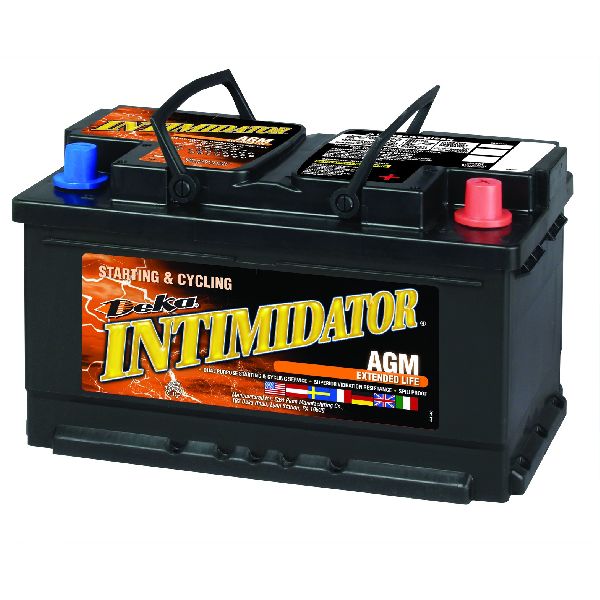
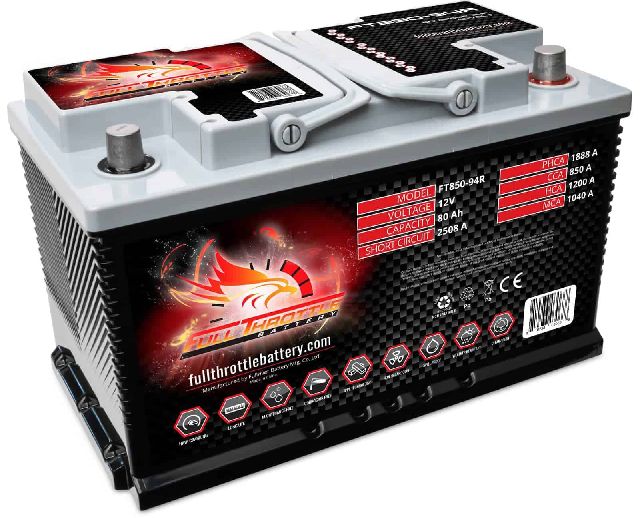
Aftermarket price range: $250-$500 - Automotive Battery (AGM Type Recommended) — A weak or failing battery is a very common cause of multiple communication codes, including U0129.
Trusted brands: Interstate, DieHard, Duralast
OEM price range: $200-$350
Aftermarket price range: $150-$300 - Mini Blade Fuses — A blown fuse is a simple but common cause that cuts power to the ABS module.
Trusted brands: Bussmann, Littlefuse
OEM price range: $1-$5
Aftermarket price range: $1-$5
Related Codes That Often Appear With This One
- U0125 — Lost Communication With Dynamics Sensor. This and other U-codes are cited in TSB #1801322, indicating a common network issue.
- U0128 — Lost Communication With Park Brake Control Module. Also cited in TSB #1801322.
- U0140 — Lost Communication With Body Control Module. Also cited in TSB #1801322, pointing to a potential widespread communication failure.
- U0141 — Lost Communication With IPM (BCM). Also cited in TSB #1801322.
- U1120 / U1110 — Lost Wheel Distance Message / Lost Vehicle Speed Message. These often accompany ABS communication faults as this data originates from or passes through the ABS module.
- U0418 — Implausible Data Received From Brake System Control Module 1. This code, also from TSB #1801322, indicates that communication may be present, but the data is corrupt or nonsensical, pointing to a software or module fault.
Technical Service Bulletins (TSBs) & Recalls
- 1801322: ELECTRONIC STABILITY CONTROL, dated 2022-01-20
- 18-013-22: Flash: Powertrain Control Module (PCM) Updates, dated 2022-01-20
Platform-Specific Known Issues
- TSB #1801322 documents that code U0129 can appear with a host of other communication codes (U0125, U0128, U0140, U0141), indicating a network-wide fault rather than an isolated issue with the brake module.
- The ABS module connector on the LD platform (300, Charger, Challenger) is susceptible to severe corrosion, which can destroy the pins and the connector itself, leading to a no-start condition and a completely offline module.
- TSB #18-013-22, while not directly for U0129, is for the 2021 Chrysler 300 and involves a PCM software update. It highlights the manufacturer's procedure of ensuring stable battery voltage (13.2-13.5V) with a charger during any module reprogramming, underscoring the system's sensitivity to voltage.
Mechanic-Grade Diagnostic Values
- ABS Module Power Supply Voltage — expected: 12.0V ± 0.5V with key on, engine off.. Failure: Voltage below ~11.5V or dropping significantly under load can cause the module to shut down.
- ABS Module Ground Resistance — expected: Less than 0.1 Ω between the module's ground pin and a clean chassis point.. Failure: Higher resistance indicates a poor ground, which is a common cause of communication failure.
- CAN Bus Idle (Recessive) Voltage — expected: CAN High and CAN Low wires should both measure approximately 2.5V to chassis ground.. Failure: Significant deviation from 2.5V on either line indicates a short to power, ground, or a faulty module.
- CAN Bus Active (Dominant) Voltage — expected: CAN High should rise to ~3.5V and CAN Low should drop to ~1.5V during data transmission.. Failure: A flat line, or voltages that don't reach these approximate levels, indicates a bus problem. This requires an oscilloscope to view.
Hidden / Shadow Codes Worth Checking
- U0418: Implausible Data Received From Brake System Control Module 1. This code indicates the PCM is receiving data, but it's corrupt or illogical. It suggests a deeper issue than a simple connection loss, pointing towards a faulty module or a software glitch. (see via A professional scan tool like Chrysler's wiTECH is often required to see this level of detail and determine which module is reporting the fault.)
Scan Tool Commands That Help
- wiTECH: Check for Software Updates / Flash Module — Use this function when TSB #1801322 applies. A software glitch in the PCM can cause it to falsely report U0129. Flashing the PCM with updated software may be the required fix, not hardware replacement.
- wiTECH or similar high-level scanner: View Network Topology — This function shows all modules on the network and their status (online/offline). If U0129 is present along with many other communication codes, this view can instantly confirm a network-wide failure versus a single module issue.
- Lab Scope + Manual Isolation: Isolate modules at Star Connector — When a network-wide failure is suspected (multiple U-codes), connect a lab scope to the CAN lines at the DLC. Then, go to the star connector and unplug modules one-by-one until the noisy signal on the scope cleans up. The module that was just disconnected is the source of the network problem.
Wiring & Ground Locations
- CAN Bus Star Connector — On many Chrysler 300 models, a primary star connector (or junction block) for the CAN C bus is located behind/underneath the glove box.. This is the central point for diagnosing network-wide communication failures. A fault here or in one of its branches can cause U0129 and other codes simultaneously.
- G100 / G101 — These are major chassis ground points located in the engine compartment, typically on the left (G100) and right (G101) front frame rails or inner fenders.. The ABS module and other critical components rely on clean, tight connections to these primary grounds. Corrosion or looseness here can cause intermittent communication issues.
- Factory Ground Post — There is often a factory ground post with multiple wires attached located under the factory airbox in the engine bay.. This is another critical grounding location. Ensuring all ring terminals on this post are clean and tight is a key diagnostic step for any electrical issue.
Real Owner Repair Stories
- YouTube channel 'Pine Hollow Auto Diagnostics' (2012 Chrysler 300 3.6L) — Numerous communication codes between all different modules.
❌ Tried (didn't work) Focusing on one specific U-code instead of diagnosing the network as a whole.
✅ What actually fixed it The technician used a lab scope and found a noisy CAN bus signal. By disconnecting modules one by one at the star connector under the glove box, he isolated the problem. The faulty Power Steering Pump Module was corrupting the entire network. Replacing the power steering module restored communication for all modules, including the ABS module. - Carly community forum user (2006 Chrysler 300) — ABS warning light on, code reader showed low voltage to ABS pump motor.
❌ Tried (didn't work) Initial check of fuses showed they were okay.
✅ What actually fixed it The owner swapped the ABS relay in the under-hood fuse box with a similar one. After clearing the codes, the fault did not immediately return, suggesting the original relay was faulty or had a poor connection.
"I Checked Everything" — The Actual Cause
- In cases where multiple 'U' codes appear, including U0129, the root cause is often not the ABS module itself, but another module on the network that has failed and is 'shouting' garbage data onto the CAN bus, preventing other modules from communicating. A 2012 Chrysler 300 had this exact issue, where all wiring and connections checked out, but the fault was ultimately traced to a bad power steering module that was crashing the entire network. The fix was replacing the power steering module, not the ABS module.
Model Year Variations Within This Range
- 2021 models built on or before October 14, 2021: These vehicles may be subject to TSB #1801322, where a PCM software update is required to fix a glitch that can cause numerous false communication codes, including U0129. Vehicles built after this date should have the updated software from the factory.
Helpful Videos
Used OEM Parts in Stock
New Aftermarket Parts Available


The information in this article is provided for general reference and educational purposes only. Vehicle specifications, procedures, and part compatibility can vary by production date, trim level, and region. Always consult your vehicle's factory service manual and verify part numbers before purchasing or performing repairs. Safety-critical components such as airbags, seat belts, and braking systems should be installed by a qualified professional.
- Chrysler 300:
- 🧭 Diagnostic Flowchart
- 🎬 Helpful Videos
- 🛍️ Shop This Part
- What's Unique About the 2021-2021 Chrysler 300
- Symptoms You May Notice
- Most Likely Causes
- Rare But Worth Checking
- Diagnosis Steps
- Parts You'll Likely Need
- Related Codes That Often Appear With This One
- Technical Service Bulletins (TSBs) & Recalls
- Platform-Specific Known Issues
- Mechanic-Grade Diagnostic Values
- Hidden / Shadow Codes Worth Checking
- Scan Tool Commands That Help
- Wiring & Ground Locations
- Real Owner Repair Stories
- "I Checked Everything" — The Actual Cause
- Model Year Variations Within This Range
- 🎟️ Get 5% Off