

OBD-II Code U0130: Lost Communication With Steering Effort Control Module
What U0130 means, why it triggers, and how to fix it
- Code U0130 indicates a total loss of power steering assist due to a communication failure, making the vehicle unsafe to drive.
- Always test the battery first; a resting voltage below 12.4V frequently causes high-draw steering modules to drop offline.
- Check the CAN bus resistance at the OBD-II port (pins 6 and 14); a healthy network reads exactly 60 ohms, while 120 ohms indicates a broken wire.
- On 2014-2020 GM trucks, clean and tighten the G218 ground under the dash before replacing any expensive steering components.
- If the steering rack requires replacement, expect costs between $1,500 and $3,000, as the control module is often integrated directly into the rack assembly.
What Does U0130 Mean?
Code U0130 means the main computer lost connection to the Steering Effort Control Module (SECM). This module manages electric power steering (EPS), making the wheel easy to turn at low speeds and firm at high speeds. When communication drops, the EPS shuts down as a safety measure, resulting in heavy, unassisted steering.
Technical definition: The SAE/ISO definition is "Lost Communication With Steering Effort Control Module". The module is not responding on the vehicle's CAN bus network, preventing data exchange with the Body Control Module (BCM) and Engine Control Module (ECM).
Can I Drive With U0130?
No — Do Not Drive. Do not drive. While technically operable, the steering becomes extremely heavy, requiring significant physical effort. This poses a severe safety risk, preventing emergency maneuvers or low-speed control. Sudden changes in steering effort cause loss of control and crashes. The immediate safety hazard outweighs any benefit of driving.
Common Causes
- Damaged Wiring or Corroded Connectors (Very Common) — This is the most frequent cause. Wires in the harness leading to the power steering module get damaged from vibration, chafing against metal components, or road debris. Electrical connectors corrode from moisture and road salt, leading to a poor or lost connection.
- Poor Power or Ground Supply (Common) — The steering module needs a stable voltage supply and a solid ground connection. A loose or corroded ground wire (a known issue on GM trucks), a high-amperage blown fuse, or a faulty fusible link at the battery terminal cuts power and triggers the code.
- Weak or Failing Battery (Common) — Electric power steering is a high-current system. A weak battery providing unstable voltage causes the Body Control Module (BCM) to shut down high-draw modules to conserve power, leading to communication loss and a U0130 code during startup.
- Faulty Steering Effort Control Module (SECM) / Rack (Common) — The module itself fails internally due to water intrusion (a known Ford Focus issue), vibration causing cracked solder joints, or internal software corruption. On many modern vehicles, this module is integrated into the steering rack, requiring full assembly replacement.
- Software or Calibration Mismatch (Common) — If a related control module was recently replaced or the vehicle's software was updated, the steering module's calibration becomes out of sync. This prevents a successful network 'handshake,' triggering a communication code. A manufacturer-issued software update (TSB) is often required.
- Faulty Clock Spring or Steering Angle Sensor (Less Common) — The clock spring is a rotary connector in the steering column that wears out, breaking electrical connections. Since the steering angle sensor communicates through it, its failure leads to related communication codes, though U0126 is more specific to this fault.
- Failed CAN Bus Termination Resistor (Rare) — The CAN bus network has a 120-ohm resistor at each end; a healthy network reads ~60 ohms. 🎬 See how to perform a professional CAN bus resistance check. If one of these resistors fails, the resistance jumps to 120 ohms, corrupting data signals and causing communication loss with sensitive modules like the SECM.
- Faulty Gateway Module (BCM or other) (Rare) — In some vehicle architectures, the SECM communicates through a central gateway module, like the Body Control Module (BCM). If the gateway module has an internal fault, it fails to route messages correctly, isolating the steering module.
Symptoms
- Heavy or Stiff Steering — The most obvious symptom is a total loss of power steering assist, making the steering wheel very difficult to turn, especially at low speeds or when parking.
- Power Steering Warning Light or Message — A warning light, often a steering wheel icon or the letters "EPS," illuminates. A message like "Service Power Steering" or "Steering Assist is Reduced, Drive With Care" appears on the dashboard.
- Intermittent or Unpredictable Steering Assist — The steering assist flickers on and off, feels jerky, or suddenly becomes heavy during a drive before correcting itself. This points to a loose connection, a poor ground, a failing battery, or an impending hard failure in the EPS system.
- ABS and Stability Control Lights — The steering system provides critical data to the anti-lock brake (ABS) and electronic stability control (ESC) systems. When this data is lost, warning lights for ABS, ESC, or Traction Control turn on as well.
Diagnostic Flowchart
Tap your situation to follow the diagnostic path that matches what you're seeing on this code.
Common Fixes & Costs
- Repair Damaged Wiring, Connectors, or Ground — Parts: $10-$50, Labor: $150-$300 (parts + labor), ~2.0 hr book time (Intermediate)
- Replace Blown Fuse / Test or Replace Battery — Parts: $5-$250, Labor: $0-$50 (parts + labor), ~0.5 hr book time (DIY)
- Replace Entire Electric Steering Rack Assembly — Parts: $800-$2,000, Labor: $1,200-$2,800 (parts + labor, includes alignment), ~4.5 hr book time (Professional)
- Replace Steering Effort / Power Steering Control Module (PSCM) — Parts: $400-$950, Labor: $550-$1,300 (parts + labor, includes programming), ~2.0 hr book time (Professional)
- Replace Clock Spring — Parts: $60-$450, Labor: $180-$630 (parts + labor), ~1.5 hr book time (Professional)
Used vs. New Parts: Buying Guide
When a used part is worth it: For an older, high-mileage vehicle where the cost of a new steering rack assembly is a significant portion of the car's value, a used part from a reputable salvage yard is a budget-conscious choice. This is viable if the vehicle does not require complex programming after installation.
Donor-vehicle mileage cap: roughly under 75000 miles for the part to have meaningful remaining life.
Donor quality checklist:
- Verify the donor vehicle was scrapped due to collision damage, not an electrical or steering-related failure.
- Match the part number exactly. Even slight variations lead to incompatibility.
- Inspect the used part's electrical connectors for any signs of corrosion, water damage, or bent pins.
- Prefer donors from dry climates to minimize the risk of corrosion.
Decision logic:
- If Vehicle is less than 7 years old or has under 100K miles → Buy new (OEM or high-quality aftermarket). The risk of premature failure of a used part and paying for labor twice is too high.
- If The repair requires VIN programming with dealer-specific software → Favor a new part. Many shops cannot program used modules, or the process is unreliable.
- If Vehicle is over 10 years old and the new part costs over $1,500 → A low-mileage used part is a reasonable option, provided you accept the shorter lifespan and warranty.
Warranty tradeoff: Used parts typically come with a 30-90 day warranty that covers the part only, not labor. New aftermarket parts often have a 1-year to limited lifetime warranty. New OEM parts usually carry a 1-year warranty.
Worst-case if a used part fails: $600-$1500. If a used steering rack fails after the short warranty period, you pay for the part again, plus the full cost of labor for a second installation and another wheel alignment.
What Happens If You Wait — Timeline
- Immediately: Power steering assist is lost. A warning light appears on the dash. Steering becomes extremely heavy and difficult, especially at low speeds. The vehicle is unsafe to operate. (MPG impact: 0%% · Added cost: $0 (Initial state))
- Days to Weeks (If driving continues): The immediate safety risk of an accident remains critical. Continued driving places high physical stress on the driver and minor mechanical stress on steering column components not designed for frequent, high-force manual steering. The underlying electrical fault worsens. (MPG impact: 0%% · Added cost: $200 - $5,000+ (Cost of a tow and potential for a low-speed collision, e.g., hitting a curb or another car while parking. The cost of the original repair remains.))
- 1-3 Months (If driving continues): The risk of a catastrophic accident due to inability to make an emergency maneuver remains extremely high. The initial fault remains unfixed. (MPG impact: 0%% · Added cost: $5,000 - $50,000+ (High probability of an accident resulting in significant vehicle damage, insurance claims, and potential injury. The initial repair cost is now compounded by accident-related costs.))
- Beyond 3 Months: The vehicle is effectively a permanent safety hazard. The root cause, such as a corroded connector or failing ground, has been neglected. The cost of an accident is the primary financial risk, far outweighing any minor additional component damage from driving without assist. (MPG impact: 0%% · Added cost: Potential for total vehicle loss and severe liability costs in the event of an accident.)
Cost of Not Fixing It
- Immediately: Severe safety risk. The steering becomes extremely heavy, making it difficult to make emergency maneuvers or control the vehicle at low speeds. The risk of an accident is significantly increased. (Added cost: Potential for a major accident, with costs ranging from minor bodywork to a total loss of the vehicle and potential injury.)
- Short-Term (Days to Weeks): Increased physical strain on the driver. Continued operation puts minor stress on steering column components not designed to handle high manual steering forces long-term. (Added cost: Negligible. The primary cost remains the unresolved safety issue and the eventual required repair.)
- Long-Term (Months): The underlying electrical issue (e.g., corrosion, shorted wire) worsens, but it is unlikely to cause cascading failures in unrelated systems like the engine or transmission. The car remains unsafe to drive. (Added cost: No significant increase in repair cost unless an accident occurs. The initial fault must still be addressed.)
Diagnosis Steps
- Read All Trouble Codes from All Modules
Use an advanced OBD-II scanner capable of accessing all vehicle modules (BCM, ABS, TCM, etc.). Note if other 'U' codes are present. A single U0130 points towards the steering system, while multiple U-codes (like U0100, U0121) suggest a broader network-wide problem.
Tools: Advanced OBD-II Scanner (Beginner) - Check Battery Health and System Voltage
The EPS system is a high-draw component. With the engine off, a healthy battery shows a resting voltage of 12.4V to 12.8V. Below 12.4V indicates a low charge or failing battery. With the engine running, the alternator produces a charging voltage between 13.5V and 14.5V. Low system voltage is a very common cause of module communication dropouts.
Tools: Multimeter, Battery Tester (Beginner) - Inspect Fuses and Power Steering Connectors
Visually inspect all fuses related to the Power Steering (EPS), Body Control, and Gateway modules. Locate the Steering Effort Control Module (often on the steering rack or column) and inspect its main electrical connector for corrosion, moisture, pushed-out pins, or physical damage.
Tools: Fuse Puller, Flashlight, Inspection Mirror (Intermediate) - Test Power and Ground at the Module Connector
Using a vehicle-specific wiring diagram, disconnect the module's connector. With the ignition on, use a multimeter to verify it receives proper battery voltage on the power pins (typically 11.5V to 14.5V). Check the ground pins for continuity to the chassis; resistance must be less than 0.5 ohms. A high resistance reading indicates a poor ground.
Tools: Multimeter, Vehicle-Specific Wiring Diagram (Advanced) - Check CAN Bus Network Resistance
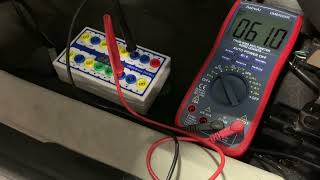
With the battery disconnected, use a multimeter to check the resistance between the two CAN bus wires (CAN High and CAN Low) at the diagnostic port (pins 6 and 14). A healthy network reads approximately 60 ohms. A reading of 120 ohms indicates a missing termination resistor or a break in the wiring. A reading near 0 ohms indicates a short between the two wires.
Tools: Multimeter (Advanced) - Perform a 'Wiggle Test' on Harnesses
If the fault is intermittent, this test helps locate it. With the scan tool connected and monitoring communication status, gently wiggle and flex the wiring harness at key points: near the SECM connector, where it passes through the firewall, and under door sill plates. If communication drops in and out as you move a specific section, you found the wiring fault.
Tools: Advanced OBD-II Scanner (Advanced) - Check Live Data PIDs for Steering Angle Sensor
Using an advanced scan tool, view the live data stream for the Steering Angle Sensor (SAS). As you turn the steering wheel, the degree value changes smoothly and accurately. A normal range is typically from -540 to +540 degrees. If the data is frozen, erratic, or absent, it indicates a fault with the SAS or clock spring.
Tools: Advanced OBD-II Scanner (Advanced) - Isolate the Module and Check for Software Updates
If wiring, power, ground, and network health are confirmed good, the issue is likely the module itself or its software. Before replacing it, use a dealer-level scan tool to check if the module responds to a direct query and to see if any Technical Service Bulletins (TSBs) or software updates are available. A re-flash sometimes resolves the issue.
Tools: Advanced Scan Tool with Programming Capability (Professional) - Analyze CAN Bus Waveform with an Oscilloscope
For a definitive network diagnosis, connect an oscilloscope to the CAN High and CAN Low pins. A healthy signal shows clean, square waves. In the recessive state, both lines are at ~2.5V. In the dominant state, CAN-High rises to ~3.5V and CAN-Low drops to ~1.5V. Look for rounded-off signals, noise, or a line shorted to power or ground.
Tools: Oscilloscope, Breakout Leads (Professional)
When This Code Triggers (Freeze-Frame Conditions)
- Battery Voltage: 11.5-12.5V (During engine crank, a weak battery's voltage dips, causing modules to drop offline and trigger the code at startup.)
- Vehicle Speed: 0-70 mph (Variable) (Triggers at any speed. Occurs at low speeds when parking (high steering load) or at highway speeds due to vibration affecting a loose wire.)
- RPM: 0-3000 (Variable) (The fault is not RPM-dependent but is often logged during initial key-on or engine start before RPMs stabilize.)
- System Status: CAN Bus Communication Attempt (The code sets the instant the Gateway Module fails to receive a valid signal from the Steering Control Module during its network check.)
Related Codes
- U0131 — This is an almost identical code for 'Lost Communication With Power Steering Control Module.' Some manufacturers use U0130 and others use U0131 for the same basic fault. Diagnostically, they are treated as the same problem, pointing to a loss of communication with the power steering brain.
- U0126 — This code means 'Lost Communication With Steering Angle Sensor (SAS) Module.' To differentiate, use a scanner to check for live data from the SAS. If you can read the steering angle, but U0130 is still present, the problem is with the power steering module's communication circuit, not the SAS itself.
- U0100 — This code means 'Lost Communication with ECM/PCM.' The key differentiator is scope. U0130 alone points to an issue with the steering system. If you see U0100, you will almost always see a long list of other 'U' codes from the transmission, ABS, and body modules. U0100 indicates a network-wide problem.
- U0121 — This code for 'Lost Communication With Anti-Lock Brake System (ABS) Control Module' appears alongside U0130. To tell them apart, check which module is not communicating with your scan tool. If both are offline, you have a shared wiring or network problem. If only the ABS module is offline, U0121 is the primary fault.
Climate & Environmental Factors
- High Humidity and Road Salt: These are the primary environmental contributors. Moisture and salt accelerate corrosion on electrical connectors, wiring harnesses, and ground points, especially those exposed on the steering rack and under the vehicle. This corrosion increases resistance and breaks the electrical connection, triggering a U0130 code.
- Extreme Cold: Cold weather significantly reduces a battery's cranking power and overall efficiency. An already weak battery fails to provide the stable voltage required by the high-draw electric power steering system during a cold start, leading to a temporary communication loss and setting the code.
- Water Ingress: Heavy rain, flooding, or high-pressure washing forces water into weather-sealed connectors or directly into the steering module itself. On some models like the Ford Focus, water intrusion into the steering rack electronics is a direct cause of U0130.
How to Talk to a Mechanic About This Code
Say this: "I have a U0130 code with a 'Service Power Steering' message and heavy steering. I'd like to book a diagnostic appointment. Before replacing any major components like the steering rack, please perform a full electrical diagnosis to check for power, ground, and communication signals at the steering module connector."
This signals that you understand U0130 is a communication fault, not necessarily a part failure. It directs the technician to perform a proper diagnosis to find the root cause (which is often a simple wiring or power issue) and prevents them from jumping to the most expensive conclusion.
Avoid saying:
- 'My power steering is out, can you fix it?' (too vague)
- 'I think I need a new steering rack.' (Don't diagnose it for them)
- 'Just do whatever it takes to fix it.' (invites a blank check)
Questions to ask before authorizing the repair:
- Did you verify good power and ground at the steering module connector?
- What was the CAN bus resistance reading at the diagnostic port?
- Were there any other 'U' codes in other modules?
- Can you show me the corroded connector or damaged wire that you found?
- If the module/rack needs replacement, does the new part require programming and is that included in the quote?
Where to Take It: Dealer vs Independent vs Chain
- Dealer:
A necessary option if a software update or module programming is required. Otherwise, a qualified independent shop is often more cost-effective.
Best for: Vehicles under warranty, Known software issues or TSBs that require a reflash, Complex repairs that require VIN-specific programming of a new steering rack
Downsides: Highest labor rates, May default to replacing the entire steering rack assembly rather than diagnosing a simpler wiring fault (Typical cost: +50% vs. baseline) - Independent Shop:
Best choice for most cases, especially if the fault is electrical. A good indie shop with strong diagnostic skills finds the root cause without unnecessarily replacing expensive parts.
Best for: Out-of-warranty vehicles, Diagnosing and repairing common electrical faults like bad grounds or wiring issues, Vehicles with well-known U0130 causes (like the GM G218 ground)
Downsides: Quality and diagnostic skill vary greatly. Vet shops by asking if they are comfortable with CAN bus and electrical diagnostics., May not have the expensive tools to program a new steering module. (Typical cost: +0% vs. baseline) - Chain Shop:
AVOID for diagnosis. While they can test or replace the battery (a potential cause), they are not the right choice for diagnosing a communication code like U0130.
Best for: Battery testing and replacement
Downsides: Technicians are often not equipped or trained for complex electrical and network diagnostics., High pressure to sell parts leads to misdiagnosis and unnecessary replacement of the steering rack. (Typical cost: -10% vs. baseline)
When to Walk Away From the Repair
If the estimated repair cost exceeds 50-75% of the car's private-party value (e.g., from Kelley Blue Book), it's time to seriously consider not fixing it.
- Car worth $5000, fix is $2500: Borderline. This is 50% of the car's value for a single repair. Get a second opinion to confirm the diagnosis before proceeding. If the diagnosis is firm, consider selling the car as-is.
- Car worth $15000, fix is $2500: Fix it. The repair cost is significant but well below the threshold. The car has plenty of value left to justify the repair.
- Car worth $3000, fix is $2500: Walk away. The repair cost is nearly the entire value of the car. It is not economical to repair.
What Scan Tool You Need for This Code
Minimum: A scanner that can read codes from ALL vehicle systems, including the Body Control Module (BCM), ABS, and the steering module itself. It must also be able to view live data.
A basic $20 code reader only checks the engine computer (ECM). U0130 is a network code, and you need to see if other modules are also offline. Without the ability to scan all systems, you are flying blind and cannot properly diagnose the issue.
Budget: BlueDriver Pro (~$100) — Scans all vehicle modules to see if U0130 is isolated or part of a wider network problem. Shows live data for battery voltage, which is a key check.
Mid-range: Autel MaxiCOM MK808 / Foxwell NT809 (~$350) — Offers full system diagnostics and some bidirectional controls. This allows you to command modules to respond, helping to confirm if the communication line is open. Essential for a 'wiggle test' to find intermittent wiring faults.
Professional: Launch X431 Series / Autel MaxiSys MS906Pro (~$500-1200) — Provides full bidirectional control, advanced coding, and programming functions. If the fix requires replacing and programming a new steering rack or module, this level of tool is often required.
Rent vs buy: For a one-time U0130 diagnosis, buying a mid-range scanner can be cheaper than paying a shop's diagnostic fee. Basic parts store loaner tools are usually not sufficient. Buy if you plan to do your own diagnostics regularly; otherwise, pay a professional.
How to Clear the Code After You Fix It
- Ensure all repairs are complete and connectors are secure.
- Reconnect the negative battery terminal if it was disconnected.
- Use an OBD-II scan tool to clear all Diagnostic Trouble Codes (DTCs) from all modules.
- Perform a complete drive cycle to allow the vehicle's readiness monitors to run their self-tests.
Drive cycle (~20 minutes): Start with a cold engine (sat for 8+ hours). Start the engine and let it idle for 2-3 minutes. Drive in mixed city traffic, including several stop-and-go situations. Accelerate smoothly to a highway speed of 55-60 mph and maintain for 5-10 minutes. Safely coast to a lower speed without hard braking. After the drive, park the vehicle and check monitor status with a scan tool.
Readiness monitors affected: Comprehensive Component Monitor, Misfire Monitor, Catalyst Monitor, Evaporative System Monitor
Before emissions retest: drive at least 50 miles to fully set monitors.
Watch out for:
- Simply clearing the code with a scanner will not fix a hardware problem; the code returns immediately.
- Disconnecting the battery clears the code but also resets all readiness monitors, causing an automatic emissions test failure until a full drive cycle is completed.
- Some vehicles require a specific steering angle sensor recalibration or module programming after repair, which a generic drive cycle will not complete.
Will This Fail Emissions / State Inspection?
Yes — this code typically fails an OBD-II emissions inspection.
- California: An active U0130 code causes an automatic failure of the smog check. Additionally, if the code was recently cleared, the vehicle fails because the OBD-II readiness monitors report as 'Not Complete'.
- New York: The NYS vehicle inspection includes an OBD-II scan. Any active diagnostic trouble code, including U0130, results in an inspection failure.
- Texas: In the 17 Texas counties requiring emissions testing, an illuminated warning light and an active U0130 code stored in the computer causes the vehicle to fail the OBD-II portion of the inspection.
Most Commonly Affected Vehicles
- Chevrolet / GMC Silverado / Sierra 1500 (2014-2020) — Extremely prone to a poor ground connection at location G218 under the driver's side dash. Also, check for a weak battery. TSB #20-NA-113 notes a software bug on 2017-18 models that requires a dealer reprogram after battery replacement to clear the code.
- Chevrolet / GMC Silverado / Sierra 2500/3500 (2015-2020) — Known issue (GM TSB #PIT5457D) involves a damaged wiring harness under the door sill plates. TSB #23-NA-201 for 2020 models also points to a loose ground causing loss of steering and brake assist.
- Ford Focus, F-150, Explorer (2011-2020) — On the Focus (2012-2018), this code is commonly caused by water ingress into the steering rack, requiring full replacement. On F-150s, recall 15S18 (NHTSA 15V340) addressed intermittent electrical connections in the steering gear, often fixed with a software update or gear replacement.
- Dodge / Ram Ram 1500/2500/3500 (2013-2018) — The Power Steering Control Module is integrated into the steering rack. A major NHTSA investigation (Recall Query 23-003) was opened for 1.1 million 2013-2016 Ram 1500s for sudden, intermittent loss of power steering, which often requires full rack replacement.
- Hyundai / Kia Elantra, Sonata, Santa Fe, Optima (2011-2016) — Many models are affected by a flexible rubber coupling in the steering motor that wears out, causing a clicking noise. While this is a mechanical part, its degradation contributes to related electronic steering faults over time. TSB 17-ST-001 addresses this common repair.
- Subaru Legacy, Outback, Forester (2015-2022) — Subject to several TSBs for EPS issues. TSB 04-17-17R addresses rattling noises from the steering rack. Other bulletins announce design changes to stabilizer bushings which affect overall steering feel and performance.
- Honda Accord, Civic (2013-2018) — While generally reliable, cases have been reported where moisture intrusion into an electrical connector for the EPS module causes an intermittent U0130 code. Thoroughly check connectors for corrosion.
- Nissan Altima, Murano, Rogue (2013-2021) — Newer Nissan models with Electric Power Steering (EPS) log a U0130 due to sensor faults or electrical issues. Diagnosis should follow the standard CAN bus procedure, checking for other codes first, as Nissan systems often log a primary fault code alongside the 'U' code.
Manufacturer-Specific Notes
- General Motors (Chevy/GMC): On many 2014-2020 trucks, code U0130 or U0131 is frequently caused by a poor ground connection at a specific spot (G218) under the dash or a damaged wire harness under the door sill plates (TSB #PIT5457D). Always check these before replacing parts.
- Ford: On the 2012-2018 Focus, U0130 is a notorious code often caused by water getting into the steering rack's electronics, requiring a full rack replacement. For many other models, recalls like 15S18 and 14S18 were issued for internal steering gear faults, sometimes fixable with a software update.
- Chrysler/Dodge/Jeep/Ram: The power steering control module is often built directly into the electric steering rack. A U0130 code on these vehicles, particularly 2013-2016 Ram 1500s, frequently means the entire steering rack assembly must be replaced due to an internal failure. This is a known issue under NHTSA investigation (Recall Query 23-003).
- Hyundai/Kia: A very common issue is the failure of a small, inexpensive rubber coupling inside the steering motor (TSB 17-ST-001). This typically causes a clicking noise when turning but degrades and contributes to other electronic steering issues over time.
Real Owner Stories
2014 Chevy Silverado with intermittent U0130
Owner experienced sudden loss of power steering while driving. The "Service Power Steering" message appeared, and steering became very heavy. The issue was intermittent, sometimes correcting itself after restarting the truck.
What they tried:
- Checked the battery and alternator; both tested good.
- Inspected power steering fuses; none were blown.
- A shop suspected a faulty steering rack, quoting over $2,000 for replacement.
Outcome: Following forum advice, the owner located and cleaned the G218 ground connection under the driver's side dashboard. The ground bolt was slightly loose with minor surface corrosion. After cleaning the contact points and tightening the bolt, the U0130 code cleared and did not return.
Lesson: On GM trucks, always check the G218 ground point before condemning the expensive steering rack. A poor ground is a well-documented cause for this specific code and is a simple, inexpensive fix.
2013 Ford Focus with 80K miles and U0130
After driving through heavy rain, the power steering failed completely with a "Steering Assist Fault" message. The code U0130 was present along with Ford-specific code U3000:49 (Internal Electronic Failure).
What they tried:
- Restarted the car multiple times, which did not solve the issue.
- Visually inspected the steering rack's main connector, noting moisture but no obvious corrosion.
- Tested the battery, which showed healthy voltage.
Outcome: Diagnosis confirmed water intruded into the steering rack's integrated control module, causing a fatal internal short circuit. The entire electric steering rack assembly required replacement and programming to the car's VIN. Total repair cost was approximately $1,800.
Lesson: On 2012-2018 Ford Focus models, U0130 is notoriously caused by water ingress into the steering rack. Be prepared for the high likelihood that the entire rack assembly needs replacement.
2015 Ram 1500 with intermittent power steering loss
The truck randomly lost power steering during low-speed turns. The warning light illuminated, and code U0130 was stored. The problem disappeared for weeks before returning.
What they tried:
- A dealership performed a software update, which did not fix the problem.
- Replaced the battery, but intermittent failures continued.
- A mechanic inspected the wiring harness but found no clear fault.
Outcome: The issue was diagnosed as an internal failure within the Power Steering Control Module, which is integrated into the electric steering rack. The entire steering rack assembly was replaced, resolving the issue permanently for around $2,500.
Lesson: Intermittent communication failures are difficult to diagnose. On Ram trucks from this era, this behavior is a known symptom of an impending steering rack failure. If basic electrical checks are inconclusive, the rack itself is the culprit.
Ford Focus with U0130 - A Misdiagnosis Story
A "Steering Assist Fault" message appeared, and code U0130 was stored. A shop immediately diagnosed a failed steering rack and replaced it.
What they tried:
- Replaced the entire steering rack assembly.
Outcome: The new steering rack did not solve the problem. Further diagnosis revealed the actual cause was a cracked main fusible link on the positive battery terminal clamp, intermittently cutting power to the steering system. Replacing this inexpensive part fixed the issue.
Lesson: Never assume the most expensive part failed. U0130 is a 'lost communication' code, most often caused by a loss of power, ground, or a wiring issue. Always diagnose the fundamentals before replacing a major component.
How to Prevent This Code From Triggering
- Apply dielectric grease to the steering module connector (Once every 2-3 years or during any under-vehicle service) — Dielectric grease is a non-conductive, silicone-based grease that seals electrical connectors from moisture, dirt, and road salt. This directly prevents the corrosion that causes poor connections and triggers U0130.
- Regularly clean battery terminals and ensure connections are tight (Every 6-12 months or with every oil change) — Corrosion on battery terminals creates resistance, leading to unstable voltage. Electric power steering is a high-current system sensitive to voltage drops, which causes the module to shut down and lose communication.
- Wash the vehicle's undercarriage regularly, especially in winter (Monthly during seasons where road salt is used) — Road salt is highly corrosive to wiring harnesses and electrical ground points on the chassis and subframe. Regularly washing it off reduces corrosion and preserves the integrity of the power and communication circuits.
- Test battery health annually after 3 years of age (Once per year) — An aging, weak battery is a leading cause of random communication codes. Its voltage drops significantly during engine start, causing high-draw modules like the SECM to temporarily drop offline.
- Consider an aftermarket undercoating or rust-proofing spray (Once, then inspect annually) — Applying a wax or oil-based undercoating provides a physical barrier that shields wiring harnesses, connectors, and ground points from direct contact with road salt and moisture, significantly reducing the risk of electrical corrosion.
Frequently Asked Questions
Can a blown fuse cause code U0130?
Yes. The Steering Effort Control Module relies on high-amperage fuses. If a fuse blows due to a short or overload, the module loses power and cannot communicate, immediately setting code U0130.
I replaced the steering module, but the U0130 code came back. What now?
This means the module was not the root cause. You must test the supporting electrical circuits. Verify stable voltage (11.5V-14.5V), ensure ground wire resistance is under 0.5 ohms, and inspect the wiring harness for hidden damage.
Can a software update or reprogramming fix a U0130 code?
Yes. Manufacturers occasionally release software updates (TSBs) to correct firmware glitches that trigger a U0130 code. This is especially common after a battery replacement or voltage drop.
Will clearing the code fix the problem?
No. Clearing the code only turns off the warning light temporarily. Because U0130 stems from a hard electrical fault, the code returns the moment the computers attempt to communicate and fail.
How can I prevent code U0130 from happening?
Keep your battery healthy and ensure terminals are free of corrosion. Avoid spraying high-pressure water directly on electrical connectors when washing the engine bay or undercarriage. Applying dielectric grease to key connectors prevents moisture intrusion.
Can I reset the power steering light myself?
You can try disconnecting the negative battery terminal for 15 minutes to discharge module capacitors and clear temporary glitches. However, if a physical fault exists, the light returns immediately. This serves as a diagnostic step, not a permanent repair.
Is the Steering Effort Control Module the same as the Power Steering Control Module?
Yes, SECM and PSCM are used interchangeably to describe the electronic brain controlling the electric power steering. Some manufacturers use code U0130 and others use U0131, but the diagnosis remains identical.
How much does it cost for a shop to diagnose code U0130?
Most repair shops charge a diagnostic fee ranging from $150 to $250. This covers the technician's time to perform a full electrical diagnosis, read network codes, and test power and ground signals to pinpoint the exact fault.
Key Takeaways
- Code U0130 indicates a total loss of power steering assist due to a communication failure, making the vehicle unsafe to drive.
- Always test the battery first; a resting voltage below 12.4V frequently causes high-draw steering modules to drop offline.
- Check the CAN bus resistance at the OBD-II port (pins 6 and 14); a healthy network reads exactly 60 ohms, while 120 ohms indicates a broken wire.
- On 2014-2020 GM trucks, clean and tighten the G218 ground under the dash before replacing any expensive steering components.
- If the steering rack requires replacement, expect costs between $1,500 and $3,000, as the control module is often integrated directly into the rack assembly.
Helpful Videos
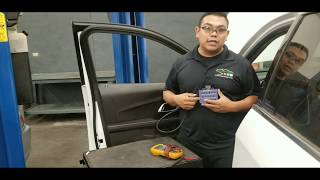
![How To Test CAN BUS With A Multimeter [CAN Bus Resistance Check] Mechanic Mindset](https://img.youtube.com/vi/JPE42HSJxAk/mqdefault.jpg)
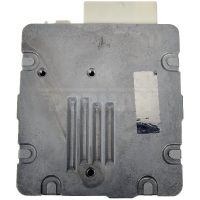
Shop the Parts Behind U0130
Below are the parts most often responsible for code U0130, ranked by how frequently each one is the actual culprit (per the diagnosis above). Tap any to see what we have for your vehicle.





The information in this article is provided for general reference and educational purposes only. Vehicle specifications, procedures, and part compatibility can vary by production date, trim level, and region. Always consult your vehicle's factory service manual and verify part numbers before purchasing or performing repairs. Safety-critical components such as airbags, seat belts, and braking systems should be installed by a qualified professional.
- 🧭 Diagnostic Flowchart
- 🎬 Helpful Videos
- 🛍️ Shop This Part
- What Does U0130 Mean?
- Can I Drive With U0130?
- Common Causes
- Symptoms
- Common Fixes & Costs
- Used vs. New Parts: Buying Guide
- What Happens If You Wait — Timeline
- Cost of Not Fixing It
- Diagnosis Steps
- When This Code Triggers (Freeze-Frame Conditions)
- Related Codes
- Climate & Environmental Factors
- How to Talk to a Mechanic About This Code
- Where to Take It: Dealer vs Independent vs Chain
- When to Walk Away From the Repair
- What Scan Tool You Need for This Code
- How to Clear the Code After You Fix It
- Will This Fail Emissions / State Inspection?
- Most Commonly Affected Vehicles
- Manufacturer-Specific Notes
- Real Owner Stories
- 2014 Chevy Silverado with intermittent U0130
- 2013 Ford Focus with 80K miles and U0130
- 2015 Ram 1500 with intermittent power steering loss
- Ford Focus with U0130 - A Misdiagnosis Story
- How to Prevent This Code From Triggering
- Frequently Asked Questions
- Can a blown fuse cause code U0130?
- I replaced the steering module, but the U0130 code came back. What now?
- Can a software update or reprogramming fix a U0130 code?
- Will clearing the code fix the problem?
- How can I prevent code U0130 from happening?
- Can I reset the power steering light myself?
- Is the Steering Effort Control Module the same as the Power Steering Control Module?
- How much does it cost for a shop to diagnose code U0130?
- Key Takeaways
- 🎟️ Get 5% Off